Cryptocurrency staking: What is it and how can you earn profits from it

Cryptocurrency Staking Explained
Cryptocurrency staking is a widely used passive income strategy for digital assets, increasingly favored by investors. The process involves users holding a specific amount of cryptocurrency in their account, supporting the operation of a project's blockchain network. By holding coins in a wallet, investors can participate in the network as validators or delegators, helping maintain the blockchain's performance and security.
Staking works by having token holders lock their assets in a dedicated smart contract or wallet. These locked funds validate transactions and help create new blocks on the network. In return for supporting the network, users receive regular rewards in the same project's cryptocurrency.
Many investors consider staking an additional income stream, allowing crypto savings to generate steady returns. It's especially appealing for long-term holders who don't intend to sell their coins soon. Instead of letting assets sit idle, they earn passive income similar to bank deposit interest.
Note: In Russian-language communities, "staking" is also referred to as "steking." Both terms are accepted in the crypto community.
Which Cryptocurrencies Support Staking?
All cryptocurrencies available for staking use the Proof-of-Stake (PoS) consensus algorithm. This approach to mining and validating digital assets is much more environmentally friendly than alternatives like Proof-of-Work (PoW), since it doesn't require large amounts of energy-hungry hardware.
The Proof-of-Stake algorithm was designed as a more efficient, sustainable alternative to traditional mining. Unlike PoW, the right to create a new block and earn rewards depends on the number of coins a user is willing to lock in the network—not on computing power.
Here's how mining works with a PoS algorithm:
-
Participant asset analysis: The network continuously reviews users' balances. The more coins a participant locks, the higher their chances of being selected to validate the next block. Those with larger holdings are more likely to secure the right to record transactions and create new blocks.
-
Computing resource usage: The selected user's device provides the computing power needed for block validation. Hardware requirements are much lower than in traditional mining. Staking is only possible while your computer or device remains powered on and online.
-
Rewards: For validating transactions and supporting network security, users earn rewards in the project's cryptocurrency. The reward amount is generally proportional to the number of coins staked.
-
Automated process: Staking is fully automated and doesn't require active management. After initial setup, the system handles rewards automatically.
In short, cryptocurrency staking is a form of coin mining using the PoS algorithm, with "proof of stake" replacing computational power.
How to Earn with Cryptocurrency Staking
Starting with cryptocurrency staking is simple, even for beginners. Here's a step-by-step guide:
Step 1: Select a cryptocurrency Begin by choosing a cryptocurrency and researching its project in detail. Make sure it supports staking and uses Proof-of-Stake or its variants (Delegated PoS, Nominated PoS, etc.). Review the whitepaper, development team, roadmap, and community engagement.
Step 2: Choose a platform Find a reputable platform or wallet that supports staking for your chosen asset. Options include an official project wallet, a hardware wallet with staking features, or a dedicated staking service. Prioritize secure, well-established solutions with strong reputations.
Step 3: Acquire and deposit assets Purchase the necessary amount of cryptocurrency. Minimum staking amounts vary by project—some have no minimum, others require a threshold. Transfer your coins to your chosen platform or wallet, then activate staking following the instructions provided.
Receive rewards: PoS systems typically distribute rewards at regular intervals—daily, weekly, or monthly, depending on the project. Rewards are often automatically added to your staked balance, enabling compound growth.
Most staking platforms and wallets provide detailed instructions for each asset. Carefully review all terms, including lock-up periods, early withdrawal options, and any penalties.
Top Cryptocurrencies for Staking
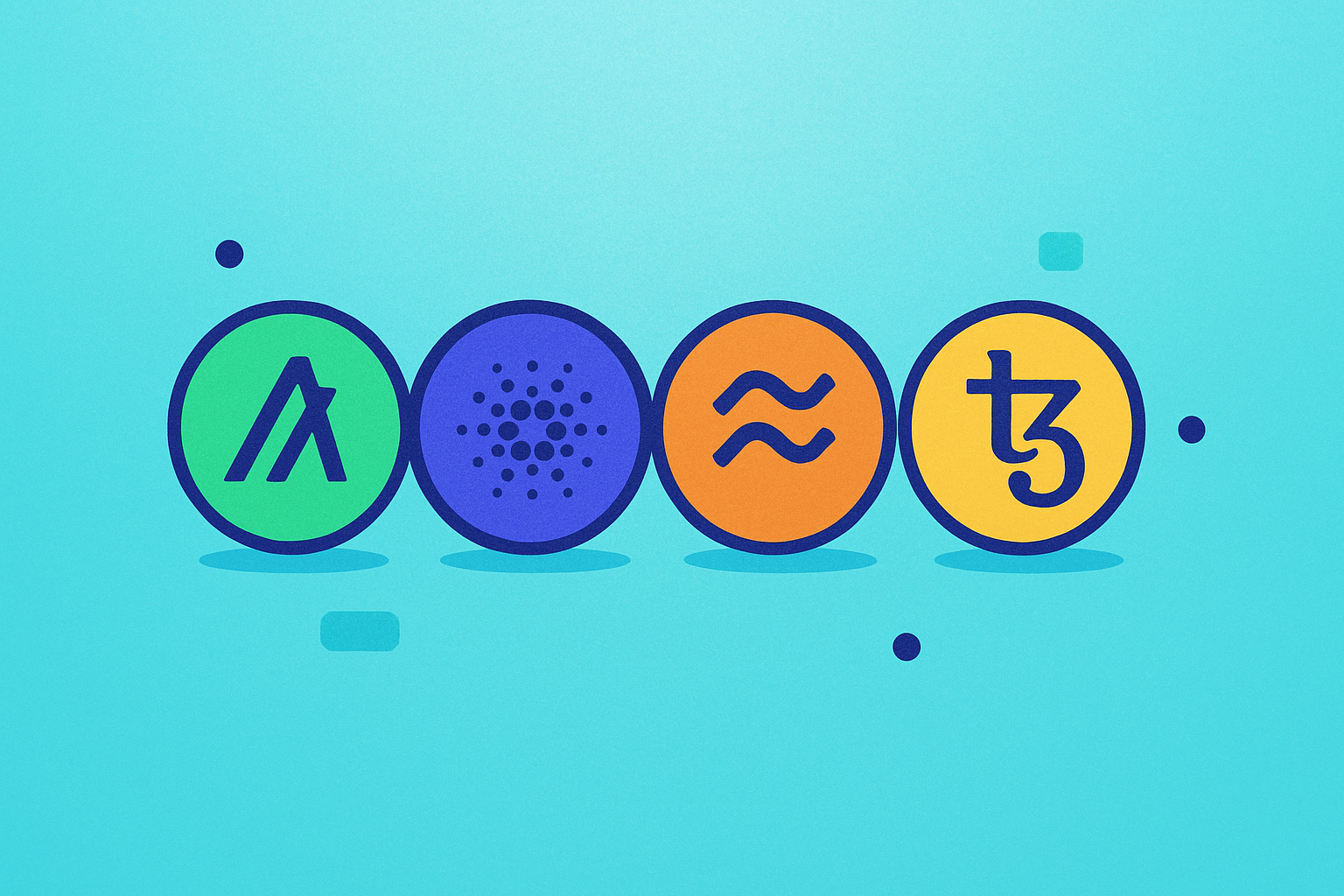
Algorand
Algorand is a leading staking project—an innovative blockchain platform created by Turing Award winner Silvio Micali. It’s recognized for fast transactions and low fees.
Download the Algorand Wallet to get started. It's available for iOS and Android, allowing mobile staking.
After installing the wallet, transfer Algorand (ALGO) coins into it. Staking begins automatically once the coins are credited—no further action required. Algorand’s official wallet can yield up to 6% annually. Rewards are distributed about every 9 minutes, so balances grow steadily. The protocol doesn’t charge fees on credited rewards, making ALGO staking especially attractive.
Cardano
Cardano (ADA) is among the most advanced blockchain projects, built on peer-reviewed research. It offers a flexible staking system with multiple participation options.
Stake Cardano by joining an existing pool (the simplest method) or running your own pool (requires technical expertise and significant funds). Both options offer yields up to 7% annually.
Buy ADA tokens and delegate them to a pool using Daedalus or Yoroi wallets. Your coins remain in your wallet and are not locked—you can transact or change pools anytime.
Polkadot
Polkadot (DOT), often called the "Ethereum killer," boasts high blockchain performance and innovative architecture, enabling cross-chain interaction. Created by Ethereum co-founder Gavin Wood.
Polkadot attracts attention for both its technology and strong staking returns. Maximum annual rewards for Polkadot stakers can reach 16%, among the highest for major projects.
Acquire DOT tokens and deposit them in a wallet or platform that supports Polkadot staking. Use Polkadot.js or other compatible wallets. Staking uses a validator nomination system—you choose up to 16 validators to support.
Tezos
Many experts credit Tezos (XTZ) with popularizing crypto staking for the mainstream. Its self-amending protocol allows upgrades without hard forks.
Tezos investors call PoS mining "baking," reflecting the project's philosophy and making it accessible for newcomers. Yields reach up to 6% annually, with regular rewards.
Buy XTZ coins and transfer them to a staking-capable wallet or platform. Use Temple Wallet, Kukai, or delegate tokens via various services. Delegation does not require locking funds—full asset control is retained.
Cryptocurrency Staking Earnings Potential
Potential earnings are a key factor when comparing staking to traditional mining and other digital asset investments.
PoS miners generally earn less than PoW miners using powerful hardware. However, staking does not require expensive equipment (ASICs or GPU farms), high electricity costs, network setup, or frequent maintenance.
Staking is much more accessible—you can start with almost any amount, whereas mining demands significant initial investment. No noise, heat, or special facilities are needed, making staking suitable for everyday users.
Staking yields vary by asset, project, total staked tokens, and other factors. Most annual staking returns range from 2% to 15% of your balance. Some newer or less popular projects may offer higher rates to attract participants.
Note that quoted yields are nominal and paid in project tokens. Your real profit in fiat terms depends on token price movements. If the token rises, profits increase; if it falls, you may lose money despite positive staking returns.
Important: Some offers promise much higher staking returns—50%, 100%, or more annually. Such unrealistic yields are often promoted by scammers or Ponzi schemes. Always research projects carefully, confirm legitimacy and security, read community reviews, and understand the source of high payouts before committing.
Exchange-Based Staking and Alternative PoS Mining Methods
There are several ways to stake cryptocurrencies; using centralized trading platforms is one of the easiest. Many leading crypto exchanges offer built-in staking services, making it simple and accessible—even for newcomers.
Examples of major platforms offering staking:
- Top international exchanges
- Popular crypto platforms
- Leading exchanges with staking support
- Large centralized trading platforms
- Established digital asset trading services
Major trading platforms may support 20–30+ coins for staking. Some assets can yield 12–16% annually. Using an exchange streamlines the process—no need to manage wallets, network transfers, or technical steps. All actions are completed in a few clicks via a user-friendly interface.
Note that, unlike official wallets released by asset developers, centralized exchanges typically charge a commission on staking rewards. This fee may range from 5% to 25% of rewards, reducing net returns. Also, staking on an exchange means handing asset control to the platform, introducing added risk.
Alternative staking methods:
Beyond exchanges, specialized staking platforms aggregate profitable coins and offer convenient interfaces and extra features for stakers.
Other popular options include:
- Hardware wallets (Ledger, Trezor) with staking support—maximum security
- DeFi protocols offering liquid staking—use staked assets in other applications
- Staking pools—pool funds from multiple users to meet minimum requirements
Summary
Cryptocurrency staking is one of the most accessible and transparent passive earning strategies for digital assets, offering income opportunities to almost anyone, regardless of technical expertise or initial capital.
It's especially attractive for long-term holders who believe in their chosen projects and support their growth. Staking lets you earn regular income while holding assets, helping offset market volatility.
Before staking, conduct thorough research. Examine your chosen project's technology, developer team, future prospects, and staking terms, including minimum requirements, lock-up periods, early withdrawal options, and penalties.
Pay close attention to yield claims—ensure they are realistic and sustainable. Choose reliable, secure platforms, whether an official wallet, trusted exchange, or specialized staking service.
Remember the risks: market volatility, technical failures, platform security. Diversify across projects and never invest more than you can afford to lose. With careful planning, staking can be an effective tool for growing your crypto portfolio and earning passive income.
FAQ
What Is Cryptocurrency Staking and How Does It Work?
Staking means locking up cryptocurrency tokens to support a blockchain and earn rewards. Participants become validators, confirm transactions, and collect commissions. It's a less energy-intensive alternative to mining, available on Ethereum, Polkadot, and more.
Which Cryptocurrencies Can Be Staked?
ETH, Polkadot, Cardano, Cosmos, Tezos, Near, Tron, and BNB are all available for staking. Choose based on yield potential and minimum deposit requirements for each asset.
How Much Can You Earn with Cryptocurrency Staking?
Staking yields typically range from 2% to 10% annually, depending on the asset and terms. For instance, staking $10,000 in Ethereum at 4% yields around $400 per year. Returns may be higher for newer projects.
What Are the Risks of Staking?
Key risks include asset price volatility, slashing (losses for protocol violations), network outages, regulatory changes, and fraud risk when using platforms. Funds may also be locked for extended periods.
How Can Beginners Start Cryptocurrency Staking?
Select a staking cryptocurrency, register on a platform, transfer coins to a staking wallet, and activate staking. Begin with small amounts and review reward terms before investing.
How Is Staking Different from Mining?
Staking doesn't require powerful hardware—mining does. Staking relies on holding crypto for validation; mining depends on computational work. Staking is more energy-efficient and broadly accessible.
Are Staking Earnings Taxable?
Yes, staking rewards are considered taxable income. Tax rates and rules depend on your country and income type.
Which Platforms Support Cryptocurrency Staking?
Major crypto platforms such as Binance, Coinbase, and OKX offer staking. They provide a broad selection of assets, competitive yields, and strong fund protection for users.
Share
Content
How to Buy Cryptocurrency


Trending Cryptocurrencies



How to Mine Ethereum in 2025: A Complete Guide for Beginners

Ethereum 2.0 in 2025: Staking, Scalability, and Environmental Impact
What is Ethereum: A 2025 Guide for Crypto Enthusiasts and Investors

How does Ethereum's blockchain technology work?
What are smart contracts and how do they work on Ethereum?

Ethereum Price Analysis: 2025 Market Trends and Web3 Impact

A Guide to Bullish Candlestick Patterns in Technical Analysis

Is KuaiCoin (KT) a good investment?: A comprehensive analysis of market potential, risks, and future prospects

Top 10 Free Play-to-Earn Games to Earn Real Money

Bull Flag Pattern Trading Guide

Is Vtrading (VT) a good investment?: A Comprehensive Analysis of Features, Risks, and Market Potential