What Is Staking? How to Earn Passive Income with Staking
How Does Staking Work?
To understand staking and how it works, you'll need to be familiar with the Proof-of-Work (PoW) consensus mechanism and mining. PoW is the most widely used consensus method across most blockchains today.
With PoW, reaching consensus and confirming the next block on a blockchain requires computational work performed by powerful hardware. Miners solve complex puzzles and are rewarded with cryptocurrency native to that network.
However, Proof-of-Stake (PoS) was introduced as an alternative to the intensive energy consumption and heavy computation of PoW. Under PoS, rewards are distributed based on the amount of assets a user stakes on the network. This approach not only conserves energy but also provides high security by creating a "value wall." Participants must lock their assets, forming a significant barrier for would-be attackers, who risk losing their staked funds if they act maliciously.
So, What Exactly Is Staking?
Staking, at its core, is the act of depositing or contributing your cryptocurrency to a blockchain network that uses Proof-of-Stake. When you stake, you lock up a set amount of crypto to help operate and secure the network.
Generally, stakers with larger holdings have a greater chance of being selected as validators for the next block. If chosen, they receive rewards proportional to the amount and duration of their stake.
The staking process is straightforward and user-friendly. You simply transfer your crypto from an exchange to a staking-enabled wallet, activate staking, and let it work automatically to earn income. This is a passive investment strategy that doesn’t require complex trading or technical analysis.
What Is Delegated Proof of Stake?
Delegated Proof of Stake (DPoS) is considered a more democratic and efficient evolution of standard Proof of Stake. In DPoS, rather than every token holder validating transactions directly, the system uses a democratic voting process.
Token holders can delegate their validation rights to a trusted third party or vote to elect a set number of representatives (delegates or witnesses). These representatives then take on the responsibility of securing and operating the network on behalf of the community.
DPoS offers faster transaction processing and lower energy consumption. However, some critics note that DPoS can lead to centralized power among a small group of elected delegates. Notable projects using DPoS include EOS, Tron, and Lisk.
Advantages and Disadvantages of Staking
Advantages of Staking
Staking delivers substantial benefits for both individuals and the broader blockchain ecosystem:
-
Energy and Resource Efficiency: Unlike traditional mining, staking uses less electricity and requires no investment in expensive hardware. You can participate using a standard computer or even a smartphone.
-
Improved Security: Token holders have a vested interest in the network’s health, motivating them to protect it. Any malicious activity directly reduces the value of their assets.
-
Enhanced Speed and Scalability: PoS blockchains typically process transactions faster and scale more effectively than PoW chains, meeting growing user demand.
-
Effortless Passive Income: Staking enables you to earn a steady passive income without high upfront costs or the need to constantly monitor the market.
-
Dual Profit Potential: If your staked token appreciates in value, you earn not only staking rewards but also benefit from the rising value of your assets.
-
Staking Pools: Users with limited capital can join staking pools, combining resources to boost their chances of validating blocks and earning rewards.
-
No Need for Specialized Knowledge: Staking is accessible to newcomers, unlike trading, which requires experience and analysis skills.
Disadvantages of Staking
Staking also comes with certain risks and limitations:
-
Centralization Risk: Large token holders ("whales") can exert outsized influence, potentially concentrating power among a small group.
-
Price Volatility: Crypto markets are highly volatile. While staking, token prices may fall sharply, reducing your total holdings even if you keep receiving staking rewards.
-
Asset Lock-Up: Some cryptocurrencies require you to lock your tokens for a set period. During this time, you cannot withdraw or sell—even if prices drop significantly.
-
Technical Risks: If your staking node fails or is attacked, you could lose some rewards or even face penalties (slashing), forfeiting part of your staked assets.
Popular Cryptocurrencies for Staking
The number of staking-enabled cryptocurrencies has surged in recent years. Ethereum, one of the world’s largest blockchains, has transitioned from PoW to PoS through major upgrades, opening staking opportunities for millions worldwide.
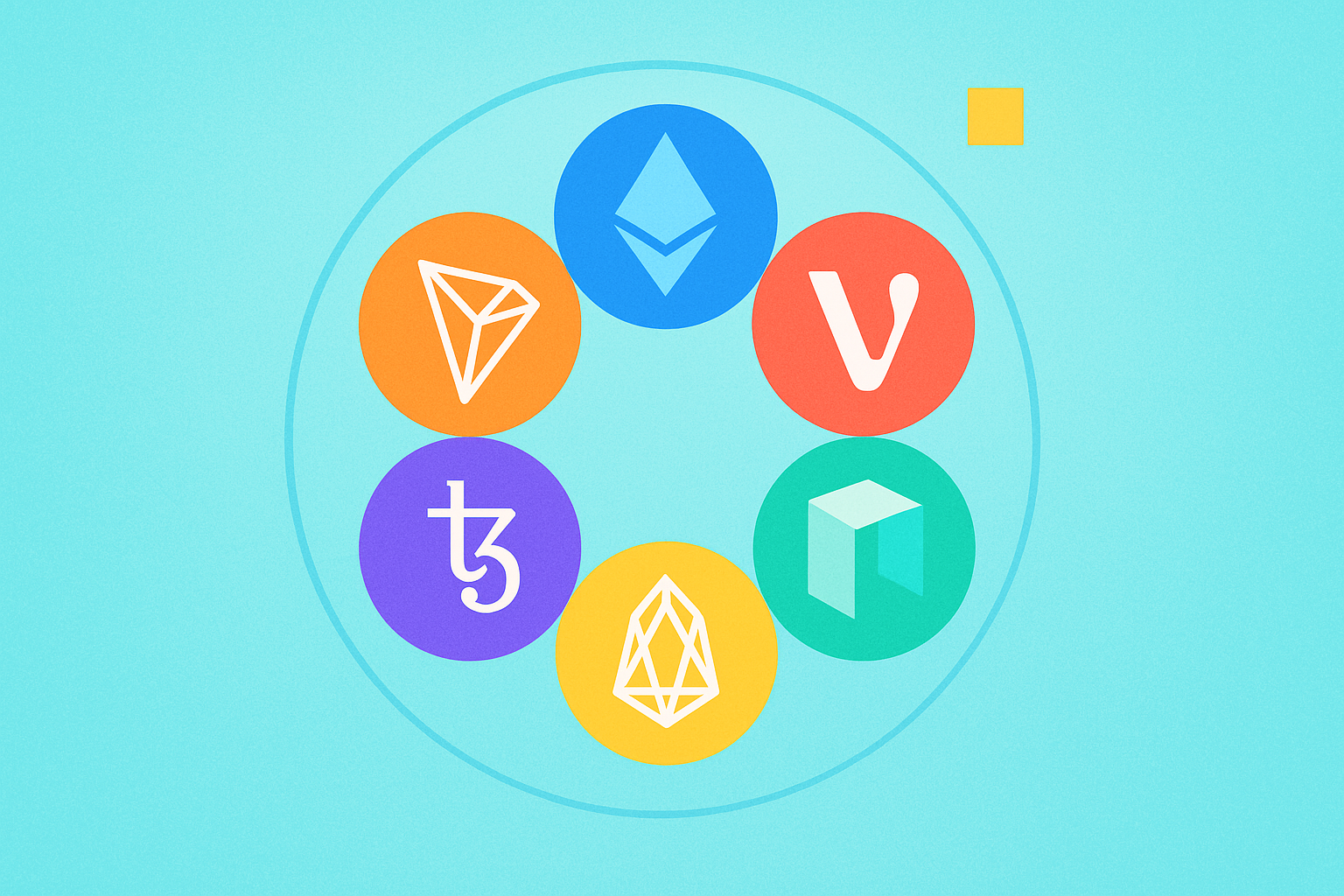
Other popular staking coins include EOS, Tezos, Tron, Cosmos, NEO, VeChain, Ark, Lisk, Loom, Decred, Stratis, ICON, Qtum, PivX, Algorand, Polkadot, Cardano, and hundreds of others with a range of market caps.
Each cryptocurrency features its own staking mechanism, yield rates, lock-up periods, and minimum requirements. Always conduct thorough research on each project before staking.
Ethereum Staking and Rewards
Ethereum’s switch to Proof of Stake has ushered in a new era for ETH staking. Anyone holding 32 ETH can become a validator on Ethereum 2.0 by running a validator node.
Ethereum staking rewards incentivize users to contribute ETH to network security. These rewards are issued as newly minted ETH for each successfully validated block. Annual percentage rates (APR) fluctuate based on total ETH staked across the network.
If you don’t have the full 32 ETH, leading exchanges offer Ethereum staking with much lower minimums. Staking pools also let multiple users combine ETH to reach the 32 ETH threshold and share rewards.
Staking Popular Altcoins
Tezos Staking/Baking
Tezos uses the term "baking" for staking. "Bakers" are responsible for validating all transactions in a block before it’s added to the blockchain.
To become a baker, you need at least 8,000 XTZ (Tezos tokens). If you lack this amount, you can delegate your XTZ to another baker and receive a portion of rewards. Many leading exchanges offer XTZ staking with attractive yields, enabling users to participate without technical expertise.
EOS Staking
EOS staking is unique among cryptocurrencies. Instead of simply locking tokens for rewards, staking EOS increases your account’s computing (CPU) and bandwidth (NET) resources on the EOS network.
CPU and NET are required to perform any action on the EOS blockchain, from transfers to interacting with decentralized apps (DApps). When you stake EOS, you’re "renting" these resources. The more EOS you stake—and the greater the network’s total stake—the more resources you receive.
Tron Staking
Tron’s Delegated Proof of Stake (DPoS) system features "Super Representatives" (SRs)—27 representatives elected by community vote.
SRs create new blocks and record transactions on the Tron blockchain. To stake TRX, simply move tokens to a staking-enabled wallet and "freeze" them. Freezing TRX gives you Tron Power (TP), which lets you vote for SRs and receive rewards.
NEO Staking
NEO, often called "the Ethereum of China," supports smart contracts and operates a secondary token called GAS, which fuels transactions and contracts.
GAS is automatically rewarded to NEO holders. Deposit NEO in a staking-enabled wallet (like NEON or O3 Wallet), and GAS accumulates automatically. No further action is needed—GAS is distributed periodically based on your NEO holdings.
VeChain Staking
VET (VeChain Token) can be staked for passive rewards. VeChain focuses on blockchain solutions for supply chains and real-world business operations.
Holding VET in your wallet automatically generates VeThor (VTHO), which pays gas fees for smart contracts and transactions. VTHO generation depends on your VET holdings and node type (if any). This is fully passive staking—no token lock-up or complex setup required.
Exchanges Supporting Staking
Many top crypto exchanges now offer integrated staking services, allowing users to stake directly on-platform without transferring tokens elsewhere. Several reputable exchanges provide these services.
All exchange staking options charge a fee or deduct a share of your rewards for system upkeep. Fees typically range from 0% to 25%, depending on the exchange and cryptocurrency. Some exchanges support staking for dozens of assets, from majors like Ethereum and Cardano to smaller altcoins.
Beyond centralized exchanges, several specialized staking providers have emerged, such as Stake Capital, Stake.Fish, Staked, and Stakinglab. These platforms offer advanced staking options and customization for experienced users.
What Is a Staking Pool?
A staking pool is ideal for those seeking passive staking income but lacking the minimum tokens needed to become an independent validator. This model pools resources from multiple holders.
By joining forces, staking pools significantly boost chances of being selected as a validator and earning block rewards. When a pool earns rewards, they're distributed to all participants according to their contribution.
Staking pool returns are usually slightly lower than solo staking (as rewards are shared), but payouts are more frequent and stable. Most pools charge a management fee or deduct a small share of rewards for operational costs.
When evaluating a staking pool, consider factors like the operator’s reputation, fees, uptime ratio, and member count.
Wallets Supporting Staking
Most Proof of Stake tokens have official staking wallets developed by their project teams. There are also multi-asset wallets supporting staking for various cryptocurrencies for greater convenience.
Atomic Wallet is one of the most comprehensive staking wallets available. It supports staking for many popular tokens—including Tezos, Tron, NEO, Cosmos, VeChain, Cardano, Algorand, and more. Atomic Wallet advertises decentralized staking with zero fees (0%), maximizing user returns.
Trust Wallet is a widely used mobile wallet with an intuitive interface. It supports staking for tokens such as Tezos, Tron, Cosmos, VeChain, Algorand, and Kava, and is optimized for both iOS and Android devices.
Hardware wallets like Ledger have also introduced staking features for select cryptocurrencies, blending cold-storage security with passive income. Most staking wallets offer a staking calculator so users can estimate potential returns based on token quantity and staking duration.
Useful Staking Resources
If you want to dive deeper into staking or track investment opportunities, several trusted resources are available:
Stakingrewards.com is one of the most comprehensive staking data platforms. It tracks hundreds of projects, providing info on annual percentage rates (APR), total value locked (TVL), and other critical metrics—essential for comparing staking opportunities.
Attestant.io offers detailed guides on Ethereum’s staking ecosystem, especially for those considering becoming validators on Ethereum 2.0. The site explains technical concepts clearly and shares best practices for node operators.
Community forums like Reddit (r/ethstaker, r/cryptocurrency), project Discords, and staking-focused Telegram channels are also excellent for learning from seasoned users and keeping up with the latest news.
Conclusion
Passive income is a major focus in the crypto investment community. Staking has emerged as an accessible and appealing way to earn steady income without the risks of active trading.
Alongside short-term trading, smart investors often diversify by allocating part of their portfolios to staking. This helps balance the pursuit of high returns with the stability of passive income streams.
This article has outlined staking from basic concepts and mechanisms to common staking types, pros and cons, and participation methods. With this knowledge, you can make informed decisions about staking and choose the cryptocurrencies that best fit your investment objectives.
However, remember: there’s no such thing as guaranteed success. Even though staking can seem like "automatic earning," you still need to put in research, assess risks, and sometimes learn through trial and error to find your optimal strategy. Always do your due diligence and only invest funds you’re willing to lose.
FAQ
What is staking? How does staking work?
Staking means holding crypto to support a blockchain network and validate transactions. Stakers are randomly selected to add transaction batches to the blockchain, earning rewards in the process. This secures the network without traditional mining.
How do I start staking? What do I need to participate?
To start staking, you need a set amount of the project’s coin. You can stake directly through a wallet or join a staking pool. No high-end computer is needed—just a basic setup. Even small investors can join easily.
Is staking safe? What are the risks?
Staking involves risks such as long reward waiting times, token price volatility, and potential loss of funds if a project fails. Risks vary by project. Always research thoroughly before staking.
What is the staking yield? How is staking profit calculated?
Staking yields generally range from 2% to 6% annually, depending on the asset. Profit is calculated as: Profit = Amount staked × Annual yield (%). For example, staking 100 ETH at 5% annual yield earns 5 ETH per year.
How is staking different from mining? Which is better?
Both staking and mining earn crypto, but mining requires significant computing power and costs. Staking is simpler: no expensive equipment, more stable returns, and lower risk. Staking is ideal for easy passive income.
Which coins can be staked? Which offer the highest returns?
Popular staking coins include ETH, SOL, ADA, and Polkadot. ETH currently offers among the highest staking yields—typically 3–5% APY depending on market conditions. SOL and ADA also provide strong returns (about 5–8% APY). Choose assets that align with your goals and capacity.
Does staking require a large initial investment? What’s the minimum?
Staking doesn’t require a large initial outlay. You can often start with very small amounts—even as little as 0.025 ETH—depending on the coin and platform. Many projects offer flexible staking with low minimums, making passive income widely accessible.
How long are funds locked in staking? Can I withdraw anytime?
Staking lock-up periods typically last 2 to 6 months, depending on the asset and platform. You can’t withdraw funds at will—you must wait for the lock-up to end or follow the project’s unstaking rules.
Is staking on an exchange or self-custody better?
Self-custody is more secure because your assets stay in your wallet. Staking on an exchange relies on the platform and carries risk of loss. Self-custody is recommended for maximum security.
How is staking taxed? Do I need to declare staking profits?
Staking rewards are taxable income. When you receive staking rewards, they are taxed based on market value at the time of receipt, following your local tax regulations.
Share
Content
How to Buy Cryptocurrency


Trending Cryptocurrencies



Ethereum 2.0 in 2025: Staking, Scalability, and Environmental Impact

2025 best encryption staking platform recommendation: secure and profitable

How to Buy Crypto: A Step-by-Step Guide with Gate.com

Crypto Assets Stake Full Analysis: How to Earn Passive Income Through Tokens

MemeBox Price and Airdrop Guide 2025: What You Need to Know
Can AI Companions (AIC) Reach $0.2729 in Price Prediction?
Is DRAC (DRAC) a good investment?: A comprehensive analysis of risks, potential returns, and future prospects in the crypto market

How do AVAX exchange inflows and institutional holdings impact market dynamics with $84 million recent capital flow
MUBI vs LTC: A Comprehensive Comparison of Two Leading Streaming Platforms for Film Enthusiasts

How to Use Technical Indicators MACD, RSI, and Bollinger Bands for Crypto Trading Signals

What is Slippage and How Can We Avoid It While Trading Cryptocurrency?