Which cryptocurrency should you buy? A guide to selecting the top coins

Top Cryptocurrencies for Investment
The fundamental rule for selecting cryptocurrencies is to invest in assets with a solid foundation and intrinsic value. When making investment decisions, focus on how long the coin has been on the market and its performance during periods of market growth and decline. These factors help gauge a project's resilience and its ability to weather market volatility.
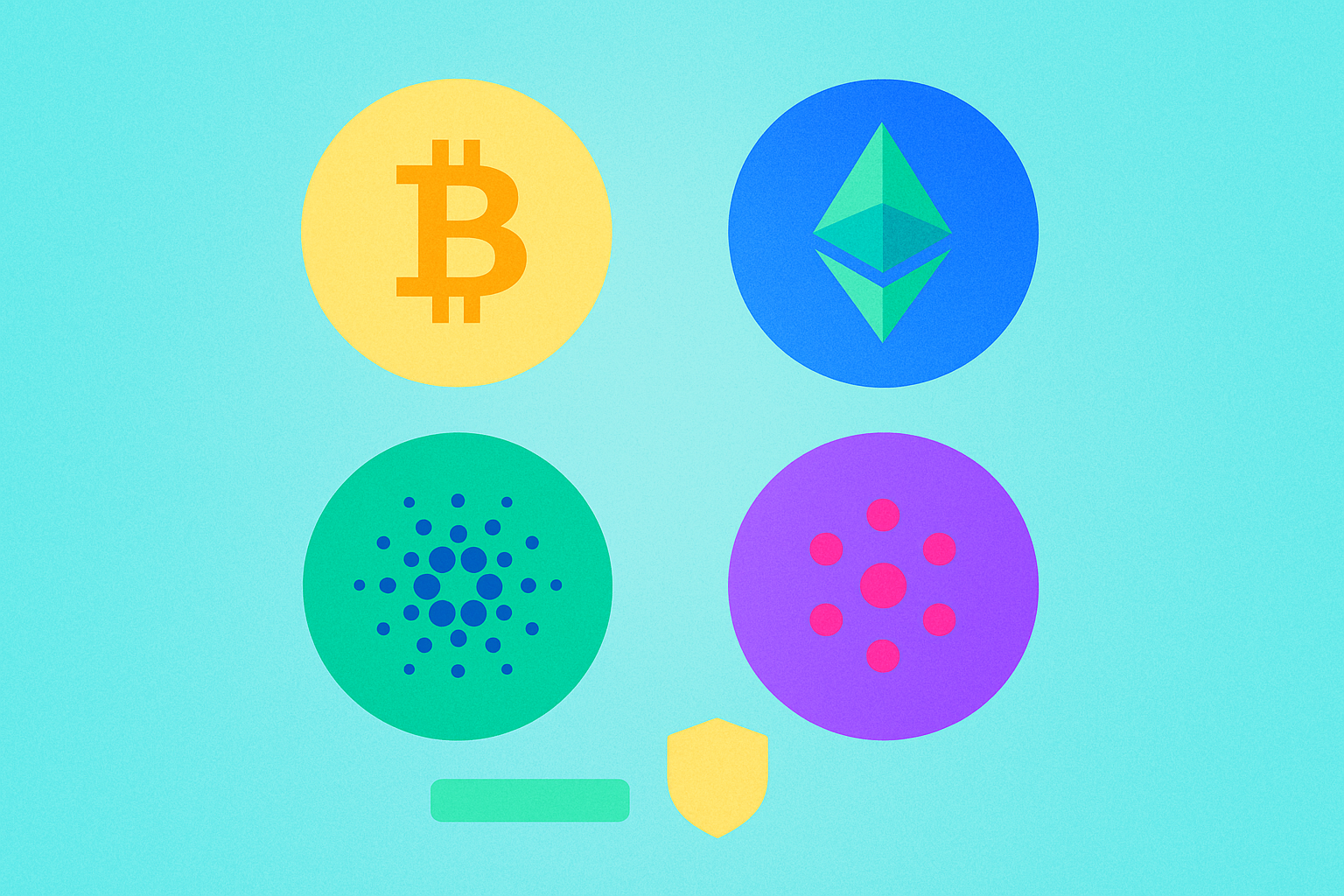
Bitcoin is the first and most recognized cryptocurrency, launched in 2009. Blockchain technology owes much of its popularity and widespread adoption to Bitcoin. Many experts and investors consider BTC to be digital gold, as its issuance is strictly limited—just 21 million coins will ever exist. Like the finite supply of gold, Bitcoin’s scarcity makes it an appealing long-term store of value.
Satoshi Nakamoto designed Bitcoin to function as a payment method for direct transactions without intermediaries. Its limited supply underpins its deflationary nature, making it not only a medium of exchange but also a reliable tool for long-term investing and protecting capital from inflation.
Ethereum is the second-largest cryptocurrency by market cap and has revolutionized the blockchain industry. The project brought smart contracts and decentralized applications (dApps) into the mainstream, opening the door to complex financial tools and services. The native token, ETH, is used for transaction fees and as a means of paying network operation fees (gas fees).
Ethereum launched in 2014 under the leadership of Vitalik Buterin and his team of developers. Like Bitcoin, Ethereum has endured several cycles of market booms and busts, proving its viability, technical strength, and investment appeal. Transitioning to the Proof-of-Stake consensus algorithm further solidified Ethereum’s position in the market.
Major Exchange Platform Token refers to the native cryptocurrency of a leading global crypto exchange. This token plays several critical roles within its ecosystem. For example, it enables users to invest in new projects via launchpad platforms and access substantial trading fee discounts. It also serves as a means of paying fees within its associated blockchain network, making it indispensable for active ecosystem participants.
Cardano is a third-generation blockchain platform designed to provide a secure, scalable, and sustainable environment for building decentralized applications. Its native cryptocurrency is ADA, used for transaction fees and participation in the Proof-of-Stake consensus process. Cardano is backed by a cohesive team of researchers and developers committed to ongoing advancement through scientific methods and peer-reviewed studies. Cardano’s methodical development approach appeals to institutional investors.
Ripple is a California-based payment platform with its own cryptocurrency, XRP, developed to transform international money transfers. Ripple introduced innovative solutions for instant global money transfers with minimal fees—tools now used by many traditional financial institutions and banks to improve cross-border payments.
In December 2020, Ripple faced allegations from the US Securities and Exchange Commission over the illegal issuance and sale of XRP as securities. In July 2023, a US court partially ruled in Ripple’s favor, recognizing private sales of XRP as lawful. Despite ongoing disputes with regulators, Ripple continues to operate, innovate, and expand its partner network.
Litecoin is one of the oldest cryptocurrencies, created in 2011. Often called “digital silver” as a counterpoint to Bitcoin’s “digital gold,” Litecoin serves as a more accessible and faster alternative. It differentiates itself with much faster transaction processing and block generation, making Litecoin more practical for everyday payments.
With over a decade of history, Litecoin has demonstrated its viability and technical reliability, weathering numerous market cycles. Developers frequently use Litecoin to test new technologies before introducing them on the Bitcoin network.
Polkadot is an innovative blockchain platform that delivers breakthrough solutions for interoperability among various blockchains and supports the creation of multi-chain ecosystems. Founded by Gavin Wood—an Ethereum co-founder and creator of the Solidity programming language—Polkadot carries significant industry credibility.
The project’s native cryptocurrency, DOT, is used for network governance, staking, and connecting parachains. Many experts believe Polkadot’s distinctive advances in cross-chain interaction will propel blockchain technology’s continued growth, widespread adoption, and integration into multiple economic sectors.
Chainlink is a decentralized oracle platform that enables blockchains to securely access real-time external data. Its native token, LINK, is used to pay for services across the Chainlink network, such as connecting to external APIs, price feeds, and other data critical for smart contract execution. Chainlink addresses the vital challenge of linking blockchains to real-world data, making it a cornerstone of decentralized finance (DeFi) infrastructure.
How to Select Cryptocurrencies for Investment
To decide which cryptocurrency to buy and which project to fund, you should thoroughly analyze each candidate’s potential across a range of criteria. Here are several critical factors to consider:
Market Capitalization. This metric represents the total value of a cryptocurrency’s circulating supply, calculated by multiplying the current price by the number of coins in circulation. Market capitalization is essential when selecting an investment project. High market capitalization often signals stability, a solid reputation, and reduced exposure to extreme price swings. Large-cap cryptocurrencies are typically more liquid and carry lower investment risk.
Technology and Application. Investigate the technology that underpins the cryptocurrency and its practical use cases. Determine whether the project solves real problems for users or businesses, and if it introduces technological innovations absent from competitors. Projects with concrete practical applications are more likely to succeed long term.
Team and Partnerships. Carefully examine the team behind the project—their expertise, track record, and level of involvement in ongoing development. Assess whether the developers have a history of successful projects and if the crypto project has valuable partnerships with large companies, institutional investors, or other blockchain ventures.
Community. The scale and engagement of a project’s community are crucial indicators of viability. Review activity on social media, forums, and messaging platforms. The larger and more active the community, the better the project’s prospects for long-term success and sustainable growth.
Opinions. Explore commentary from influential crypto community members, analysts, and experts. Visit specialized crypto forums like Bitcointalk, and review discussions on platforms such as Reddit, Twitter (X), and Telegram. Consider both positive and critical feedback for a balanced view.
Audits. Independent security audits are vital for projects using smart contracts and handling user funds. Even a minor code vulnerability can enable a hack, resulting in investor losses and reputational damage. Always examine the results of independent audits conducted by respected blockchain security firms.
Technical and Fundamental Analysis. Technical analysis entails a deep dive into historical price trends using charts and analytical tools like volume indicators, moving averages, and support/resistance levels. Fundamental analysis assesses core aspects such as business model, tokenomics, market outlook, competitive advantages, and niche competition.
Whitepaper and Roadmap. Thoroughly read all project technical documentation, especially the whitepaper. This document details the technology, objectives, tokenomics, and development plans—essential for objectively evaluating the project’s future. Check the roadmap to see if the team’s actual progress aligns with published deadlines and commitments.
Risk and Investment Prospects. Objectively assess the risk profile and investment potential of the cryptocurrency based on your time horizon and risk tolerance. Remember: Crypto investments carry high risks, including potential total loss. Never invest more than you can afford to lose.
Listing. Confirm that the cryptocurrency is listed on reputable, widely used exchanges. Prioritize coins available on several major platforms with strong reputations. Focus on coins with high trading volume, which signals robust liquidity and the ability to buy or sell quickly without major price impact.
Where to Buy Cryptocurrency with Rubles
Now, let’s answer the practical question: where can you safely buy cryptocurrency with rubles and minimal fees? If you want to purchase digital assets with fiat, focus on P2P (peer-to-peer) platforms provided by major crypto exchanges.
P2P platforms let users buy and sell crypto directly with one another, bypassing intermediaries. This flexibility enables a range of payment methods and often results in better exchange rates. On these platforms, you’ll find sellers accepting rubles through various payment systems: bank transfers, e-wallets, cards, and other convenient options.
When choosing a P2P platform, check for a Russian-language interface, seller reputation system, escrow protection, and high-quality customer support. Leading global exchanges typically offer reliable P2P services with strong security and user-friendly features.
Cryptocurrencies to Avoid for Investment
New Cryptocurrencies. Many new projects haven't delivered on their promised technology, launched a working product, or proven their business model in practice. The 2017 ICO boom saw countless failed projects—many were outright scams or unrealistic ideas. Scrutinize new projects with extreme diligence and healthy skepticism.
Cryptocurrencies with Questionable Reputations. Some coins have earned dubious or negative reputations due to public developer disputes, fraud, lack of transparency, or links to illicit activity (money laundering, terror financing, etc.). Investing in such assets carries significant reputational and financial risks.
Low-Liquidity, Low-Volume Cryptocurrencies. In crucial moments, these coins can be extremely difficult or impossible to sell quickly at a fair price—making it hard to realize profit or limit losses. A single sale of even a small amount can dramatically affect the market price and trigger sharp declines.
Cryptocurrencies with No Practical Value. Meme coins, for example, are based on internet jokes and lack technological or utility value. Such projects—often called shitcoins—resemble gambling or lotteries. Their price is driven entirely by speculation, social media hype, and large holders, with little real value for users.
Non-Transparent Projects. Never invest in a cryptocurrency whose developers withhold information, hide their identities (except in rare justified cases), or fail to publish technical documentation and regular updates. A lack of transparency makes it difficult to assess genuine potential and often signals fraudulent intent. Legitimate projects always strive for maximum transparency with their community and investors.
FAQ
Which Cryptocurrencies Are Most Worth Considering for Investment in 2024?
The best cryptocurrencies for 2024 are Bitcoin, Ethereum, XRP, Solana, BNB, Dogecoin, and Cardano. These assets show strong growth potential, driven by technological innovation and increasing market demand.
Bitcoin or Ethereum: Which Should You Buy?
Bitcoin is ideal for long-term holding and inflation protection. Ethereum is better suited for investors who believe in blockchain application development. Bitcoin offers more stability; Ethereum has greater growth potential. The choice depends on your strategy and risk appetite.
How Do You Choose the Right Cryptocurrency for Personal Investment?
Define your investment goals and risk tolerance. Conservative investors should focus on high-cap coins like Bitcoin and Ethereum. Aggressive investors can consider altcoins with higher growth prospects, analyzing trading volume and technical fundamentals.
How Can Beginners Start Buying Cryptocurrency?
Register an account on a trusted platform, complete KYC verification, link your bank account, and deposit funds. Start with small amounts, learn the market, and choose established cryptocurrencies with high trading activity.
What Are the Main Risks of Cryptocurrency Investing?
Primary risks include high price volatility, regulatory uncertainty, technical vulnerabilities, and market manipulation. Prices can fluctuate sharply based on news and speculation, and security relies on the reliability of platforms and wallets.
Which Cryptocurrencies Are Suitable for Small Investments?
For small amounts, consider Solana for low fees and fast transactions, or Dogecoin for even lower fees. Both are efficient for small payments and offer excellent value.
How Can You Determine the True Value of a Cryptocurrency Project?
Assess technical innovation, team experience, and market demand. Review long-term viability, competitive advantages, trading volume, and community engagement to gauge the project's true worth.
Where Can You Buy Cryptocurrency Safely?
Choose reputable, licensed platforms with two-factor authentication. Look for exchanges with high trading volumes and strong reputations. Prioritize platforms that comply with local regulations and offer asset insurance for users.
Share
Content
How to Buy Cryptocurrency


Trending Cryptocurrencies



XZXX: A Comprehensive Guide to the BRC-20 Meme Token in 2025

Bitcoin Fear and Greed Index: Market Sentiment Analysis for 2025

5 ways to get Bitcoin for free in 2025: Newbie Guide

Top Crypto ETFs to Watch in 2025: Navigating the Digital Asset Boom
Bitcoin Market Cap in 2025: Analysis and Trends for Investors
2025 Bitcoin Price Prediction: Trump's Tariffs' Impact on BTC

How does Fed monetary policy and inflation data impact crypto prices in 2026
What is Monad (MON): whitepaper logic, use cases, technical innovation, and team background analysis
How does Federal Reserve policy and inflation impact MON token price in 2026
2026 TRVL Price Prediction: Expert Analysis and Future Outlook for Travel Tokens in the Cryptocurrency Market

What is token economics model: inflation, deflation, burn mechanisms, and governance utility explained