YGG vs BTC: Which Cryptocurrency Offers Better Investment Potential in 2024?
Introduction: YGG vs BTC Investment Comparison
In the cryptocurrency market, comparisons between Yield Guild Games and Bitcoin have always been a topic investors cannot avoid. The two assets not only show significant differences in market capitalization ranking, application scenarios, and price performance, but also represent distinct positioning within the crypto asset landscape. Yield Guild Games (YGG): Launched in 2021, it has gained market recognition by combining NFT and DeFi characteristics to introduce liquidity mining mechanisms into the gaming economy, while adding value to the metaverse through the development of game players, artists, and creators. Bitcoin (BTC): Since its inception in 2008 as proposed by Satoshi Nakamoto, it has been recognized as digital gold and is the global cryptocurrency with the highest trading volume and market capitalization. This article will conduct a comprehensive analysis of the investment value comparison between YGG and BTC from multiple perspectives including historical price trends, supply mechanisms, market adoption, and ecosystem development, while attempting to address the question investors care about most:
"Which is the better buy right now?"
Yield Guild Games (YGG) vs Bitcoin (BTC): Comparative Market Analysis Report
I. Historical Price Comparison and Current Market Status
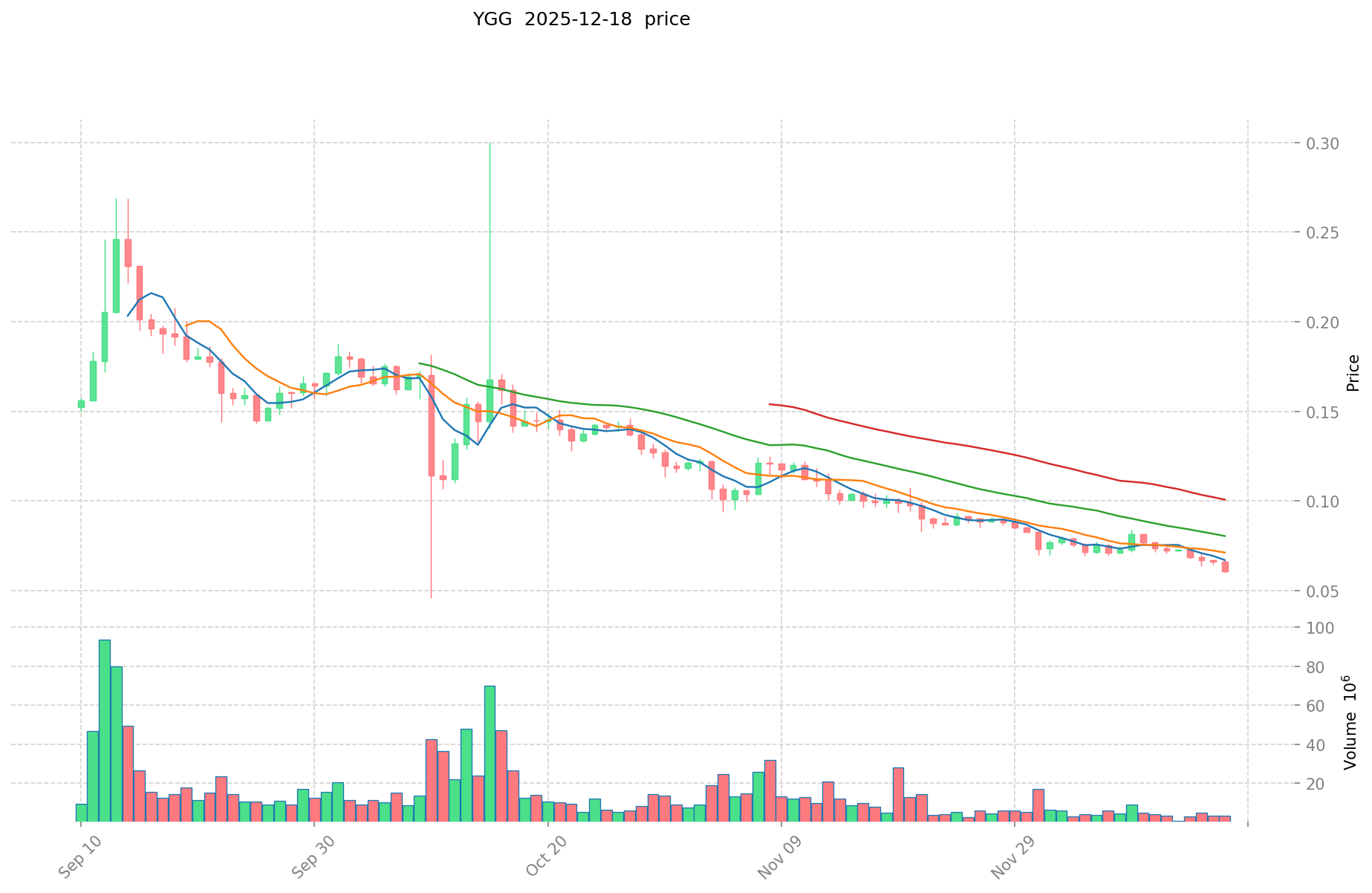
YGG and BTC Historical Price Trends
Yield Guild Games (YGG):
- All-time high: $11.17 (November 21, 2021)
- All-time low: $0.05936 (December 18, 2025)
- Decline from peak: -89.85% over the past year
- Price trajectory: YGG experienced significant depreciation from its 2021 peak, with the token trading near historical lows as of the reporting date
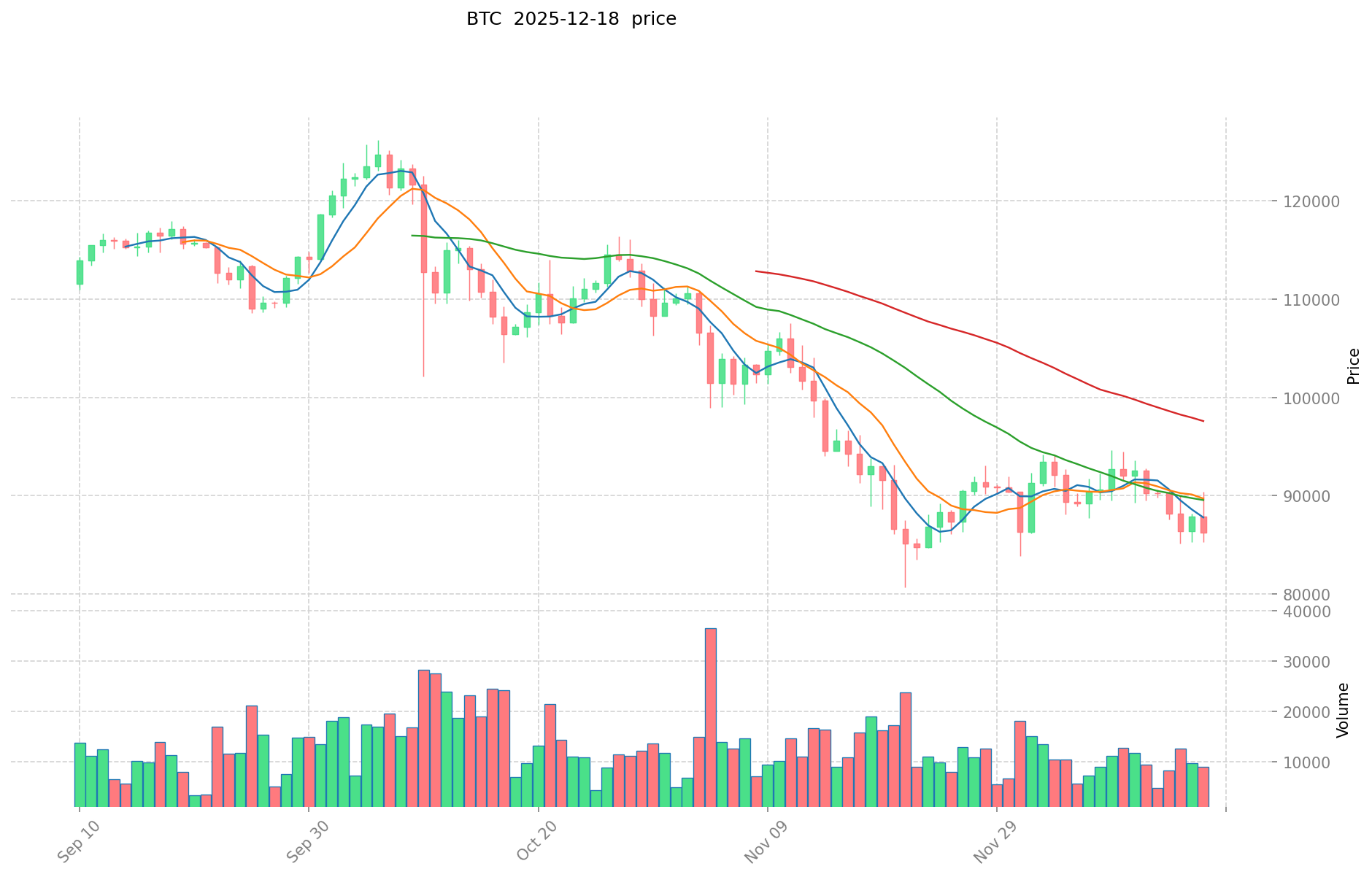
Bitcoin (BTC):
- All-time high: $126,080 (October 7, 2025)
- All-time low: $67.81 (July 6, 2013)
- Year-to-date performance: -17.36% decline
- Price trajectory: Bitcoin maintained relative strength despite recent pullbacks, remaining substantially above its historical lows
Comparative Analysis: YGG has experienced significantly steeper losses than Bitcoin. While BTC declined 17.36% over the past year, YGG plummeted 89.85% during the same period. This stark difference reflects divergent market dynamics: Bitcoin's position as the market's primary asset has provided relative resilience, whereas YGG's gaming-focused utility token faced heightened volatility and sector-specific headwinds.
Current Market Status (December 19, 2025)
Price Metrics:
- YGG current price: $0.06204
- BTC current price: $88,014.90
- 24-hour price change: YGG -1.31%, BTC +0.97%
Trading Activity:
- YGG 24-hour trading volume: $223,590.74
- BTC 24-hour trading volume: $809,522,263.17
- Volume differential: BTC trading volume exceeds YGG by approximately 3,621x
Market Capitalization:
- YGG market cap: $62,022,404.79 (fully diluted valuation)
- BTC market cap: $1,757,113,180,843.50
- Market dominance: BTC holds 55.55% of total cryptocurrency market capitalization, while YGG represents 0.0019%
Market Emotion Index:
- Crypto Fear & Greed Index: 17 (Extreme Fear)
- Interpretation: The market sentiment reflects heightened risk aversion and pessimistic positioning across digital assets
View Real-Time Prices:
- YGG Current Price: Market Data
- BTC Current Price: Market Data
II. Price Performance Across Multiple Timeframes
| Timeframe | YGG Change | BTC Change |
|---|---|---|
| 1 Hour | -0.92% | -0.80% |
| 24 Hours | -1.31% | +0.97% |
| 7 Days | -14.86% | -2.42% |
| 30 Days | -39.64% | -6.34% |
| 1 Year | -89.85% | -17.36% |
Key Observations: The performance divergence widens as the timeframe extends. While both assets show recent hourly weakness, Bitcoin's 24-hour performance demonstrates modest gains, whereas YGG continues declining. The 30-day and 1-year comparisons reveal that YGG's downward pressure significantly exceeds Bitcoin's corrections.
III. Fundamental Characteristics
Yield Guild Games (YGG)
Project Overview: Yield Guild Games is a decentralized autonomous organization (DAO) focused on investing in NFTs based on virtual worlds and blockchain gaming. The project combines NFT and DeFi characteristics, incorporating liquidity mining mechanisms into gaming economies.
Token Utility:
- Staking YGG for token rewards related to all activities
- Staking for exclusive event-specific rewards
- staking for exclusive content access
- DAO governance voting participation
- Exclusive merchandise purchases
- Network service payments
Supply Metrics:
- Circulating supply: 681,815,285.77 YGG (68.18% of total)
- Total supply: 999,716,389.32 YGG
- Maximum supply: 1,000,000,000 YGG
- Active holders: 23,191
Bitcoin (BTC)
Project Overview: Bitcoin is a decentralized digital currency introduced by Satoshi Nakamoto in 2008. It operates as a peer-to-peer electronic cash system utilizing blockchain technology for transaction verification and recording without reliance on central authorities.
Technical Framework:
- Decentralized P2P network architecture
- Cryptographic security mechanisms
- Distributed consensus verification
- Fixed maximum supply preventing artificial manipulation
Supply Metrics:
- Circulating supply: 19,963,796 BTC (95.07% of total)
- Maximum supply: 21,000,000 BTC
- Active holders: 55,001,982
IV. Market Position and Trading Infrastructure
Exchange Availability:
- YGG: Listed on 43 exchanges
- BTC: Listed on 86 exchanges
Contract Address:
- YGG: 0x25f8087EAD173b73D6e8B84329989A8eEA16CF73 (Ethereum network)
- BTC: 0x7130d2a12b9bcbfae4f2634d864a1ee1ce3ead9c (BSC network)
Market Ranking:
- YGG: Rank 554 by market capitalization
- BTC: Rank 1 by market capitalization
V. Risk Assessment and Market Dynamics
YGG Specific Considerations:
- Gaming and metaverse sector volatility
- Dependency on NFT market cycles
- Concentrated holder base (23,191 addresses)
- Extreme price pressure with 89.85% annual decline
- Current trading near all-time lows
BTC Market Characteristics:
- Established network security and adoption
- Significant institutional participation
- Broader market capitalization and liquidity
- Regulatory clarity in multiple jurisdictions
- Recent consolidation within defined trading ranges
VI. Summary
As of December 19, 2025, Bitcoin and Yield Guild Games represent fundamentally different asset categories within the cryptocurrency ecosystem. Bitcoin functions as an established store of value with institutional adoption and network effects supporting its market position. YGG operates as a utility token within the gaming and NFT sectors, experiencing severe valuation compression reflecting broader challenges in these markets.
The extreme fear sentiment index (17/100) suggests heightened market-wide risk aversion, which disproportionately impacts smaller-cap, niche-sector tokens like YGG while providing relative stability to core infrastructure assets like Bitcoin.
Report Date: December 19, 2025
Data Source: Gate Market Data
Disclaimer: This report presents factual market data and technical information. It does not constitute investment advice or recommendations. All cryptocurrency investments carry substantial risk.
Investment Value Analysis: YGG vs BTC
I. Executive Summary
This report analyzes the core investment factors influencing Yield Guild Games (YGG) and Bitcoin (BTC), two distinct assets operating in the cryptocurrency ecosystem. YGG represents the GameFi sector with a current market capitalization of approximately USD 45.3 million, while BTC remains the leading cryptocurrency asset. The analysis reveals strong market correlation (0.87) between these assets, indicating significant industry interconnection.
II. Core Factors Influencing YGG vs BTC Investment Value
A. Supply Mechanism and Tokenomics
Bitcoin:
- Fixed supply mechanism with a maximum cap of 21 million BTC
- Halving events occurring approximately every four years, reducing mining rewards
- Predictable scarcity model driving long-term valuation dynamics
YGG:
- Token distribution model tied to gaming guild operations and community participation
- Supply dynamics influenced by active player engagement and gaming ecosystem development
📌 Historical Pattern: Bitcoin's halving cycle has historically correlated with multi-year price appreciation cycles. YGG's tokenomics remain tied to the broader GameFi ecosystem expansion and virtual economy growth.
B. Institutional Adoption and Market Application
Institutional Holdings:
- Bitcoin demonstrates significant institutional investor participation, with major corporations and funds maintaining substantial holdings
- YGG exhibits lower institutional penetration, primarily driven by gaming communities and Web3 enthusiasts
Market Application:
- Bitcoin: Global reserve asset, cross-border settlement considerations, investment portfolio diversification
- YGG: Gaming ecosystem participation, player monetization, decentralized autonomous organization (DAO) governance for player organization
Regulatory Environment:
- Bitcoin faces evolving regulatory frameworks across different jurisdictions, with increasing acceptance in certain markets
- YGG operates within the GameFi regulatory landscape, subject to gaming and virtual asset regulations varying by region
C. Market Correlation and Industry Dynamics
Industry Resonance Effect: On October 14, the total cryptocurrency market capitalization exceeded USD 2.8 trillion, with Bitcoin surpassing USD 65,000, driving the entire GameFi sector upward. YGG and BTC demonstrated a correlation coefficient of 0.87, indicating strong synchronized movement and significant co-directional effects.
Core Business Model:
- YGG: Operates as a service-type DAO with core business focused on organizing players for in-game monetization activities
- Bitcoin: Functions as decentralized peer-to-peer electronic cash and store of value
D. Macroeconomic Factors and Market Cycles
Liquidity Environment: Bitcoin market dynamics are primarily driven by liquidity considerations rather than technical chart patterns. Three core driving factors currently support Bitcoin markets:
- Expanding global liquidity
- Accelerating institutional capital inflows
- Cryptocurrency-friendly regulatory environment
Monetary Policy Sensitivity:
- U.S. inflation data and Federal Reserve policy direction significantly impact cryptocurrency market valuations
- Global monetary policy trends influence overall market conditions for both BTC and GameFi assets
Market Cyclicality: Both assets operate within broader cryptocurrency market cycles influenced by macroeconomic conditions, geopolitical developments, and shifts in capital allocation toward digital assets.
III. Key Market Indicators
| Metric | Observation |
|---|---|
| Market Cap (YGG) | USD 45,308,229.64 |
| YGG-BTC Correlation | 0.87 |
| BTC Price Reference | USD 65,000+ (October 14) |
| Total Crypto Market Cap | USD 2.8 trillion+ (October 14) |
IV. Conclusion
YGG and BTC operate at different layers of the cryptocurrency ecosystem. Bitcoin functions as a macroeconomic hedge and reserve asset, primarily influenced by global economic conditions and institutional adoption. YGG represents the gaming and virtual economy sector, driven by community participation and GameFi ecosystem development. The strong 0.87 correlation coefficient indicates that both assets respond to broader cryptocurrency market conditions, though their underlying value drivers remain distinct. Investment decisions should reflect these fundamental differences and respective market dynamics.
III. 2025-2030 Price Forecast: YGG vs BTC
Short-term Forecast (2025)
- YGG: Conservative $0.0416-$0.0603 | Optimistic $0.0627
- BTC: Conservative $71,426-$87,105 | Optimistic $101,913
Mid-term Forecast (2027-2028)
- YGG could enter consolidation phase with price recovery trajectory, estimated range $0.0560-$0.0879
- BTC expected to experience sustained growth momentum, projected range $78,516-$136,094
- Key drivers: institutional capital inflows, spot ETF adoption, ecosystem development acceleration
Long-term Forecast (2029-2030)
- YGG: Base case scenario $0.0717-$0.0825 | Optimistic scenario $0.1220-$0.1196
- BTC: Base case scenario $86,682-$127,615 | Optimistic scenario $134,838-$159,518
Disclaimer
The forecasts presented above are based on historical data analysis and market model projections. Cryptocurrency markets are highly volatile and subject to numerous unpredictable factors including regulatory changes, technological developments, and macroeconomic conditions. These predictions should not be considered as investment advice. Past performance does not guarantee future results. Investors should conduct independent research and consult with qualified financial advisors before making investment decisions. Gate and its analysts assume no responsibility for investment outcomes based on these forecasts.
YGG:
| 年份 | 预测最高价 | 预测平均价格 | 预测最低价 | 涨跌幅 |
|---|---|---|---|---|
| 2025 | 0.0627016 | 0.06029 | 0.0416001 | -2 |
| 2026 | 0.07686975 | 0.0614958 | 0.056576136 | 0 |
| 2027 | 0.08786212425 | 0.069182775 | 0.05603804775 | 11 |
| 2028 | 0.0863746945875 | 0.078522449625 | 0.0628179597 | 26 |
| 2029 | 0.12202388671725 | 0.08244857210625 | 0.071730257732437 | 32 |
| 2030 | 0.119616388411747 | 0.10223622941175 | 0.059297013058815 | 64 |
BTC:
| 年份 | 预测最高价 | 预测平均价格 | 预测最低价 | 涨跌幅 |
|---|---|---|---|---|
| 2025 | 101913.318 | 87105.4 | 71426.428 | -1 |
| 2026 | 105850.48208 | 94509.359 | 74662.39361 | 7 |
| 2027 | 109196.1133886 | 100179.92054 | 81145.7356374 | 13 |
| 2028 | 136094.42205359 | 104688.0169643 | 78516.012723225 | 18 |
| 2029 | 134838.1658500184 | 120391.219508945 | 86681.6780464404 | 36 |
| 2030 | 159518.365849352125 | 127614.6926794817 | 91882.578729226824 | 44 |
Yield Guild Games (YGG) vs Bitcoin (BTC): Investment Strategy and Risk Analysis Report
IV. Investment Strategy Comparison: YGG vs BTC
Long-term vs Short-term Investment Strategy
- YGG: Suitable for investors focusing on GameFi ecosystem potential and virtual economy growth. Short-term traders may capitalize on volatility rebounds from current depressed levels; long-term investors should evaluate recovery timeline and market adoption trajectory.
- BTC: Suitable for investors seeking store-of-value characteristics, inflation hedging, and portfolio diversification. Both short-term traders capitalizing on macroeconomic momentum and long-term holders building strategic positions benefit from established institutional infrastructure and network effects.
Risk Management and Asset Allocation
Conservative Investors:
- YGG: 0-5% | BTC: 60-80% (with 15-40% stable coins for liquidity preservation)
- Rationale: Bitcoin's established market position and institutional adoption provide relative stability; minimal YGG exposure reflects current sector weakness.
Aggressive Investors:
- YGG: 10-20% | BTC: 50-70% (with 10-20% allocation to emerging opportunities)
- Rationale: Aggressive positioning allows for higher-risk exposure to potential YGG recovery while maintaining substantial BTC core holdings.
Hedging Tools:
- Stablecoin allocation for volatility management and tactical entry points
- Cross-asset correlation strategies leveraging the 0.87 YGG-BTC correlation coefficient
- Options strategies for defined risk exposure in high-volatility periods (reflected by Fear & Greed Index reading of 17)
V. Potential Risk Comparison
Market Risk
- YGG: Extreme sector-specific volatility with 89.85% annual decline; concentrated holder base (23,191 addresses) creates liquidity concerns; dependency on NFT and metaverse market cycles experiencing prolonged downturns; current trading near all-time lows presents capitulation risk.
- BTC: Macroeconomic sensitivity to Federal Reserve policy and U.S. inflation data; institutional capital concentration creates withdrawal risk during market stress; regulatory uncertainty in certain jurisdictions; recent -17.36% annual decline indicates consolidation rather than structural weakness.
Technology Risk
- YGG: Smart contract security exposure on Ethereum network; DAO governance operational risk with community decision-making processes; protocol sustainability during extended bear markets; reliance on active user engagement for ecosystem viability.
- BTC: Established network security with longest operational history (since 2008); consensus mechanism resilience through distributed mining; potential for future protocol upgrades requiring community coordination; minimal algorithmic vulnerabilities after years of operational testing.
Regulatory Risk
- YGG: GameFi sector faces evolving regulatory frameworks treating gaming tokens and NFT mechanisms with heightened scrutiny; variable compliance requirements across jurisdictions; potential classification challenges as securities or gambling tokens in certain markets.
- BTC: Progressive regulatory acceptance with established compliance frameworks in major economies; institutional adoption reducing regulatory uncertainty; potential for adverse regulatory action remains lower compared to gaming and metaverse-focused tokens; CBDCs development may create competitive pressures.
VI. Conclusion: Which Is the Better Buy?
📌 Investment Value Summary
YGG Advantages:
- Potential recovery opportunity from severe valuation compression (89.85% decline from peak)
- Direct exposure to GameFi ecosystem growth if virtual economy adoption accelerates
- Lower absolute entry price ($0.06204) enables portfolio diversification with minimal capital allocation
- DAO governance participation offers community-aligned value proposition
BTC Advantages:
- Proven store-of-value characteristics with 55.55% cryptocurrency market dominance
- Institutional adoption providing network effects and reduced volatility compared to sector-specific tokens
- Established regulatory clarity and compliance infrastructure across major markets
- Superior liquidity (3,621x trading volume advantage over YGG) enabling efficient entry/exit
- Favorable price forecast trajectory (2025-2030 expected range $71,426-$159,518 vs YGG $0.0416-$0.1220)
- Historical halving cycle correlation supporting long-term appreciation potential
✅ Investment Recommendations
Beginner Investors:
- Allocate primary holdings to BTC (60-80%) for market exposure with lower complexity and established infrastructure
- Maintain 15-40% stablecoin reserves for opportunity-based deployment during extreme fear periods (current Fear & Greed Index of 17 presents such conditions)
- Avoid concentrated YGG positions until ecosystem stabilization indicators emerge; monitor sector sentiment shifts
Experienced Investors:
- Implement diversified strategy: BTC core holdings (50-70%) providing foundation; YGG allocation (10-20%) for speculative recovery exposure
- Deploy tactical strategies leveraging 0.87 correlation coefficient: long-short pairs trading; volatility harvesting during divergence events
- Monitor macroeconomic catalysts (Fed policy, inflation data) driving BTC performance; track GameFi adoption metrics for YGG recovery signals
- Consider time-weighted averaging for YGG accumulation if fundamental developments strengthen; establish predetermined stop-loss levels given sector volatility
Institutional Investors:
- BTC allocation as portfolio hedging instrument against currency devaluation and geopolitical risk; leverage spot ETF infrastructure for efficient capital deployment
- Conduct sector-level analysis before YGG exposure: evaluate gaming partnership pipeline, virtual economy transaction metrics, developer ecosystem activity
- Implement risk-parity frameworks: BTC liquidity advantage (86 exchange listings vs YGG's 43) enables large position sizing without market impact
- Structure hedges through options markets for tail-risk protection; monitor regulatory developments affecting GameFi classification
⚠️ Risk Disclaimer: Cryptocurrency markets demonstrate extreme volatility with factors including regulatory changes, technological developments, and macroeconomic conditions creating unpredictable outcomes. Current market sentiment (Fear & Greed Index: 17) reflects heightened risk aversion and elevated downside exposure. This report presents factual market data and technical analysis; it does not constitute investment advice. Past performance does not guarantee future results. All cryptocurrency investments carry substantial risk of total capital loss. Investors must conduct independent research and consult qualified financial advisors before making investment decisions. Gate and contributing analysts assume no responsibility for investment outcomes.
Report Date: December 19, 2025
Data Source: Gate Market Data
Disclaimer: This analysis reflects market conditions as of the report date and should not be relied upon for time-sensitive investment decisions.
None
Yield Guild Games (YGG) vs Bitcoin (BTC): Frequently Asked Questions
VII. FAQ
Q1: What is the primary difference between YGG and BTC in terms of market position and purpose?
A: Bitcoin (BTC) functions as a decentralized digital currency and store of value, operating since 2008 with the highest cryptocurrency market capitalization ($1.76 trillion) and 55.55% market dominance. Yield Guild Games (YGG) is a utility token launched in 2021 that serves the GameFi ecosystem, enabling player monetization, NFT investments, and DAO governance within virtual worlds and blockchain gaming environments. The fundamental distinction lies in Bitcoin's role as a macro-level asset class versus YGG's positioning as a sector-specific gaming token.
Q2: How significant is the performance gap between YGG and BTC over the past year?
A: The performance divergence is substantial and reflects different market dynamics. Bitcoin declined 17.36% over the past year, maintaining relative strength as a core cryptocurrency asset. Yield Guild Games plummeted 89.85% during the same period, experiencing severe valuation compression from its all-time high of $11.17 (November 2021) to $0.06204 (December 19, 2025). This stark contrast demonstrates heightened sector-specific headwinds affecting gaming and NFT-focused tokens compared to established infrastructure assets like Bitcoin.
Q3: What does the 0.87 correlation coefficient between YGG and BTC indicate for investors?
A: A 0.87 correlation coefficient indicates strong synchronized movement between the two assets, meaning both respond together to broader cryptocurrency market conditions and liquidity cycles. However, this correlation does not eliminate asset-specific risks; YGG's significantly steeper declines (89.85% vs BTC's 17.36%) demonstrate that sector fundamentals and individual token dynamics create divergent outcomes despite high correlation. Investors utilizing these assets for portfolio diversification should recognize this synchronized movement while maintaining awareness of YGG's additional exposure to GameFi sector volatility.
Q4: Which asset demonstrates superior long-term investment potential based on price forecasts through 2030?
A: Bitcoin projects substantially higher appreciation potential according to 2025-2030 forecasts. BTC base case scenario estimates $86,682-$127,615 range by 2030 with optimistic scenarios reaching $134,838-$159,518, representing 44-80% appreciation from current levels. YGG forecasts project $0.0717-$0.1220 range by 2030 (32-96% appreciation from current $0.06204), indicating lower absolute return magnitude. Bitcoin's established institutional adoption, regulatory clarity, and predictable halving cycle mechanics support more optimistic long-term projections compared to YGG's recovery trajectory from extreme valuation compression.
Q5: How should risk-averse investors allocate between YGG and BTC given the current extreme fear market sentiment (Fear & Greed Index: 17)?
A: Conservative investors should maintain minimal YGG exposure (0-5% portfolio allocation) and concentrate holdings in Bitcoin (60-80%) supplemented by 15-40% stablecoin reserves. The extreme fear sentiment (index value 17/100) reflects heightened market-wide risk aversion disproportionately impacting smaller-cap niche-sector tokens like YGG while providing relative stability to core infrastructure assets like Bitcoin. The liquidity differential (BTC trading volume 3,621x higher than YGG) and market dominance advantage ($1.76 trillion vs $62 million market cap) position Bitcoin as the superior risk-adjusted choice during periods of heightened market stress and capital flight toward established assets.
Q6: What specific factors should trigger increased YGG allocation for growth-oriented investors?
A: Growth-oriented investors should monitor three core YGG recovery catalysts before increasing allocation above 10-20% levels: (1) Stabilization of NFT and metaverse market cycles with renewed developer partnership announcements and gaming studio collaborations; (2) Active holder growth exceeding current 23,191 addresses with expanding DAO governance participation; (3) Macroeconomic shifts toward expansionary monetary policy reducing current extreme fear sentiment. Additionally, track virtual economy transaction metrics, on-chain player engagement data, and blockchain gaming adoption rates. Establish predetermined entry points at price recovery milestones ($0.10-$0.15 range) rather than deploying capital at current depressed levels without fundamental improvement signals.
Q7: How do regulatory risks differ between YGG and BTC, and what implications exist for investment decisions?
A: Bitcoin faces progressive regulatory acceptance with established compliance frameworks across major economies, creating lower classification uncertainty. YGG operates within evolving GameFi sector regulations subject to heightened scrutiny regarding gaming token mechanisms, NFT treatment, and potential securities classification. Variable compliance requirements across jurisdictions create additional uncertainty; certain markets may implement restrictions on gaming tokens classified as gambling instruments or unregistered securities. Institutional investors should prioritize Bitcoin allocation (50-70%) for regulatory clarity while maintaining limited YGG exposure (10-20%) until the sector achieves standardized regulatory framework clarity. Monitor regulatory developments affecting virtual asset classification; adverse rulings could trigger additional YGG depreciation while Bitcoin maintains relative regulatory resilience.
Q8: What liquidity and exchange access considerations should influence YGG versus BTC investment decisions?
A: Bitcoin demonstrates superior market infrastructure with listings on 86 exchanges versus YGG's 43 exchanges, creating substantial liquidity advantages. BTC 24-hour trading volume ($809.5 million) exceeds YGG ($223,591) by approximately 3,621 times, enabling efficient large position sizing without material market impact for Bitcoin. This liquidity differential proves critical for institutional investors and those requiring tactical flexibility; Bitcoin positions can be entered, managed, and exited with minimal slippage, while YGG positions face higher execution costs and potential liquidity constraints during market stress periods. Risk-averse investors and those prioritizing capital deployment flexibility should weight BTC allocation higher (60-80%) to ensure portfolio liquidity and operational flexibility. YGG allocation should reflect acceptance of reduced liquidity and potential exit challenges during market downturns when trading volumes contract further.
Report Date: December 19, 2025
Data Source: Gate Market Data
Disclaimer: This FAQ section presents factual market analysis and technical information based on available data. It does not constitute investment advice, financial recommendations, or investment guarantees. Cryptocurrency markets exhibit extreme volatility subject to regulatory changes, technological developments, and unpredictable macroeconomic conditions. Past performance does not guarantee future results. All cryptocurrency investments carry substantial risk of capital loss. Investors must conduct independent research and consult qualified financial advisors before making investment decisions.
Share
Content
Introduction: YGG vs BTC Investment Comparison
I. Historical Price Comparison and Current Market Status
II. Price Performance Across Multiple Timeframes
III. Fundamental Characteristics
IV. Market Position and Trading Infrastructure
V. Risk Assessment and Market Dynamics
VI. Summary
I. Executive Summary
II. Core Factors Influencing YGG vs BTC Investment Value
III. Key Market Indicators
IV. Conclusion
Short-term Forecast (2025)
Mid-term Forecast (2027-2028)
Long-term Forecast (2029-2030)
Disclaimer
IV. Investment Strategy Comparison: YGG vs BTC
V. Potential Risk Comparison
VI. Conclusion: Which Is the Better Buy?
VII. FAQ
How to Buy Cryptocurrency


Trending Cryptocurrencies



2025 RON Price Prediction: Analyzing Growth Potential in the Play-to-Earn Gaming Ecosystem

Is Sidus (SIDUS) a good investment?: Analyzing the Potential and Risks of this Gaming Cryptocurrency

2025 UNA Price Prediction: Bullish Trends and Key Factors Shaping the Token's Future Value
MORE vs ENJ: Comparing Two Leading Blockchain Gaming Tokens
2025 GMEE Price Prediction: Analyzing Market Trends and Potential Growth Factors
GOG vs LINK: The Battle for Digital Distribution Supremacy in the Gaming Industry

Understanding Consortium Blockchains: A Beginner's Guide
Copy Trading Made Simple: Learn How to Follow Expert Traders
Understanding Futures Funding Rates in Crypto Trading and Their Importance
What is FDV in Crypto Assets? The importance of Fully Diluted Valuation for investors.
Top NFT Wallets for Bitcoin Ordinals