This comprehensive analysis compares ZKWASM and BCH as investment assets in the blockchain scalability era. ZKWASM, launched in 2025, represents emerging zero-knowledge proof technology enabling verifiable off-chain computation and modular rollup architecture, currently trading at $0.006457. BCH, operational since 2017, provides established peer-to-peer payment infrastructure focused on transaction efficiency and merchant adoption, priced at $533.28. The article examines historical price trends, supply mechanisms, institutional adoption, technology ecosystems, and market forecasts through 2031 to help investors understand both assets' distinct positioning. While BCH offers established market presence and higher liquidity with $6,419,812 daily volume, ZKWASM presents emerging technology exposure with growth potential. Conservative investors may favor BCH's stability and proven utility, while technology-focused investors might consider ZKWASM's innovation potential. Investment decisions should reflect individua
Introduction: Investment Comparison Between ZKWASM and BCH
In the cryptocurrency market, the comparison between ZKWASM vs BCH has become a topic that investors cannot overlook. These two assets demonstrate significant differences in market capitalization ranking, application scenarios, and price performance, representing distinct positioning within the crypto asset landscape.
ZKWASM (ZKWASM): Launched in 2025, it has gained market recognition through its positioning as the first open-source virtual machine enabling zero-knowledge proof generation for WebAssembly, supporting verifiable off-chain computation and modular rollup architecture.
BitcoinCash (BCH): Since its launch in 2017, it has been recognized as a scalable peer-to-peer electronic cash system, representing one of the cryptocurrencies with substantial global trading volume and market capitalization.
This article will provide a comprehensive analysis of the investment value comparison between ZKWASM vs BCH, focusing on historical price trends, supply mechanisms, institutional adoption, technical ecosystems, and future projections, attempting to address investors' most pressing question:
"Which is the better buy right now?"
I. Historical Price Comparison and Current Market Status
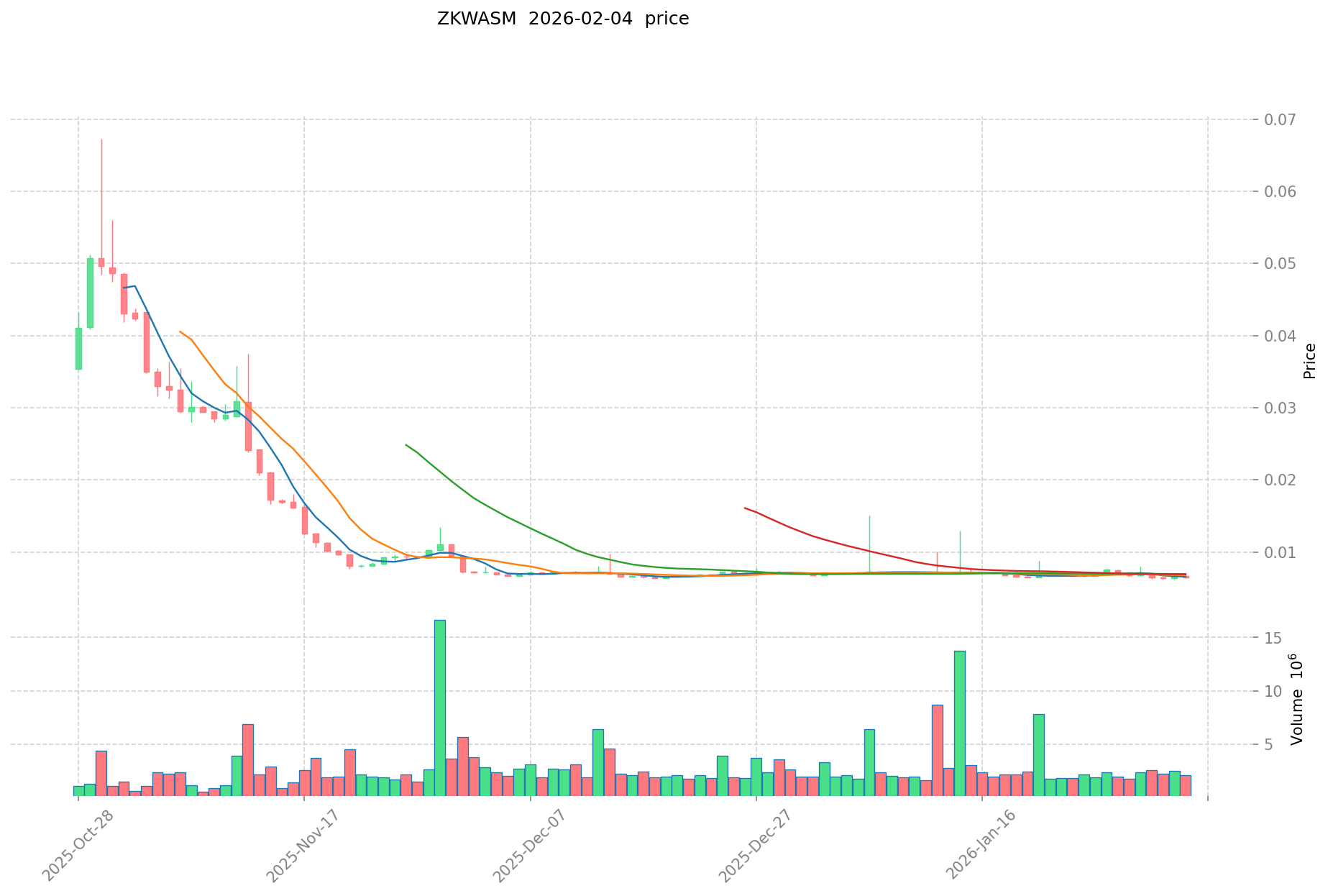
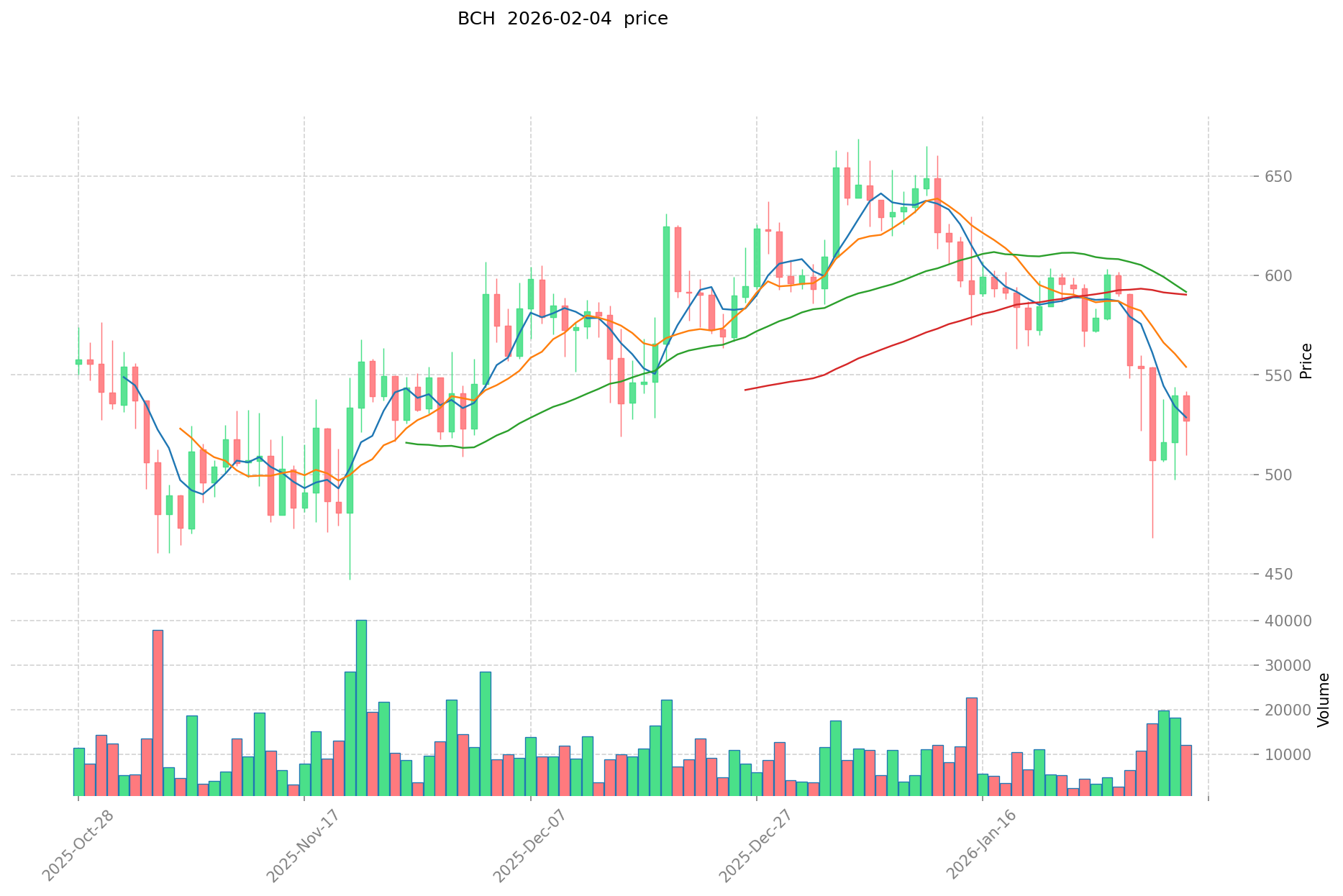
ZKWASM and BCH Historical Price Trends
- 2025: ZKWASM reached a notable price level of $0.17412 in August 2025, representing a significant milestone since its market debut in July 2025.
- 2017-2018: BCH experienced substantial volatility during this period, reaching an elevated price point of $3,785.82 in December 2017, followed by a decline to $76.93 by December 2018.
- Comparative Analysis: During the recent market cycle, ZKWASM declined from $0.17412 to $0.006154, while BCH fluctuated from $3,785.82 to its current range, demonstrating different volatility patterns between an emerging asset and an established cryptocurrency.
Current Market Situation (2026-02-04)
- ZKWASM Current Price: $0.006457
- BCH Current Price: $533.28
- 24-Hour Trading Volume: ZKWASM recorded $13,845.77957 compared to BCH's $6,419,812.89326
- Market Sentiment Index (Fear & Greed Index): 14 (Extreme Fear)
View real-time prices:
II. Core Factors Influencing ZKWASM vs BCH Investment Value
Supply Mechanism Comparison (Tokenomics)
- ZKWASM: The reference materials do not provide specific information about ZKWASM's supply mechanism or tokenomics model.
- BCH: BCH implements a halving mechanism similar to Bitcoin's deflationary model, with block rewards reducing over time to control supply inflation.
- 📌 Historical Pattern: Fixed supply caps in crypto assets tend to create scarcity effects that correlate with price cycles, as historical data suggests supply mechanism changes often align with significant price movements.
Institutional Adoption and Market Applications
- Institutional Holdings: BCH benefits from broader institutional recognition due to its established market presence and historical connection to Bitcoin, though specific institutional preference data between these assets is not detailed in available materials.
- Enterprise Adoption: BCH has gained traction in cross-border payments and merchant settlements due to its transaction speed advantages. ZKWASM's enterprise applications primarily focus on zero-knowledge proof technology implementations in computational verification scenarios.
- National Policies: Regulatory attitudes toward both assets vary by jurisdiction, with BCH generally subject to cryptocurrency regulations similar to Bitcoin, while ZKWASM's regulatory landscape remains less defined due to its emerging technology status.
Technology Development and Ecosystem Building
- ZKWASM Technology Upgrades: ZKWASM leverages zero-knowledge WebAssembly technology to enable scalable and privacy-preserving computational verification. Its development focuses on ZK Rollup solutions and computational finance (ComputeFi) applications.
- BCH Technology Development: BCH continues to optimize for faster transaction processing and lower fees compared to Bitcoin's base layer, maintaining focus on payment efficiency and network scalability.
- Ecosystem Comparison: BCH has established presence in payment infrastructure and merchant adoption networks. ZKWASM's ecosystem centers on emerging applications in DeFi protocols requiring zero-knowledge proofs and privacy-preserving smart contracts, though its ecosystem remains in earlier development stages compared to BCH.
Macroeconomic Environment and Market Cycles
- Performance Under Inflation: Both assets face exposure to crypto market volatility. BCH's longer market history provides more data points for inflation-hedge assessment, while ZKWASM's anti-inflation properties remain largely untested.
- Macroeconomic Monetary Policy: Interest rate changes and US dollar index fluctuations affect both cryptocurrencies through their impact on overall crypto market liquidity and risk appetite. Higher interest rates typically correlate with reduced speculative investment in crypto assets.
- Geopolitical Factors: Cross-border transaction demand may favor BCH given its established payment infrastructure. International regulatory developments and technological sovereignty considerations could impact both assets, though specific geopolitical positioning differs based on their respective use cases.
III. 2026-2031 Price Forecast: ZKWASM vs BCH
Short-term Forecast (2026)
- ZKWASM: Conservative $0.0038904 - $0.006484 | Optimistic $0.006484 - $0.00752144
- BCH: Conservative $378.7211 - $533.41 | Optimistic $533.41 - $794.7809
Mid-term Forecast (2028-2029)
- ZKWASM may enter a gradual growth phase, with projected price range of $0.006800341392 - $0.0139145446944
- BCH may enter an expansion phase, with projected price range of $478.01590491 - $1357.03854225255
- Key drivers: institutional capital inflows, ETF developments, ecosystem expansion
Long-term Forecast (2030-2031)
- ZKWASM: Baseline scenario $0.008058906728576 - $0.0121883041872 | Optimistic scenario $0.014138432857152 - $0.016088561527104
- BCH: Baseline scenario $851.66372110360575 - $1166.662631648775 | Optimistic scenario $1306.662147446628 - $1698.6607916806164
View detailed price predictions for ZKWASM and BCH
Disclaimer
ZKWASM:
| Year |
Predicted High Price |
Predicted Average Price |
Predicted Low Price |
Price Change |
| 2026 |
0.00752144 |
0.006484 |
0.0038904 |
0 |
| 2027 |
0.0104340528 |
0.00700272 |
0.0042716592 |
8 |
| 2028 |
0.01220574096 |
0.0087183864 |
0.006800341392 |
35 |
| 2029 |
0.0139145446944 |
0.01046206368 |
0.006800341392 |
62 |
| 2030 |
0.016088561527104 |
0.0121883041872 |
0.008288046847296 |
88 |
| 2031 |
0.015269507485724 |
0.014138432857152 |
0.008058906728576 |
118 |
BCH:
| Year |
Predicted High Price |
Predicted Average Price |
Predicted Low Price |
Price Change |
| 2026 |
794.7809 |
533.41 |
378.7211 |
0 |
| 2027 |
956.297448 |
664.09545 |
411.739179 |
24 |
| 2028 |
1142.37699309 |
810.196449 |
478.01590491 |
51 |
| 2029 |
1357.03854225255 |
976.286721045 |
615.06063425835 |
83 |
| 2030 |
1446.661663244481 |
1166.662631648775 |
851.66372110360575 |
118 |
| 2031 |
1698.6607916806164 |
1306.662147446628 |
1162.92931122749892 |
145 |
IV. Investment Strategy Comparison: ZKWASM vs BCH
Long-term vs Short-term Investment Strategies
- ZKWASM: May appeal to investors interested in emerging zero-knowledge proof technology applications and computational verification solutions. The asset's early-stage positioning suggests potential alignment with investors seeking exposure to nascent blockchain infrastructure developments.
- BCH: May suit investors focusing on established payment infrastructure and peer-to-peer transaction utility. Its longer market history provides more observable performance patterns across different market cycles.
Risk Management and Asset Allocation
- Conservative Investors: Consideration might be given to higher allocation toward BCH given its established market presence, while maintaining limited exposure to ZKWASM as an emerging technology position.
- Aggressive Investors: Portfolio construction might incorporate increased allocation to ZKWASM for technology-focused positioning, balanced with BCH exposure for diversification across different cryptocurrency use cases.
- Hedging Tools: Portfolio risk management approaches may include stablecoin reserves for liquidity management, derivative instruments where available, and cross-asset diversification strategies.
V. Potential Risk Comparison
Market Risk
- ZKWASM: The asset faces volatility associated with early-stage market positioning and limited trading history. Price movements demonstrate significant fluctuation patterns, with the asset experiencing substantial decline from $0.17412 to $0.006154 during its initial trading period. Lower trading volumes of $13,845.77957 may contribute to liquidity considerations.
- BCH: The asset demonstrates volatility patterns observed across its market history since 2017, including price movements from elevated levels of $3,785.82 to various range-bound periods. Trading volume of $6,419,812.89326 reflects more established market activity compared to ZKWASM.
Technology Risk
- ZKWASM: The asset's reliance on zero-knowledge WebAssembly technology presents considerations related to implementation maturity and ecosystem development stages. Network stability and computational verification scalability remain subject to ongoing development processes.
- BCH: Technical considerations include network consensus mechanisms and blockchain scalability approaches. The asset's fork history and ongoing development direction represent factors for technical assessment.
Regulatory Risk
- Global regulatory frameworks continue to evolve across jurisdictions, affecting both assets differently based on their respective technological characteristics and use cases. BCH's classification tends to align with established cryptocurrency regulatory approaches, while ZKWASM's positioning within zero-knowledge proof technology may encounter evolving regulatory considerations as authorities develop frameworks for privacy-preserving computational technologies.
VI. Conclusion: Which Is the Better Buy?
📌 Investment Value Summary:
- ZKWASM Characteristics: The asset represents exposure to zero-knowledge proof technology and computational verification applications. Its early-stage positioning offers potential participation in emerging blockchain infrastructure development, though accompanied by considerations related to limited market history and ecosystem maturity.
- BCH Characteristics: The asset provides exposure to established peer-to-peer payment infrastructure with observable performance history across multiple market cycles. Its positioning in cross-border transactions and merchant adoption networks reflects developed use case implementation.
✅ Investment Considerations:
- Beginning Investors: Consideration might be given to assets with more established market history and observable performance patterns. Thorough research into cryptocurrency fundamentals, including technology architecture and use case validation, remains important before allocation decisions.
- Experienced Investors: Portfolio construction approaches may incorporate diversification across different cryptocurrency categories, balancing exposure between established assets and emerging technology positions based on individual risk tolerance and investment objectives.
- Institutional Investors: Investment frameworks might emphasize comprehensive due diligence processes, including technology assessment, regulatory compliance evaluation, and liquidity analysis. Portfolio allocation strategies may reflect institutional risk management protocols and investment mandate requirements.
⚠️ Risk Disclosure: Cryptocurrency markets demonstrate significant volatility characteristics. This content does not constitute investment advice, financial guidance, or trading recommendations. Investment decisions should reflect individual circumstances, risk tolerance, and comprehensive research processes.
VII. FAQ
Q1: What are the fundamental differences between ZKWASM and BCH as investment assets?
ZKWASM represents an emerging zero-knowledge proof technology platform launched in 2025, while BCH is an established peer-to-peer payment cryptocurrency operational since 2017. ZKWASM functions as an open-source virtual machine enabling zero-knowledge proof generation for WebAssembly, supporting verifiable off-chain computation and modular rollup architecture. Its current price stands at $0.006457 with 24-hour trading volume of $13,845.77957. BCH operates as a scalable electronic cash system focused on transaction efficiency, currently priced at $533.28 with substantially higher trading volume of $6,419,812.89326. The fundamental distinction lies in their technological focus: ZKWASM targets computational verification and privacy-preserving applications within DeFi protocols, whereas BCH emphasizes payment infrastructure and merchant adoption networks with demonstrated utility in cross-border transactions.
Q2: How do the historical price movements of ZKWASM and BCH compare?
BCH has experienced significant volatility since its 2017 launch, reaching $3,785.82 in December 2017 before declining to $76.93 by December 2018, while ZKWASM, launched in July 2025, achieved a notable price of $0.17412 in August 2025 before declining to $0.006154. BCH's longer market history provides observable performance patterns across multiple market cycles spanning nearly nine years, whereas ZKWASM's trading history extends only several months. The assets demonstrate different volatility characteristics: BCH shows established cryptocurrency market dynamics with substantial price ranges, while ZKWASM exhibits early-stage asset behavior with rapid price adjustments during its initial market introduction period. BCH's current price of $533.28 reflects market stabilization compared to its historical peaks, while ZKWASM's $0.006457 price point represents significant adjustment from its August 2025 levels.
Q3: What are the projected price forecasts for ZKWASM and BCH through 2031?
Short-term forecasts for 2026 project ZKWASM between conservative range of $0.0038904 - $0.006484 and optimistic range of $0.006484 - $0.00752144, while BCH forecasts range from conservative $378.7211 - $533.41 to optimistic $533.41 - $794.7809. Mid-term projections for 2028-2029 suggest ZKWASM may reach $0.006800341392 - $0.0139145446944, while BCH could expand to $478.01590491 - $1357.03854225255. Long-term forecasts for 2030-2031 indicate ZKWASM baseline scenario of $0.008058906728576 - $0.0121883041872 with optimistic potential of $0.014138432857152 - $0.016088561527104, whereas BCH baseline scenario projects $851.66372110360575 - $1166.662631648775 with optimistic range of $1306.662147446628 - $1698.6607916806164. These projections reflect different growth trajectories based on ecosystem development, institutional adoption patterns, and technology maturity stages.
Q4: Which asset presents lower risk exposure for conservative investors?
BCH presents characteristics more aligned with conservative investment approaches due to its established market presence since 2017, higher trading volume of $6,419,812.89326 compared to ZKWASM's $13,845.77957, and observable performance history across multiple cryptocurrency market cycles. BCH demonstrates developed use case implementation in payment infrastructure and merchant adoption networks, providing verifiable utility metrics. ZKWASM, as an emerging technology launched in 2025, carries considerations associated with early-stage market positioning, limited trading history, and ecosystem maturity development. The substantial decline from ZKWASM's $0.17412 to $0.006154 during its initial period illustrates volatility patterns typical of nascent assets. Conservative portfolio construction might emphasize higher allocation toward BCH while maintaining limited exposure to ZKWASM as an emerging technology position, subject to individual risk tolerance and comprehensive research processes.
Q5: How do liquidity considerations differ between ZKWASM and BCH?
Liquidity characteristics demonstrate substantial differences between these assets. BCH's 24-hour trading volume of $6,419,812.89326 reflects significantly higher market activity compared to ZKWASM's $13,845.77957, representing approximately 463 times greater trading volume. Higher liquidity in BCH facilitates easier position entry and exit with potentially reduced price impact during transactions, particularly beneficial for larger allocation sizes. ZKWASM's lower trading volume may present liquidity considerations affecting order execution, particularly for substantial transaction sizes, potentially resulting in greater price slippage. BCH's established presence across multiple trading platforms and broader market maker participation contributes to its enhanced liquidity profile. For investors prioritizing liquidity management and position flexibility, BCH's trading volume characteristics may align more closely with liquidity requirements, while ZKWASM's trading activity reflects early-stage market development patterns requiring consideration in portfolio construction approaches.
Q6: What role do technology ecosystems play in differentiating ZKWASM and BCH investment value?
Technology ecosystems represent distinct value propositions for these assets. BCH maintains established presence in payment infrastructure with demonstrated merchant adoption networks and cross-border transaction implementations, reflecting mature ecosystem development with verifiable utility metrics. ZKWASM's ecosystem centers on emerging applications in computational verification, zero-knowledge proof implementations, and privacy-preserving smart contracts within DeFi protocols, though remaining in earlier development stages. BCH's technology development focuses on transaction processing optimization and network scalability for payment efficiency, building upon nearly nine years of operational experience. ZKWASM leverages zero-knowledge WebAssembly technology for ZK Rollup solutions and computational finance applications, representing newer technological approaches within blockchain infrastructure. Ecosystem maturity differences suggest BCH provides exposure to established payment utility with observable adoption patterns, while ZKWASM offers participation in emerging computational verification technology development subject to implementation validation and ecosystem growth processes.
* The information is not intended to be and does not constitute financial advice or any other recommendation of any sort offered or endorsed by Gate.