

Trade
Basic
Futures
Futures
Hundreds of contracts settled in USDT or BTC
TradFi
Gold
Trade global traditional assets with USDT in one place
Options
Hot
Trade European-style vanilla options
Unified Account
Maximize your capital efficiency
Demo Trading
Futures Kickoff
Get prepared for your futures trading
Futures Events
Participate in events to win generous rewards
Demo Trading
Use virtual funds to experience risk-free trading
Earn
Launch
CandyDrop
Collect candies to earn airdrops
Launchpool
Quick staking, earn potential new tokens
HODLer Airdrop
Hold GT and get massive airdrops for free
Launchpad
Be early to the next big token project
Alpha Points
Trade on-chain assets and enjoy airdrop rewards!
Futures Points
Earn futures points and claim airdrop rewards
Investment
Simple Earn
Earn interests with idle tokens
Auto-Invest
Auto-invest on a regular basis
Dual Investment
Buy low and sell high to take profits from price fluctuations
Soft Staking
Earn rewards with flexible staking
Crypto Loan
0 Fees
Pledge one crypto to borrow another
Lending Center
One-stop lending hub
VIP Wealth Hub
Customized wealth management empowers your assets growth
Private Wealth Management
Customized asset management to grow your digital assets
Quant Fund
Top asset management team helps you profit without hassle
Staking
Stake cryptos to earn in PoS products
Smart Leverage
New
No forced liquidation before maturity, worry-free leveraged gains
GUSD Minting
Use USDT/USDC to mint GUSD for treasury-level yields

More


Coinbase-supported Kontigo faces service cuts from multiple financial institutions due to Venezuela sanctions controversy
41m ago
HTX DeepThink: Wosh's nomination sparks a reversal of expectations, and the market re-prices the Federal Reserve's "lower bound" path
2h ago
Trending Topics
View More378.4K Popularity
7.03K Popularity
7K Popularity
4.2K Popularity
2.81K Popularity




Pin
Crypto 2029: The Dawn of a New Order
Written by: hitesh.eth
Compiled by: Shan Ouba, Golden Finance
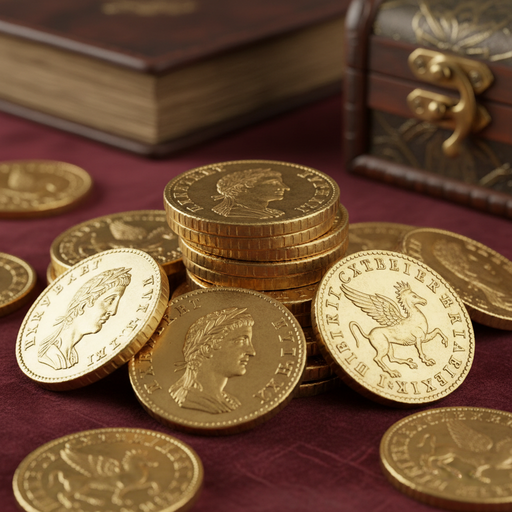
In 2029. Bitcoin has become the new consensus of investors around the world. This year, its price topped $500,000, but it wasn’t a sudden spike, but a decade-long battle of narrative reversals, government compromises, and institutional rule changes. Today, billions of people around the world are hoarding sats, the smallest unit of Bitcoin, in a variety of ways. Just as people used to buy gold jewellery to pass it down from generation to generation, families now sit around and calculate how much they can leave to their descendants.
Bitcoin has already become a new asset class—one that doesn’t require regulation to prove its value. It is bought like collectibles, stored in decentralized vaults, and viewed as a family heirloom passed down through generations. Those millennials who mocked Bitcoin in their twenties are now caught in an unprecedented FOMO. It’s no longer a competition for status, but a race for survival. Bitcoin is no longer just currency; it symbolizes a passport. A passport to community, resources, and security.
Bitcoin is now the most popular financial instrument in human history—surpassing gold, stocks, and even government bonds. This asset has achieved the highest compound returns over the past 20 years and is now included in the standard investment portfolios of every financial advisor. Client managers who once promoted mutual funds and insurance plans are now also selling Bitcoin with the same professional smile and skilled tone.
Even the finance ministries of developed countries now hold Bitcoin as a hedging tool—this was an unimaginable scenario ten years ago. More than 100 listed companies have included BTC in their balance sheets. It is not just a hedging asset, but the foundational layer of the new economic order.
Those who held Bitcoin in the early days and steadfastly refused to sell during global skepticism have become the new elite. They call themselves “Bitcoiners.” But this is not just an identity; it is a movement, a philosophy, a new religion. Its moral foundation is monetary freedom, self-education, and non-traditional marriage contracts.
They drafted their own laws, wrote their own code, and formed an alliance that rejects state control. They did what the government fears the most - they exited the existing system.
They have established “Bitcoin Island” — a sovereign nation located somewhere in the Pacific, entirely funded by BTC. Initially, there were only 100 citizens, but now over ten thousand people live here — mostly early users, developers, investors, and thinkers. This island has its own passports and a decentralized identity system, and it has become a tourist destination. Blue skies, clear waters, no taxes, psychedelic rituals, armed privacy… everything that is illegal elsewhere becomes legal and accessible here through self-regulation. Every transaction is recorded on the public chain; however, freedom is absolute.
But this island has started to rot.
Bitcoin billionaires now regard outsiders as inferior. A hidden colonial mentality is taking root. They exchange services for coins—but the tone is filled with imperialistic undertones, with the aim of subjugation. As the external world’s economy collapses, this island begins to shape itself into a new power center—the next “America.” Outsiders voluntarily sign subjugation contracts in desperation and hunger. Bitcoiners no longer hide their dominance but rather begin to relish it.
And the core of this movement is Satoshi Nakamoto.
The pseudonymous creator of Bitcoin has become a deity. Not just symbolically. Today, there are over 100 “Nakamoto temples” around the world. Ceremonies are held weekly—people chant the SHA-256 hash and meditate on the principles of decentralization. These temples also serve as recruiting centers. Potential candidates must go through a screening process, and if deemed “qualified,” they will be sent to Bitcoin Island for training. The religious fervor surrounding Satoshi Nakamoto has reached a level of deification—his white paper has become a combination of the new Bhagavad Gita, the Quran, and the Bible.
And outside the island - it’s a different scene.
The global economy is in ruins. The debt bubble in the United States has finally burst. The post-Bretton Woods system cannot withstand the pressure of artificial markets, and the dominoes are falling. Inflation has reached unprecedented levels. Fiat currency has collapsed, and savings have been wiped out. People have lost their jobs, homes, and even their sanity.
AI agents—products trained on the entirety of human internet memory—have taken over white-collar jobs. Programmers, writers, lawyers, consultants… none are spared. Even psychologists have been replaced by highly personalized AI companions. Companies rely on AI to improve efficiency but have laid off millions of employees. “Human inefficiency” has no place to exist anymore. We have optimized ourselves to extinction.
To escape, people chose the “metaverse.”
The new toys of the middle class are no longer cars or houses, but a VR headset. This headset has become a window to a better life - the only life worth having. In the metaverse, they can design their own homes, lovers, and jobs. They are gods in the sandbox. Interpersonal relationships have changed. Physical intimacy has been replaced by sensory simulation. People spend 80% of their time in virtual spaces. 90% of communication happens on digital platforms. Families are just a group of avatars in the same virtual room. Touch has disappeared. Eye contact has been forgotten. Consciousness begins to blur. Reality has become an option.
And the real world is becoming darker.
Discussions of nuclear strikes have become commonplace. Every country has its hand on the button. Everyone feels threatened. News spreads rumors of conflict every day. Major cities have begun to rehearse evacuation plans again. Children are learning survival strategies. The world is plunged into collective panic, and the metaverse has become the last refuge.
But in the chaos, heroes emerged.
They did not wear cloaks, nor were they funded by billionaires. They are teachers, programmers, philosophers. They have no weapons, only consciousness. These people — known as the “Secret Circle” — began to help others “pull the plug,” teaching them how to breathe, teaching them how to feel, teaching them to remember what it means to “be alive.” But before awakening others, they must first cleanse their own mental ecology.
Spirituality has become a business. Workshops, courses, and “Master Coins” are emerging one after another. Every retreat center has turned into a paid app. Speculators have turned healing into a performance, draining people’s wallets with false promises. People are starting to feel betrayed by “inner work,” and the term “spirituality” has lost its meaning.
So these superheroes began to reshape the field. They return to classic texts, practice in silence, and help others one-on-one. There are no price tags, no labels, only pure intentions. They are slowly building a new culture—one that is not based on control or escape, but rather centered around “balance.”
Some people still believe in the crypto world—not in its current form as a casino, but in the technology behind it: cryptography, privacy, decentralized value transfer. They still believe that these technologies have the power to liberate. But what pains them the most is seeing the crypto world turn into a scam.
The tools they once revered as sacred are now used to deceive the innocent. Worthless meme coins, Ponzi farms on the blockchain, influencers dumping on their fans at peak prices. People have lost trust, viewing cryptocurrency as a playground for the dark web. And the original believers—the cryptographers—have been crushed.
But they did not give up.
A new movement has been born. “The Anarchist Manifesto 2.0”
This is not just a piece of text, but a digital charter. A declaration that calls for builders, not speculators. It aims to form an alliance of enterprises that upholds the original spirit of crypto — transparency, privacy, and value exchange. They are re-starting to build tools, not issue tokens; building systems, not speculating. A new era has begun.
The “Manifesto of Crypto Anarchists 2.0” spreads like wildfire through encrypted channels, transmitted through QR code tattoos at underground gatherings, whispering and diffusing in zero-knowledge networks. It does not promise wealth, but demands integrity. It criticizes those extremists who have become oligarchs, questioning every project that claims to “change the world” but is merely aimed at pumping the market. Most importantly, it reminds the world why Bitcoin—and cryptocurrencies in general—were originally created: to break the monopoly on “trust.”
This underground renaissance is devoid of ostentation. There are no glamorous conferences, no internet celebrity platforms, only Git commits, research papers, and anonymous nodes reconnecting like neurons reactivated in a sleeping brain. Small collectives gather again in abandoned buildings, forests, and repurposed bunkers. They are not only coding but also contemplating: Can identity be rebuilt without government intervention? Can a child born in 2030 live a life without surveillance? Can the distribution of value be achieved solely through protocol incentives, detached from profit motives?
In this silent storm, the “Secret Circle” and “Crypto Anarchists” begin to intersect.
They realized that the realization of freedom is not only at the technical level but also must be at the spiritual level. A person cannot meditate in a surveillance society; and if the soul is still hollow, no matter how powerful the privacy technology, it is of no use. Thus, they began the “fusion” – the unity of code and consciousness. They do not wear robes, nor do they build blockchains for billionaires. They create libraries for free thinkers and deploy nodes in temples. Their “law” is online rate, and their mantra is: “Verify, then trust.” Their practice of encryption is as sacred, precise, and altruistic as others’ prayers.
By 2030, a whisper began to circulate in the most unexpected corners of the Earth:
Decentralized Soul.
No one knows its origin, but it has become the slogan of the new era.
People have built fortresses on their islands for Bitcoin - but the real future is quietly being constructed in the ruins, completed by those who still remember ‘why we set out’.
A true reboot does not start from the top, but rather sprouts from the ground up. Quietly, persistently, and in a decentralized manner.