

Trade
Basic
Futures
Futures
Hundreds of contracts settled in USDT or BTC
TradFi
Gold
Trade global traditional assets with USDT in one place
Options
Hot
Trade European-style vanilla options
Unified Account
Maximize your capital efficiency
Demo Trading
Futures Kickoff
Get prepared for your futures trading
Futures Events
Participate in events to win generous rewards
Demo Trading
Use virtual funds to experience risk-free trading
Earn
Launch
CandyDrop
Collect candies to earn airdrops
Launchpool
Quick staking, earn potential new tokens
HODLer Airdrop
Hold GT and get massive airdrops for free
Launchpad
Be early to the next big token project
Alpha Points
Trade on-chain assets and enjoy airdrop rewards!
Futures Points
Earn futures points and claim airdrop rewards
Investment
Simple Earn
Earn interests with idle tokens
Auto-Invest
Auto-invest on a regular basis
Dual Investment
Buy low and sell high to take profits from price fluctuations
Soft Staking
Earn rewards with flexible staking
Crypto Loan
0 Fees
Pledge one crypto to borrow another
Lending Center
One-stop lending hub
VIP Wealth Hub
Customized wealth management empowers your assets growth
Private Wealth Management
Customized asset management to grow your digital assets
Quant Fund
Top asset management team helps you profit without hassle
Staking
Stake cryptos to earn in PoS products
Smart Leverage
New
No forced liquidation before maturity, worry-free leveraged gains
GUSD Minting
Use USDT/USDC to mint GUSD for treasury-level yields

More


From start to giving up, why I stopped doing Web3 payments.
2025-12-23 09:51
The Year of the New Token's Demise
2025-12-23 08:41
Trending Topics
View More9.48K Popularity
6.72K Popularity
4.52K Popularity
325 Popularity
2.11K Popularity
Hot Gate Fun
View More- MC:$2.82KHolders:10.00%
- MC:$0.1Holders:10.00%
- MC:$2.84KHolders:10.00%
- MC:$0.1Holders:10.00%
- MC:$2.83KHolders:10.00%




Pin
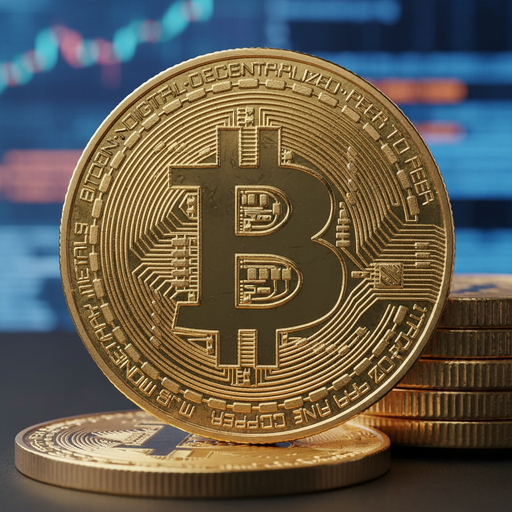
The relationship between Bitcoin and gold: How to choose between BTC, gold, and USD?
Author: NDV
The NDV research team recently conducted a systematic analysis of the price relationship between Bitcoin (BTC) and gold (XAU). The reason for focusing on this topic is that these two types of assets are often viewed by the market as “stores of value” and “hedging tools”: gold has been a traditional safe-haven asset and a “safe harbor” for global investors for decades; meanwhile, BTC is increasingly referred to as “digital gold” by more investors, gaining new status in the context of rising macro uncertainty.
The starting point of the research is: In an investment portfolio with a high Crypto weight, how to balance volatility and enhance the Sharpe Ratio by allocating gold and BTC.
In other words, are the two in a substitutive relationship or a complementary relationship?
After analyzing the data and market mechanisms of the past four years, the conclusion is:
· In most scenarios, BTC and gold exhibit a “conditional complementary” relationship: their overall direction is consistent, but there are significant differences in risk budgeting and volatility performance, complementing each other.
· Under a few extreme narratives, gold has a “phased substitution” property: during liquidity tightening, geopolitical conflicts, or exposure of financial system risks, gold's hedging function significantly outperforms BTC and can partially replace its allocation;
· In terms of asset allocation logic, they should be seen as “cross-mechanism anti-fragile pairs”: gold relies on central bank reserves and institutional endorsement, while BTC is driven by its total supply cap and halving mechanism. The two come from completely different systems, but precisely because of this, they often perform complementarily in different market environments. By regularly rebalancing between the two (making adjustments when trends diverge), investors can better diversify risk and achieve more stable, risk-adjusted returns over the long term.
The following is a detailed analysis.
1. Long-term Perspective: BTC and Gold Trends are Highly Correlated
Since 2021, BTC has shown a high degree of correlation with gold, indicating that macro liquidity and monetary policy are common drivers for both.
the stage of rising and falling together
Under the dominance of macroeconomic policies and market risk sentiment, Bitcoin and gold often exhibit synchronous rises or falls, such as:
End of 2022 to the beginning of 2023: Inflation peaks + rate hikes slow down → BTC and gold both rebound;
March 2023 Banking Crisis: Increased demand for safe-haven assets → Gold rises, while BTC benefits from the “decentralization” narrative and also rises;
Q1 2024: Federal Reserve shifts to rate cut expectations + BTC ETF approval → Gold approaches historic highs, BTC breaks past historic peak.
Divergence phase
When the market enters a phase dominated by “individual narratives,” the prices of Bitcoin and gold will diverge, such as:
Gold strong, BTC weak: Spring and summer of 2021: Gold strengthened due to inflation concerns, while Bitcoin plummeted due to Chinese regulations and Musk's comments; From the end of 2021 to the beginning of 2022: Geopolitical conflicts pushed up gold, but BTC weakened due to the Federal Reserve's tightening and tech stock corrections; In the first quarter of 2025, trade frictions and Middle Eastern conflicts → Gold breaks through 3000 USD, while BTC enters a high-level correction after “good news is priced in.”
BTC strong, gold weak: By the end of 2024, Trump wins + ETF capital inflow → BTC rises independently, gold remains flat.
Therefore, from a statistical perspective, BTC is highly correlated with gold in the long-term direction, but its short-term behavior is independent. This is also the reason why it can bring additional sources of returns.
2. Why the BTC Yield is Higher than Gold
Although BTC and gold are highly correlated in long-term price trends, from a return perspective, BTC has more advantages. We believe there are mainly the following reasons:
1. Asset Attribute Comparison: Same Narrative, Different Functions
Common ground (narrative level):
· Scarcity: Gold relies on natural scarcity and high mining costs for support, while BTC relies on a total supply limit (fixed at 21 million coins) and a halving mechanism (which continuously enhances scarcity) for support;
· Trading and settlement: Gold has strong physical properties, a long settlement chain but a mature institutional adaptation; BTC on-chain programmable settlement, high cross-border efficiency, and decentralization, but there is a disconnection between on-chain and offline liquidity;
· Volatility and Risk Budgeting: Over the long term, gold's annualized volatility remains relatively stable in the medium-low range (historical average around 15%, source: State Street Global Advisors); it exerts relatively low pressure during extreme market periods. In contrast, Bitcoin's volatility is significantly higher than that of traditional assets (historically observed range of 50%-80%, with extreme cases exceeding 100%, source: WisdomTree, The Block), making it more akin to a high Beta risk asset;
· Path of Institutional Adoption: Gold is a global central bank reserve asset, with strong institutional anchoring; BTC is currently in the process of institutionalization (ETF listings, compliant custody, institutional allocation), but in the short term, it will still be periodically affected by regulatory disturbances.
Summary: In the narrative of “inflation hedging” and “store of value”, BTC has a certain substitutability with gold; however, in terms of risk budgeting, institutional adoption, and settlement functions, there are significant differences between the two, thus reflecting complementarity.
Capital Flow Differences: The incremental buying of gold mainly comes from central banks and some hedging positions, with limited increments; while the new funds for BTC are more explosive, covering ETF inflows, institutional allocations, and retail participation, etc. (Data source: CME Group, CoinShares flow report).
Historical Performance Evidence: Over the past decade, the annualized return rate of gold has been approximately 4%–5% (in USD, not adjusted for inflation, data source: StatMuse); while the long-term annualized return rate of BTC is significantly higher.
Technical Validation: Statistical tests indicate that the correlation between the returns and volatility of BTC and gold is close to zero (modeling methods such as DCC-GARCH, Granger, etc. did not show significance, data source: NDV internal model), which suggests that the excess returns of BTC are independent of gold, and gold cannot provide the same high elasticity.
Therefore, in most cases, when both move in the same direction, directly holding BTC can achieve a higher risk premium and excess returns; while the value of gold is more reflected in extreme risk environments, serving as a defensive supplement to the portfolio.
[Technical Analysis Chart Description]
Yield Correlation: Statistical tests show that the daily returns of BTC and gold do not have a significant correlation. This indicates that the short-term fluctuations of the two do not move together, and the rise and fall of BTC is more driven by its own market events.
Volatility Correlation: Through DCC-GARCH dynamic correlation modeling, it was found that the conditional correlation coefficient between the two is mostly below 0.1, indicating that the volatilities are almost independent and the inter-asset linkage effect is low.
Causality Test: The Granger causality test results show that there is no significance in the analysis between BTC and gold during the 1-10 day lag periods, which means that neither asset exhibits leading characteristics in terms of the changes in each other's returns, and it is not possible to better predict the future price trends of one asset based on the price movements of the other.
3. Medium-term perspective: Holding gold is more effective than holding cash in USD
In the current macroeconomic environment, the hedging effect of gold is more prominent compared to cash in USD. The reason lies in: the continuous expansion of the U.S. fiscal deficit, which has weakened the safe-haven status of treasury bonds and the dollar; even institutional investors who have long supported dollar assets are beginning to reassess their allocations. Meanwhile, inflation remains high, and the market's expectations for future interest rate cuts persist, which means real interest rates are continuously declining. Holding cash not only lacks interest advantages but also faces the risk of eroded purchasing power. In contrast, gold, as a physical asset with “no counterparty risk,” does not rely on any credit backing. Against the backdrop of frequent geopolitical conflicts and trade frictions, its demand as a safe haven has significantly increased. Looking back at history, whether during the stagflation period of the 1970s or the recent phases of rising inflation cycles, gold has demonstrated better value preservation capabilities compared to cash.
Therefore, we believe that gold is a more effective defensive asset than US dollar cash from a medium-term perspective.
4. Configuration Insights
Based on our analysis, we can derive three levels of configuration ideas:
Firstly, in a normal environment, BTC remains the core position of the portfolio, as it possesses higher elasticity and growth potential, staying in sync with gold in the larger direction, but with generally more considerable upward movement.
Secondly, in extreme risk environments, such as a sudden tightening of global liquidity, escalation of geopolitical conflicts, or uncertainty in the financial system, the defensive properties of gold will clearly outperform BTC. During these phases, moderately increasing gold positions to replace a portion of BTC can help reduce drawdowns and enhance robustness.
Finally, from a broader perspective, under the current macroeconomic context, gold can play a more effective hedging role compared to cash in US dollars. Rather than passively holding cash and waiting for devaluation, it is better to achieve defense and value preservation through gold allocation. This dynamic allocation approach reflects our continuous improvement of the investment framework and optimization of the risk-return structure.
V. Conclusion
The relationship between BTC and gold is essentially long-term synchronization, short-term differentiation.
We firmly believe that BTC remains the core asset of the portfolio, carrying higher growth and resilience; while gold demonstrates unique defensive value in extreme risk environments, outperforming cash as a hedging tool. The two are not substitutes, but rather complementary. This dynamic allocation approach allows us to capture growth while ensuring the portfolio remains robust in an uncertain macro environment.
More importantly, we have a strong belief in the long-term value of BTC. Historically, BTC has experienced significant cyclical fluctuations, but its long-term returns have significantly outperformed any traditional asset. If BTC increases tenfold over the next decade, we are confident that through active management strategies, we can seize the cycles, capture the volatility, and continuously create alpha above β, allowing the overall performance of the fund to significantly outperform simply holding BTC.
The value of gold lies in its supplementation and defense, while the value of Bitcoin lies in long-term growth. For us, the direction is clear: BTC is superior to gold, and the NDV fund aims to outperform BTC. Through rigorous risk control, flexible allocation, and in-depth research, we not only follow the upward cycle of this generation of digital assets but also strive to continuously provide investors with long-term returns that exceed the assets themselves.