

Trade
Basic
Futures
Futures
Hundreds of contracts settled in USDT or BTC
TradFi
Gold
Trade global traditional assets with USDT in one place
Options
Hot
Trade European-style vanilla options
Unified Account
Maximize your capital efficiency
Demo Trading
Futures Kickoff
Get prepared for your futures trading
Futures Events
Participate in events to win generous rewards
Demo Trading
Use virtual funds to experience risk-free trading
Earn
Launch
CandyDrop
Collect candies to earn airdrops
Launchpool
Quick staking, earn potential new tokens
HODLer Airdrop
Hold GT and get massive airdrops for free
Launchpad
Be early to the next big token project
Alpha Points
Trade on-chain assets and enjoy airdrop rewards!
Futures Points
Earn futures points and claim airdrop rewards
Investment
Simple Earn
Earn interests with idle tokens
Auto-Invest
Auto-invest on a regular basis
Dual Investment
Buy low and sell high to take profits from price fluctuations
Soft Staking
Earn rewards with flexible staking
Crypto Loan
0 Fees
Pledge one crypto to borrow another
Lending Center
One-stop lending hub
VIP Wealth Hub
Customized wealth management empowers your assets growth
Private Wealth Management
Customized asset management to grow your digital assets
Quant Fund
Top asset management team helps you profit without hassle
Staking
Stake cryptos to earn in PoS products
Smart Leverage
New
No forced liquidation before maturity, worry-free leveraged gains
GUSD Minting
Use USDT/USDC to mint GUSD for treasury-level yields

More


An era without good answers: Understanding Vosh, Trump, and the next four years of the new era
49m ago
Wintermute Ventures: Our Six Major Predictions for Digital Assets in 2026
5h ago
Trending Topics
View More376.85K Popularity
5.09K Popularity
5.18K Popularity
3.24K Popularity
2.08K Popularity
Hot Gate Fun
View More- MC:$2.81KHolders:10.00%
- MC:$0.1Holders:10.00%
- MC:$2.82KHolders:10.00%
- MC:$0.1Holders:10.00%
- MC:$2.87KHolders:20.35%




Pin
Repricing of Safe-Haven Funds: The Logic Behind Gold's Strength and Bitcoin's Divergence
Author: 137Labs
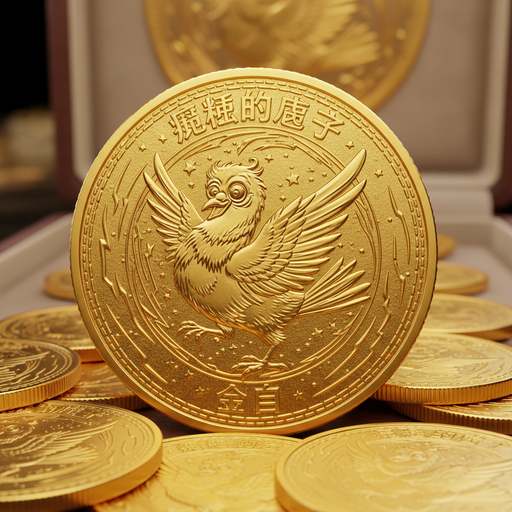
Against the backdrop of continued rising risk aversion in global markets, asset performance divergence has become increasingly evident. Gold has maintained above $5,000 per ounce for the second consecutive trading day, while Bitcoin shows signs of fatigue amid high-level fluctuations. Fund flow data indicates that investors are systematically adjusting their risk positioning across different assets.
Over the past week, funds related to Bitcoin-focused products have experienced a net outflow of over $1.3 billion, becoming a significant part of the overall withdrawal trend from cryptocurrency ETFs.
Gold Continues to Strengthen, Weak Dollar Resonates with Geopolitical Risks
Driven by geopolitical tensions, escalating sovereign debt concerns, and a persistently weakening dollar, international gold prices have risen for the seventh consecutive trading day. During the session, gold prices surged by 1.3%, firmly surpassing the $5,000 mark. Meanwhile, silver prices jumped nearly 7% in a single day, indicating that the precious metals sector is broadly favored by safe-haven capital.
Recently, U.S. President Trump has issued multiple tough trade and diplomatic statements, including tariff threats and geopolitical remarks, fueling market concerns over policy uncertainty. At the same time, the dollar index has fallen to its lowest level in nearly four years, with market speculation even suggesting that the U.S. might intervene in the foreign exchange market to stabilize the yen.
Institutional View: The Two Main Pillars Supporting the Gold Bull Market Remain
Daniel Ivascyn, Chief Investment Officer and Managing Director at PIMCO, one of the world’s largest bond management firms, pointed out that the current rise in gold is driven not by short-term sentiment but by deep structural factors.
He stated that the key factors supporting gold’s long-term performance are mainly two:
“One is the ongoing escalation of geopolitical tensions worldwide, and the other is investors’ concerns over high debt levels of various governments. As long as these two factors continue to play a significant role in the market, gold may continue to perform very well in the long run.”
From a historical perspective, gold prices have doubled over the past two years and just recorded their best annual performance since 1979. Year-to-date, gold has gained approximately 17%, highlighting its defensive properties amid systemic risks.
Volatility Rising in Tandem, Short-term Correction Risks Emerge
While the long-term outlook remains optimistic, some market participants are cautious about short-term gold movements.
Stephen Innes, Managing Partner at SPI Asset Management, noted that recent market sensitivity to Trump’s policy directions is high:
“Today it’s tariffs, tomorrow it’s geopolitical issues, and the day after could involve the Federal Reserve’s independence. This recurring uncertainty will inevitably increase short-term market volatility.”
Data shows that the implied volatility of COMEX gold futures has risen to the highest level since early 2020 during the pandemic; simultaneously, the volatility of the world’s largest gold ETF, SPDR Gold Trust, remains elevated.
Ivascyn also warned that precious metals might experience technical pullbacks in the short term:
“Recently, gold and silver have significantly outperformed other assets, partly because retail investors have continued to add positions, and prices have risen rapidly. Therefore, a substantial short-term correction cannot be ruled out.”
Bitcoin Stagnates, Funds Continue to Exit Crypto Market
Contrasting sharply with the ongoing strength of gold, Bitcoin has recently hovered around $87,000, with trading volumes remaining subdued. Since its peak in October last year, Bitcoin has retraced approximately 25%, with a 6% decline over the past week alone.
In terms of fund flows, investors are accelerating their withdrawal from crypto assets. Data shows that in the past week, Bitcoin-related funds experienced net outflows exceeding $1.3 billion, quickly reversing the brief inflow seen earlier this year.
JPMorgan: Systemic Outflows from Cryptocurrency ETFs
JPMorgan recently reported that, in the current market environment, equities and precious metals are attracting large-scale capital inflows, while cryptocurrency ETFs face ongoing pressure.
The report indicates that broad-based equity ETFs are experiencing some of the largest net inflows in history, whereas crypto-related ETFs are being continuously reduced by investors, reflecting a clear decline in risk appetite.
Expert Skepticism: Bitcoin Struggles to Serve as a Stable Macro Hedge
Stephane Ouellette, CEO and Co-Founder of FRNT Financial Inc., believes that the crypto market currently faces multiple challenges:
“On one hand, artificial intelligence has attracted substantial capital over the past year; on the other, cryptocurrencies are being excluded from inflation trades.”
This phenomenon has reignited academic discussions about Bitcoin’s safe-haven properties. Duke University professor Cam Harvey bluntly stated:
“Bitcoin is unlikely to replace gold as the preferred safe-haven asset for investors.”
The analysis team at Tagus Capital, a crypto asset firm, also pointed out that Bitcoin’s hedging effectiveness has clear limitations:
“Bitcoin’s returns may react to loose monetary policies or concerns about fiat currency devaluation, but academic research shows that this hedge is sporadic, weaker than gold, and heavily influenced by risk appetite, liquidity, and factors similar to stocks.”
Conclusion: Safe-Haven Funds Are Redefining ‘Safe Assets’
Overall, the continuous new highs in gold and the sluggish performance of Bitcoin are not coincidental but reflect a global reordering of asset safety and stability during periods of high uncertainty.
In the short term, precious metals may remain relatively strong driven by safe-haven demand; however, for Bitcoin to regain its status as a ‘macro hedge asset,’ market consensus will likely require a rebound in risk appetite and a more stable macro environment.
The views expressed in this article are based on publicly available information and the author’s judgment. They are not investment advice. Markets carry risks; please invest cautiously.