Trade
Basic
Futures
Futures
Hundreds of contracts settled in USDT or BTC
TradFi
Gold
Trade global traditional assets with USDT in one place
Options
Hot
Trade European-style vanilla options
Unified Account
Maximize your capital efficiency
Demo Trading
Futures Kickoff
Get prepared for your futures trading
Futures Events
Participate in events to win generous rewards
Demo Trading
Use virtual funds to experience risk-free trading
Earn
Launch
CandyDrop
Collect candies to earn airdrops
Launchpool
Quick staking, earn potential new tokens
HODLer Airdrop
Hold GT and get massive airdrops for free
Launchpad
Be early to the next big token project
Alpha Points
Trade on-chain assets and enjoy airdrop rewards!
Futures Points
Earn futures points and claim airdrop rewards
Investment
Simple Earn
Earn interests with idle tokens
Auto-Invest
Auto-invest on a regular basis
Dual Investment
Buy low and sell high to take profits from price fluctuations
Soft Staking
Earn rewards with flexible staking
Crypto Loan
0 Fees
Pledge one crypto to borrow another
Lending Center
One-stop lending hub
VIP Wealth Hub
Customized wealth management empowers your assets growth
Private Wealth Management
Customized asset management to grow your digital assets
Quant Fund
Top asset management team helps you profit without hassle
Staking
Stake cryptos to earn in PoS products
Smart Leverage
New
No forced liquidation before maturity, worry-free leveraged gains
GUSD Minting
Use USDT/USDC to mint GUSD for treasury-level yields

More


US SEC and CFTC Chairmen Join Forces to Pave the Way for Cryptocurrency Regulation
38m ago
Cryptocurrency exemption fails to take effect in January! US SEC urgently "puts on the brakes," Wall Street erupts
3h ago
Trending Topics
View More379.14K Popularity
8.09K Popularity
7.76K Popularity
4.56K Popularity
3.06K Popularity
Hot Gate Fun
View More- MC:$0.1Holders:10.00%
- MC:$0.1Holders:10.00%
- MC:$2.88KHolders:20.09%
- MC:$2.83KHolders:10.00%
- MC:$2.83KHolders:00.00%





Pin
Storm in the US hits mining farms! Bitcoin hash rate drops by 12%, the worst decline since China's ban on mining.
Bitcoin mining activities are facing the most severe impact since the end of 2021. Due to a strong winter storm in the United States, several major mining companies were forced to shut down emergency operations to respond to grid dispatching, leading to a全面 drop in Bitcoin network hash rate, mining output, and revenue. According to on-chain data from CryptoQuant, the total network hash rate of Bitcoin has plummeted by approximately 12% since November 11 of last year. This is the largest single-day decrease since China’s全面 ban on mining in October 2021. Currently, the total hash rate remains at only 970 EH/s per second, the lowest level since September 2025.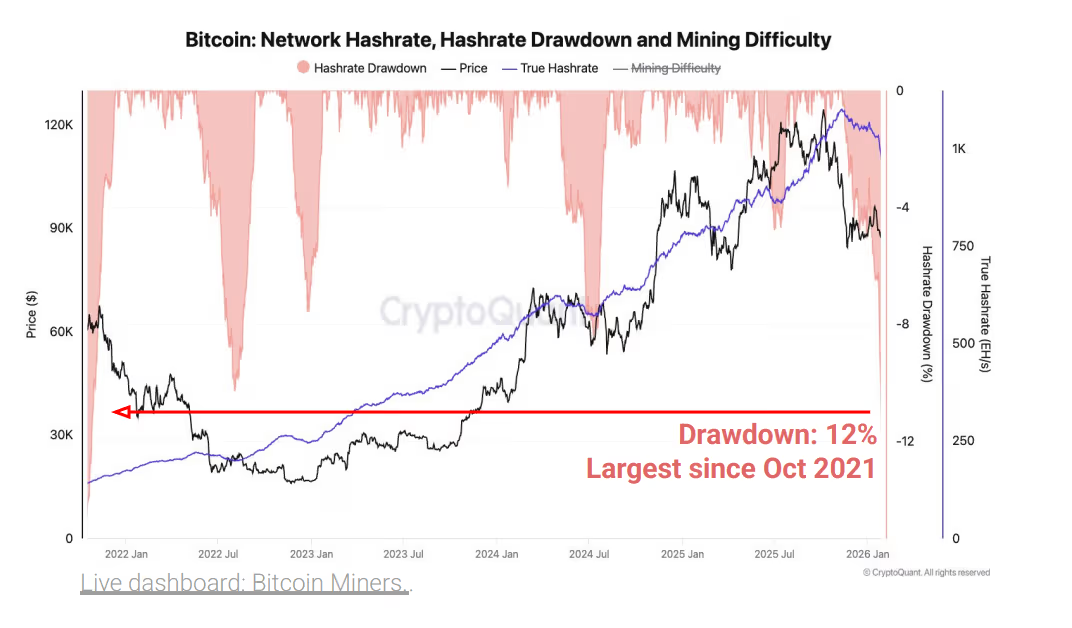 This hash rate retreat has worsened rapidly since last week, with extreme cold impacting several major mining hubs in the US, causing tight electricity supplies. To protect equipment and comply with “power restriction requirements,” many publicly listed miners have chosen to temporarily shut down their mining rigs, and the hash rate has frozen sharply, which has immediately reflected in miners’ earnings.
Data shows that Bitcoin’s daily mining revenue dropped from about $45 million on January 22 to $28 million within just two days, hitting a new low in a year. Although it has slightly rebounded to around $34 million, it remains far below recent average levels, reflecting the dual pressures of declining hash rate and weakening coin prices.
Mining output has also shrunk sharply. The daily total production of listed miners decreased from 77 BTC to only 28 BTC; small and medium-sized miners’ output also fell from 403 BTC to 209 BTC.
Looking at the 30-day moving average, the production of listed miners decreased by 48 BTC, the largest decline since the halving in May 2024; non-listed miners’ output further decreased by 215 BTC, the largest drop since July 2024.
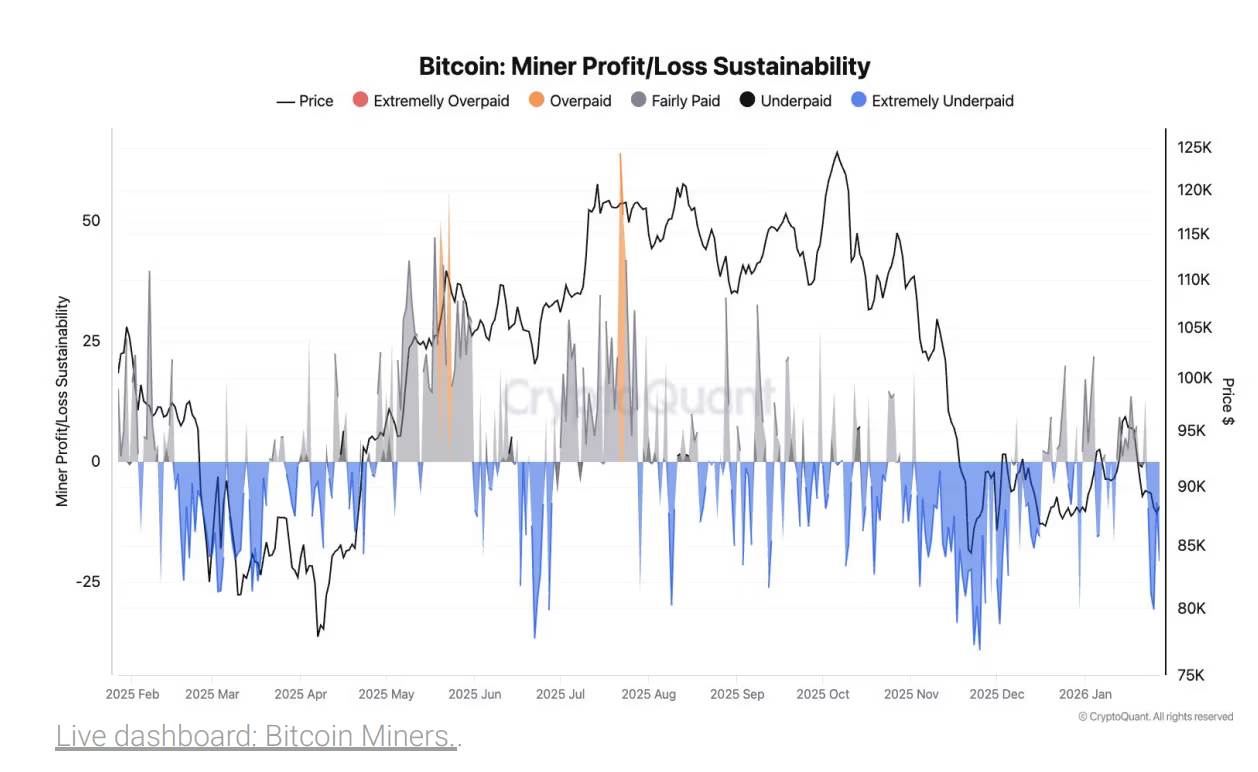
What is more concerning is that miners’ survival space is being squeezed to the limit. CryptoQuant’s “Miner Profit and Loss Sustainability Index” has fallen to 21, the lowest level since November 2024, indicating that more and more miners are “losing money.” Despite multiple adjustments to mining difficulty, mining revenue still struggles to cover the high costs of electricity and maintenance.
This hash rate retreat has worsened rapidly since last week, with extreme cold impacting several major mining hubs in the US, causing tight electricity supplies. To protect equipment and comply with “power restriction requirements,” many publicly listed miners have chosen to temporarily shut down their mining rigs, and the hash rate has frozen sharply, which has immediately reflected in miners’ earnings.
Data shows that Bitcoin’s daily mining revenue dropped from about $45 million on January 22 to $28 million within just two days, hitting a new low in a year. Although it has slightly rebounded to around $34 million, it remains far below recent average levels, reflecting the dual pressures of declining hash rate and weakening coin prices.
Mining output has also shrunk sharply. The daily total production of listed miners decreased from 77 BTC to only 28 BTC; small and medium-sized miners’ output also fell from 403 BTC to 209 BTC.
Looking at the 30-day moving average, the production of listed miners decreased by 48 BTC, the largest decline since the halving in May 2024; non-listed miners’ output further decreased by 215 BTC, the largest drop since July 2024.
What is more concerning is that miners’ survival space is being squeezed to the limit. CryptoQuant’s “Miner Profit and Loss Sustainability Index” has fallen to 21, the lowest level since November 2024, indicating that more and more miners are “losing money.” Despite multiple adjustments to mining difficulty, mining revenue still struggles to cover the high costs of electricity and maintenance.