

Trade
Basic
Futures
Futures
Hundreds of contracts settled in USDT or BTC
TradFi
Gold
Trade global traditional assets with USDT in one place
Options
Hot
Trade European-style vanilla options
Unified Account
Maximize your capital efficiency
Demo Trading
Futures Kickoff
Get prepared for your futures trading
Futures Events
Participate in events to win generous rewards
Demo Trading
Use virtual funds to experience risk-free trading
Earn
Launch
CandyDrop
Collect candies to earn airdrops
Launchpool
Quick staking, earn potential new tokens
HODLer Airdrop
Hold GT and get massive airdrops for free
Launchpad
Be early to the next big token project
Alpha Points
Trade on-chain assets and enjoy airdrop rewards!
Futures Points
Earn futures points and claim airdrop rewards
Investment
Simple Earn
Earn interests with idle tokens
Auto-Invest
Auto-invest on a regular basis
Dual Investment
Buy low and sell high to take profits from price fluctuations
Soft Staking
Earn rewards with flexible staking
Crypto Loan
0 Fees
Pledge one crypto to borrow another
Lending Center
One-stop lending hub
VIP Wealth Hub
Customized wealth management empowers your assets growth
Private Wealth Management
Customized asset management to grow your digital assets
Quant Fund
Top asset management team helps you profit without hassle
Staking
Stake cryptos to earn in PoS products
Smart Leverage
New
No forced liquidation before maturity, worry-free leveraged gains
GUSD Minting
Use USDT/USDC to mint GUSD for treasury-level yields

More


TradFi's Great Transformation! JPMorgan Embraces Cryptocurrency, A Complete Analysis of Friendly Banks by 2026
3h ago
Bitcoin derivatives products blow up! CME's fourth-largest gap in history, with a clearing amount exceeding $5.4 billion
3h ago
Trending Topics
View More378.44K Popularity
7.07K Popularity
7.04K Popularity
4.2K Popularity
2.81K Popularity




Pin
Peter Schiff's prophecy comes true! Silver surges 53%, Bitcoin struggles to break through 100,000
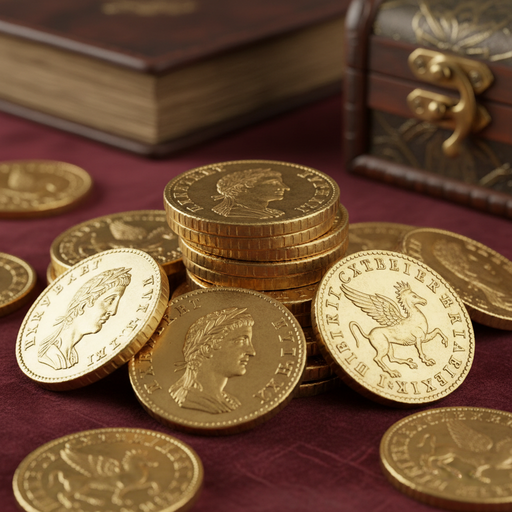
Gold bug Peter Schiff’s predictions are coming true. Silver surged by 53%, reaching a new high of $111.27, gold broke through $5,000, and the Shanghai silver premium hit $130. In contrast, Bitcoin struggles to break the $100,000 mark. Schiff points out that those who rebalanced on January 23rd have now earned four times their investment.
Silver Skyrockets 53% with Shanghai Premium Reaching $130
Peter Schiff is a well-known precious metals advocate who has long predicted the rise of metals and stagnation in Bitcoin. The recent bull markets in silver and gold have significantly bolstered his credibility. This year, silver has experienced a complete vertical move, with March futures rising over 53%, reaching an all-time high of over $111.27 during Monday’s trading session, currently steady at $108.21.
Such a rally is extremely rare in the precious metals market. Silver is historically known for its volatility, but a move exceeding 50% in such a short period last occurred during the panic buying at the start of the 2020 pandemic, when silver soared from $12 to $30 before quickly retreating. This time, the rally is more structurally supported, driven by a surge in physical demand and geopolitical uncertainties.
Although there was a brief sell-off during trading, the outlook remains optimistic as the Shanghai market continues to trade silver at a significant premium, reaching $130. This premium is crucial because it reflects real physical silver demand, not just speculative paper futures trading. As one of the world’s largest silver-consuming markets, Shanghai’s premium often signals tight supply and persistent buying pressure.
The $130 premium over the international futures price of $108 indicates about a 20% spread. Under normal market conditions, such a gap would be quickly arbitraged away. However, the persistent premium suggests potential bottlenecks in the physical silver supply chain—be it mine capacity constraints, refining limitations, or logistical delays—creating a solid foundation for further price increases.
Another major favorite of Schiff, gold, has also broken the $5,000 barrier for the first time. March futures climbed to $5,093.90 on Monday, with gold performing strongly, up nearly 17% this year. Surpassing $5,000 is both a psychological and technical milestone. Psychologically, this figure has long been considered an “impossible” target, and breaking through it will attract a flood of speculative capital. Technically, there are no significant resistance levels ahead, as the price enters a vacuum zone, greatly reducing upward barriers.
Three Major Drivers Behind the Metal Rally
Geopolitical Risk Premium: Tensions in the Middle East and US-China trade frictions boost safe-haven demand.
Inflation Hedge Demand: US PPI exceeds expectations, raising fears of a resurgence in inflation.
Dollar Confidence Crisis: The Fed’s hawkish pivot has sparked doubts about the long-term purchasing power of the dollar.
For years, Schiff has criticized Bitcoin as a “bubble of speculation with no intrinsic value,” insisting that only precious metals are true stores of value. The current market movements seem to validate his view—at least in the short term.
Bitcoin Stalls at $100,000 Despite Trump’s Support and Market Reforms
While Bitcoin has not experienced the “catastrophic crash” Schiff predicted, it has indeed failed to break the $100,000 level this year, despite unprecedented support from the Trump administration and discussions of broad market regulation reforms. This stagnation contrasts sharply with the vertical rise in silver and gold, providing ammunition for Schiff’s long-standing criticisms.
The Trump administration’s support for cryptocurrencies has been unprecedented. The president dismissed skeptics and SEC Chair Gary Gensler, appointing crypto-friendly Paul Atkins. The Department of Justice reduced investigations into crypto firms, new legislation established a regulatory framework for stablecoins, and retirement savings were allowed to invest in cryptocurrencies. These policies should, in theory, have propelled Bitcoin’s price significantly higher.
However, Bitcoin has hovered around $78,000 at the end of January, down about 28% from its peak of $109,000 in October last year. This performance has given Schiff an opportunity to criticize further. In a recent social media post, he stated: “What’s happening with silver right now will happen to Bitcoin—just in reverse. Silver’s incredible rally will trigger a catastrophic crash in Bitcoin. Don’t say I didn’t warn you.”
This prediction is based on Schiff’s consistent logic: when investors see metals offering better preservation and appreciation of value, capital will flow out of Bitcoin into silver and gold. Schiff believes the narrative of Bitcoin as “digital gold” will be discredited, as real gold and silver demonstrate their irreplaceable value. The historic moments of silver surpassing $100 and gold breaking $5,000, in his view, mark a turning point where capital shifts from virtual assets back to physical assets.
Bitcoin supporters counter that the current pullback is merely a technical correction, not a trend reversal. They point out that Bitcoin has experienced 30%-50% corrections in previous bull cycles but still reached new highs. Institutional adoption continues to accelerate; although weekly outflows from spot Bitcoin ETFs have occurred, cumulative inflows still total hundreds of billions of dollars. Yet, these defenses seem pale compared to the vertical surge in silver and gold.
The Harsh Reality of the Rebalancing on January 23rd: Fourfold Gains Now
On January 23rd, when silver first broke $100, Schiff criticized Bitcoin holders for not converting their holdings into silver when they had the chance. He emphasized: “If they had done so, today they would have nearly four times as much money. The good news is, it’s not too late to trade now.” This “four times” claim needs specific calculation to verify.
Suppose an investor held $100,000 worth of Bitcoin on January 23rd. At that time, Bitcoin was around $95,000, and silver futures were about $33 per ounce. If the investor converted all Bitcoin into silver futures, they could buy approximately 3,030 ounces of silver. At the current price of $108, that silver is worth about $327,240, roughly 3.27 times the initial investment. Considering that silver touched $111 on Monday, the fourfold estimate is quite close.
In contrast, Bitcoin investors now face about an 18% loss—from $95,000 down to $78,000—highlighting the stark difference in returns. This massive gain differential over just ten days underscores Schiff’s point: choosing silver over Bitcoin has yielded over 300% more return in this period. Such a dramatic contrast is rare in financial markets.
However, this kind of post-hoc comparison overlooks a key question: how many people could have accurately predicted silver would rise to $111 within ten days on January 23rd? Even Schiff himself, while long-term bullish on silver, likely did not foresee such rapid and sharp increases. Markets are full of “what if” regrets, but very few can make the right decision at the turning point.
Schiff’s advice that “it’s not too late to trade now” must be taken cautiously. Silver’s rapid ascent has led to severe technical overbought conditions, with high risk of a correction. Chasing the rally could result in significant short-term losses. Moreover, the surge in silver and gold is partly driven by panic buying amid geopolitical crises; if tensions ease, prices could fall sharply. Blindly following Schiff’s advice without considering personal risk tolerance and market timing could lead to disastrous outcomes.
The Century-Long Debate: Metals vs. Bitcoin Continues
The debate between Schiff and the Bitcoin community has lasted over a decade. Schiff insists that only proven, thousands-of-years-tested precious metals are true money, while Bitcoin is merely a speculative bubble. Bitcoin supporters argue that digital scarcity and decentralization make Bitcoin the gold of the digital age, with physical metals having inherent disadvantages in portability and divisibility.
Current market trends give Schiff a short-term victory, but long-term conclusions remain to be seen. Historical data shows that metals and Bitcoin are not always correlated; sometimes they rise together (e.g., early 2020 pandemic), other times they diverge (e.g., Bitcoin’s bull run in 2021 while gold stagnated). The current divergence may be cyclical rather than structural.
A more balanced view is that metals and Bitcoin serve different investment needs and risk profiles. Gold and silver are suitable for conservative investors and inflation hedging, while Bitcoin appeals to high-risk, high-reward speculators. Framing them as zero-sum—believing that one’s gain must come at the expense of the other—oversimplifies complex market dynamics.
Nevertheless, Schiff’s short-term victory is undeniable. From January 23 to now, choosing silver has significantly outperformed holding Bitcoin. This fact offers a valuable lesson: never put all your eggs in one basket; diversification remains the key to long-term survival.
[End of translation]