

Trade
Basic
Futures
Futures
Hundreds of contracts settled in USDT or BTC
TradFi
Gold
Trade global traditional assets with USDT in one place
Options
Hot
Trade European-style vanilla options
Unified Account
Maximize your capital efficiency
Demo Trading
Futures Kickoff
Get prepared for your futures trading
Futures Events
Participate in events to win generous rewards
Demo Trading
Use virtual funds to experience risk-free trading
Earn
Launch
CandyDrop
Collect candies to earn airdrops
Launchpool
Quick staking, earn potential new tokens
HODLer Airdrop
Hold GT and get massive airdrops for free
Launchpad
Be early to the next big token project
Alpha Points
Trade on-chain assets and enjoy airdrop rewards!
Futures Points
Earn futures points and claim airdrop rewards
Investment
Simple Earn
Earn interests with idle tokens
Auto-Invest
Auto-invest on a regular basis
Dual Investment
Buy low and sell high to take profits from price fluctuations
Soft Staking
Earn rewards with flexible staking
Crypto Loan
0 Fees
Pledge one crypto to borrow another
Lending Center
One-stop lending hub
VIP Wealth Hub
Customized wealth management empowers your assets growth
Private Wealth Management
Customized asset management to grow your digital assets
Quant Fund
Top asset management team helps you profit without hassle
Staking
Stake cryptos to earn in PoS products
Smart Leverage
New
No forced liquidation before maturity, worry-free leveraged gains
GUSD Minting
Use USDT/USDC to mint GUSD for treasury-level yields

More


XRP Price Crashes 24%, Sparking Debate: Was It Meant to Replace Bitcoin?
5h ago
Dogecoin Price Prediction 2026: DOGE Holds Critical Support As Musk Hype Fades
5h ago
Trending Topics
View More78.2K Popularity
5.59K Popularity
1.66K Popularity
2.53K Popularity
6.92K Popularity



Pin
Gate Square | 2/5 Today's Hot Topic: #BuyTheDipOrWaitNow?
🎁 [Community Perk] Post with the topic or #BTC, 10 lucky users * $100 position Voucher.
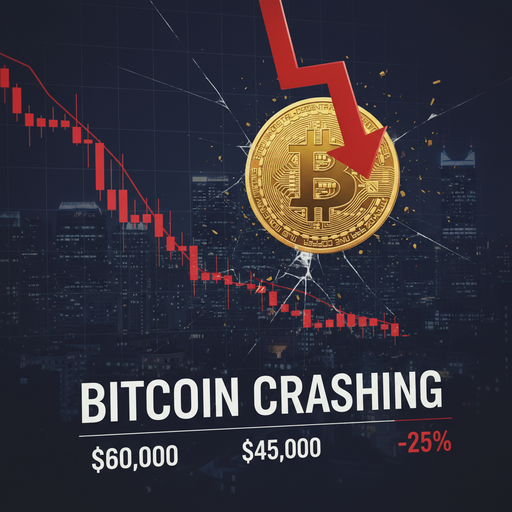
Market volatility continues as BTC breaks below the $74,000 key support level, with altcoins pulling back in sync. Are you buying the dip in batches or waiting for a better entry point?
💬 Today’s Discussion:
1️⃣ Bottom Signals: Where do you see BTC’s bottom — $70,000 or lower?
2️⃣ Market Drivers: Which recent macroeconomic news or rumors are influencing the market?
3️⃣ Dark Horses: Are there any resilient or outperforming tokens worth watching?
ShTap to Trade in Gate Square, Win up to 50 GT & Merch!
Click the trading widget in Gate Square content, complete a transaction, and take home 50 GT, Position Experience Vouchers, or exclusive Spring Festival merchandise.
Click the registration link to join
https://www.gate.com/questionnaire/7401
Enter Gate Square daily and click any trading pair or trading card within the content to complete a transaction. The top 10 users by trading volume will win GT, Gate merchandise boxes, position experience vouchers, and more.
The top prize: 50 GT.
 metric suggests XRP is entering a historical zone that has often preceded bullish reversals, the current absence of countervailing buying pressure means the path of least resistance remains down.
The Provocative Claim: XRP Ledger, Bitcoin’s “Plan B”?
Amidst this market turmoil, a compelling narrative about XRP’s origins has resurfaced, challenging its status as merely another altcoin. The conversation began when Marshall Hayner, an early Bitcoin developer, observed that Bitcoin still lacks a truly scalable and decentralized version. This opened the door for Matt Hamilton, a former Ripple director, to drop a bombshell: he asserted that “Bitcoin developers literally created the XRP Ledger 15 years ago for this exact reason.” This positions XRP not as a competitor that emerged by chance, but as a purpose-built solution crafted by Bitcoin insiders to solve the very problems—slow speed, high fees, limited throughput—that still plague Bitcoin today as a payment system.
This claim is anchored in verifiable history. The XRP Ledger was co-created in 2011-2012 by Jed McCaleb, a legendary figure in Bitcoin’s early days who founded the Mt. Gox exchange, alongside Arthur Britto and David Schwartz. The argument goes that these pioneers, frustrated by the inherent limitations in Bitcoin’s Proof-of-Work design, engineered XRPL with a novel consensus mechanism (the Federated Byzantine Agreement) to achieve what Bitcoin could not: fast, cheap, and energy-efficient transactions on a base-layer blockchain. This reframes the entire Bitcoin vs. XRP rivalry. It’s no longer a story of an imposter challenging a king, but rather of a dedicated team building the king’s long-awaited heir—a scalable electronic cash system true to Satoshi’s original vision.
The Three Perspectives on the Bitcoin-XRP Relationship
The Successor Thesis: XRP is the fulfillment of Bitcoin’s original promise of “peer-to-peer electronic cash.” Its ledger was designed from the outset by Bitcoin experts to fix Bitcoin’s scalability trilemma, making it the logical technological evolution.
The Competitor Thesis: XRP is a separate, centralized project that has failed to displace Bitcoin. Bitcoin’s scaling is being responsibly addressed via Layer-2 solutions like the Lightning Network, preserving its supreme decentralization and security.
The Complementary Thesis: Bitcoin is digital gold (a store of value), and XRP is digital oil (a settlement layer for payments). They serve different, non-competing purposes in a future financial system, a view gaining traction with institutions.
The Lingering Question: If this scalable solution has existed for 15 years, why hasn’t the Bitcoin community embraced it? This question speaks to the deep philosophical divides over decentralization, governance, and change within crypto.
Why This History Debate Matters for XRP’s Price and Future
The timing of this historical debate is not coincidental; it provides a crucial counter-narrative to the prevailing market fear. For long-term investors watching their portfolios bleed, the idea that XRP is a deliberately engineered solution with foundational ties to Bitcoin’s creation offers a pillar of fundamental conviction. It transforms the asset from a speculative token to a project with a deep-rooted, utilitarian purpose. This narrative can be the difference between panic selling at a loss and holding with patience during a downturn.
Furthermore, this origin story is critically important for institutional adoption. When asset managers like Franklin Templeton note XRP’s growing “institutional credibility,” they are bolstered by a respectable, technically-sound pedigree. It’s far easier for a financial institution to justify an investment in a project presented as “Bitcoin’s scalable sibling” than in just another altcoin. High-profile bets, such as Bitcoin trader James Wynn’s $25 million XRP investment based on its potential to “revolutionize banking,” align perfectly with this infrastructure-level narrative. In a bear market, a strong, credible story is essential armor against total loss of confidence.
XRP Price Prediction: Key Levels to Watch for Recovery or Further Loss
With XRP trading near $1.44, the technical setup presents clear lines in the sand. The immediate battle is for the $1.37 support level. A decisive break and daily close below this threshold would likely accelerate selling, with the next major target at $1.28. Such a move would confirm a breakdown of the broader market structure that has been in place for over a year and could trigger a deeper search for support.
For the bulls to mount any meaningful recovery, the first critical step is to reclaim the $1.58 level. Regaining this as solid support would signal that the worst of the panic selling has been absorbed and that a new base is forming. From there, a push toward $1.70 becomes plausible. However, a sustainable recovery requires a shift in the on-chain dynamics. Key signals to watch for include: a slowdown in the flow of XRP to exchanges, a rebalancing where profitable transactions begin to match or exceed loss-making ones, and ultimately, data showing large wallets are accumulating at these lower prices. The historical NUPL zone suggests a turning point is near, but price action must confirm it.
What Is the XRP Ledger? The Technology Behind the Token
What is the XRP Ledger (XRPL)? The XRP Ledger is an open-source, decentralized blockchain that launched in 2012. Its native cryptocurrency is XRP. Unlike Bitcoin, it does not use mining. Instead, it employs a unique consensus protocol called the Federated Byzantine Agreement (FBA), where a network of independent, trusted validators agree on the order and validity of transactions. This design allows for remarkable performance: settlements in 3-5 seconds, transaction costs at a fraction of a penny, and the capacity to handle thousands of transactions per second.
Addressing the Centralization Question: Critics often argue that XRPL’s validator set is more centralized than Bitcoin’s permissionless miner network. Proponents counter that the validator list is diverse and decentralized for its intended purpose as a global settlement rail, and that its efficiency and lack of energy waste are transformative advantages. The network has no central authority controlling transaction processing.
Primary Use Case and Vision: XRPL is built explicitly for moving value. Its flagship use case is facilitating fast, low-cost cross-border payments, aiming to disrupt legacy correspondent banking systems like SWIFT. This focus on institutional-grade financial utility starkly differentiates it from platforms designed for general smart contracts or purely as monetary assets.
A Test of Narrative Versus Market Mechanics
The first week of February 2026 presents XRP with its most significant test in years. On one side, the cold, hard mechanics of the market—flooding exchange balances, deep losses, and broken support—paint a bleak picture with a clear risk of further decline to $1.28. On the other side, a powerful and resurrected narrative about its genesis as Bitcoin’s scalable heir provides a foundational story of purpose and long-term potential.
In the short term, market mechanics typically overpower narrative. The weight of sell orders will determine the next price level. However, for investors with a longer horizon, this confluence of events creates a fascinating scenario. The “generational accumulation zone” signaled by on-chain metrics coincides with a forceful reminder of why XRP was built. The outcome will hinge on whether enough capital believes in that “why” to step in and buy while others are fleeing. Whether XRP stabilizes or continues to fall will offer a clear lesson in what truly drives crypto asset prices in a crisis: pure fear, or enduring belief in a foundational idea.