


Elon Musk Confirms X Money External Beta in 1–2 Months: ‘The Place Where All Money Is’
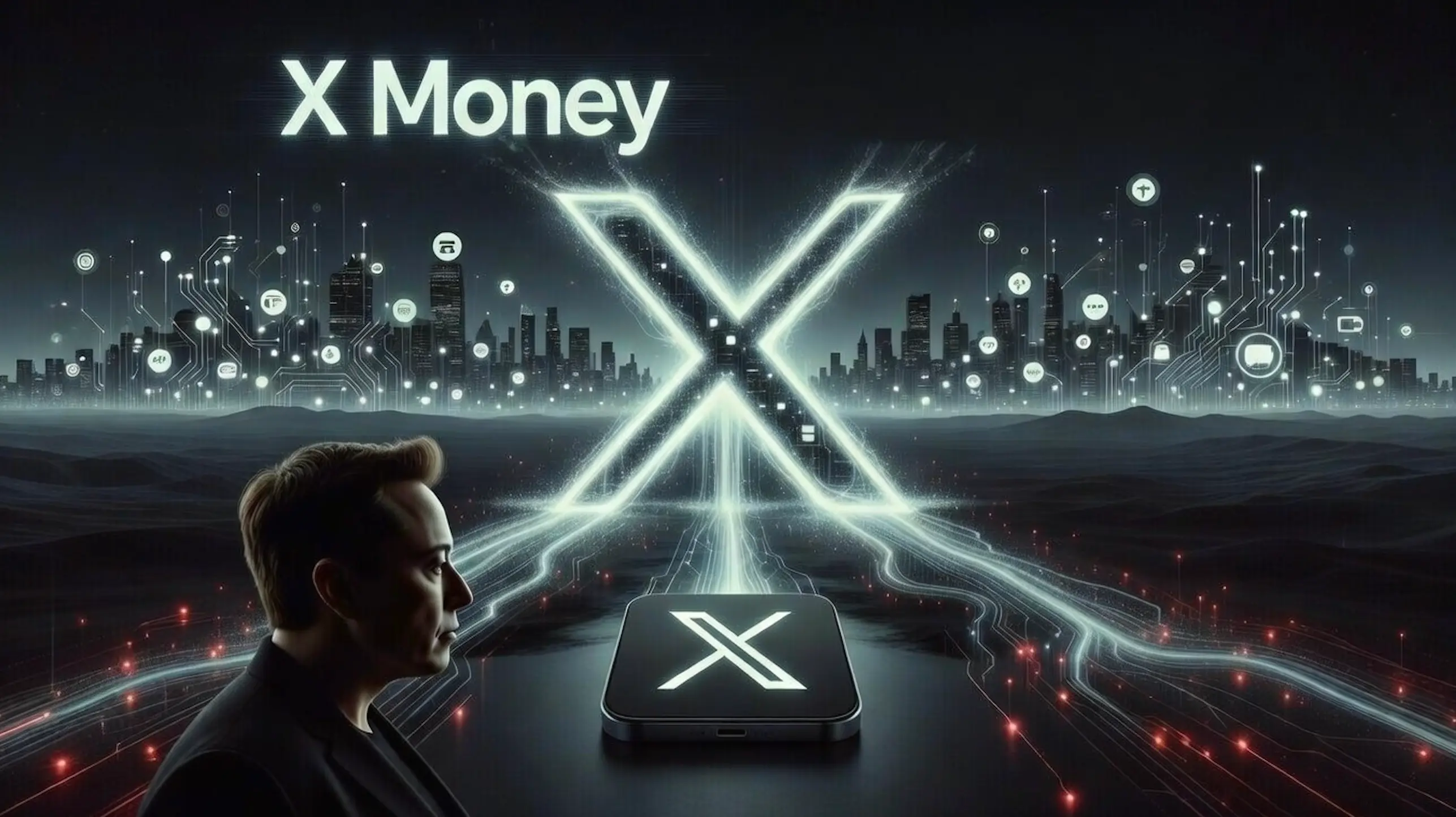
Elon Musk announced that X Money is already live in an internal closed beta, with a limited external beta scheduled for the next one to two months. The payments hub is designed to become the central source of all monetary transactions on X, advancing Musk’s vision of an “everything app.” With 600 million monthly users and prior Visa integration, X Money could redefine social payments — but crypto support remains unconfirmed.
Musk’s xAI All‑Hands: The X Money Reveal
On February 12, 2026, Elon Musk stood in front of employees at an xAI all‑hands presentation and casually dropped one of the most anticipated updates in recent fintech history.
“For X Money, we’ve actually had X Money live in closed beta within the company,” Musk said. “We expect in the next month or two to go to a limited external beta, and then to go worldwide to all X users.”
The announcement was brief, tucked inside a broader discussion about xAI’s restructuring and the future of the X platform. But its implications extend far beyond the presentation room. After more than three years of speculation, regulatory filings, and behind‑the‑scenes infrastructure work, Musk’s payments vision is finally taking tangible form.
Musk did not provide a firm date for the worldwide release. He did not name fees, supported countries, or how users will be selected for the limited beta. Yet his description of the product’s ambition left little room for ambiguity.
“This is intended to be the place where all money is,” he said. “The central source of all monetary transactions.”
The ‘Everything App’ Blueprint: Why X Money Is the Missing Piece
Since acquiring Twitter for $44 billion in October 2022 and rebranding it as X, Musk has spoken consistently about transforming the platform into an “everything app” — a single digital hub for communication, news, entertainment, and commerce.
The concept is not new. WeChat, Tencent’s super‑app, has dominated the Chinese market for years by integrating messaging, social feeds, payments, booking, and government services into one seamless interface. Musk has explicitly cited WeChat as an inspiration.
X already has the components: XChat for encrypted messaging, Grok for AI‑powered conversation, long‑form video for content, and a rapidly growing user base. What it lacked was a native financial layer.
X Money fills that gap.
“As we give people more reasons to use the X app, whether it’s for communications, for Grok, or for X Money, whatever the case may be, we want it to be such that if you wanted to, you could live your life on the X app,” Musk said.
The logic is circular and self‑reinforcing: payments increase utility, utility increases engagement, engagement increases payments. For a platform that Musk claims now has approximately 1 billion installed users and 600 million monthly actives, even modest conversion to financial services could generate billions in transaction volume.
What We Know About X Money: Partners, Features, and Timeline
X Money did not emerge from a vacuum. Its foundation was laid throughout 2025.
Visa Partnership: In early 2025, X publicly announced a collaboration with Visa to develop digital wallet capabilities and person‑to‑person payments. While Musk did not mention Visa in his xAI presentation, the partnership remains the most concrete signal of X Money’s underlying payment rails. Visa’s global network, compliance infrastructure, and existing relationships with financial institutions provide X with a shortcut to market that building from scratch could never achieve.
XChat Encryption: The platform recently rolled out XChat, an encrypted messaging system that consolidates direct messages into a single inbox. Musk has compared its security protections to “Bitcoin‑level encryption,” a statement that, while technically vague, signals a deliberate privacy posture. For a payments product, end‑to‑end security is not optional — it is table stakes.
Timeline: The internal closed beta is already running. The limited external beta is scheduled for the next one to two months. A worldwide rollout will follow, though Musk did not specify whether “worldwide” means every country simultaneously or a phased expansion.
What Remains Unknown: X has not disclosed fees, transfer limits, supported countries, or how users will be selected for the beta. The company has also not confirmed whether X Money will support cryptocurrency transactions — a question that continues to generate intense speculation.
The Crypto Question: Will Dogecoin or Bitcoin Find a Home on X?
Musk’s relationship with cryptocurrency is long, public, and often market‑moving. He has promoted Dogecoin, accepted it for Tesla merchandise, and floated the idea of Twitter integrating crypto payments multiple times since 2022.
Yet his xAI presentation contained zero mention of crypto assets, tokens, or blockchain networks.
This silence is conspicuous. Former X CEO Linda Yaccarino stated previously that beyond payments, X would eventually integrate investment and trading capabilities, a phrase that naturally includes digital assets. Musk himself has repeatedly endorsed Dogecoin and, on several occasions, suggested that Twitter could explore blockchain‑based payments.
The absence of crypto details in the X Money announcement could mean several things:
Scenario A: Crypto integration is planned for a later phase, after the fiat‑based peer‑to‑peer system is stable and compliant. This would mirror PayPal’s evolution: payments first, crypto later.
Scenario B: Regulatory complexity in key markets (especially the U.S. and EU) has pushed crypto features to the back burner. The GENIUS Act and CLARITY Act have provided more clarity, but compliance for a global payments platform with 600 million users is exponentially more demanding than for a standalone exchange.
Scenario C: Musk is deliberately keeping crypto capabilities out of the public narrative to avoid premature regulatory scrutiny or market speculation.
What is certain: XChat’s “Bitcoin‑level encryption” framing demonstrates that Musk is comfortable using crypto terminology to signal security. Whether that translates to actual on‑chain settlement remains unconfirmed.
For Dogecoin proponents, hope springs eternal. For now, they must wait.
X’s Expanding Ecosystem: Grok, XChat, Video, and Now Money
X Money cannot be understood in isolation. It is the financial layer of a rapidly maturing ecosystem.
Grok: xAI’s conversational AI is increasingly embedded into X’s user experience. It answers questions, summarizes threads, and generates content. Future integration could allow Grok to initiate payments (“Send $20 to @john”), manage subscriptions, or provide financial advice.
XChat: Encrypted messaging creates a private communication channel where peer‑to‑peer payments naturally belong. The parallel to WhatsApp Pay and iMessage payments is obvious. XChat eliminates the need to switch apps; money moves where conversations already happen.
Long‑Form Video: X has aggressively courted creators with ad revenue sharing and native video hosting. Payments infrastructure enables direct monetization: tips, subscriptions, pay‑per‑view, and fan funding. X could become a creator economy platform without sending users to Patreon or Ko‑fi.
X Money: The hub that ties it together. Send money to a friend in XChat. Pay for a creator’s subscription. Buy a product advertised in a video. Settle a bet with Grok. All within the same blue‑and‑white interface.
Musk’s “live your life on the X app” vision is not hyperbolic. It is a description of WeChat’s current reality. X Money is the enabler.
Competitive Landscape: Can X Money Challenge PayPal, Apple Pay, and the Banks?
X enters a crowded but fragmented market.
PayPal/Venmo dominate peer‑to‑peer transfers in the U.S. but lack a social graph of 600 million active users. Apple Pay and Google Pay are embedded in device operating systems but are transaction‑focused, not relationship‑focused. Cash App has both payments and Bitcoin, but its user base is a fraction of X’s.
X’s advantages are structural:
Distribution: 600 million monthly active users do not need to download a new app or create a new account. They are already inside the ecosystem.
Social Context: Payments on X are not anonymous transfers; they occur between followers, friends, and public figures. This social layer creates trust and discoverability that standalone payment apps lack.
Data Integration: X knows who users follow, what they discuss, and what they value. This enables personalized financial product recommendations that PayPal cannot match.
Yet challenges are equally formidable.
Trust: Musk’s polarizing public persona may deter users who prefer their financial services to be boring and apolitical.
Regulation: Payments is the most heavily regulated sector in finance. X must obtain money transmitter licenses in every U.S. state and comply with AML/KYC requirements globally. The Visa partnership mitigates some of this burden, but compliance is expensive and slow.
User Habits: Changing how people move money is harder than changing how they post. Venmo is a verb; X Money is not.
Musk has never been deterred by incumbents. His track record with Tesla, SpaceX, and even Twitter’s transformation suggests he is willing to endure skepticism during the build phase.
X Money at a Glance: What We Know and What We Don’t
| Status | Internal closed beta live; external beta 1–2 months |
|---|---|
| Core Function | Peer‑to‑peer transfers, payment hub inside X |
| Partners | Visa (announced 2025) |
| User Base | 600M MAU (target for initial beta) |
| Crypto Support | Not confirmed; no details disclosed |
| Fees & Limits | Not disclosed |
| Global Rollout | Phased; worldwide after external beta |
| Related Features | XChat (encrypted messaging), Grok (AI) |
The Road Ahead: From Beta to Billions
Musk’s timeline is characteristically ambitious. “Next month or two” in Musk time could mean three weeks or six months. Investors and users have learned to calibrate expectations.
Yet the direction is undeniable.
X Money is real. It is coded, tested, and running inside the company. Real employees are sending real money to each other on a platform designed to handle 600 million active users. The Visa rails are connected. The encryption is implemented.
The external beta, when it arrives, will be limited — probably by invitation, probably in a single country, probably focused on core P2P functionality. But it will mark the moment when X transitions from a social network with payment ambitions to an actual payments provider.
For Musk, the ultimate metric is not transaction volume or revenue. It is daily active users. He has stated that X aims to reach one billion daily actives. Payments increase frequency; frequency increases stickiness; stickiness compounds engagement.
“If you wanted to, you could live your life on the X app,” Musk said.
X Money is the infrastructure that makes that sentence plausible.
Conclusion: The Everything App Gets Its Engine
Elon Musk has spent three years acquiring, rebranding, and rebuilding what was once Twitter. He has fired executives, overhauled engineering, battled advertisers, and defended free speech absolutism in courtrooms and boardrooms.
Through it all, the “everything app” remained a concept — a north star, but not a reality.
X Money changes that.
With an internal beta already live and an external test weeks away, payments are no longer theoretical. They are the engine that will power the super‑app. Messaging, AI, video, and money: the four pillars of a digital life, now under one roof.
Crypto enthusiasts hoping for Dogecoin integration will need to wait. Regulators will scrutinize every license. Competitors will fight to protect their turf.
But the train has left the station. X Money is coming.
And Musk, as always, is betting that he can move faster than anyone expects.