


SBF Seeks New Trial as FTX Founder’s Missed $80 Billion Fortune Comes to Light
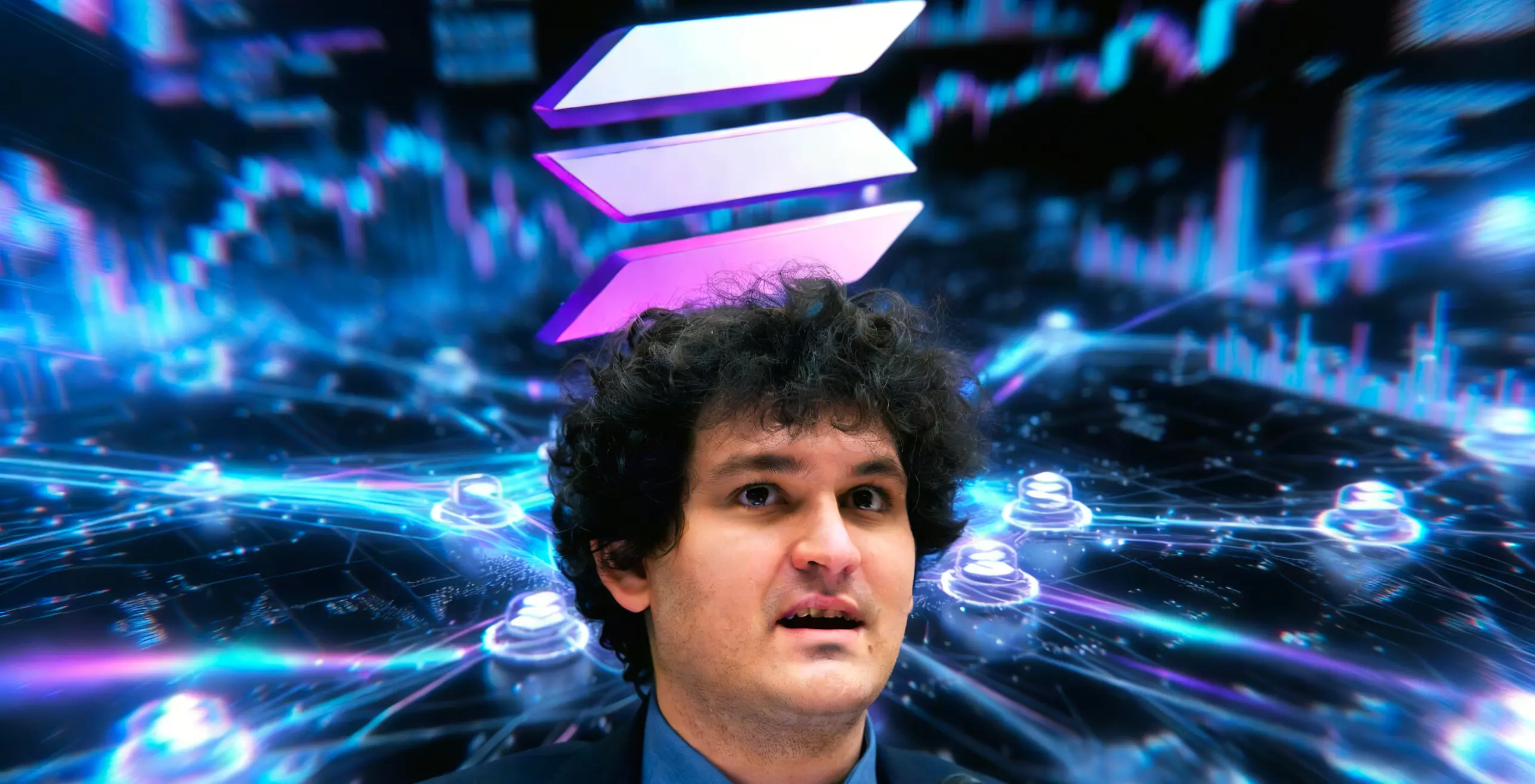
Sam Bankman-Fried, the incarcerated FTX founder serving a 25-year sentence for fraud, has filed a motion requesting a new trial, claiming newly discovered evidence and witness intimidation could overturn his 2023 conviction.
The legal maneuver arrives alongside a striking revelation: early investments SBF made before FTX’s collapse—including stakes in Anthropic, Solana, and Robinhood—would today be worth approximately $80 billion had they not been seized by authorities. For the crypto industry, this dual narrative underscores the gap between investment acumen and ethical governance, while raising questions about what might have been for one of digital assets’ most controversial figures.
Sam Bankman-Fried Files for New Trial: What the Latest Motion Claims
Sam Bankman-Fried is not going quietly. On Feb. 10, his mother, Stanford Law professor emerita Barbara Fried, filed a 35-page pro se motion in a Manhattan federal court requesting a new trial under Rule 33 of the Federal Rules of Criminal Procedure . The filing argues that two key witnesses were prevented from testifying in his favor due to pressure from federal agents, and that this newly surfaced evidence warrants vacating the guilty verdict .
The witnesses in question are former FTX executives Ryan Salame and Daniel Chapsky. Salame, who was separately convicted on federal charges, had claimed he made an arrangement to cooperate with prosecutors that should have protected his wife, Michelle Bond, from legal pursuit. She was later charged with accepting illegal campaign contributions during her congressional bid. SBF’s motion suggests that Salame’s absence from the witness table deprived the defense of testimony that could have countered the prosecution’s narrative.
The timing matters. Rule 33 allows defendants to request a new trial based on newly discovered evidence within three years of a guilty verdict. SBF was convicted over two years ago on seven counts of fraud and conspiracy, meaning this window remains open . Requests for any other reason must be filed within 14 days, which passed long ago.
This isn’t SBF’s first attempt at post-conviction relief. He appealed his case in 2024, arguing he was “presumed guilty” by everyone involved, including the media, prosecutors, and the judge. That appeal is still pending before a three-judge panel. Last week, he fired his appellate lawyer, Jason Driscoll, opting to represent himself going forward .
The $80 Billion Portfolio SBF Left Behind
While SBF fights for his freedom from behind bars, a parallel story has captured the crypto community’s attention: the staggering value of the investments he made before FTX imploded. Had those assets not been seized during the 2022 bankruptcy proceedings, they would today rank among the most successful venture bets of the past decade .
SBF’s Early Investments: A Scorecard
- Anthropic: $500 million investment → Current value: $70 billion (140x return)
- Solana (SOL): $60 million at ~$8 per token → Peak value: $2.1 billion (35x return)
- Mysten Labs (Sui): $100 million investment → Current value: $800 million (8x return)
- Robinhood: 7.5% equity stake → Current value: $10 billion
The numbers tell a story of remarkable foresight. SBF’s $500 million bet on Anthropic, an AI startup focused on generative intelligence and AI safety, now commands an estimated $70 billion valuation as the artificial intelligence sector has exploded . That single investment, had it remained under his control, would have generated roughly 140 times its original cost.
His Solana accumulation proved equally prescient. SBF acquired $60 million worth of SOL tokens when they traded around $8 each. At Solana’s peak market valuation, that position swelled to $2.1 billion, capitalizing on the blockchain’s emergence as a high-speed alternative to Ethereum . Even today, with crypto markets in a corrective phase, Solana remains a top-tier layer-1 protocol.
The $100 million directed to Mysten Labs, the development team behind the Sui blockchain, has appreciated to over $800 million. Sui has gained traction as an innovative layer-1 network leveraging the Move programming language, and Mysten’s technical pedigree—many team members are former Meta engineers from the Diem project—has attracted sustained interest from institutional investors .
Rounding out the portfolio is SBF’s 7.5% equity stake in Robinhood, the retail trading app that became a cultural phenomenon during the 2021 meme stock frenzy. Acquired during a turbulent period for the company, that stake would now be worth approximately $10 billion, buoyed by Robinhood’s expansion into crypto trading and a recovering stock market .
What SBF’s Missed Fortune Reveals About His Downfall
Add it up, and the collective value of these holdings exceeds $80 billion. That’s more than the peak valuation of FTX itself, which reached $32 billion before its collapse. It’s also roughly equivalent to the entire market capitalization of major corporations like Ford or Starbucks.
The irony is difficult to miss. SBF didn’t fail because he lacked vision or made bad bets. He failed because he couldn’t keep his hands out of the cookie jar. The same boldness that led him to back Anthropic before AI was a household word, and to accumulate Solana when it was a fringe Ethereum competitor, also led him to commingle customer funds between FTX and Alameda Research in ways that ultimately proved fatal.
Federal prosecutors proved at trial that SBF authorized the use of FTX customer deposits to prop up Alameda’s risky trading positions, fund venture investments, make political donations, and purchase luxury real estate in the Bahamas. When the music stopped, there was a multibillion-dollar hole in FTX’s balance sheet .
SBF continues to maintain that FTX was merely illiquid, not insolvent, at the time of its collapse. In his recent social media posts, published through proxies, he has characterized himself as a victim of what he calls the Biden administration’s “lawfare machine” targeting the crypto industry . He has even attempted to align himself with President Donald Trump, suggesting both men were accused of “bogus charges” by political enemies.
That strategy hasn’t worked. Trump told the New York Times last month that he has no intention of pardoning SBF, closing off one potential escape route .
The Legal Road Ahead: What a New Trial Would Mean
For SBF to actually secure a new trial, he faces an uphill climb. The standard for granting a Rule 33 motion based on newly discovered evidence is demanding. He must demonstrate that the evidence wasn’t available during the original trial, that it’s material, and that it would likely produce an acquittal if presented to a new jury.
The claims about witness intimidation face a skeptical audience. During the November 2024 appeal hearing, Circuit Judge Maria Araújo Kahn pushed back on SBF’s arguments, noting that “part of the government’s theory of the case is that the defendant misrepresented to investors that their money was safe.” Solvency wasn’t really the point; misappropriation was.
SBF has also requested that a different judge preside over any new trial, arguing that Judge Lewis Kaplan showed “demonstrable bias” during the original proceedings . That’s another long shot. Kaplan presided over a months-long trial that resulted in a unanimous guilty verdict on all seven counts, and appellate courts typically defer to trial judges’ discretion unless clear error is shown.
Even if SBF somehow prevailed in securing a new trial, he would remain incarcerated pending the outcome. And the assets that once made him a paper billionaire? Those belong to the FTX bankruptcy estate now, being marshaled to repay the customers and creditors he allegedly defrauded.
The Missed Fortune as a Cautionary Tale
There’s something almost Shakespearean about the numbers. SBF had the Midas touch when it came to picking winners, but couldn’t resist crossing lines that would have left his fortune intact. Running a legitimate hedge fund or venture arm, he could have leveraged his insights into emerging technologies to build multigenerational wealth.
Instead, his investments will benefit the estates of the companies he destroyed. The Anthropic stake, for example, was sold by the FTX bankruptcy administrators for approximately $1.5 billion—a fraction of its current value, but still a meaningful recovery for creditors . That sale occurred when Anthropic was valued around $180 billion, before its most recent funding round pushed the figure closer to $400 billion. The difference represents opportunity cost measured in the billions.
For the crypto industry, the SBF saga carries lessons that extend beyond one man’s rise and fall. It demonstrates that vision without ethics is a house built on sand. It shows that regulatory compliance isn’t just bureaucratic box-checking; it’s the difference between building something that lasts and watching it crumble.
And it offers a haunting alternate history. Had SBF operated within bounds, he might today be celebrated as one of the great investors of his generation, alongside names like Peter Thiel or Marc Andreessen. Instead, he sits in a prison cell, filing motions written in his own hand, watching from afar as the fortune that could have been his enriches the very people he wronged.
The next date to watch is March 11, when SBF’s appellate team—now just SBF himself—will need to convince the court that his new evidence merits a fresh look. Barring that, his appeals will exhaust, and the 25-year sentence will become the reality of his foreseeable future. The $80 billion question, the one about what might have been, will linger unanswered.