


Biggest prize among Bitcoin miners! $75 worth of hash power for a chance to win 200,000, with odds similar to a lottery.
A Bitcoin miner independently mined a full block on February 25, 2026, by renting 1 PH/s of hash power through the Braiins hash power marketplace for $75. The miner received over 3.1 BTC as a block reward, worth approximately $200,000 at the current Bitcoin market price. Under current network conditions, the probability of this event occurring is about once every 1.1 million blocks, which equates to roughly 21 years of continuous mining.
Probability of Solo Mining: A 1 in 1.1 Million Hash Power Lottery
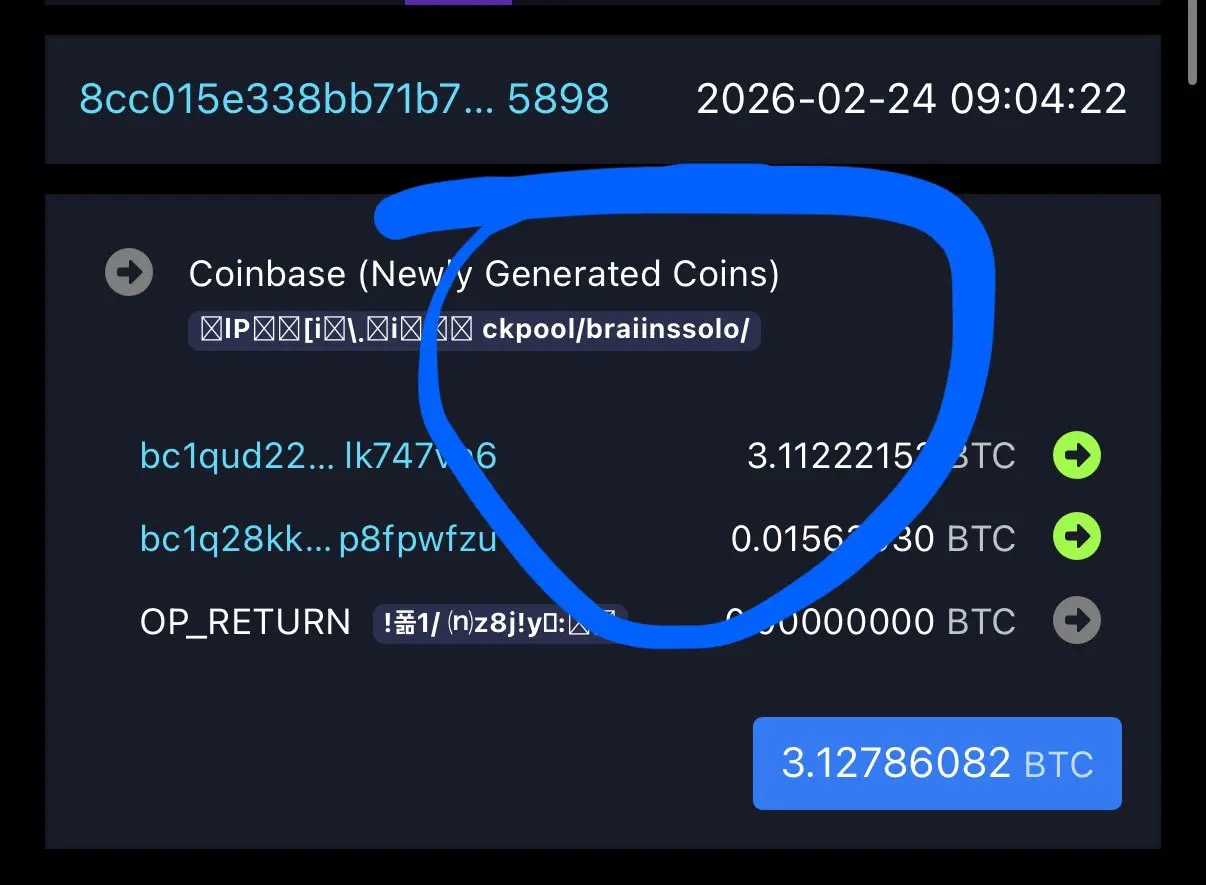
(Source: Braiins)
Bitcoin mining is fundamentally a race of computational power, where miners must solve cryptographic puzzles first to earn the right to add a block and receive the BTC reward. Large mining pools, with their massive hash power, nearly monopolize the chances of discovering new blocks, while solo mining is often compared by industry experts to “buying a lottery ticket”—extremely low odds of winning but with potentially high rewards.
Braiins’ hash power marketplace allows users to directly rent mining hash power without purchasing or operating physical mining hardware, with a minimum of 1 PH/s. The recent winner used a rental configuration costing less than $75 to secure a full block reward worth over $200,000, translating to an ROI of over 2,600 times.
According to Bitinfo, the Bitcoin network’s average hash rate has now exceeded 1.1 ZH/s, a significant increase from about 730 EH/s a year ago—roughly a 50% growth—reflecting ongoing competition and growth in network computational power.
Recent Similar Events and Industry Restructuring
Instances of large solo mining wins are not isolated; several similar events have occurred in recent months, indicating that hash power rental models are providing low-cost opportunities for small participants to engage in high-stakes mining.
Recent Bitcoin Solo Mining Records
February 2026: A miner mined over 3.1 BTC for $75 worth of hash power, valued at about $200,000
January 2026: Two miners independently mined over 3.1 BTC each, worth approximately $300,000 at the time
December 2025: A miner independently mined a full block, earning Bitcoin rewards valued at over $282,000
Meanwhile, the overall structure of Bitcoin mining is undergoing profound reorganization. Publicly traded mining companies like Bitfarms announced complete shutdowns of their mining operations, while Riot Platforms, under pressure from activist investor Starboard Value, is pivoting to seize opportunities in the $21 billion AI high-performance computing market. Hash power share among North American pools continues to decline in 2025, partly due to resources shifting toward AI infrastructure needs, while hash power from Chinese and other regions has seen some rebound.
Frequently Asked Questions
What is solo mining, and why do experts compare it to a lottery?
Solo mining involves a miner using their entire hash power to compete independently for the next block. If they solve the cryptographic puzzle first, they earn the full block reward (currently 3.125 BTC plus transaction fees). Since large pools control most of the network’s hash power, individual miners with small hash power have extremely low chances of winning, but the potential reward is huge. This makes solo mining akin to “buying a lottery ticket”—low cost, low probability, high reward.
How does Braiins’ hash power marketplace work, and can ordinary users participate?
Braiins’ marketplace allows users to rent Bitcoin mining hash power directly from the platform, with a minimum of 1 PH/s. Users do not need to purchase or operate their own hardware or infrastructure. Through this service, individuals can participate in solo mining at a lower cost, with the possibility of independently discovering a full block and earning the entire reward.
As Bitcoin’s network hash rate continues to grow, does this mean individual miners have less chance of winning?
With the Bitcoin network’s hash rate increasing from about 730 EH/s last year to over 1.1 ZH/s now, the probability of winning with a fixed amount of hash power diminishes further. However, the lowering of hash power rental thresholds and the attractiveness of block rewards still make solo mining an appealing high-leverage gamble for some. The recent frequent occurrences of solo miners hitting the jackpot reinforce this perception.
Related Articles
Is Avalanche (AVAX) About to Repeat Its 2020 Magic Against Bitcoin? This Emerging Fractal Suggest So!
Bitcoin Technical Shock: Weekly RSI Undercuts Mt. Gox, 2018 Bear Market, and COVID Crash
El Salvador introduces Bitcoin Diploma 2.0, incorporating Bitcoin education into the national curriculum system
Bitcoin price fluctuates but adoption hits new highs: institutions, banks, and countries accelerate BTC reserve deployment