


Polygon price soars 40% while whales sell off 210 million POL: Is a reversal imminent?
The price of Polygon (POL) has increased by 40% since hitting its bottom on February 6, marking a strong recovery. However, behind this rally are concerning signals. Whales—large investors holding most of the supply—have quietly sold off a significant amount of tokens, with a total of 210 million POL released into the market during the price surge.
Meanwhile, retail investors have nearly stopped selling, with POL entering exchanges dropping by up to 95% in just a few days. Despite these initial positive signs, POL’s price still cannot break through a key resistance level, putting the coin in a “tipping point” situation. The next move is likely to be a strong breakout in one of two directions.
Whales Retreat: Selling 210 Million Tokens During the Rally
Market data paints a clear picture of whale activity during the recent price increase.
On February 14, whale wallets held a total of 8.75 billion POL. By February 25, this number had decreased to just 8.54 billion POL—meaning 210 million POL were sold. This indicates whales took advantage of the rally to take profits or exit their positions.
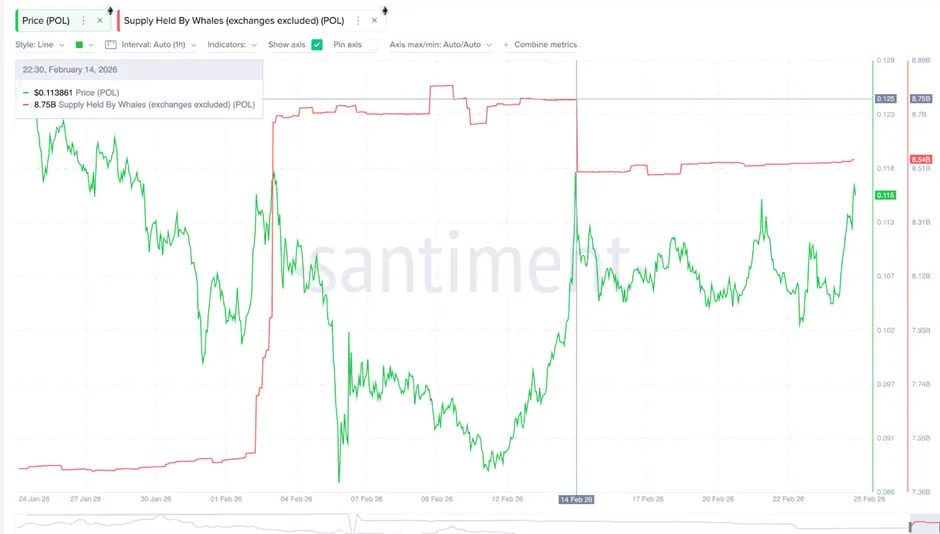 POL Whales | Source: SantimentThis behavior is not surprising, as whales tend to buy when the market is weak and sell when prices are high. In fact, from January 10 to February 6, POL’s price dropped sharply by 55%, wiping out all gains made since early January. As the price began to recover from the bottom, whales quickly capitalized on the opportunity to distribute large amounts of tokens.
This presents a major challenge for the bulls. If the largest investors are selling during rallies, who is buying? Data suggests the answer may lie with retail investors and some large institutions.
However, selling pressure from retail investors appears to have dried up. Tokens transferred to exchanges plummeted from 470,000 POL to just 23,000 POL—a 95% decrease. This indicates the panic selling from retail investors has ended.
Nevertheless, the amount of tokens withdrawn from exchanges has also decreased significantly. The market is entering a “wait-and-see” phase, with both buyers and sellers awaiting clearer signals.
Hidden Divergence: RSI Rising but Price Stagnates
Technical analysis from February 14 to 24 shows a conflicting picture.
POL’s price tested the same resistance level twice, forming a “double top” pattern. However, the RSI reached higher highs on the second test.
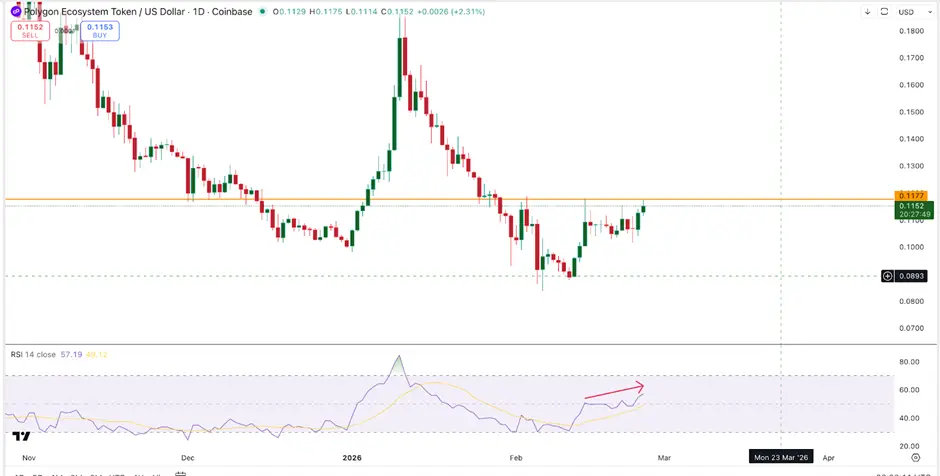 Source: TradingViewThis divergence between price and RSI is called “hidden bearish divergence.” It suggests momentum is improving, but the price cannot break through the resistance. This often signals that the upward trend is losing steam.
Buyers seem to be trying to push the price higher, as indicated by rising RSI. However, each time the price hits resistance, sellers quickly appear, providing ample supply and preventing a breakout.
This is especially significant for POL, as the recovery from February’s bottom has already gained 40%—a notable figure. But if it cannot break through the key resistance, a downward trend could resume. Coupled with whale selling, the market remains vulnerable, where any factor could trigger a sharp decline.
Institutional Accumulation Amid Market Confrontation
A positive signal emerged when the Chaikin Money Flow (CMF) index recently crossed above zero, indicating accumulation. The last time this indicator went positive was just before a strong rally. This suggests large institutions or big capital might be quietly accumulating POL at attractive levels.
However, this contrasts sharply with whale activity, as they continue to sell large amounts of tokens. The conflicting actions of these “smart money” groups create a tense standoff between buying and selling forces.
The $0.14 level will be crucial for POL’s next move. If the price clearly breaks above this threshold, the path to $0.18 opens, completing the recovery from the previous crash. Bulls would then regain control of the market.
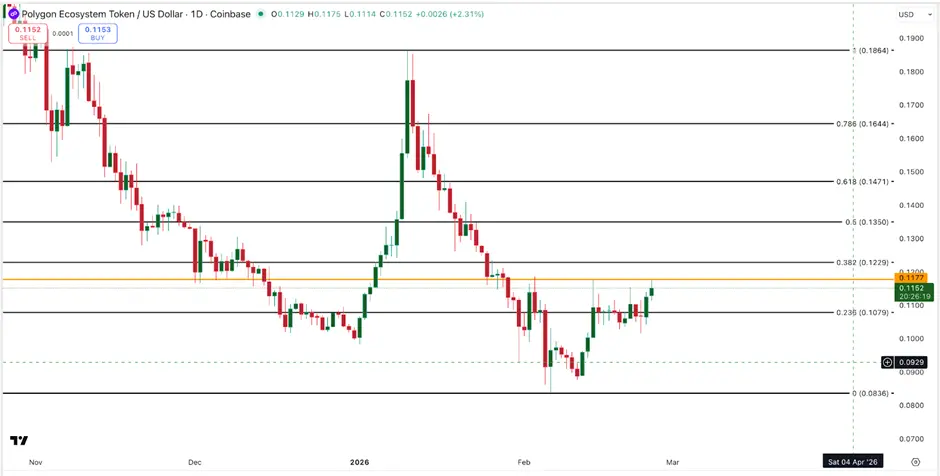 POL Price Levels | Source: TradingViewConversely, if the price fails to break resistance and drops below $0.10, a negative scenario could quickly unfold. Losing this support could push the price down to $0.08—about 20% below current levels—trapping investors who bought during the recovery and causing losses.
Polygon’s Crossroads: Major Move Imminent
The showdown between whales and large institutions has created a “tipping point” for POL’s price. Small investors—who have stayed on the sidelines—may benefit from patience or miss the opportunity entirely if they don’t act quickly.
With volatility narrowing and key levels clearly defined, a significant price move could happen soon. Will buyers break resistance and push the price higher, or will sellers regain control and drive it lower? The answer will soon be revealed.