


Tether assists U.S. Department of Justice in freezing $61 million in "pig butchering" scam funds, exposing $4.2 billion in criminal freezes
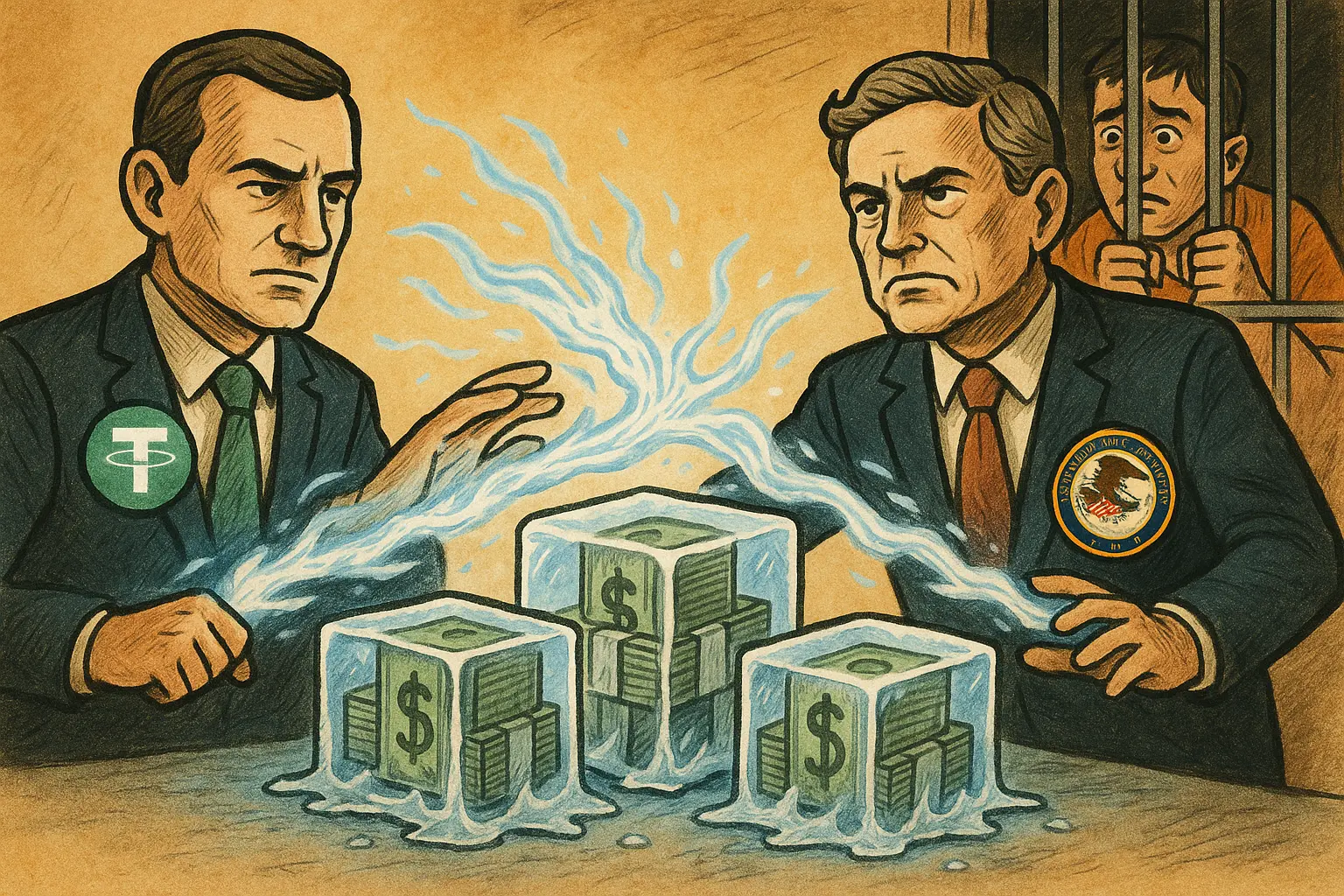
Stablecoin issuer Tether announced on February 27 that it has frozen approximately $4.2 billion worth of cryptocurrencies related to “illegal activities,” with $3.5 billion of those funds remaining frozen since 2023. This week, Tether also assisted the U.S. Department of Justice (DOJ) in freezing nearly $61 million in USDT linked to “pig butchering” scams.
Tether’s Freezing Capabilities and Law Enforcement Cooperation Mechanisms
Tether is the world’s largest stablecoin issuer, with its USD-pegged USDT circulating market cap exceeding $180 billion, more than doubling from about $70 billion three years ago. As the centralized issuer of USDT, Tether has the technical ability to remotely freeze USDT tokens held in any user wallet upon law enforcement request, without the holder’s knowledge or cooperation.
The recent $61 million freeze assisted by Tether targets funds related to “pig butchering” scams. Pig butchering is a carefully crafted emotional scam where attackers build long-term personal trust with victims, then persuade them to invest funds into cryptocurrency platforms, ultimately fleeing with the money. Tether has previously frozen wallets associated with human trafficking in Israel and Ukraine, as well as funds related to “terrorism and war,” and platform assets of sanctioned Russian exchange Garantex.
Broader Cryptocurrency Crime Context: Money Laundering Scale Has Increased Eightfold in Five Years
Tether’s freezing actions reflect broader challenges in anti-money laundering (AML) efforts within the crypto space. Blockchain researchers in January 2026 reported that in 2025, money launderers received at least $82 billion in cryptocurrencies, a significant increase from $10 billion in 2020, partly driven by the expansion of criminal networks targeting Chinese-speaking communities.
The Financial Action Task Force (FATF) last year also called on countries to strengthen measures against illegal financial activities in the crypto market, noting that regulation of crypto markets is generally less strict than mainstream finance, providing criminals with relatively low-threshold money laundering channels.
Overview of Major Tether Freezing Actions and Amounts
2026 (this week): Assisted the DOJ in freezing nearly $61 million in USDT related to “pig butchering” scams
2023 to present: Total of $3.5 billion in assets frozen related to illegal activities, forming the main part of the $4.2 billion total
Human trafficking and conflict-related: Wallets associated with human trafficking in Israel and Ukraine, and “terrorism and war”
Garantex sanctions enforcement: Frozen platform assets of the sanctioned Russian crypto exchange Garantex
Frequently Asked Questions
How can Tether remotely freeze USDT, and what does this mean for users?
As the centralized issuer of USDT, Tether retains the technical capability to remotely freeze tokens in specific wallet addresses. When law enforcement requests, Tether can, without the wallet holder’s knowledge or cooperation, make USDT in certain addresses unspendable. This indicates that although USDT operates on a blockchain, it is not fully decentralized or censorship-resistant, possessing a certain degree of centralized control.
Why are “pig butchering” scams particularly rampant in the crypto space?
Pig butchering is a long-term emotional scam: attackers build trust through social media or dating platforms, then lure victims into high-yield crypto investments, only to disappear with the funds. Due to the cross-border nature of crypto transactions and the relative anonymity of some platforms, scammers prefer using stablecoins as transfer tools, making it difficult for traditional financial regulators to track in real-time.
What are FATF’s requirements for AML in cryptocurrencies, and how do they impact stablecoin issuers like Tether?
The FATF urges member countries to strengthen regulation of crypto asset service providers (VASPs), requiring compliance with KYC (Know Your Customer) and AML procedures similar to traditional financial institutions, and implementing the Travel Rule, which mandates sharing sender and receiver identity information for crypto transfers. For Tether, these requirements align closely with its existing law enforcement cooperation mechanisms.
Related Articles
Tether freezes $4.2 billion USD Tether related to illegal activities
The largest on-chain gold transaction in nearly three weeks: Tether transfers 28,723 XAUT to Abraxas
Tether Freezes $4.2 Billion in USDT Across Law Enforcement Actions Targeting Illicit Activity
USDT, Computing Power, and Agent: Tether's AI Financial System Experiment