


MoonPay Teams Up with M0 to Launch PYUSDx: PayPal USD Supports App Stablecoin
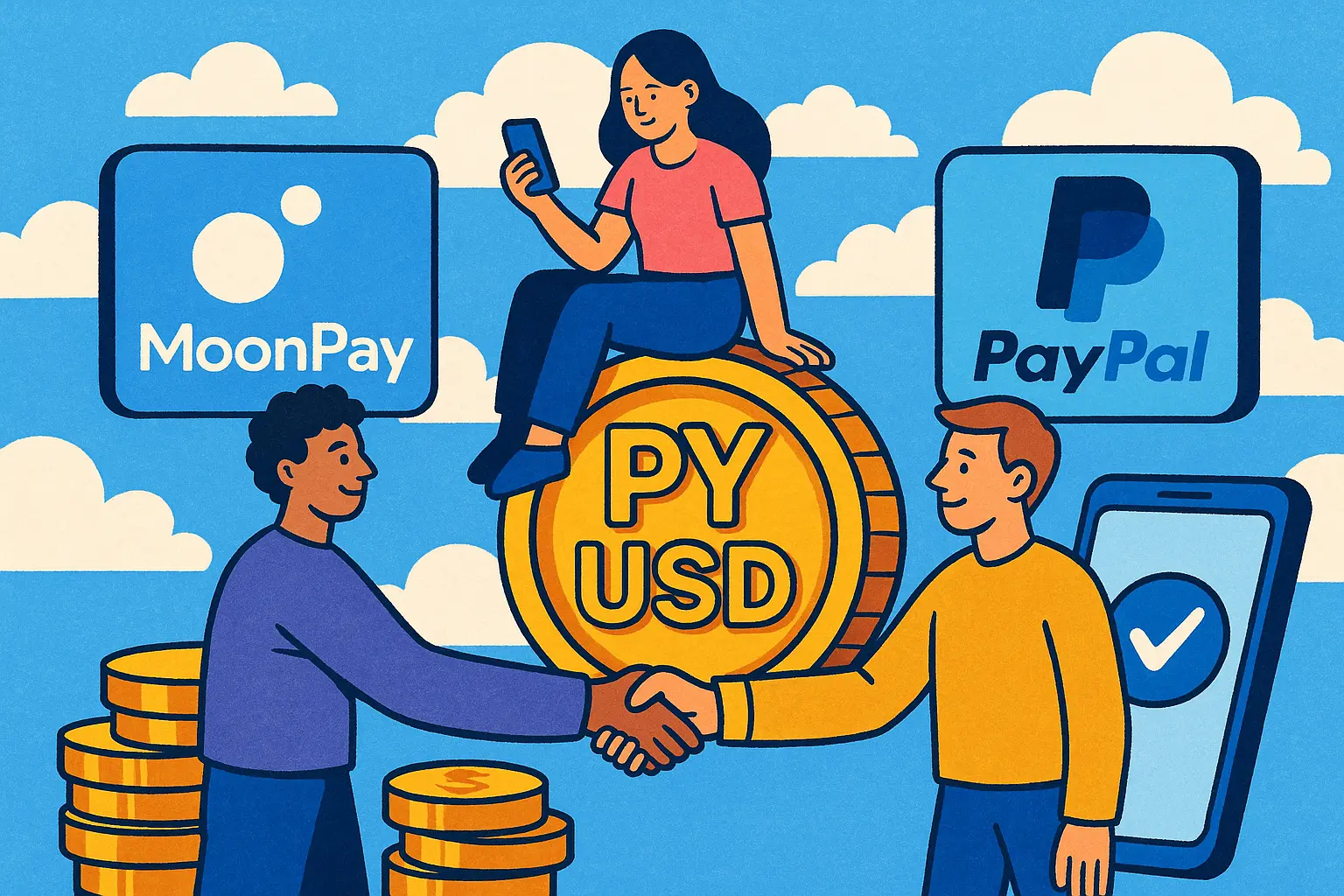
MoonPay and M0 announced the launch of the PYUSDx framework on February 27, allowing developers to quickly issue application-specific branded stablecoins using PayPal dollars (PYUSD) as a reserve asset, with the goal of reducing deployment time from months to days without the need to build issuance, custody and liquidity infrastructure themselves.
PYUSDx Framework: Infrastructure that lowers the barrier to entry for branded stablecoin deployment
PYUSDx’s core value proposition is to significantly lower the technical and compliance threshold for developers to launch their own stablecoins. Through this framework, developers can directly utilize PYUSD as a reserve asset, with MoonPay’s subsidiary MoonPay Digital Assets Limited as an independent tokenization and issuance framework operator, and PYUSD itself is issued and managed by the federally regulated Paxos Trust Company.
It is worth noting that tokens created through PYUSDx are two different assets from PYUSD itself - these branded tokens do not support storage or trading in PayPal or Venmo accounts, and their usage scenarios are defined by the deployed application party. This design allows PYUSD to extend to third-party ecosystems without directly integrating into PayPal’s consumer applications - PYUSD has long lagged behind USDC and USDT in circulation, and PYUSDx provides a differentiated expansion path.
MoonPay’s two-line layout: the stablecoin framework and AI agents are advancing in tandem
The launch of PYUSDx is not an isolated event but the latest step in MoonPay’s accelerated transformation. Just earlier that same week, MoonPay announced the launch of “MoonPay Agents,” a non-custodial layer designed to empower AI systems to autonomously create crypto wallets and execute transactions, representing MoonPay’s official foray into the AI-driven financial infrastructure space.
The two-line layout (PYUSDx framework + MoonPay Agents) shows that MoonPay’s positioning is shifting from a traditional fiat-to-crypto entrance to a middle-layer infrastructure provider between regulated stablecoin issuers and AI-driven financial application developers.
PYUSDx framework key architectural essentials
Reserve assets:P YUSD (issued by Paxos Trust Company, federally regulated)
framework operator:MoonPay Digital Assets Limited (a subsidiary of MoonPay)
Deployment velocity targets: Complete branded stablecoin deployment within a few days (compared to months of traditional processes)
Important Limitations:P YUSDx token is a different asset from PYUSD and does not support PayPal or Venmo account storage/trading
partners:M0 (technical partner of the collaborative launch framework)
Market Background:P YUSD circulation has been lower than USDC and USDT for a long time; PYUSDx offers a differentiated expansion path
Frequently Asked Questions
How does the PYUSDx framework relate to and differ from PYUSD itself?
PYUSDx is a tokenized issuance framework for PYUSD-based reserve assets, operated by MoonPay Digital Assets Limited as a standalone framework, while PYUSD itself is issued and managed by Paxos Trust Company. Branded tokens created through PYUSDx are separate assets that are not supported for use in PayPal or Venmo accounts, and their functionality is defined by the application party deploying the token.
How is MoonPay’s PYUSDx strategically connected to MoonPay Agents?
Together, the two form MoonPay’s infrastructure transformation strategy: PYUSDx allows developers to quickly deploy branded stablecoins, and MoonPay Agents enables AI systems to conduct crypto transactions autonomously. MoonPay is trying to become an intermediary layer between regulated stablecoins and AI-driven applications, serving the infrastructure needs of fintech developers and AI builders.
Why is PYUSD in circulation lower than USDC and USDT, and can PYUSDx improve this situation?
PYUSD lags behind in circulation, partly due to its primary channels being confined to the PayPal and Venmo ecosystems. The PYUSDx framework allows third-party developers to create their own branded tokens with PYUSD as a reserve, expanding its reach in the broader ecosystem without directly integrating PYUSD, but the ultimate effect depends on the scale of developer adoption.
Related Articles
Uniswap fee switch to be expanded to eight chains, with UNI burn to claim protocol revenue
Ripple CEO says Gary Gensler apologizes for the legal battle with crypto
Aave controversy continues: Labs makes concessions by not forcing migration to v3, $42 million fund proposal leads in voting
USDT, Computing Power, and Agent: Tether's AI Financial System Experiment
SIGN (Sign) increased by 20.12% in the past 24 hours