


Iranian Drone Strikes Trigger Spike in European Natural Gas Prices
European natural gas prices spiked on Monday after Qatar halted all liquefied natural gas production following Iranian drone strikes on key energy facilities, jolting already tight markets across Europe and Asia.
U.S. Gas Futures Rise as Middle East Conflict Hits LNG Supply
The Dutch Title Transfer Facility benchmark, Europe’s main gas price gauge, jumped as much as 49.1% to €47.65 per megawatt-hour, up from roughly €32 before the attacks. U.S. natural gas futures climbed about 6.7% to $3.05 per million British thermal units, while Asian spot prices tracked higher as traders braced for tighter cargo availability.
The disruption follows escalating military conflict involving the United States, Israel, and Iran. On March 2, Qatar’s Ministry of Defense said two Iranian drones struck a water tank at a power plant in Mesaieed Industrial City and an energy facility in Ras Laffan Industrial City. No casualties were reported, but the message to energy markets was unmistakable.
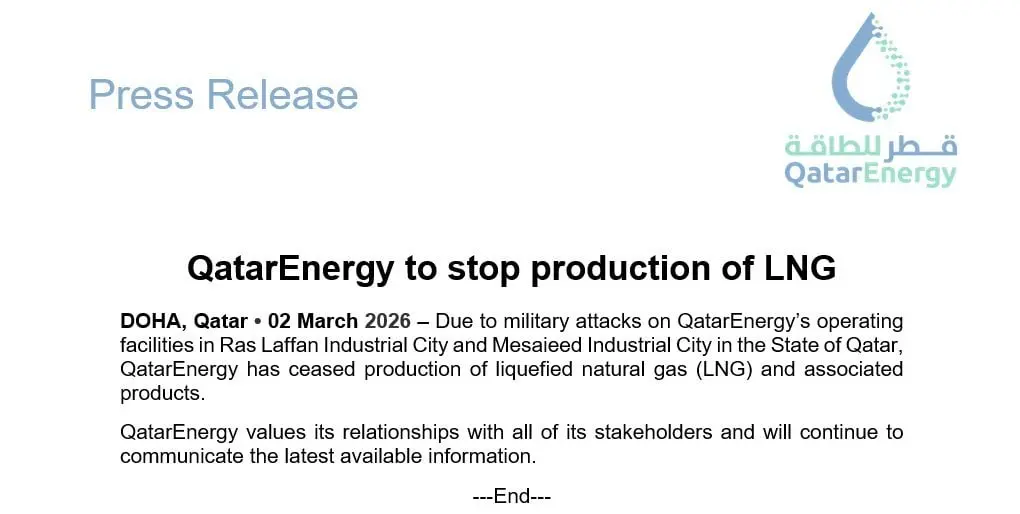 Press release following the Iranian drone strikes.
State-owned Qatar Energy, which manages the country’s liquefied natural gas operations, immediately suspended all LNG production and related exports, citing security concerns. Damage assessments are underway. The company said it would provide updates as more information becomes available.
Press release following the Iranian drone strikes.
State-owned Qatar Energy, which manages the country’s liquefied natural gas operations, immediately suspended all LNG production and related exports, citing security concerns. Damage assessments are underway. The company said it would provide updates as more information becomes available.
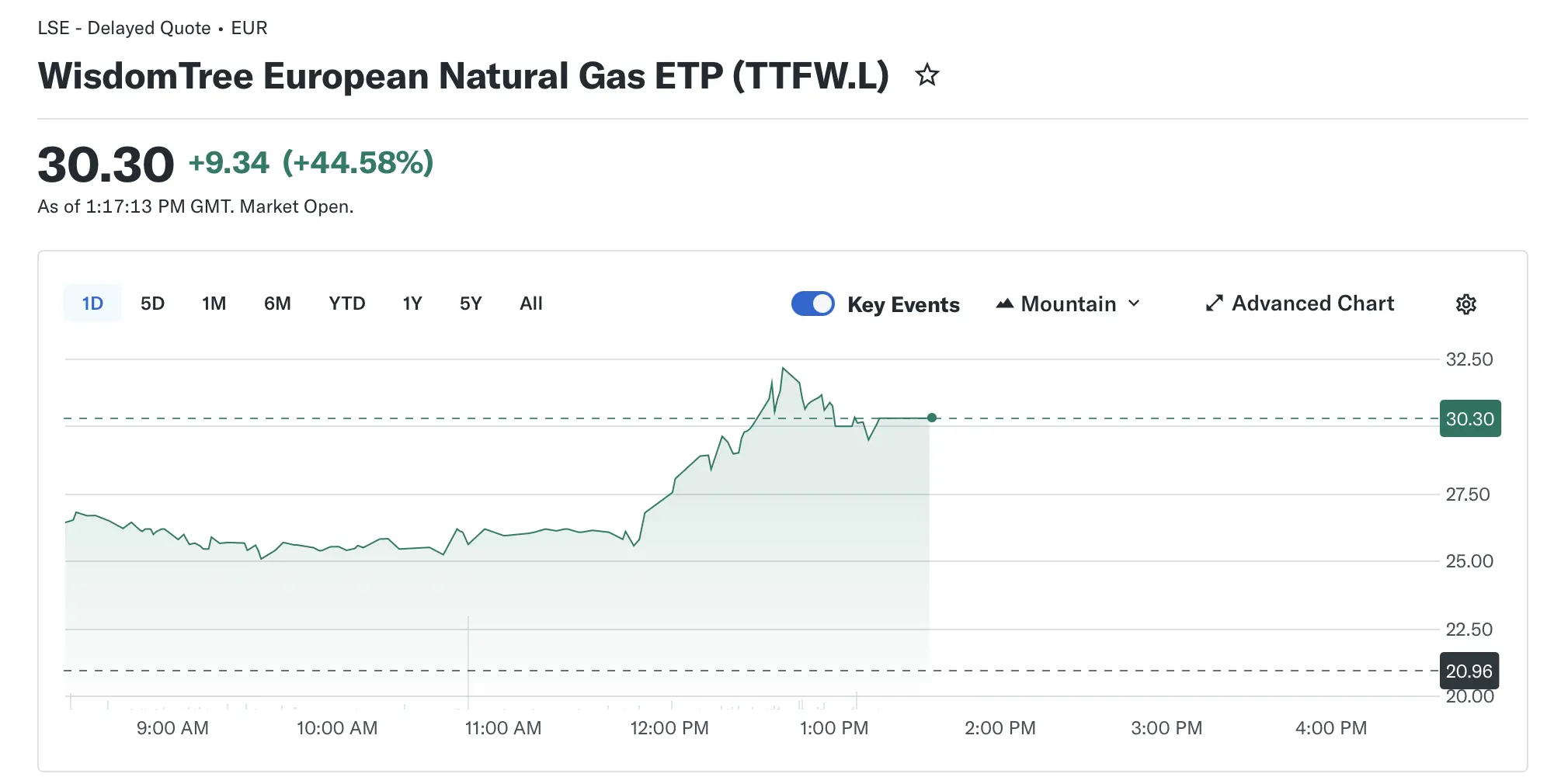 European LNG prices following Qatar’s suspension of services.
Qatar is the world’s second-largest LNG exporter, accounting for nearly 20% of global supply. The halt affects roughly 81 million tonnes, or about 110 billion cubic meters, of annual exports based on 2025 levels. That volume is not easily replaced, particularly in a market still recalibrating after Russia’s 2022 invasion of Ukraine.
European LNG prices following Qatar’s suspension of services.
Qatar is the world’s second-largest LNG exporter, accounting for nearly 20% of global supply. The halt affects roughly 81 million tonnes, or about 110 billion cubic meters, of annual exports based on 2025 levels. That volume is not easily replaced, particularly in a market still recalibrating after Russia’s 2022 invasion of Ukraine.
The situation is compounded by disruptions in the Strait of Hormuz, a strategic chokepoint through which around 80 million tonnes per year of LNG typically transit, much of it from Qatar. Ship-tracking data indicates that at least 11 LNG tankers have paused voyages to avoid the waterway, adding logistical strain to an already stressed system.
European storage levels offer little cushion. Gas inventories across the European Union stand near 30.6% of capacity, well below seasonal norms of about 40% and roughly 10 percentage points lower than this time last year. Germany’s storage is near 20.7%, while France sits around 21.1%, following a severe January cold spell that drained reserves.
Analysts warn that if Hormuz shipping remains disrupted for a month, Dutch TTF prices could climb to €74 per megawatt-hour, more than double pre-crisis levels. A halt lasting more than two months could push prices above €100 per megawatt-hour, forcing utilities to maximize switching to coal and oil to offset tightening gas supplies.
Consultancy Wood Mackenzie estimates that about 1.5 million tonnes, or 2.2 billion cubic meters, of LNG exports are at risk for each week of disruption. The firm said the halt will reignite intense competition between Asia and Europe for spot cargoes, likely prolonging tight conditions even after flows resume. Freight rates have tripled in some cases, and insurance premiums for vessels transiting the Gulf are climbing.
Oil markets are also reacting. Brent crude rose more than 8% amid concerns that up to 15% of global oil supply could be exposed to regional escalation. Analysts say prices could exceed $100 per barrel if disruptions persist, with extreme scenarios pointing toward $125 per barrel. U.S. retail gasoline prices could rise by nearly 13 cents per gallon in the near term.
For Europe, the episode underscores lingering vulnerability after shifting away from Russian pipeline gas. Qatar supplies about 15% of European Union LNG imports, while the United States provides roughly 57%. Any prolonged outage would test industrial sectors such as petrochemicals and metals, which are still recovering from prior energy shocks.
The broader global market is now watching for signs of de-escalation or a phased restart of Qatari operations. Even if production resumes quickly, traders say a new geopolitical risk premium is likely to remain embedded in prices — a reminder that energy security can hinge on a handful of facilities in a volatile region.
FAQ ⛽
- Why did European gas prices rise sharply? European prices jumped after Qatar halted LNG production following Iranian drone strikes on key energy facilities.
- How much LNG does Qatar supply globally? Qatar accounts for nearly 20% of global LNG exports, making it a critical supplier to Europe and Asia.
- What is the Dutch TTF benchmark? The Dutch Title Transfer Facility is Europe’s primary natural gas pricing benchmark used in energy contracts.
- Could U.S. gas and gasoline prices increase? Yes, U.S. natural gas futures and gasoline prices may rise due to tighter global supply and higher oil prices.