


Hamaney's son to succeed! Trump: Concerned that Iran's successor "will be just as bad"
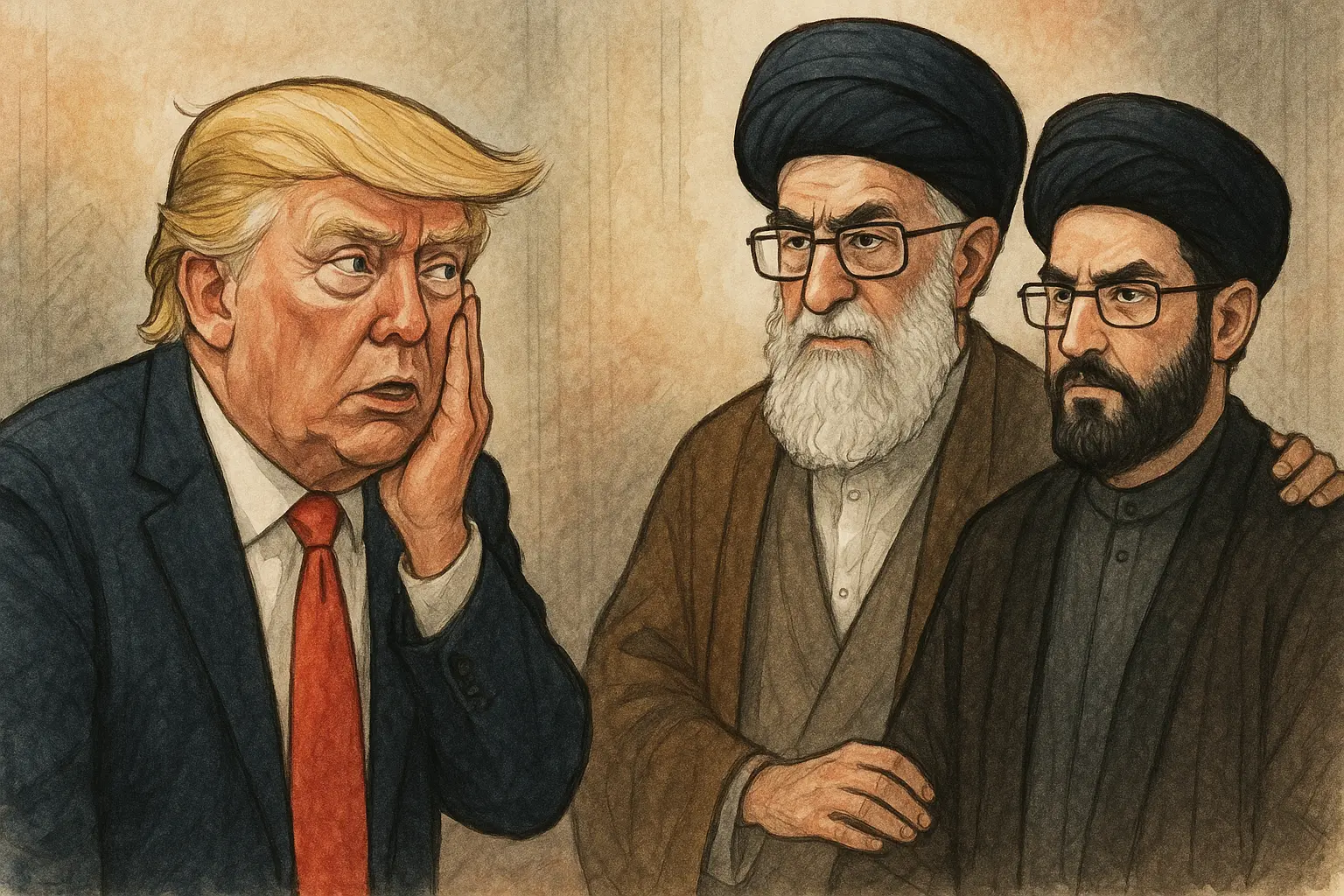
U.S. President Donald Trump admitted at a press conference in the Oval Office that the “worst outcome” of the U.S.-Israel military strike on Iran is that the successor is “as bad as the previous one”; simultaneously, Iranian International Television, citing informed sources, reported that the Islamic Revolutionary Guard Corps (IRGC) is pushing for the rapid, outside-legal-process appointment of his son Mujtaba following the death of Supreme Leader Khamenei.
Trump’s “worst-case scenario” confession: political outcomes are more difficult to determine than military victories
During a meeting with visiting German Chancellor Friedrich Merz, Trump was asked about the “worst-case scenario” of U.S.-Israel military actions, and he responded directly: “I think the worst case scenario is that we do this, and then the person who succeeds us is as bad as our predecessor. This can happen. We don’t want that to happen.”
Trump emphasized the military effectiveness of the U.S.-Israel actions: “From a military perspective, we have completely defeated them and destroyed their missile stockpiles.” However, he acknowledged that military superiority does not necessarily translate into achieving political goals, and warned Iranians not to take to the streets to protest at this time: “It’s very dangerous outside.”
In a controversial statement, Trump claimed that Iran “originally intended to strike first,” saying: “I may have forced Israel to act.” This statement contradicts earlier remarks by Secretary of State Marco Rubio regarding Israel’s initiative to initiate action.
Internal turmoil in Iran: Khamenei’s son suspected of bypassing legal procedures to succeed
Following Khamenei’s death, Iran’s political power is being filled in an unusual manner. According to sources familiar with Iranian international television, the IRGC is pushing for Khamenei’s son Mujtaba to take over outside the legal process, aiming to complete the appointment before dawn on March 1. As airstrikes continue, the constitutional body responsible for selecting the Supreme Leader, the “Assembly of Experts,” can no longer convene normally, prompting the IRGC to seek to bypass legal procedures to advance the appointment.
Meanwhile, reports indicate that U.S. and Israeli airstrikes have severely disrupted Iran’s military command chain, with some command transmissions interrupted; the IRGC is also concerned about the potential for large-scale popular protests after dawn on Sunday. In discussions with Trump, Merz expressed support for overthrowing the Iranian regime but tried to shift focus back to Ukraine: “As for what will happen after they step down, we will discuss that later.”
Key points from the Oval Office statement
Definition of worst outcome: Trump admits that Iran’s successor leader being “as bad as his predecessor” is the worst political result
Military claims: states that the U.S. and Israel have “completely defeated” Iran, destroying numerous missile depots
Public warning: warns Iranian protesters “not to take to the streets now,” citing dangerous circumstances
Preemptive claim: asserts that Iran “originally intended to strike first,” contradicting Rubio’s earlier statements
Spain sanctions warning: due to Spain’s refusal to provide bases, Trump threatens to cut off all trade relations
Frequently Asked Questions
Why is Trump worried that “his successor is as bad as his predecessor,” and what policy dilemmas does this reflect?
Military actions have eliminated the Supreme Leader, but who fills the political vacuum remains uncontrollable. In authoritarian regimes, successors are often nominated by hardliners such as the IRGC, which may not signify a fundamental policy shift. Trump’s concern essentially acknowledges the potential gap between military victory and political objectives, and is a core reason critics point to the lack of clear political pathways following this military operation.
What do the rumors of Khamenei’s son bypassing legal procedures to succeed indicate?
According to Iran’s constitution, the next Supreme Leader is officially elected by the “Assembly of Experts.” However, the airstrikes have prevented this assembly from convening, prompting the IRGC to seek to push through the appointment outside the legal process. This reflects the severe chaos within Iran’s top power structures under military strikes and the hardliners’ attempt to dominate the political trajectory amid the crisis.
Is Trump’s threat to cut off trade with Spain feasible?
Trump threatened to “cut off all contacts with Spain” because Spain refused to provide a joint base. Spain is an important trading partner for the U.S. within the EU, and significant trade reductions would face legal challenges under bilateral agreements with the EU and the U.S. Spanish officials have stated they do not anticipate substantial consequences, asserting that the use of the base is based on existing arrangements rooted in sovereignty and treaties.