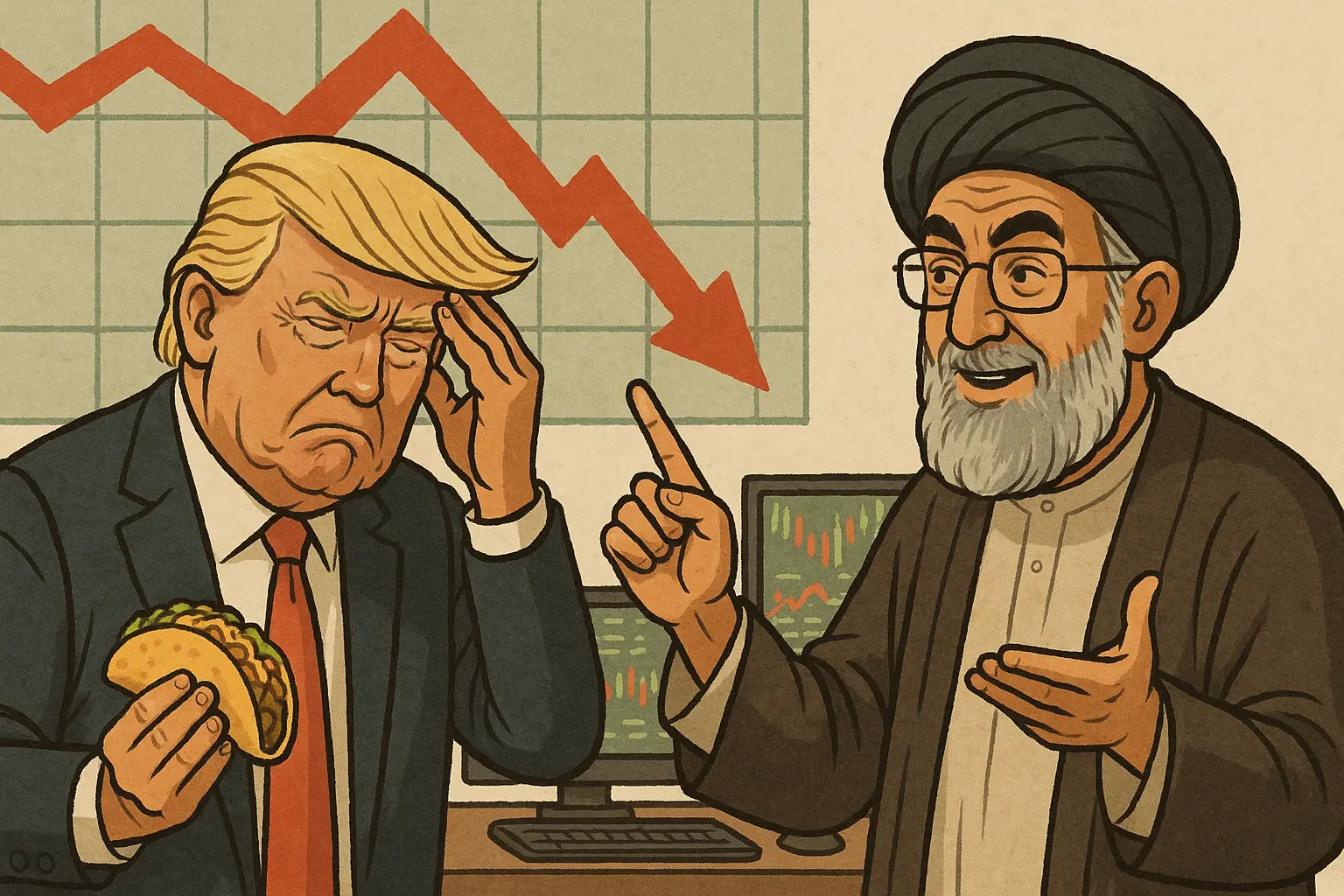
Iranian Parliament Speaker Mohammad Baqer Ghalibaf released a statement on social media on March 29 that resembled a trading suggestion, claiming that Trump’s pre-market statement was a “contrarian indicator” and advising followers to adopt a counter-strategy in the energy market. This action came at a critical time for the TACO trading strategy (Trump Always Chickens Out).
TACO Trading from Undefeated to Dysfunctional: Iran is a Different Opponent
TACO trading dominated much of the market trend in 2025, with a simple logic: buy whenever Trump’s remarks triggered a market drop and wait for a policy reversal days later. This strategy worked multiple times during tariff standoffs with China, Canada, and the EU, as these trading partners were all rational economic actors, willing to compromise and ultimately accept a decent agreement.
The situation with Iran is entirely different. Since the joint U.S.-Israel strikes, Iran’s Supreme Leader has died early in the conflict, and after repeated strikes on military infrastructure, Tehran has shown no willingness to negotiate. The Strait of Hormuz is effectively still blockaded, with Brent crude prices exceeding $110 per barrel.
Barclays Bank strategist Emmanuel Cau pointed out that repeated policy delays are undermining market confidence, with investors no longer viewing the delays as a path to peace but interpreting them as a tactical pause before further escalation.
Four Structural Reasons for TACO Trading’s Failure
Fundamentally Different Nature of the Opponent: Iran is not a rational negotiating party seeking economic stability; traditional compromise logic does not apply.
The Supreme Leader is No Longer in Power: The core decision-making mechanism is disrupted, making the negotiation path and scope of authority increasingly ambiguous.
Geopolitical Premium Becoming Structural: The long-term blockade of the Strait of Hormuz has made high oil prices a norm rather than a temporary fluctuation.
Diminishing Returns of Delay Effects: The market no longer interprets deadline extensions as positive signals but sees them as a continuation of uncertainty.
Ghalibaf’s Dual Warning: Trading Suggestions and Bond Market Threats
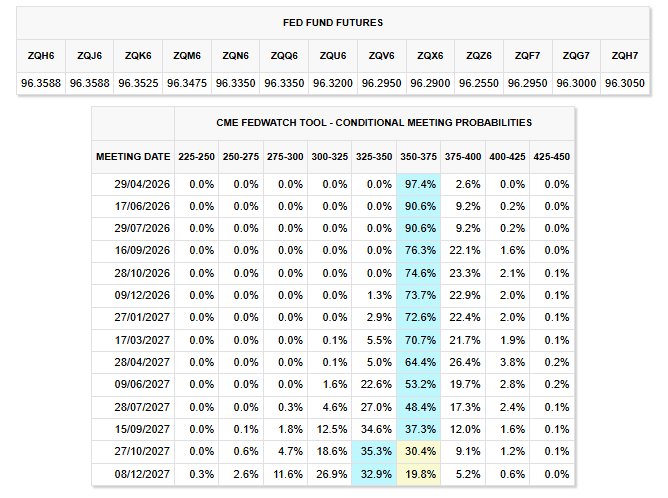 (Source: CME Fed Watch)
The implications of Ghalibaf’s public statement extend far beyond a mere trading suggestion. He previously served as the commander of the Islamic Revolutionary Guard Corps (IRGC) and is one of the most influential political figures in wartime Iran. He not only denied any negotiations with the U.S. but also warned that financial institutions purchasing U.S. Treasury bonds are “legitimate military targets,” pushing the already fragile bond market into a new tier of geopolitical risk.
The yield on the U.S. 10-year Treasury bond has risen to 4.46%, nearing the critical threshold of 4.5% — April 2025 was the turning point when yields reached this level, forcing Trump to suspend reciprocal tariffs. Johns Hopkins University economist Steve Hanke noted that under the dual pressure of the tariff war and the Iran conflict, bond market hawks have clearly shifted to pressuring Trump.
Macroeconomic data is simultaneously deteriorating: the Atlanta Fed’s GDPNow tracker has downgraded first-quarter economic growth expectations to 2%, down from 3.1% a month ago; CME FedWatch data shows that the market expects rates to remain stable until the end of 2026, far from earlier expectations of multiple rate cuts.
Frequently Asked Questions
What is the TACO trading strategy?
TACO trading (Trump Always Chickens Out) is a buy-the-dip strategy that became prevalent in the 2025 market: buy whenever Trump’s remarks trigger a market decline, betting that he will eventually backtrack on his hardline stance and that the market will reverse in the short term. This strategy has worked multiple times during tariff confrontations with trading partners like China and the EU.
Why did TACO trading fail during the Iran crisis?
Iran fundamentally differs from traditional trading partners: it lacks the willingness for economic compromise, the Supreme Leader has died early in the conflict, and the long-term blockade of the Strait of Hormuz has made the geopolitical premium structural rather than a temporary fluctuation. The traditional logic of “delays equal de-escalation” no longer holds in this context.
Why is the U.S. bond yield approaching 4.5% critical for the market?
4.5% is a widely recognized critical threshold; after yields reached this level in April 2025, it forced Trump to announce the suspension of reciprocal tariffs. A further breach could pressure the White House to take action; however, in the reality of war, geopolitical factors are more challenging to resolve quickly through mere policy interventions than trade disputes.
Disclaimer: The information on this page may come from third parties and does not represent the views or opinions of Gate. The content displayed on this page is for reference only and does not constitute any financial, investment, or legal advice. Gate does not guarantee the accuracy or completeness of the information and shall not be liable for any losses arising from the use of this information. Virtual asset investments carry high risks and are subject to significant price volatility. You may lose all of your invested principal. Please fully understand the relevant risks and make prudent decisions based on your own financial situation and risk tolerance. For details, please refer to
Disclaimer.


