

Trade
Basic
Futures
Futures
Hundreds of contracts settled in USDT or BTC
TradFi
Gold
Trade global traditional assets with USDT in one place
Options
Hot
Trade European-style vanilla options
Unified Account
Maximize your capital efficiency
Demo Trading
Futures Kickoff
Get prepared for your futures trading
Futures Events
Participate in events to win generous rewards
Demo Trading
Use virtual funds to experience risk-free trading
Earn
Launch
CandyDrop
Collect candies to earn airdrops
Launchpool
Quick staking, earn potential new tokens
HODLer Airdrop
Hold GT and get massive airdrops for free
Launchpad
Be early to the next big token project
Alpha Points
Trade on-chain assets and enjoy airdrop rewards!
Futures Points
Earn futures points and claim airdrop rewards
Investment
Simple Earn
Earn interests with idle tokens
Auto-Invest
Auto-invest on a regular basis
Dual Investment
Buy low and sell high to take profits from price fluctuations
Soft Staking
Earn rewards with flexible staking
Crypto Loan
0 Fees
Pledge one crypto to borrow another
Lending Center
One-stop lending hub
VIP Wealth Hub
Customized wealth management empowers your assets growth
Private Wealth Management
Customized asset management to grow your digital assets
Quant Fund
Top asset management team helps you profit without hassle
Staking
Stake cryptos to earn in PoS products
Smart Leverage
New
No forced liquidation before maturity, worry-free leveraged gains
GUSD Minting
Use USDT/USDC to mint GUSD for treasury-level yields

More






What is the safest stablecoin
What is a stablecoin?
A stablecoin is a type of digital asset whose goal is to maintain price stability by pegging its value to a traditional reserve asset. As an important part of the crypto financial ecosystem, stablecoins account for about 10% of the overall crypto market capitalization, or $124 billion out of $1.3 trillion in assets. More and more people are choosing to adopt stablecoins like USD Coin (USDC), Tether (USDT), and Binance USD (BUSD) because of their ability to effectively protect investors from the volatility associated with cryptocurrencies.
While the popularity of stablecoins has provided investors with a variety of options, it has also brought with it the challenge of identifying which stablecoins are safe and reliable. Among the growing number of stablecoin offerings, factors such as stablecoin-backed assets, regulatory compliance, and audit practices have become key indicators to assess the reliability of stablecoins.
Security factors for stablecoins
When assessing the security of stablecoins, the level of investor confidence depends on several factors. Although the primary goal of stablecoins is to maintain the stability of value, the mechanisms to achieve this must be transparent, secure, and reliable.
Here is a breakdown of the main factors to consider:
By considering these factors together, the security of stablecoins can be assessed more comprehensively and help investors make more informed investment decisions.
Top 3 safest stablecoins
Based on our multi-factor analysis, which considers factors such as regulatory compliance, asset backing, and transparency, we have identified the top three safest stablecoins for discerning investors in the crypto finance space. These stablecoins provide a safe and secure harbor in a volatile sea of digital assets:
Why is USDC the safest stablecoin?
USDC is the safest stablecoin and is backed by a strong financial and regulatory framework. Created by Circle, a regulated fintech company, USDC is not only a digital dollar, but also a highly liquid asset, with a 24-hour trading volume of $4 billion as of October 25, 2023. This stablecoin has a circulation of $25 billion and has 1.8 million holders worldwide. Its reserves are managed and held by leading financial institutions such as BlackRock and BNY Mellon, ensuring that they can be exchanged for dollars at a 1:1 ratio.
USDC’s financial statements are audited annually, and the coin adheres to auditing standards set by the American Institute of Certified Public Accountants (AICPA). In addition, the SEC-registered Circle Reserve Fund holds a portfolio of short-term U.S. Treasuries and overnight repo agreements. This multi-layered approach to security and compliance makes USDC a trusted choice in both traditional and crypto financial ecosystems.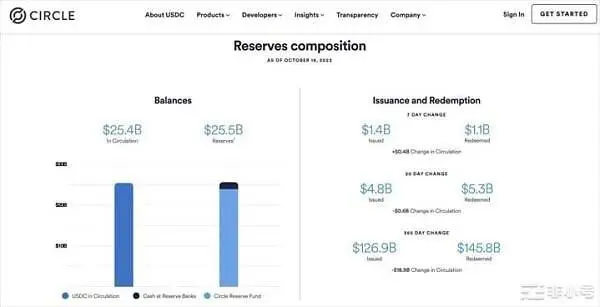
Is DAI a secure decentralized stablecoin?
DAI has significantly reduced its reliance on centralized assets such as USDC, with collateral reserves falling from 50% to 4.9%. Instead, it relies more on Ethereum derivatives such as Encapsulated Ethereum (WETH) and Encapsulated Staked Ethereum (wstETH), which currently account for 68% of its total collateral. This diverse support enhances DAI’s stability, making it the most secure decentralized stablecoin.
DAI’s overcollateralization ratio is currently at 213%, enhancing its robustness as a stable asset. In addition to this high collateral ratio, it also integrates wrapped Ethereum (wstETH), enabling DAI to take advantage of Ethereum staking rewards. These features enhance DAI’s credibility, making it the go-to choice for earning stablecoin yield through established on-chain protocols like Spark and AAVE.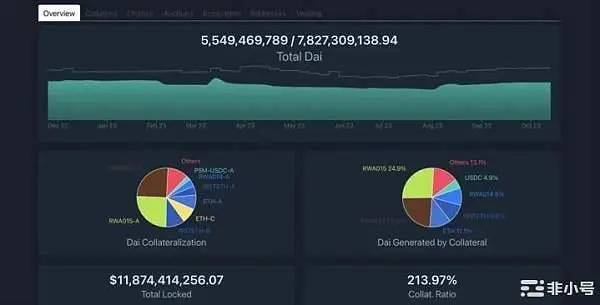
The bottom line
In the ever-changing cryptocurrency landscape, stablecoins such as USDC, USDT, and DAI provide a relatively safe haven as important financial instruments for traders and investors. To make an informed decision, multiple aspects such as regulatory oversight, asset backing, and cybersecurity must be considered.
Among centralized stablecoins, USDC dominates with its strong reserves of funds and strict regulation, while DAI is a reliable decentralized alternative. By taking a closer look at these key factors, investors can be more confident in navigating the intricacies of the cryptocurrency market. For a more holistic perspective, see our research article on stablecoin statistics to understand the broader trends shaping this segment.
Source: Golden Finance