China’s general announcement on February 6 — banning unlicensed stablecoins pegged to the renminbi, classifying most real-world asset (RWA) tokenization activities as illegal, and reaffirming the comprehensive ban on cryptocurrency-related activities — did not cause significant market volatility. According to Jason Atkins, Head of Trading at Hong Kong-based market maker Auros, this muted reaction is the most notable signal.
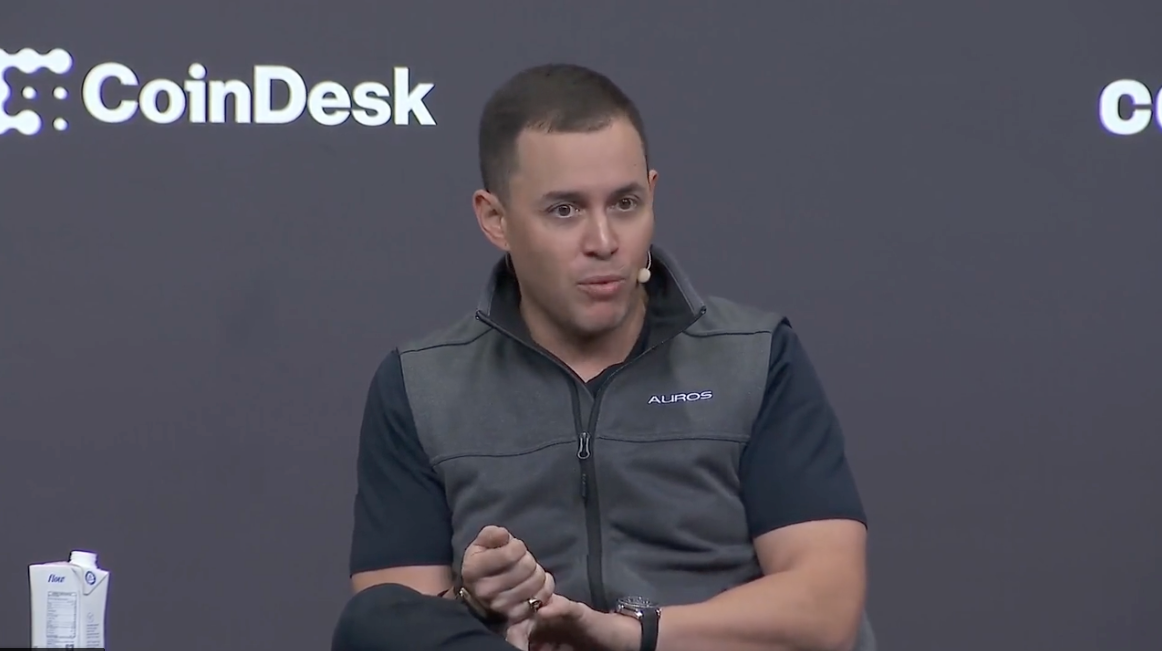 Jason Atkins, Head of Trading at Auros | Source: Screenshot from Consensus After years of bans and repeated similar measures, the market seems accustomed to Beijing’s tough stance on decentralized cryptocurrencies. However, the most interesting aspect isn’t the ban itself, but the details revealed in this announcement.
RWA: Leading the Global Trend
The most notable new point in the February 6 announcement is China’s first specific mention of RWA. While some interpret this as a move to tighten control, Atkins sees it as a “preparatory step” for future regulations.
He explains that Beijing has learned from the past rapid growth of Bitcoin mining within China. Allowing the industry to grow too large before banning it in 2021 created significant regulatory challenges. With RWAs booming worldwide, China appears determined not to repeat that mistake.
Explicit mention of RWA in the announcement indicates that Beijing views it as a potential risk to capital controls. This reflects concerns over the rapid and free movement of assets, which runs counter to China’s strict financial control philosophy.
However, this does not mean a legal framework for RWA will be implemented soon. Instead, it shows that Beijing is closely monitoring the sector to act swiftly when necessary.
“Bitcoin mining grew rapidly in China without authorities even realizing, and then it became too big to control,” Atkins notes. “Including RWA in this announcement shows they’re trying to anticipate potential issues and craft regulations before they become real threats.”
Stablecoins, Hong Kong, and the story of financial infrastructure
A noteworthy point is that China is for the first time distinguishing stablecoins from virtual currencies, instead viewing them as tools that perform “some functions of fiat money.” Some experts suggest this could subtly open the door for Chinese banks in Hong Kong to seek licenses to issue stablecoins under the city’s new legal framework.
Atkins considers this interpretation reasonable, but the path to realization remains long. He emphasizes that the core issue isn’t innovation but infrastructure: if stablecoins prove beneficial in improving payment efficiency and transaction processing, they will be seen as upgrades to the banking system rather than threats.
Initially, crypto startups may lead the testing environment in Hong Kong. Over time, larger banks will participate as the legal framework matures and risks are better managed.
Regarding whether China’s major tech firms—who previously experimented with stablecoins in Hong Kong before suspensions—will be allowed to continue, Atkins admits this depends on behind-the-scenes negotiations between Beijing and Hong Kong. “We only know what they want us to know,” he says.
The silent dominance of the US dollar in the digital age
Atkins’s deepest analysis isn’t about China’s ban but about what China might find hard to control. He states that the US GENIUS Act has brought the world closer to a new reality where digital transactions—and traditional ones—default to US dollar-based payment systems.
Every purchase of a dollar-pegged stablecoin is essentially a US government bond purchase. China has long understood this power: in 2013, it was the largest foreign holder of US Treasuries, with over $1.3 trillion. Over the years, China reduced holdings to about $680 billion, now behind Japan and the UK.
However, in a world where stablecoins are widely accepted and operate cross-border, abandoning US Treasuries is no longer feasible. The demand for US debt becomes an inevitable consequence of daily digital transactions, beyond any government’s control.
“You can ban it,” Atkins says. “But how do you really stop it?”
The big question yet to be asked
In conclusion, Atkins highlights an important but often overlooked issue: as regulators worldwide approve stablecoin legal frameworks and test asset tokenization, the question of who will provide liquidity for these products remains unresolved.
Deposit and withdrawal channels, price stability, and low slippage—all depend on market makers operating under appropriate incentives. Regulations may open the door, but liquidity is the key factor determining whether that door can be passed through.
“Without liquidity, nothing can operate,” he states. “No matter how attractive the system is, it won’t function.”
Although Atkins speaks as the Head of Trading at a company with direct stakes in this area, his perspective remains valuable. Without continuous market makers maintaining supply-demand balance, volatility will increase, spreads will widen, and a stable, accessible market—as envisioned by regulators in Hong Kong, Washington, or even Beijing—will not materialize.
China may choose to ignore this reality or believe it can build an alternative system based on state-controlled infrastructure. However, regardless of Beijing’s intentions, the operational foundation of any effective stablecoin ecosystem must rely on companies like Auros.
Disclaimer: The information on this page may come from third parties and does not represent the views or opinions of Gate. The content displayed on this page is for reference only and does not constitute any financial, investment, or legal advice. Gate does not guarantee the accuracy or completeness of the information and shall not be liable for any losses arising from the use of this information. Virtual asset investments carry high risks and are subject to significant price volatility. You may lose all of your invested principal. Please fully understand the relevant risks and make prudent decisions based on your own financial situation and risk tolerance. For details, please refer to
Disclaimer.


