
According to CoinShares’ weekly report released on April 7, global digital asset investment products recorded approximately $224 million in net inflows last week, and market sentiment improved slightly. However, in the latter part of the week, funds momentum weakened as both stronger-than-expected retail sales data and more hawkish rate expectations hit at the same time. The main driver behind this inflow came from Europe: Switzerland contributed $157.5 million in the week, the highest globally, diverging from the previous weeks’ U.S.-led product dominance.
Regional and Asset Breakdown: Europe Leads, and Market Sentiment Splits
This fund flow inflow showed a clear shift in regional structure, and the performance of each digital asset also showed a clear divergence.
Summary of Last Week’s Digital Asset Fund Flows
· Regional breakdown
Switzerland: Net inflows of approximately $157.5 million, #1 globally
Germany: Net inflows of $27.7 million
Canada: Net inflows of $11.2 million
United States: Net inflows of approximately $27.5 million, significantly lagging behind Europe overall
· Asset breakdown
Bitcoin: Net inflows of approximately $107.3 million, but still recorded a cumulative net outflow of $145 million year-to-date
Short bitcoin products: Net inflows of $16.0 million, the highest since mid-November 2025, indicating that market views remain persistently polarized
Solana: Net inflows of approximately $34.9 million, with year-to-date cumulative inflows still steadily accounting for 10% of its assets under management
Ethereum: Net outflows of $52.8 million; regulatory uncertainty stemming from the 《Clarity Act》 continues to weigh on inflows
Miner Selling Pressure: A Double Hit from Falling Hashrate and AI Transition Sell-Offs
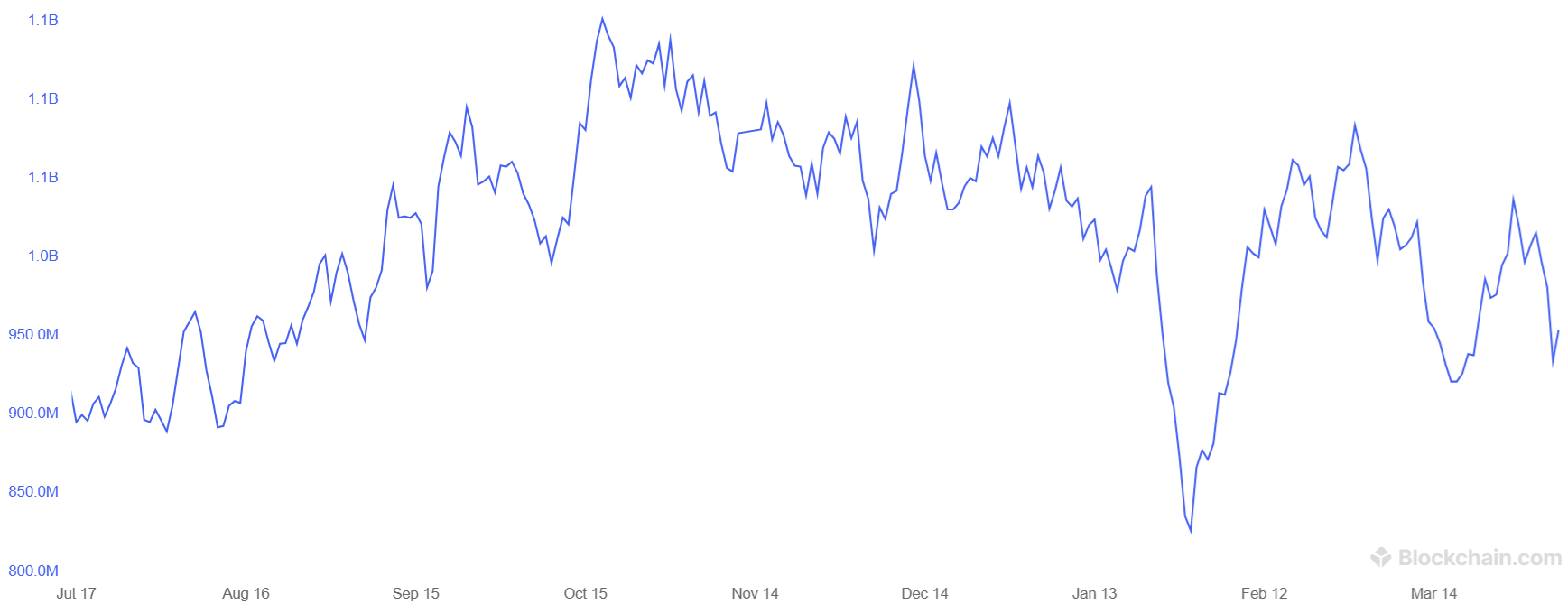 (Source: Blockchain.com)
Although the digital asset market saw net inflows last week, the bitcoin end faced ongoing selling pressure from miners, which constrained market sentiment.
On Tuesday, MARA Holdings (MARA) transferred 250 bitcoins; it had sold a total of 15,133 bitcoins in March, and currently holds 38,689 bitcoins. Riot Platforms (RIOT) transferred 1,500 bitcoins for sale in the first week of April, holding 15,680 bitcoins. High energy costs continue to compress profit margins. Several miners are cutting debt and shifting resources toward artificial intelligence (AI) computing data centers. This transition strategy has led to systematic BTC selling pressure.
Bitcoin’s hashrate fell on Monday to 953 exahashes, below 1,083 exahashes in late February, further weighing on market sentiment. Strategy (MSTR) continued to add to holdings against the trend last week, buying 4,871 bitcoins. However, after a two-month bear market, the market worries that companies taking on debt to increase bitcoin holdings have limited buyers left to absorb the added supply, and the pressure to sell reserves being forced to build up is accumulating.
Ethereum Continues to Lag, and Options Market Sends a Bearish Signal
Ethereum has recorded net outflows in consecutive days. Last week’s single-week outflow was $52.8 million. Investors are continuing to digest the negative impact of the 《Clarity Act》’s legal classification on Ethereum, and risk-off/keep-watching sentiment is clearly evident.
On Tuesday, the bitcoin options market showed a bearish signal: the put option premium versus call options (Call) reached 17%, a recent high, indicating that some market participants are hedging against downside risk. Although the U.S.-listed bitcoin spot ETF recorded $471 million in net inflows on Monday—its highest in five weeks—analysts noted that strong single-day ETF inflows are not sufficient to confirm sustained growth in institutional demand. Overall, market risk sentiment remains cautious.
Frequently Asked Questions
What types of investment products does CoinShares’ weekly digital asset report track?
CoinShares’ weekly fund flow report tracks major global digital asset investment products, including spot ETFs and derivative funds for cryptocurrencies such as bitcoin, ethereum, and Solana, as well as shorting-type products—reflecting overall fund flows and sentiment shifts among both institutional and retail investors toward digital assets.
Why have fund inflows into short bitcoin products hit a near-month high?
According to CoinShares data, short bitcoin products recorded $16.0 million in inflows last week—the highest since mid-November 2025—indicating that some investors remain cautious about bitcoin’s short-term trend. Miner selling pressure, falling hashrate, more hawkish rate expectations, and a 17% premium in the bitcoin options market for Put/Call are all behind the market’s sentiment divergence.
What is the specific impact of the 《Clarity Act》 as Ethereum continues to see net outflows?
The 《Clarity Act》 is an important piece of legislation within the U.S. federal legislative framework related to the classification of crypto assets. Its classification of Ethereum’s legal nature has triggered uncertainty in how it will be regulated, leading some institutional investors to adopt a wait-and-see stance. Funds have continued to withdraw from Ethereum-related investment products, causing it to clearly underperform bitcoin and Solana in this week’s asset performance.
Disclaimer: The information on this page may come from third parties and does not represent the views or opinions of Gate. The content displayed on this page is for reference only and does not constitute any financial, investment, or legal advice. Gate does not guarantee the accuracy or completeness of the information and shall not be liable for any losses arising from the use of this information. Virtual asset investments carry high risks and are subject to significant price volatility. You may lose all of your invested principal. Please fully understand the relevant risks and make prudent decisions based on your own financial situation and risk tolerance. For details, please refer to
Disclaimer.


