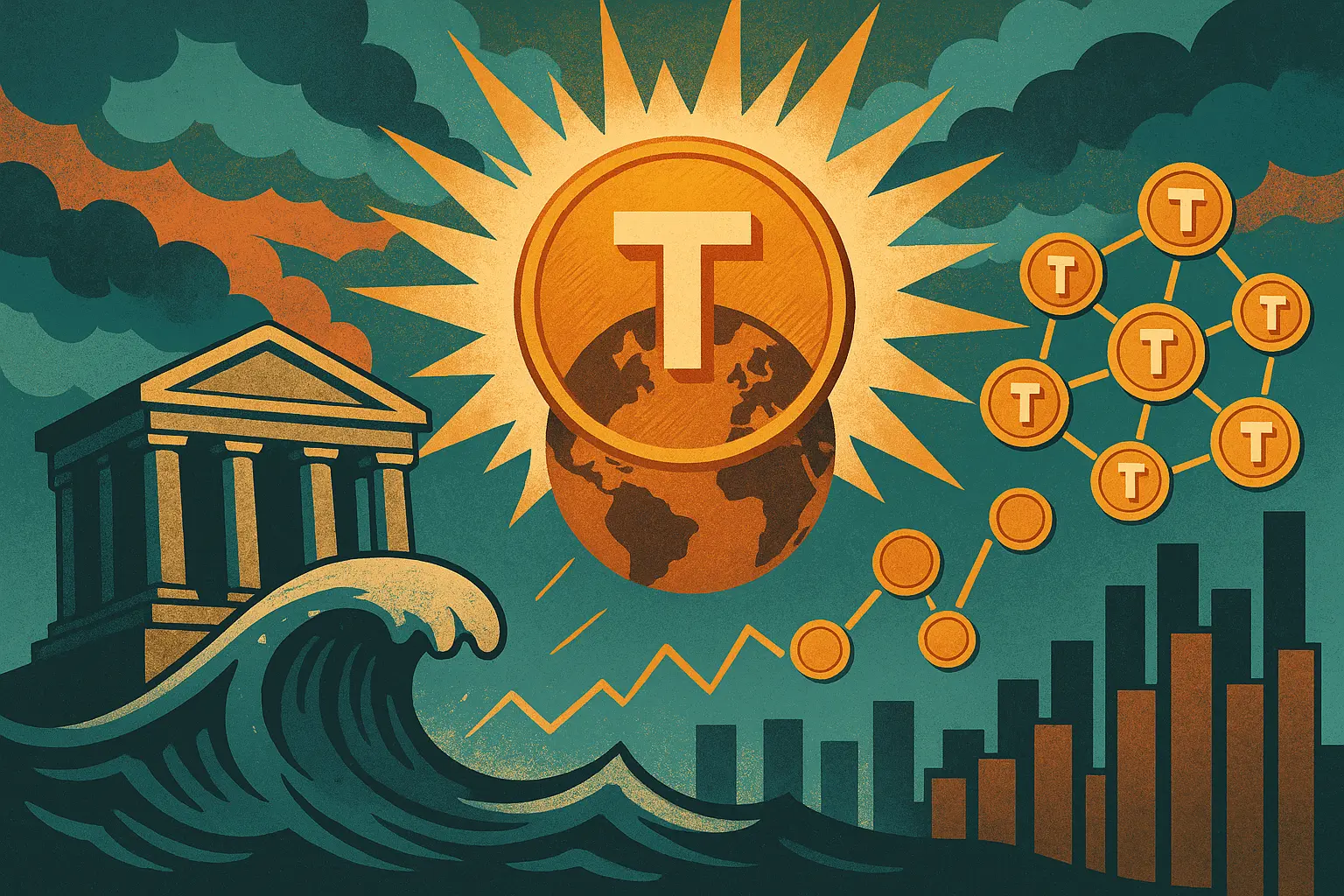
On April 1, the International Monetary Fund (IMF) released a report stating that tokenized finance should be considered a structural shift in the global financial system, rather than incremental improvements at the technology level. The report notes that tokenization replaces traditional intermediaries such as banks and clearinghouses with smart contracts and shared ledgers, fundamentally reshaping the market operating framework. As of early April, the market size of tokenized real-world assets (RWA) had reached about $27.5 billion.
Market Size and Asset Composition of Tokenized RWA
The current asset structure of tokenized RWA directly reflects the drivers behind market adoption. Tokenized U.S. Treasuries exceed $12 billion and make up the largest share; next are commodities and credit instruments. The share of tokenized equities and venture capital assets is still relatively low at present.
The IMF said this structure shows that tokenization is currently driven mainly by institutional investors’ demand for yield-bearing and fixed-income products, rather than by retail-centered equity-type assets. This aligns with the trend in traditional financial markets of gradually shifting fixed-income instruments to blockchain-based settlement systems.
IMF Warns of Three Major Structural Risks
The IMF report clearly points out that the efficiency advantages brought by tokenized finance, and the new risks it introduces, often stem from the same underlying characteristics:
Liquidity crisis amplification: Nearly instantaneous settlement and around-the-clock (24/7) trading eliminate the buffer mechanisms of traditional settlement delays; under market stress, automatic margin top-ups and immediate settlement can quickly transmit pressure to all participants, accelerating both the speed and breadth of liquidity collapse
Chain infection from code vulnerabilities: Errors in smart contracts or underlying infrastructure may simultaneously affect multiple protocols and participants without any human intervention, and isolation mechanisms in traditional finance are more difficult to replicate in a tokenized environment
Procyclical effects of programmable capital flows: Programmable capital flows may strengthen procyclical behavior during market volatility—accelerating selling when markets fall, and automatically pulling in credit when liquidity tightens—leaving less room for mitigation through human intervention than traditional systems
Structural Challenges of Fragmentation and Regulatory Frameworks
The IMF report also highlights deep-seated hidden risks in tokenized finance: different tokenized platforms operate independently, forming fragmented ecosystems that are not interoperable, which may lead to structural fragmentation in the global financial system.
In terms of competition at the settlement layer, competition among stablecoins, tokenized bank deposits, and central bank digital currencies (CBDCs) makes cross-border regulatory coordination even more complex. The IMF said that existing international financial regulatory frameworks may be difficult to apply directly to tokenized finance scenarios, and policymakers may need to re-examine the current financial stability framework before tokenized adoption rates continue to rise.
The report’s conclusion emphasizes that the long-term impact of tokenization depends on whether technology and regulation can evolve in tandem—if the pace of innovation continues to outstrip regulatory capacity, systemic risk will accumulate to a threshold point that becomes difficult to effectively control.
Frequently Asked Questions
How does the IMF define tokenized finance?
The IMF defines tokenized finance as a structural shift: by using smart contracts and blockchain shared ledgers, traditional financial instruments are put “on-chain” in the form of digital tokens, replacing traditional intermediaries such as banks and clearinghouses to perform transaction execution, settlement, and collateral functions—fundamentally changing how trust in the financial system is established.
Why does the IMF warn that tokenization involves systemic risk?
The core characteristics of tokenized finance—speed, automation, and programmability—while improving efficiency, eliminate the buffer mechanisms present in traditional systems. Instant settlement and automatic margin top-ups can quickly amplify liquidity crises during periods of market stress; vulnerabilities in smart contracts may also rapidly spread to multiple protocols without any human intervention.
What are the main components of tokenized RWA today?
As of early April, the total size of tokenized RWA is about $27.5 billion, of which tokenized U.S. Treasuries exceed $12 billion and make up the largest share; next are commodities and credit instruments. The share of tokenized equities and venture capital assets remains relatively low, indicating that the market at this stage is driven mainly by institutional investors’ demand for fixed-income products.
Disclaimer: The information on this page may come from third parties and does not represent the views or opinions of Gate. The content displayed on this page is for reference only and does not constitute any financial, investment, or legal advice. Gate does not guarantee the accuracy or completeness of the information and shall not be liable for any losses arising from the use of this information. Virtual asset investments carry high risks and are subject to significant price volatility. You may lose all of your invested principal. Please fully understand the relevant risks and make prudent decisions based on your own financial situation and risk tolerance. For details, please refer to
Disclaimer.


