
Futures
Access hundreds of perpetual contracts
TradFi
Gold
One platform for global traditional assets
Options
Hot
Trade European-style vanilla options
Unified Account
Maximize your capital efficiency
Demo Trading
Introduction to Futures Trading
Learn the basics of futures trading
Futures Events
Join events to earn rewards
Demo Trading
Use virtual funds to practice risk-free trading
Launch
CandyDrop
Collect candies to earn airdrops
Launchpool
Quick staking, earn potential new tokens
HODLer Airdrop
Hold GT and get massive airdrops for free
Launchpad
Be early to the next big token project
Alpha Points
Trade on-chain assets and earn airdrops
Futures Points
Earn futures points and claim airdrop rewards


More


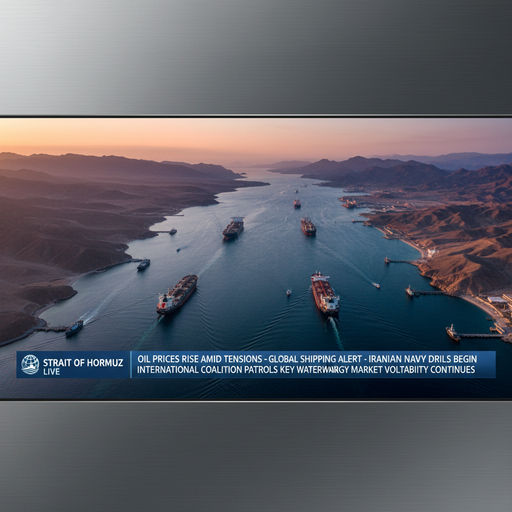
The Strait of Hormuz is considered the "lifeline" of global energy: Nearly 30% of the world's crude oil, 40% of refined oil products, and about 20 million barrels of oil are transported through here daily. If the situation changes, global oil prices and stock markets will experience intense volatility. Over the past two weeks, the market has already entered risk-avoidance mode:
U.S. stocks: The Dow and Nasdaq have fallen consecutively, with the Nasdaq dropping over 9% in a single week—the largest weekly decline in three years;
A-shares: The Shanghai Composite Index has retreated nearly 6%, with northbound funds continuously net outflowing over 30 billion yuan for several days;
Crude oil: Brent crude oil stabilizes around $110 per barrel, approaching $120;
Gold: Its safe-haven attribute is highlighted, with prices holding steady near $4,300 per ounce.
After tonight, the global markets will face two key directions that will directly influence asset trends:
Scenario 1: Agreement reached (probability 60%) — Market-wide rebound
Crude oil plunges 10%-15%, falling below $100; U.S. stocks rebound violently, with the Nasdaq leading up over 4%; A-shares open high and continue rising the next day, benefiting sectors like shipping, aviation, chemicals, and technology, with a significant inflow of northbound funds.
Scenario 2: Negotiations collapse and war breaks out (probability 40%) — Black swan attack
Crude oil surges to $120-$130 per barrel, intensifying inflation fears; U.S. stocks plummet in panic, with the Nasdaq dropping over 5%; A-shares open sharply lower, with only gold, military, and oil sectors strengthening, while others remain under pressure.
On April 6, what seems to be a negotiation between the U.S. and Iran is actually a "watershed" for the global economic landscape in 2026—if an agreement is reached, inflation will ease and stocks will recover; if negotiations fail, stagflation will return and global turmoil will ensue.
For ordinary people, there's no need to gamble on news or panic blindly: investors should watch the three key signals—crude oil, exchange rates, and northbound funds—for tomorrow's decisions; car owners can pay attention to oil price trends; what we can do is respect the trend and observe quietly.
Finally, I want to ask: Do you think the U.S. and Iran will reach an agreement tonight? Leave your judgment in the comments 👇#国际油价走高 $BTC