# USBlocksStraitofHormuz

687.51K
🚀 RAVE/USDT Trade Setup
💰 Price: $6.3954
📊 24H Change: +219.26%
💹 Volume: 831.18M
📍 Trade Setup
🔹 Entry: $5.80 – $6.20
🎯 Target 1: $7.20
🎯 Target 2: $8.00
🛑 Stop Loss: $5.20
⚡ Market Insight:
Explosive rally with huge volume — strong momentum but high risk ⚠️
Avoid chasing; wait for pullback confirmation for safer entry.$RAVE #GateSquareAprilPostingChallenge #USBlocksStraitofHormuz #GateSpotDerivativesBothTop3 #AaveDAOApproves$25MGrant
RAVE218.73%
post-image
post-image
  • Reward
  • Comment
  • Repost
  • Share
#USIranCeasefireTalksFaceSetbacks
Background: How Did We Get Here?
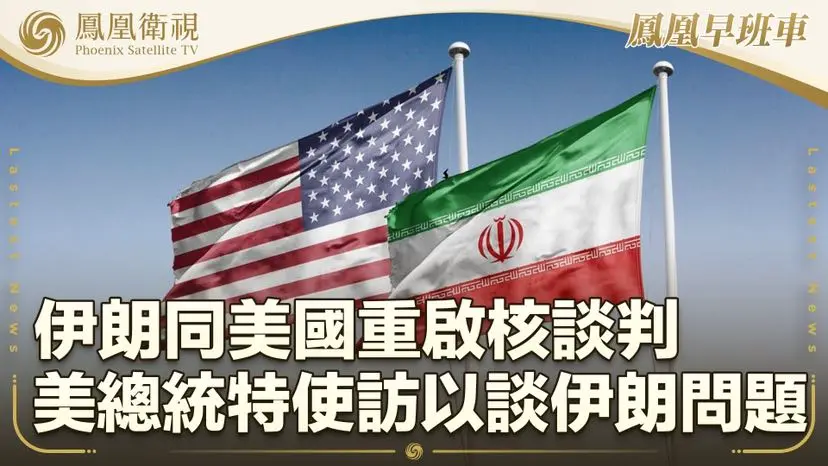
The conflict escalated sharply when joint US-Israeli strikes under "Operation Epic Fury" hit Iranian military and nuclear infrastructure on February 27, 2026, killing Supreme Leader Ali Khamenei. Iran responded militarily, and a full-scale war between the US and Iran was underway.
After weeks of spiraling conflict — including Iran seizing control of the Strait of Hormuz (through which roughly 20% of the world's oil flows) — Trump set a hard deadline: accept talks or face total annihilation. Less than two hours before that dead
BTC-0.74%
post-image
post-image
post-image
post-image
  • Reward
  • 6
  • Repost
  • Share
Yunna:
LFG 🔥
View More
The Impact on Bitcoin and Cryptocurrencies
On April 12, 2026, Trump's threat to blockade the Strait of Hormuz, combined with Iran's "toll system" legalized in March 2026, created a critical turning point for cryptocurrencies. Iran charges approximately $1 per barrel (up to $2 million for supertankers) for tanker transit and accepts payments in Bitcoin, USDT, yuan, or CIPS. This is the most concrete example of sanctions evasion and de-dollarization at the state level.
What is a Crypto Toll System?
Friendly countries (especially China) receive easy passage, while others undergo security screenin
BTC-0.74%
  • Reward
  • 4
  • Repost
  • Share
CryptoDiscovery:
To The Moon 🌕
View More
The Impact on Bitcoin and Cryptocurrencies
On April 12, 2026, Trump's threat to blockade the Strait of Hormuz, combined with Iran's "toll system" legalized in March 2026, created a critical turning point for cryptocurrencies. Iran charges approximately $1 per barrel (up to $2 million for supertankers) for tanker transit and accepts payments in Bitcoin, USDT, yuan, or CIPS. This is the most concrete example of sanctions evasion and de-dollarization at the state level.
What is a Crypto Toll System?
Friendly countries (especially China) receive easy passage, while others undergo security screenin
BTC-0.74%
post-image
post-image
post-image
User_any
Trump's Hormuz Blockade: A Strategic Move Targeting China's Yuan Oil Pipeline Against Iran's "Toll System"
On April 12, 2026, following the failure of US-Iran talks mediated by Pakistan in Islamabad, US President Donald Trump made a critical announcement. He declared that the US Navy would blockade all ships entering and exiting the Strait of Hormuz. He emphasized, "We will stop any ship paying tribute to Iran in international waters," and with an "all or nothing" approach, he made it clear that selective passage would not be permitted. Trump also suggested an alternative oil supply channel, saying, "Let China send its ships to us, send them to Venezuela; we have plenty of oil, we'll even sell it cheaper."
While these statements initially appear to be a military move against Iran, a deeper examination reveals that the real target is China's de-dollarization mechanism established through Iranian oil. 80-90% of Iran's oil exports go to China, and this trade is largely conducted in yuan, via CIPS (China's alternative to SWIFT), and outside of the dollar/SWIFT system. Trump's blockade effectively aims to cut off China's cheapest and most independent source of oil – while simultaneously offering Beijing a deal to become dependent on US oil (or Venezuelan sources).
Background 🧐
Islamabad Talks and Failure
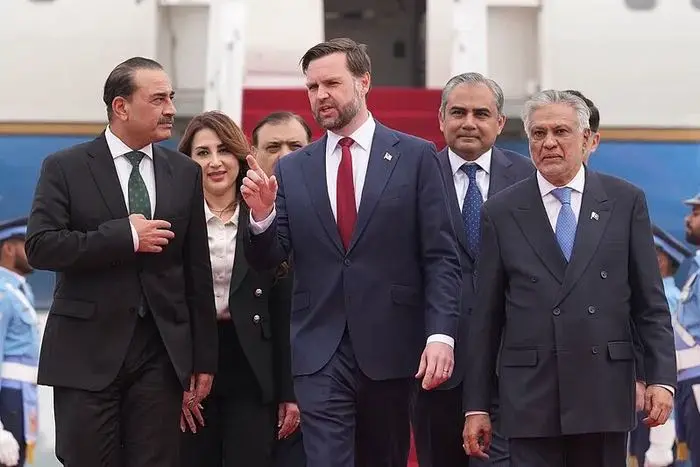
The US delegation at the talks, mediated by Pakistan, was led by Vice President JD Vance. In a marathon of over 21 hours, the "final and best offer" was put on the table, but Iran refused to abandon its nuclear program. Vance, upon leaving, stated, "Iran did not accept our terms." Hours later, Trump's statements against the blockade and "illegal tolls" emerged. This directly targets not only Iran but also the new "toll system" in the strait.
Iran's Hormuz "Toll Gate System": The March 2026 Law and Yuan/Crypto Payments
At the end of March 2026, the Iranian Parliament legalized the "Strait of Hormuz Management Plan." The system is simple and effective: Each ship is given a priority score between 1 and 5. "Friendly countries" (primarily China) receive easier passage, while others undergo security screening and pay a fee of approximately $1 per barrel (up to $2 million for a fully loaded supertanker). Payment is made in yuan, Bitcoin, USDT, or CIPS. Once the fee is approved, the Revolutionary Guard issues a transit code, and boats escort the vessels. Empty tankers pass free of charge. Even some allies, including Japan, have been forced to use this system. Potential daily revenue can exceed $20 million.
This system represents the legal and technological pinnacle of Iran's strategic advantage in the strait during wartime (since February 2026). It is also a concrete example of non-dollar trade: China buys 80-90% of Iranian oil with yuan, and this is part of Beijing's challenge to petrodollar hegemony.
🧐 China's Independent Oil Pipeline
Trump's "blockade + alternative offer" combination is a classic geo-economic move. China buys cheap, sanctions-resistant oil from Iran; payments are non-dollar, non-SWIFT. Buying from the US or Venezuela (reserves under Trump's control) means dollars, the banking system, and the potential risk of sanctions. Beijing knows this. Therefore, the issue is not the quantity of oil; it's control and dominance of the monetary system.
Trump announced that in post-Maduro Venezuela, US companies could sell oil at market prices (and to China at a "fair" price). This is part of a strategy to replace Iranian oil. However, China's preference is clear: to remain independent.
Risk Scenarios
👀 If the Blockade Happens or Doesn't Happen
1. If the US stops a Chinese tanker: This will be seen as a trade blockade and a violation of sovereignty. China could increase military/support for Iran, strengthen the yuan system in the strait, bring its navy closer, or sell US bonds. Conclusion: The Iran-China alliance deepens, and the regional crisis transforms into a global energy shock.
2. If the US cannot intervene: The blockade remains on paper. The world (Gulf countries, Europe, Taiwan, Russia) develops the perception that "the US cannot do what it says." Ray Dalio's formula comes into play: If superpowers lose control of critical trade routes, trust erodes, allies distance themselves, and capital flees. Historical examples (Portugal, the Netherlands, the 1956 UK-Suez Canal) confirm this.
The first test is very close: What will the US Navy do when a Chinese oil tanker approaches the Strait of Hormuz? This moment will determine the balance of power in the 21st century.
🧐The Struggle for Control and the Future
Trump's move aims not only to punish Iran but also to break China's rising yuan-oil axis. However, the risks are high. If successful, dollar dominance will be strengthened; if unsuccessful, the US deterrent power will be questioned. The first tanker transit in the coming days and the potential reaction will shape not only energy markets but also the global financial architecture.
⚠️Don't Forget to mark Stoploss and manage risk properly.
👉NFA
👉DYOR
#OilEdgesHigher
#USIranCeasefireTalksFaceSetbacks
#GateSquareAprilPostingChallenge
Take action now and post your first plaza message in April!
👉️ https://www.gate.com/post
🗓 Deadline: April 15th
Details: https://www.gate.com/announcements/article/50520
$BTC $XAUUSD $XTIUSD
repost-content-media
  • Reward
  • 13
  • Repost
  • Share
CryptoDiscovery:
To The Moon 🌕
View More
🚨 #USBlocksStraitofHormuz – High-Impact Global Signal
Any disruption involving the Strait of Hormuz instantly sends shockwaves across global markets 🌍
This region is one of the most critical النفط routes in the world — so even the idea of blockage creates fear, volatility, and rapid price reactions.
📊 Market Implications:
• Oil prices likely to spike due to supply concerns
• Increased global uncertainty and risk-off sentiment
• Short-term volatility across crypto & traditional markets
• Safe-haven assets may see inflows
💡 Dragon Fly Official Insight:
Geopolitical events don’t just affect o
post-image
post-image
post-image
post-image
  • Reward
  • 2
  • Repost
  • Share
Yunna:
2026 GOGOGO 👊
View More
#USIranCeasefireTalksFaceSetbacks 🔍 Key Friction Points in the Negotiations
The breakdown after 21 hours suggests that the "Strategic Red Lines" are currently immovable:
The Hormuz Clause: Iran’s insistence on "maritime sovereignty" vs. the US demand for unrestricted transit. This is the primary driver for the current spike in oil volatility.
The "Snapback" Mechanism: Disagreement over how quickly sanctions return if nuclear restrictions are breached.
The CPI Factor: For the US, a failure here risks a secondary spike in energy costs, complicating the Fed's path just as markets were hoping for
BTC-0.74%
post-image
post-image
  • Reward
  • 2
  • Repost
  • Share
LittleGodOfWealthPlutus:
LFG🔥
View More
#USIranCeasefireTalksFaceSetbacks The US–Iran ceasefire situation is currently sitting in one of the most fragile and complex geopolitical phases of 2026. On paper, a 14-day ceasefire exists, but in reality, the underlying structure of negotiations remains deeply unstable. What we are seeing now is not true peace—it is a temporary pause inside an unresolved multi-layer conflict system that is still actively influencing global markets, especially oil, gold, and crypto.
From my personal market interpretation, this is one of those rare situations where geopolitics is not just background noise—it
BTC-0.74%
ETH-0.76%
post-image
  • Reward
  • 3
  • Repost
  • Share
MasterChuTheOldDemonMasterChu:
冲就完了 👊
View More
#Gate广场四月发帖挑战
US-Iran Talks Collapse in Islamabad What It Actually Means for Every Market You Trade
After 21 hours of direct negotiations in Islamabad, Pakistan, the United States and Iran walked away from the table on April 12, 2026, without a deal. Vice President JD Vance, leading the American delegation alongside Special Envoy Steve Witkoff and Jared Kushner, delivered the announcement bluntly at a press conference: no agreement had been reached, Iran had rejected U.S. terms, and the delegation would be returning home empty-handed. His exact words carried a clear warning "that's bad news f
post-image
post-image
post-image
post-image
post-image
  • Reward
  • 9
  • Repost
  • Share
CryptoDiscovery:
To The Moon 🌕
View More
#USIranCeasefireTalksFaceSetbacks
Islamabad Collapse and the New Global Market Shockwave
The collapse of the US–Iran negotiations in Islamabad on April 12, 2026, marks more than just another failed diplomatic attempt—it represents a renewed escalation of a geopolitical crisis that is now deeply embedded into global financial architecture. After 21 hours of intense, high-stakes discussions, the absence of any agreement has instantly reintroduced uncertainty into markets that had briefly begun pricing in de-escalation. What makes this moment particularly significant is not only the breakdown i
post-image
  • Reward
  • 8
  • Repost
  • Share
CryptoDiscovery:
To The Moon 🌕
View More
⛽ 𝙎𝙢𝙖𝙧𝙩 𝙈𝙤𝙣𝙚𝙮 𝙇𝙚𝙖𝙫𝙚𝙨 𝙎𝙄𝙇𝙑𝙀𝙍 𝙛𝙤𝙧 𝙊𝙞𝙇
A major market whale made a quick shift in strategy. After U.S.–Iran talks ended without results, the trader “0x9e8” closed most of its 20x leveraged $XAG SILVER long positions within five hours.
Soon after, the whale moved into oil, opening a $9 million long position in $CL with 95,577 contracts at 20x leverage, showing a clear move toward energy amid growing uncertainty. 👀
$XAG ‌#USIranCeasefireTalksFaceSetbacks #silver #GateSquareAprilPostingChallenge
XAG-1.77%
post-image
  • Reward
  • Comment
  • Repost
  • Share
Load More