


# DeFiSecurity

2.26K
#LayerZeroCEOAdmitsProtocolFlaws
April–May 2026 exposed major cracks in the cross-chain ecosystem. LayerZero CEO Bryan Pellegrino flagged a critical flaw in the Across Protocol token contract, while the same period saw the $292M KelpDAO hack. The community response was clear: simply adding more validators is not enough.
According to Pellegrino, a sensitive function in the ERC20 implementation was mistakenly left public, allowing the contract owner to withdraw tokens from any wallet and even set balances to zero. On top of that, unlimited minting rights created a permanent vulnerability. The pr
ZRO1.54%
ACX-2.88%
discovery
#LayerZeroCEOAdmitsProtocolFlaws
LayerZero CEO Confession: Protocol Vulnerabilities and After $290M Hack
The cross-chain world was shaken in April-May 2026. LayerZero CEO Bryan Pellegrino revealed a critical flaw in the Across Protocol token contract. The same week, the $292 million KelpDAO hack occurred. The community rose up: “Just increasing the number of validators isn’t enough.”
1. CEO Confession: “Red Alert” in Token Contract
Pellegrino addressed the Across team: “You accidentally left a function that should be private in your ERC20 implementation public. The contract owner can withdraw tokens from any wallet and set the balance to zero. Also, Across and UMA contracts have unlimited minting rights.”
Suggested solution: Transfer contract ownership to an immutable smart contract. Disable mint/burn rights. Because this is a permanent vulnerability. Pellegrino: “If there’s a bug bounty, contact the LayerZero team.”
2. $292M KelpDAO Disaster: Responsibility Dispute
Around April 20, KelpDAO’s LayerZero bridge was drained: 116,500 rsETH, $292M stolen. Lazarus Group suspected.
LayerZero: “The attack was not on our protocol, but an infrastructure attack. KelpDAO used a 1-of-1 DVN, so it’s an isolated incident.” In other words, they trusted a single validator network; our recommendation was multi-DVN.
The community is angry: “Your RPC infrastructure was hacked, you can’t just blame KelpDAO.” 47% of OApp still uses 1-of-1 DVN. At risk is $4.5 billion.
3. Structural Issue: DVN Architecture
LayerZero claims “modular security”: Applications choose their own DVNs. But if default settings are weak, projects unknowingly entrust a single validator. This happened with KelpDAO too. Attackers poisoned RPCs and approved fake messages.
Stani Kulechov warned: “Bridge exploits are an existential threat to DeFi. After Ronin, Poly Network, Nomad, now LayerZero-based bridges are in the spotlight.”
Market Impact • ZRO Token: Fell 20% after the hack, ranging from $1.47 to $2.28. Despite a 5.18% jump in the last 3 days, the trend remains downward. • TVL Risk: $4.5B+ OApp operates with 1-of-1 DVN. If similar attacks recur, contagion risk is high. • Trust Crisis: “Zero contagion” was claimed, but the community is not convinced. Bridge security is now the top priority in DeFi.
Summary: LayerZero says “applications choose their own security,” but defaults put billions at risk. The CEO’s disclosure about Across was well-intentioned, but the “responsibility is not ours” stance after KelpDAO drew criticism. Protocol-level security cannot be solved simply by adding more validators. Industry-wide audits, standards, and transparency are essential.
#GateSquareMayTradingShare
#LayerZeroCEOAdmitsProtocolFlaws

repost-content-media
  • Reward
  • 5
  • Repost
  • Share
ybaser:
2026 GOGOGO 👊
View More
Ledger has officially integrated Hyperliquid perps trading directly into its hardware wallets via Yield,xyz. This is a game changer for traders who prioritize "Cold Storage Security" alongside high-frequency execution. From an engineering standpoint, being able to sign perpetual contracts on a hardware device reduces the attack surface for wallet drains. It bridges the gap between the speed of a DEX and the absolute security of an offline private key. I am watching the volume on Hyperliquid closely as more pro traders move their execution layers into hardware-secured environments. Security and
HYPE-2.99%
  • Reward
  • Comment
  • Repost
  • Share
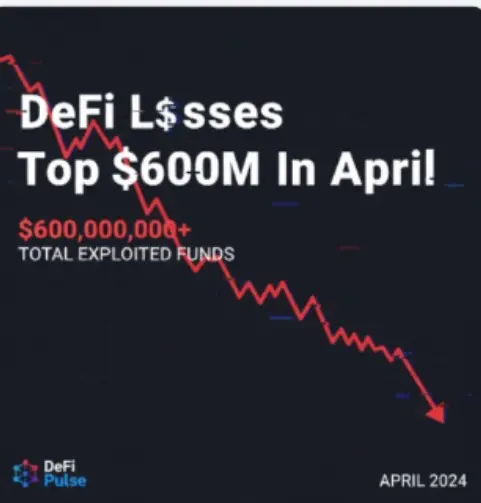
#DeFiLossesTop600MInApril
April proved to be one of the toughest months for the DeFi ecosystem, with security breaches resulting in confirmed losses exceeding $600 million—the highest monthly total since March 2022.
Kelp DAO alone suffered approximately $292 million in losses, while Drift Protocol was hit for nearly $280 million. In total, over 20 attacks targeted various protocols, highlighting the alarming frequency and sophistication of these exploits.
The wave of attacks continued into May, with Wasabi Protocol and Aftermath Finance falling victim on the very first day, underscoring the p
DRIFT-9.19%
ARB3.13%
post-image
  • Reward
  • 5
  • Repost
  • Share
discovery:
To The Moon 🌕
View More
Urgent Security Alert: ZetaChain Transactions Halted
​The decentralized finance landscape faces another critical test today. ZetaChain has officially suspended its cross-chain transaction operations following the discovery of a significant security exploit within its GatewayZEVM contract. Preliminary investigations suggest the vulnerability originated from insufficient access control and a lack of rigorous input validation in the contract’s call function. This oversight allowed unauthorized actors to potentially bypass established security protocols, creating an immediate need for the temporar
SOL1.41%
ETH-2.21%
post-image
post-image
  • Reward
  • Comment
  • Repost
  • Share
🚨 #rsETHAttackUpdate | Full Breakdown of the Recent DeFi Security Incident
The DeFi space just witnessed another high-impact exploit — this time targeting rsETH, a major liquid restaking token in the EigenLayer ecosystem.
What is rsETH?
rsETH is a liquid restaking token by Kelp DAO that allows users to earn rewards while keeping liquidity. It’s backed by ETH and LSTs like stETH, making it a key player in the restaking narrative.
What Happened?
A sophisticated exploit targeted a reentrancy vulnerability in the reward-claim mechanism.
Attack Flow:
• Attacker identified missing security guard (
ETH-2.21%
STETH-2.37%
post-image
  • Reward
  • 3
  • Repost
  • Share
HighAmbition:
thnxx for the update
View More
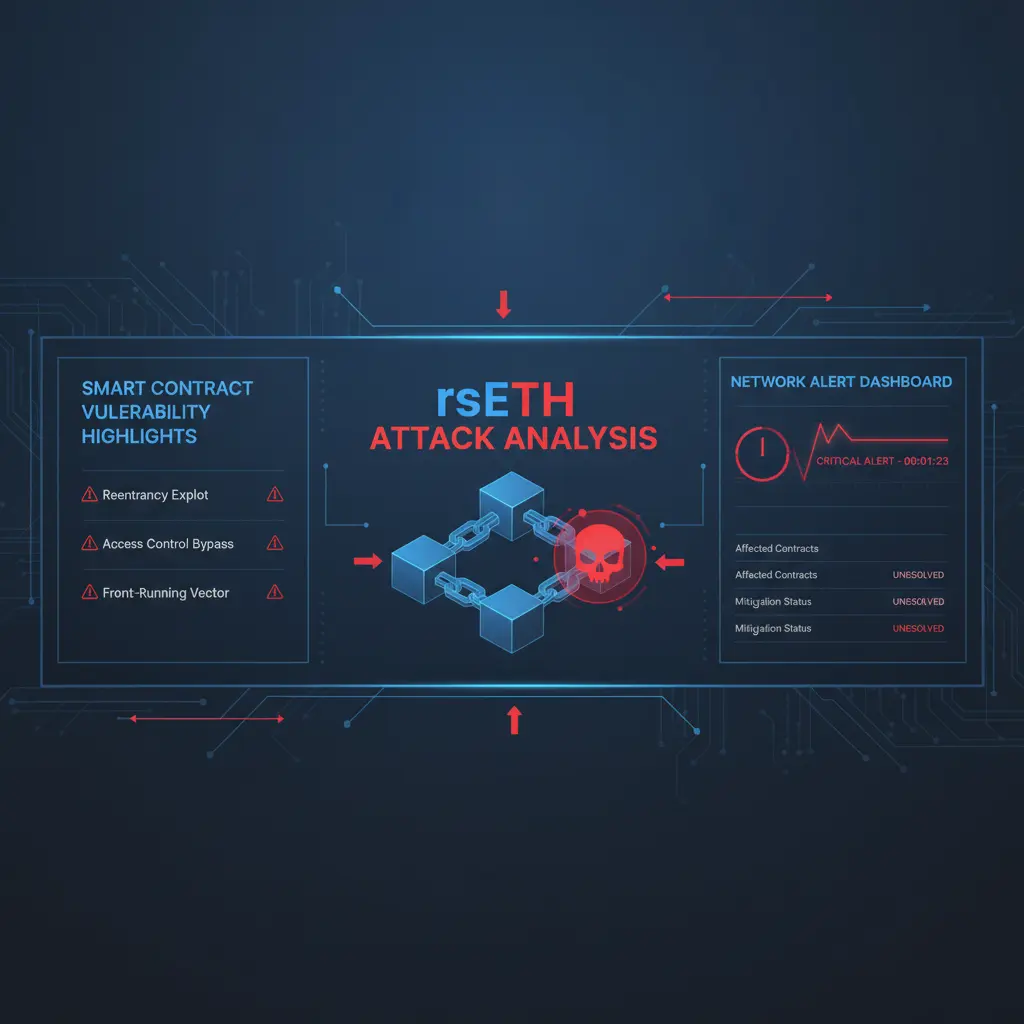
#rsETHAttackUpdate : Technical Analysis of DeFi's Largest Cross-Chain Attack
On April18,2026, KelpDAO's rsETH protocol suffered a $292 million exploit through its LayerZero bridge, marking one of DeFi's most significant security failures. This briefing examines the attack vectors, cascading effects, and structural vulnerabilities exposed.
Attack Overview
The attacker minted116,500 unbacked rsETH tokens (18% of total supply) by compromising KelpDAO's cross-chain infrastructure. The exploit targeted a critical architectural weakness: KelpDAO's bridge operated with a1-of-1 DVN (Decentralized Vali
ZRO1.54%
AAVE-1.19%
ETH-2.21%
ARB3.13%
Dubai_Prince
#rsETHAttackUpdate : Technical Analysis of DeFi's Largest Cross-Chain Attack
On April18,2026, KelpDAO's rsETH protocol suffered a $292 million exploit through its LayerZero bridge, marking one of DeFi's most significant security failures. This briefing examines the attack vectors, cascading effects, and structural vulnerabilities exposed.
Attack Overview
The attacker minted116,500 unbacked rsETH tokens (18% of total supply) by compromising KelpDAO's cross-chain infrastructure. The exploit targeted a critical architectural weakness: KelpDAO's bridge operated with a1-of-1 DVN (Decentralized Validator Network) configuration, making LayerZero Labs the sole verification entity for cross-chain messages.
Technical Execution
The attack followed a sophisticated multi-phase approach:
1. Infrastructure Penetration: Attackers gained access to RPC nodes used by the LayerZero DVN, replacing legitimate op-geth binaries with malicious versions that served forged data exclusively to the DVN's IP addresses.
2. Traffic Manipulation: Through DDoS attacks on clean nodes, attackers forced complete failover to compromised infrastructure, ensuring all verification traffic routed through poisoned endpoints.
3. Message Forgery: A fabricated cross-chain message claiming origin from KelpDAO's Unichain deployment was validated against manipulated on-chain state, passing the2-of-3 multisig quorum.
4. Token Extraction: The bridge released116,500 rsETH to attacker-controlled addresses in a single transaction, creating unbacked tokens with no underlying collateral.
Attribution analysis points to North Korea's Lazarus Group (TraderTraitor), known for advanced cryptocurrency exploits targeting financial infrastructure.
Financial Cascading Effects
The attacker immediately deployed unbacked rsETH as collateral across Aave V3 and V4 markets:
- Borrowed52,834 WETH on Ethereum mainnet
- Borrowed29,782 WETH plus821 wstETH on Arbitrum
- Total extraction: approximately83,427 WETH and wstETHThis created substantial bad debt within Aave's lending markets. The protocol responded within hours by freezing rsETH markets and removing borrowing power, but damage extended across DeFi:
- Over $7 billion withdrawn from leading protocols
- Aave lost $6.2 billion (23% of TVL)
- Similar outflows hit Morpho, Sky, and Jupiter Lend
- Panic withdrawals affected even unaffected protocols on Solana Emergency Responses
Multiple protocols and networks implemented damage control measures:
- KelpDAO paused rsETH contracts across mainnet and L2s
- Arbitrum froze30,000 ETH ($71 million) linked to exploit addresses
- Tether froze $344 million USDT across two Tron wallets
- Aave community initiated discussions on permanent rsETH delisting Structural Vulnerabilities Exposed
The exploit reveals fundamental weaknesses in DeFi's cross-chain architecture:
Centralized Validation: Despite decentralization marketing, bridges often rely on concentrated verification. The1-of-1 DVN configuration created a catastrophic single point of failure.
Trust Boundary Failures: The exploit occurred at LayerZero's message verification and KelpDAO's bridge acceptance intersection, demonstrating how modular security without robust standards creates systemic risk.
Composability Amplification: Attackers leveraged unbacked tokens across multiple protocols, showing how DeFi's interconnected nature magnifies individual failures.
Governance Reality Gap: DeFi operates where theoretical decentralization masks practical control concentration, complicating accountability and emergency response.
Industry Implications
This incident carries significant consequences for DeFi development:
Security Standards: Cross-chain bridges require distributed validation mechanisms and elimination of single points of failure. The industry must establish minimum security standards for bridge architecture.
Risk Assessment: Lending protocols need real-time collateral verification and stricter assessment of bridged asset backing before accepting deposits.
Emergency Protocols: Rapid market freezing capabilities are essential, but reactive measures cannot substitute for preventive security architecture.
Regulatory Scrutiny: Exploits of this scale accelerate regulatory attention and compliance pressure on DeFi protocols.
Accounting Challenges: Auditors face fundamental difficulties evaluating control effectiveness when validation relies on potentially compromised off-chain infrastructure.
Key Lessons
For developers and participants:
1. Bridge security architecture demands multi-signature distributed validation, not single-entity verification.
2. Collateral backing must be verifiable in real-time, particularly for cross-chain assets.
3. Protocol composability creates systemic risk requiring comprehensive security assessment.
4. Emergency response capabilities must be balanced with preventive security measures.
5. Due diligence on underlying infrastructure security is essential before depositing funds.
Conclusion
The rsETH exploit demonstrates that in DeFi, bridge design inseparably determines asset security. Distribution across chains does not distribute risk automatically. This incident exposes the tension between rapid scalability and robust security architecture that defines DeFi's current evolution.
The attack reveals a fundamental truth: decentralized governance in theory often masks concentrated control in practice. For DeFi to achieve resilient financial infrastructure, the industry must address these architectural vulnerabilities through stronger standards, distributed validation mechanisms, and protocols prioritizing security over deployment speed.
The cascading effects across Aave and other protocols show how quickly individual bridge failures become systemic crises. As DeFi matures, cross-chain security must evolve from an afterthought to a foundational design principle.
Preliminary attribution to state-sponsored actors adds geopolitical dimension to DeFi security challenges. The sophistication demonstrated suggests future attacks may increase in complexity and impact, making proactive security investment essential for protocol survival.
This incident will likely accelerate development of more resilient cross-chain solutions while prompting comprehensive reassessment of bridge-related risk exposure across the DeFi ecosystem. The question is no longer whether bridges can be secured, but whether the industry can implement adequate security standards before the next exploit occurs.
#rsETHExploit #DeFiSecurity #CrossChainRisk #KelpDAOHack
repost-content-media
  • Reward
  • 1
  • Repost
  • Share
CryptoDiscovery:
To The Moon 🌕
#rsETHAttackUpdate : Technical Analysis of DeFi's Largest Cross-Chain Attack
On April18,2026, KelpDAO's rsETH protocol suffered a $292 million exploit through its LayerZero bridge, marking one of DeFi's most significant security failures. This briefing examines the attack vectors, cascading effects, and structural vulnerabilities exposed.
Attack Overview
The attacker minted116,500 unbacked rsETH tokens (18% of total supply) by compromising KelpDAO's cross-chain infrastructure. The exploit targeted a critical architectural weakness: KelpDAO's bridge operated with a1-of-1 DVN (Decentralized Vali
ZRO1.54%
AAVE-1.19%
ETH-2.21%
ARB3.13%
Dubai_Prince
#rsETHAttackUpdate : Technical Analysis of DeFi's Largest Cross-Chain Attack
On April18,2026, KelpDAO's rsETH protocol suffered a $292 million exploit through its LayerZero bridge, marking one of DeFi's most significant security failures. This briefing examines the attack vectors, cascading effects, and structural vulnerabilities exposed.
Attack Overview
The attacker minted116,500 unbacked rsETH tokens (18% of total supply) by compromising KelpDAO's cross-chain infrastructure. The exploit targeted a critical architectural weakness: KelpDAO's bridge operated with a1-of-1 DVN (Decentralized Validator Network) configuration, making LayerZero Labs the sole verification entity for cross-chain messages.
Technical Execution
The attack followed a sophisticated multi-phase approach:
1. Infrastructure Penetration: Attackers gained access to RPC nodes used by the LayerZero DVN, replacing legitimate op-geth binaries with malicious versions that served forged data exclusively to the DVN's IP addresses.
2. Traffic Manipulation: Through DDoS attacks on clean nodes, attackers forced complete failover to compromised infrastructure, ensuring all verification traffic routed through poisoned endpoints.
3. Message Forgery: A fabricated cross-chain message claiming origin from KelpDAO's Unichain deployment was validated against manipulated on-chain state, passing the2-of-3 multisig quorum.
4. Token Extraction: The bridge released116,500 rsETH to attacker-controlled addresses in a single transaction, creating unbacked tokens with no underlying collateral.
Attribution analysis points to North Korea's Lazarus Group (TraderTraitor), known for advanced cryptocurrency exploits targeting financial infrastructure.
Financial Cascading Effects
The attacker immediately deployed unbacked rsETH as collateral across Aave V3 and V4 markets:
- Borrowed52,834 WETH on Ethereum mainnet
- Borrowed29,782 WETH plus821 wstETH on Arbitrum
- Total extraction: approximately83,427 WETH and wstETHThis created substantial bad debt within Aave's lending markets. The protocol responded within hours by freezing rsETH markets and removing borrowing power, but damage extended across DeFi:
- Over $7 billion withdrawn from leading protocols
- Aave lost $6.2 billion (23% of TVL)
- Similar outflows hit Morpho, Sky, and Jupiter Lend
- Panic withdrawals affected even unaffected protocols on Solana Emergency Responses
Multiple protocols and networks implemented damage control measures:
- KelpDAO paused rsETH contracts across mainnet and L2s
- Arbitrum froze30,000 ETH ($71 million) linked to exploit addresses
- Tether froze $344 million USDT across two Tron wallets
- Aave community initiated discussions on permanent rsETH delisting Structural Vulnerabilities Exposed
The exploit reveals fundamental weaknesses in DeFi's cross-chain architecture:
Centralized Validation: Despite decentralization marketing, bridges often rely on concentrated verification. The1-of-1 DVN configuration created a catastrophic single point of failure.
Trust Boundary Failures: The exploit occurred at LayerZero's message verification and KelpDAO's bridge acceptance intersection, demonstrating how modular security without robust standards creates systemic risk.
Composability Amplification: Attackers leveraged unbacked tokens across multiple protocols, showing how DeFi's interconnected nature magnifies individual failures.
Governance Reality Gap: DeFi operates where theoretical decentralization masks practical control concentration, complicating accountability and emergency response.
Industry Implications
This incident carries significant consequences for DeFi development:
Security Standards: Cross-chain bridges require distributed validation mechanisms and elimination of single points of failure. The industry must establish minimum security standards for bridge architecture.
Risk Assessment: Lending protocols need real-time collateral verification and stricter assessment of bridged asset backing before accepting deposits.
Emergency Protocols: Rapid market freezing capabilities are essential, but reactive measures cannot substitute for preventive security architecture.
Regulatory Scrutiny: Exploits of this scale accelerate regulatory attention and compliance pressure on DeFi protocols.
Accounting Challenges: Auditors face fundamental difficulties evaluating control effectiveness when validation relies on potentially compromised off-chain infrastructure.
Key Lessons
For developers and participants:
1. Bridge security architecture demands multi-signature distributed validation, not single-entity verification.
2. Collateral backing must be verifiable in real-time, particularly for cross-chain assets.
3. Protocol composability creates systemic risk requiring comprehensive security assessment.
4. Emergency response capabilities must be balanced with preventive security measures.
5. Due diligence on underlying infrastructure security is essential before depositing funds.
Conclusion
The rsETH exploit demonstrates that in DeFi, bridge design inseparably determines asset security. Distribution across chains does not distribute risk automatically. This incident exposes the tension between rapid scalability and robust security architecture that defines DeFi's current evolution.
The attack reveals a fundamental truth: decentralized governance in theory often masks concentrated control in practice. For DeFi to achieve resilient financial infrastructure, the industry must address these architectural vulnerabilities through stronger standards, distributed validation mechanisms, and protocols prioritizing security over deployment speed.
The cascading effects across Aave and other protocols show how quickly individual bridge failures become systemic crises. As DeFi matures, cross-chain security must evolve from an afterthought to a foundational design principle.
Preliminary attribution to state-sponsored actors adds geopolitical dimension to DeFi security challenges. The sophistication demonstrated suggests future attacks may increase in complexity and impact, making proactive security investment essential for protocol survival.
This incident will likely accelerate development of more resilient cross-chain solutions while prompting comprehensive reassessment of bridge-related risk exposure across the DeFi ecosystem. The question is no longer whether bridges can be secured, but whether the industry can implement adequate security standards before the next exploit occurs.
#rsETHExploit #DeFiSecurity #CrossChainRisk #KelpDAOHack
repost-content-media
  • Reward
  • 1
  • Repost
  • Share
CryptoDiscovery:
To The Moon 🌕
#rsETHAttackUpdate 🚨
⚠️ $292M DeFi Exploit Exposes Critical Cross-Chain Risks
One of the largest DeFi attacks of 2026 has shaken the ecosystem.
KelpDAO’s rsETH protocol was exploited via a LayerZero bridge vulnerability — revealing deep structural flaws in cross-chain security.
🔍 What happened:
• Attacker minted 116,500 unbacked rsETH (18% supply)
• Exploited 1-of-1 validation system (single point of failure)
• Used fake cross-chain messages to unlock real assets
💥 Impact:
• ~83,000+ WETH extracted via Aave
• $7B+ liquidity withdrawn across DeFi
• Aave TVL dropped 23% ($6.2B loss)
• Panic s
AAVE-1.19%
ARB3.13%
ZRO1.54%
post-image
  • Reward
  • 1
  • Repost
  • Share
CryptoDiscovery:
2026 GOGOGO 👊
#rsETHAttackUpdate : Technical Analysis of DeFi's Largest Cross-Chain Attack
On April18,2026, KelpDAO's rsETH protocol suffered a $292 million exploit through its LayerZero bridge, marking one of DeFi's most significant security failures. This briefing examines the attack vectors, cascading effects, and structural vulnerabilities exposed.
Attack Overview
The attacker minted116,500 unbacked rsETH tokens (18% of total supply) by compromising KelpDAO's cross-chain infrastructure. The exploit targeted a critical architectural weakness: KelpDAO's bridge operated with a1-of-1 DVN (Decentralized Vali
ZRO1.54%
AAVE-1.19%
ETH-2.21%
ARB3.13%
post-image
post-image
  • Reward
  • 4
  • Repost
  • Share
BlockRider:
Diamond Hands 💎
View More
Load More