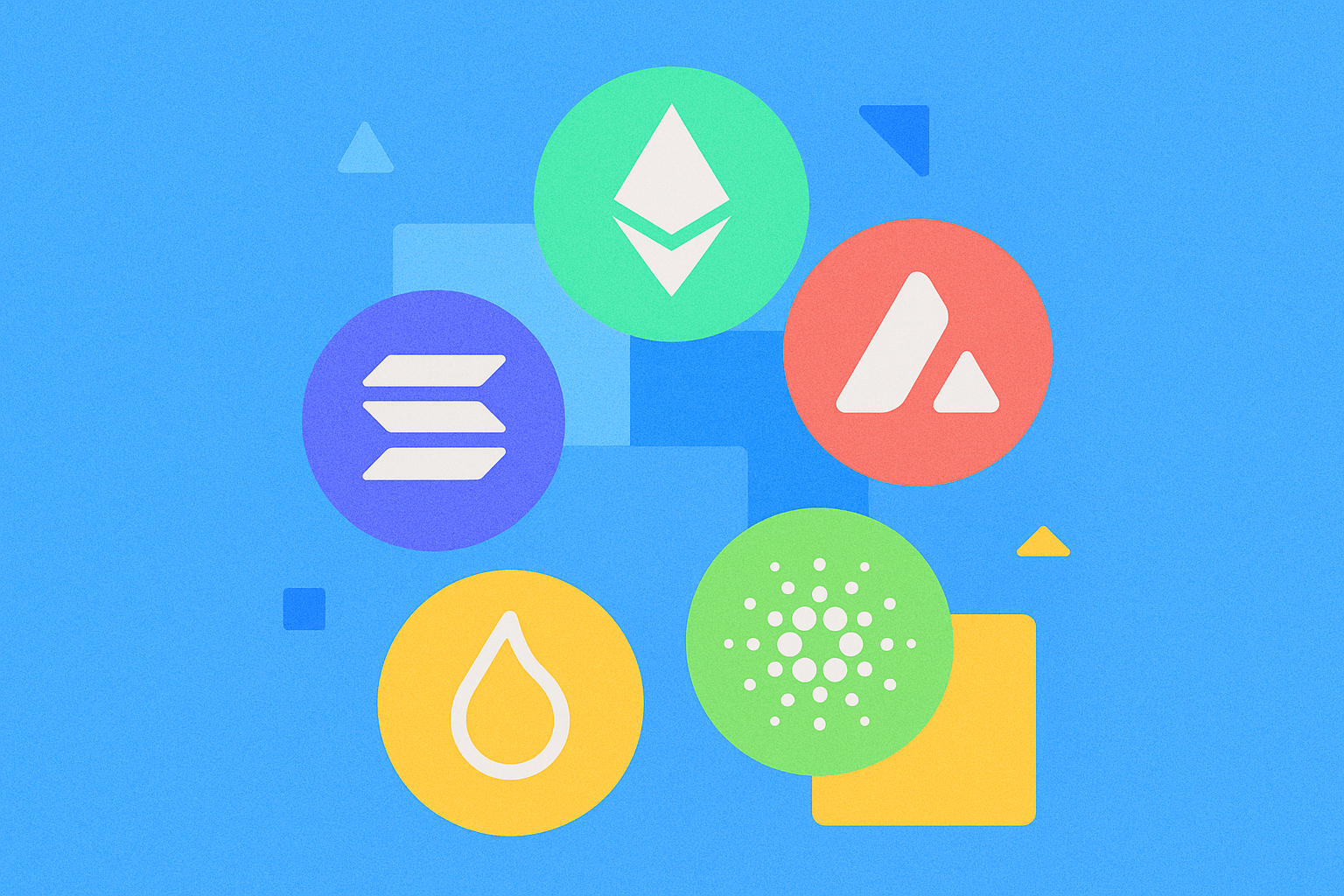
Discover the fundamentals of Layer 1 blockchains: key characteristics, scaling technologies such as sharding and Proof of Stake (PoS), and top projects including Ethereum, Bitcoin, and Solana. Compare Layer 1 and Layer 2—explore the distinctions and benefits of cryptocurrency solutions available on Gate.
Key Points
As blockchain adoption accelerates, scalability is emerging as a central concern. Enhanced data processing speeds empower blockchains to support new applications and handle increasing transaction volumes efficiently. Two main approaches have evolved to address these scalability issues: Layer 1 and Layer 2 solutions.
- Layer 1 directly upgrades the core blockchain protocol to boost scalability, while Layer 2 employs external solutions to offload pressure from the main chain.
- Key Layer 1 strategies include changing the consensus mechanism, adjusting block size and block production interval, and implementing sharding. These methods target fundamental performance improvements.
- Layer 2 solutions encompass rollups, nested blockchains, state channels, and sidechains. These approaches distribute main chain load and enhance overall network efficiency.
- The blockchain trilemma highlights a core limitation: blockchains cannot simultaneously achieve perfect security, decentralization, and scalability. This challenge is central to blockchain architecture.
Layer 1 Scaling Solutions
Layer 1 blockchains comprise the network’s base protocol. As the fundamental infrastructure, all transactions and data flow through this layer. Layer 1 scaling solutions aim to enhance scalability by directly improving this foundational protocol.
Layer 1 solutions focus on modifying the protocol to increase transaction capacity. Such upgrades—often implemented via hard forks or soft forks—frequently require broad network consensus.
Layer 1 Scaling Technologies
Block Size and Block Production Interval Adjustment
Adjusting block size and the time between blocks is among the most intuitive Layer 1 scaling approaches. These changes can increase the number of transactions processed per second.
-
Increasing block size: Expanding block capacity allows more transactions per block. For example, Bitcoin Cash increased Bitcoin’s block size to boost throughput. However, unchecked block size growth raises node storage and bandwidth requirements, which may affect decentralization.
-
Reducing block interval: Shortening the time between blocks accelerates transaction confirmation and increases throughput. However, excessively short intervals can undermine network security, so careful calibration is critical.
Consensus Mechanism Upgrade
The consensus mechanism determines how blockchain networks validate transactions and create new blocks. Switching to a more efficient consensus protocol can significantly enhance processing speed and energy efficiency.
- Transition from Proof of Work to Proof of Stake: PoS assigns block production rights to users who stake significant amounts of the native token. Compared to PoW, PoS is more energy efficient and supports faster transaction processing. Ethereum’s shift from PoW to PoS is a prominent case, improving both scalability and sustainability.
Sharding
Sharding divides the blockchain’s state into smaller segments, or “shards,” each of which processes transactions in parallel. Borrowed from database partitioning, sharding can dramatically increase overall network throughput.
With sharding, each node only stores and processes a fraction of the full blockchain, reducing operational demands and fostering decentralization. Ethereum 2.0’s sharding is expected to multiply throughput thousands of times.
Types of Layer 1 Blockchains
Diverse Layer 1 blockchains address scalability in unique ways, adopting various design philosophies and technologies.
-
Ethereum: The leading smart contract platform, recently transitioned to Proof of Stake. Ethereum 2.0’s upgrade enhances scalability, security, and sustainability.
-
Cardano, Solana, Avalanche: These Layer 1 networks were built with scalability in mind. Each employs distinct consensus mechanisms and architectures to achieve high throughput and low transaction costs.
-
Bitcoin: The original blockchain, optimized for decentralization and security but with limited throughput. Bitcoin’s design prioritizes stability and trust.
-
Sui: A next-generation Layer 1 chain built for scalability, low costs, and high speed. Its innovative object-centric data model maximizes parallel processing.
Advantages
Layer 1 solutions fundamentally enhance blockchain performance with several key benefits.
-
Scalability is the most notable advantage. Protocol improvements directly enhance the network’s core throughput.
-
Layer 1 upgrades deliver decentralization and security with high scalability and efficiency. These changes apply network-wide, ensuring equal security and performance for all users.
-
They foster ecosystem growth. Enhanced infrastructure gives developers the foundation for more advanced and innovative applications.
Disadvantages
Layer 1 solutions face certain limitations.
-
Upgrades require broad network consensus, making implementation challenging and slow. Hard forks may also risk community splits.
-
Many legacy Layer 1 networks have fundamental scalability limits, especially those whose initial designs did not prioritize scalability.
Layer 2 Scaling Solutions
Layer 2 scaling solutions offload transaction processing from the base blockchain to off-chain architectures. This approach allows for major scalability gains without altering the main chain.
The core Layer 2 principle: process most transactions off-chain and only post final results to the main chain. This reduces main chain congestion without sacrificing security.
Types of Layer 2 Projects
Many Layer 2 initiatives use different technologies to tackle scalability.
-
zkSync, Starknet: Both use ZK-Rollup (zero-knowledge rollup) technology, leveraging cryptographic proofs to ensure transaction validity and high throughput.
-
Lightning Network: The flagship Layer 2 solution for Bitcoin, enabling instant and low-cost transactions via payment channels.
-
Optimism & Arbitrum: Leading Ethereum scaling solutions using optimistic rollups, widely adopted across the Ethereum ecosystem.
Advantages
Layer 2 solutions offer several practical benefits.
-
No impact on base chain performance or features—implementation is relatively quick and straightforward since the main chain remains unchanged.
-
Enable fast microtransactions with minimal fees, unlocking use cases like micropayments.
-
Inherit main chain security while delivering higher throughput, creating a strong balance of security and scalability.
Disadvantages
Layer 2 also comes with limitations.
-
May restrict blockchain interoperability—moving assets between Layer 2 solutions can be complex.
-
Security and privacy may not always match main chain levels; some solutions require additional trust assumptions.
-
Withdrawing to the main chain may involve delays, especially with optimistic rollups.
How Layer 2 Solves Scalability
Layer 2 employs a range of technical approaches, each with unique advantages, drawbacks, and use cases.
Rollups
Rollups bundle multiple transactions into a single proof, which is submitted to Layer 1. This allows efficient use of main chain storage and high throughput.
-
ZK Rollup: Uses zero-knowledge proofs to verify transactions. This enables instant validation and fast withdrawals, but the cryptographic proof generation is technically demanding.
-
Optimistic Rollup: Assumes all transactions are valid unless challenged. This approach is easier to implement and highly compatible with Ethereum, but withdrawals require a waiting period.
Nested Blockchains
Nested blockchains are blockchains within or on top of other blockchains. The primary chain handles security and settlement, while sub-chains process transactions, providing greater scalability and flexibility.
The ability for each sub-chain to operate independently makes this model well-suited for complex logic and specialized use cases.
State Channels
State channels enable two-way communication between the blockchain and off-chain channels, boosting capacity and speed. Participants interact with the main chain only to open or close channels; all other transactions are handled instantly off-chain.
State channels are ideal for frequent, repeated transactions, as seen in gaming or micropayment scenarios.
Sidechains
Sidechains are independent transaction chains linked to the main blockchain, typically handling high transaction volumes. They operate with their own consensus mechanisms and exchange assets with the main chain via two-way pegs.
Sidechains can be tailored for specific purposes, supporting custom solutions for various applications. However, since their security is separate from the main chain, additional trust assumptions may be necessary.
What Is Layer 3?
Layer 3 is an additional abstraction layer built atop Layer 2, emerging as blockchain technology evolves. It delivers even more specialized and efficient application environments.
Layer 3 leverages Layer 2 scalability and adds features tailored for specific use cases, enabling developers to build more complex and innovative decentralized applications.
Layer 3 Objectives
Layer 3 aims to advance the blockchain ecosystem with several core goals.
-
Enhanced interoperability: Seamlessly connects different blockchains, unifying decentralized systems as a single, integrated environment.
-
Application-specific optimization: Delivers custom features for specialized decentralized applications—gaming, DeFi, NFTs, and more.
-
Greater abstraction: Provides user and developer experiences that abstract away blockchain’s technical complexities—crucial for broad adoption.
What Is the Blockchain Trilemma?
The blockchain scalability trilemma states that blockchains cannot achieve perfect security, decentralization, and scalability simultaneously—a concept introduced by Ethereum co-founder Vitalik Buterin. This dilemma is a core design challenge for blockchain networks.
According to the trilemma, only two of the three properties can be fully optimized at once. For example, maximizing security and decentralization reduces scalability, while prioritizing scalability and security may weaken decentralization.
Solving the Trilemma
Projects address the trilemma in different ways.
-
Ethereum: Pursues balance among all three dimensions through Layer 2 rollups and sharding. Ethereum 2.0 embodies a comprehensive trilemma solution strategy.
-
Bitcoin: Maximizes security and decentralization at the expense of scalability, prioritizing network safety and trustlessness.
-
Solana: Focuses on scalability and performance, with decentralization comparatively lower due to high hardware requirements for node operation.
Layer 1 vs Layer 2: Key Differences
Layer 1 and Layer 2 represent fundamentally distinct approaches to blockchain scalability. Understanding their differences is essential.
1. Definition
Layer 1: Directly improves the blockchain’s core protocol, altering the network’s foundational rules and structure.
Layer 2: Offloads the base protocol’s transaction load to supplementary off-chain solutions, adding an extra layer without changing the main chain.
2. How They Work
Layer 1: Implements scaling by modifying the core protocol—consensus changes, block size adjustments, sharding, and more.
Layer 2: Operates independently from the main chain, processing most transactions off-chain and recording only final outcomes on Layer 1.
3. Solution Types
Layer 1: Network-level upgrades such as consensus protocol improvements and sharding impact the entire blockchain.
Layer 2: Includes rollups, state channels, sidechains, and more—offering diverse solutions suitable for a variety of use cases.
4. Quality
Layer 1: Ultimately responsible for transaction finality and security. All transactions rely on Layer 1 for settlement.
Layer 2: Adds enhanced features—faster processing, lower fees—while still leveraging Layer 1’s security guarantees.
The Future of Scalability
Scalability bottlenecks have hindered mass adoption of crypto assets. However, ongoing evolution of Layer 1 and Layer 2 solutions is steadily overcoming these roadblocks.
Going forward, the blockchain landscape will consist of evolutionary chains that combine robust Layer 1 foundations with a range of Layer 2 scaling options, each tailored for specific use cases.
Emerging layers, such as Layer 3, will enable blockchains to support even more sophisticated applications. This multi-layer architecture will help strike a better balance among security, decentralization, and scalability.
Advancements in cross-chain technologies and interoperability protocols will further enhance the ecosystem. When diverse blockchains communicate and collaborate seamlessly, the entire industry’s efficiency and utility will rise significantly.
FAQ
What are Layer 1 and Layer 2? How do they differ?
Layer 1 is the base blockchain layer for final transaction settlement. Layer 2 is a scalability solution built on top of Layer 1, increasing throughput. The key difference: Layer 2 boosts Layer 1 performance.
What are the pros and cons of Layer 2 compared to Layer 1?
Layer 2 enables faster transactions and lower fees but relies on Layer 1 for security. Layer 1 provides high security and decentralization—but at slower speeds.
What are the main Layer 2 solutions? (e.g., Rollup, Plasma, Side Chain, etc.)
Main Layer 2 solutions include Rollups (ZK Rollup and Optimistic Rollup), Plasma, and Sidechains. Rollups are now most popular for superior scalability and security. ZK Rollups offer quick confirmations, while Optimistic Rollups are EVM-compatible and support complex smart contracts.
Does Layer 2 reduce security? What are the risks?
Layer 2 inherits Layer 1 security, but carries risks: smart contract vulnerabilities, sequencer centralization, and finality delays. Trusted solutions like Arbitrum and Optimism provide high protection.
Are Layer 2 transaction fees really much lower than Layer 1?
Yes, Layer 2 transaction fees are often dozens of times lower. However, most Layer 2 revenue goes toward Layer 1 settlement, so actual savings may be less than expected.
How do Optimistic Rollup and ZK-Rollup compare?
Optimistic Rollup is cheaper and easier to develop but requires a week-long withdrawal period. ZK-Rollup is faster and more secure, but demands greater computational power. Long term, ZK-Rollup has greater potential.
How will Layer 1 and Layer 2 evolve? Which will lead?
Layer 1 and Layer 2 will coexist. Layer 1 will remain dominant thanks to its established ecosystem and security, while Layer 2 will become the go-to scaling solution with greater throughput and lower fees. Modular blockchains will be the future trend.
* The information is not intended to be and does not constitute financial advice or any other recommendation of any sort offered or endorsed by Gate.