Dusting Attack: How Hackers Steal Your Information with Tiny Crypto Amounts and How to Protect Yourself
What is a Dusting Attack
The cryptocurrency market has been the target of various types of attacks over the years, with malicious actors employing increasingly sophisticated methods. One relatively new approach is the "dusting attack," a novel hacking technique where attackers send extremely small amounts of cryptocurrency to hundreds of thousands of wallet addresses to extract users' personal information.
As we'll explore, attackers don't always intend to steal funds directly. While the financial impact may not be the worst-case scenario in terms of attacks, it carries other significant implications that users should be aware of.
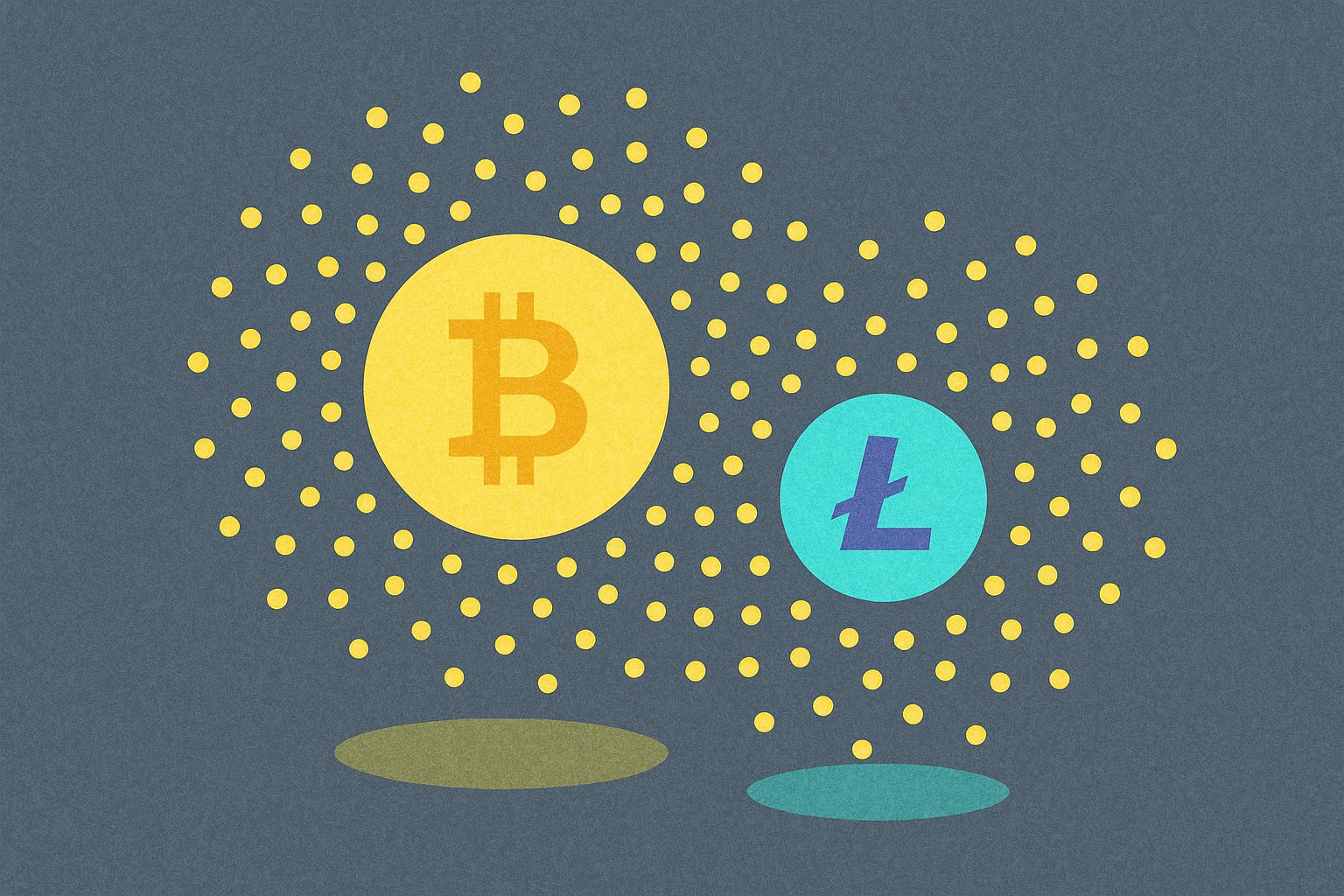
A dusting attack involves sending minuscule amounts of cryptocurrency, such as Bitcoin, to individual crypto wallets. However, this attack doesn't attempt to steal funds in any direct way. Instead, it focuses on using these transactions to extract private information about the individuals or groups behind the wallets. The extracted information can then be used to deanonymize users and compromise their privacy, which represents the true threat of this attack method.
The term "dust" originates from these tiny amounts of cryptocurrency scattered across blockchain networks, resembling digital dust particles. While users may occasionally receive small amounts through regular transactions, dusting attacks are deliberately orchestrated attempts with malicious intent rather than innocent transaction byproducts.
Important Note: Dusting attacks can occur on any public blockchain, including Bitcoin and other major cryptocurrencies.
For Bitcoin specifically, the amount is typically 1 satoshi, which equals 0.00000001 BTC. Many exchanges also offer options to convert these extremely small amounts of cryptocurrency, often referred to as crypto dust, into more usable denominations.
While not as critical as other types of attacks, dusting attacks have become particularly prominent in recent years and warrant attention. This represents a different type of threat compared to common smart contract exploits or other blockchain vulnerabilities.
How Dusting Attacks Occur
Malicious actors execute dusting attacks by sending "dust" to numerous addresses to track their targeted addresses. The attack mechanism relies on the blockchain's transparent nature and users' behavioral patterns.
Attackers understand that most cryptocurrency users don't actually notice small changes in their balance, so they continuously monitor the movement of these trace amounts. They then employ social engineering techniques to attempt to discover the personal identity of users and potentially blackmail them. This represents the real threat of dusting attacks and why they pose a serious privacy concern.
What happens afterward is even more harmful. The tiny amounts of coins sent by attackers can help monitor the activity of specific wallets. By analyzing transaction patterns and connections between addresses, attackers can build profiles of users' activities. They then use this information for phishing attacks, which appears to be the original intended purpose of dusting attacks. These sophisticated phishing campaigns can lead to credential theft, malware installation, or direct financial losses through deceptive schemes.
Past Examples of Dusting Attacks
One of the most notable dusting attack attempts occurred in recent years when hundreds of thousands of dust transactions were conducted on the Litecoin network. The source of the attack was later quickly identified as a group advertising their Litecoin mining farm. While no harm was caused, it became clear that this technique could be used for malicious purposes and demonstrated the vulnerability of public blockchain systems.
Bitcoin also experienced dusting attacks in the past. Thousands of wallets received 888 satoshis each. It was later revealed to be from Best Mixer, a crypto mixer platform that was once again advertising their platform through this unconventional method. This incident highlighted how dusting could be used for both marketing and potentially malicious purposes.
To date, there have been no major reported consequences from dusting attacks. However, it's possible that some users have already become victims of dusting attacks, as follow-up actions on such attacks are not easy to track or identify. This is certainly something to avoid and a fact that is too easily overlooked by the cryptocurrency community. The lack of reported incidents doesn't necessarily mean attacks haven't been successful, but rather that victims may not realize they've been compromised.
These series of events have drawn public attention to the negative consequences of dusting attacks, but there are several ways to avoid the worst attacks. Using these methods can prevent such attacks or at least avoid their consequences and protect your privacy in the cryptocurrency ecosystem.
How to Avoid Dusting Attacks
Fortunately, the likelihood of being affected by a dusting attack is relatively low if you take proper precautions. The simplest approach is to not use the received cryptocurrency. Some platforms allow you to flag these unused transaction outputs, effectively quarantining them from your active funds. And because many exchanges offer dust conversion options, you can simply convert it to a more substantial amount or another cryptocurrency. That's it. You don't need to worry about your identity being leaked through social engineering attempts.
You can also use hierarchical deterministic (HD) wallets that create new addresses for each transaction. This practice significantly enhances privacy by making it much more difficult for attackers to link transactions together or build a comprehensive profile of your activities. Of course, not all of these options are beginner-friendly, so it may be better to use an exchange that offers the option to convert dust into usable amounts. This approach provides a good balance between security and ease of use for most cryptocurrency users.
By taking these steps, you don't need to worry much about dusting attacks. While these incidents occur frequently, you should only be concerned if a specific address becomes targeted repeatedly. However, forewarned is forearmed, and understanding these threats is the first step in protecting yourself.
Why You Shouldn't Ignore Potential Dusting Attacks
As a unique form of attack against cryptocurrency users, dusting attacks certainly stand out in the threat landscape. The fact that it focuses on identifying the identity of those being attacked is quite novel, and once the dust moves, it can lead to potential risks that extend far beyond the initial transaction. Attackers can then use social engineering to launch phishing attacks, which can lead to more serious consequences including financial losses, identity theft, and compromised security.
While more common attack types cause more serious consequences, dusting attacks are not something to be particularly wary of compared to major exploits or exchange hacks. However, it's always important to be careful in the cryptocurrency space, so if you find that your holdings have increased slightly with an unknown transaction, don't touch it. A better approach is to use the dust conversion option provided by the platform you're using, which safely removes the threat while maintaining your privacy.
Staying informed about emerging threats like dusting attacks is crucial for maintaining security in the cryptocurrency ecosystem. As the technology evolves, so do the methods used by malicious actors, making continuous education and vigilance essential for all cryptocurrency users.
FAQ
What is a Dusting Attack? How does it compromise cryptocurrency users' privacy?
A dusting attack is a malicious technique where attackers send tiny amounts of cryptocurrency to wallets to track transaction activity and compromise user privacy. By monitoring how these dust amounts are spent, attackers can trace wallet ownership and expose user identities through blockchain's public transaction records.
How to identify and detect if my wallet has been subjected to a dusting attack?
Regularly monitor your wallet balance for unexpected transfers from unknown addresses. Review your transaction history for suspicious deposits. Use blockchain explorers to track incoming transactions. Enable wallet notifications to alert you of any unauthorized activity immediately.
What personal information can hackers obtain after a dusting attack, and what are the dangers of this information?
Hackers can obtain wallet addresses, transaction history, and linked personal data like email or phone numbers. This information enables identity theft, targeted phishing attacks, social engineering fraud, and unauthorized account access, putting your assets and privacy at serious risk.
How to protect against dusting attacks? What are practical security measures and best practices?
Protect against dusting attacks by using hardware wallets for storage, avoiding interaction with suspicious transactions, enabling address whitelisting, monitoring wallet activity regularly, and keeping private keys offline. Use reputable wallet software with security audits and enable two-factor authentication for exchanges.
What is the relationship between dusting attacks and on-chain analysis tracking?
Dusting attacks leverage on-chain analysis tracking by sending tiny crypto amounts to identify targets. Attackers monitor blockchain transactions to link wallet activities, revealing user identities and transaction patterns through data correlation over time.
How resistant are different types of cryptocurrency wallets (cold wallets, hot wallets, hardware wallets) to dusting attacks?
Hardware wallets and cold wallets offer superior resistance to dusting attacks by keeping private keys offline. Cold wallets, which never interact with smart contracts, provide the strongest protection. Hot wallets connected to the internet are most vulnerable. Hardware wallets signing transactions offline prevent dust tracking, while isolated accounts further minimize exposure risk.
What should I do if I receive small crypto transfers from unknown sources?
Do not interact with these transfers. Immediately revoke any smart contracts you may have approved, and secure your account by changing passwords and enabling two-factor authentication. These are likely dusting attacks attempting to track your wallet activity.
Share
Content
How to Buy Cryptocurrency


Trending Cryptocurrencies



Where to Buy Labubu in Japan: Top Stores and Online Shops 2025

What Is a Phantom Wallet: A Guide for Solana Users in 2025

Best Crypto Wallets 2025: How to Choose and Secure Your Digital Assets

How Web 3.0 is changing the way we use crypto assets: from Wallet to DAO

Web3 Wallet Guide: The Ultimate Strategy for Secure Digital Asset Management

How to choose the most suitable Web3 wallet? Expert insights and comparisons
Proof of Work vs Proof of Stake: Which Consensus Mechanism is Superior?
2026 MENGO Price Prediction: Expert Analysis, Market Trends, and Investment Outlook for the Next Generation of Digital Assets
2026 DCK Price Prediction: Expert Analysis and Market Forecast for the Coming Year
2026 ROUTE Price Prediction: Expert Analysis and Market Forecast for the Route Protocol Token

2026 MOBI Price Prediction: Expert Analysis and Market Forecast for Mobius Network Token