Six Cryptocurrencies With Total Growth Exceeding 1,000x

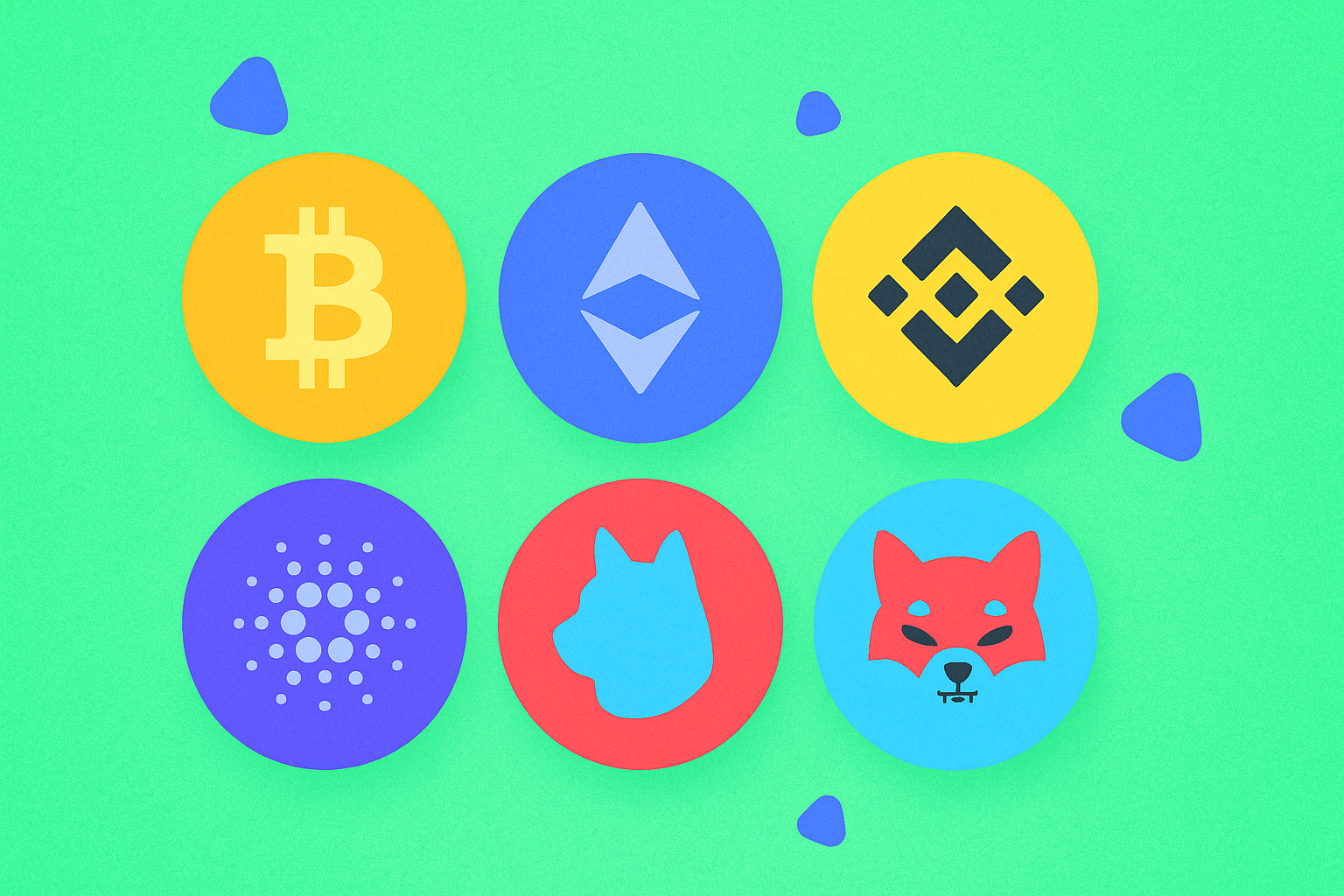
Growth Summary of the Six Leading Tokens
The cryptocurrency market has seen astonishing growth over the past decade, with many tokens multiplying hundreds or even thousands of times from their initial value. Bitcoin stands out, having soared at least one million times—possibly tens of millions—from its starting price to its all-time high. Beyond Bitcoin, which other tokens have increased by over 1,000 times?
This article highlights six major tokens that have grown more than 1,000-fold between 2009 and 2025, detailing their launch year, initial price (beginning of trading), all-time high, and approximate growth multiplier.
The initial price is based on either the "ICO price" or the "market price at the start of trading," and the all-time high reflects the peak up to April 1, 2025. The multiplier is calculated by dividing the all-time high by the initial price.
Bitcoin (BTC) launched in 2009 with an estimated initial price of about $0.0008 (for 2010). On January 20, 2025, it reached an all-time high of $109,350—an increase of roughly 136,687,500 times.
Ethereum (ETH) launched in 2015 with an ICO price of $0.31. Its peak was $4,878 in November 2021, marking about a 15,736-fold increase.
Binance Coin (BNB) was sold at an ICO price of $0.15 in 2017, reaching $690 in May 2021—a roughly 4,600-fold increase. In November 2024, BNB set a new record at $705, up about 7,016 times from its initial price.
Cardano (ADA) launched in 2017 at an ICO price of about $0.0024. In September 2021, it hit $3.10, achieving approximately 1,291 times growth.
Dogecoin (DOGE) began trading in December 2013 at about $0.0004. In May 2021, it peaked at $0.74, a 1,850-fold increase. In December 2024, Dogecoin hit a new high of $1.23, reaching about 3,075 times its initial value.
Shiba Inu Coin (SHIB) started trading in August 2020 with an initial price of about $0.00000000051. In October 2021, it reached $0.0000885, an extraordinary 173,529-fold increase.
Bitcoin (BTC)
Overview and Key Features
Bitcoin, launched in January 2009 by Satoshi Nakamoto, is the world’s first cryptocurrency. It serves as the foundation of the crypto market and is known as "digital gold." With a strict supply cap of 21 million BTC, its scarcity and decentralized network security make it a prominent long-term store of value.
The Bitcoin blockchain operates on a Proof of Work (PoW) consensus algorithm, where miners provide computational power to secure the network. This enables trustworthy, decentralized transaction records without a central authority.
Price Trends and Multipliers
Bitcoin had virtually no monetary value at launch, as exchanges did not exist in 2009. The first exchange rate with the US dollar was established in October 2009, when 5,050 BTC sold for about $5, pricing each BTC at roughly $0.0009. Trading began in July 2010 with initial prices between $0.0008 and $0.08.
By late 2010, Bitcoin rose to about $0.5, broke $1 in 2011, and spiked to $29.6 in June, showing extreme volatility. Its price followed a four-year cycle, reaching $1,000 in late 2013 and about $19,000 in December 2017. The latest all-time high was $109,350 on January 20, 2025. Compared to the initial trading price ($0.0008–$0.08), Bitcoin’s price increased by at least one million times, and possibly tens of millions.
This surge reflects not only speculation, but also Bitcoin’s growing role as a store of value. In periods of heightened inflation concerns, demand for Bitcoin as a digital alternative to gold rose significantly.
Key Growth Drivers
Market Maturity and Reserve Currency Status
As the first cryptocurrency, Bitcoin has always been central to the market. It’s recognized as the "first choice asset" by institutional investors and corporations, and has consistently accounted for more than half the crypto market’s total capitalization. Its role as a primary trading pair for altcoins further strengthens its reserve status.
On many exchanges, purchasing altcoins often requires converting to Bitcoin first, ensuring sustained demand. Bitcoin’s price also serves as a benchmark for the broader crypto market, significantly impacting other tokens.
Supply Constraints and Halving-Induced Scarcity
Bitcoin undergoes a "halving" event about every four years, reducing new issuance by half. These events in 2012, 2016, and 2020 curbed inflation. After the third halving in 2020, Bitcoin’s reputation as an "inflation-hedge asset" soared amid global monetary easing.
The halving mechanism decreases Bitcoin’s supply over time, and if demand holds steady or rises, upward price pressure builds. Historically, prices have surged after halving events, making them key for investors.
Macro-Economic Conditions and Safe-Haven Re-Evaluation
After the COVID-19 shock, fiscal stimulus and quantitative easing accelerated capital inflows into Bitcoin. In early 2021, Bitcoin attracted attention alongside stocks and real estate, surging from $29,000 at the end of 2020 to over $64,000 within months.
This trend illustrates Bitcoin’s renewed status as "digital gold" amid mounting inflation concerns in traditional markets. As central banks continue large-scale monetary easing, Bitcoin increasingly serves as a hedge against fiat currency depreciation.
Institutional and Corporate Adoption
Institutional investors and large corporations have recently accelerated Bitcoin adoption in their portfolios. For example, MicroStrategy began holding large amounts of BTC in 2020 as a corporate strategy, and Tesla announced a $1.5 billion BTC purchase in 2021.
PayPal and major US banks have launched crypto services, signaling the entry of traditional financial institutions. As a result, Bitcoin is now recognized as an attractive asset class for both retail and institutional investors.
National-Level Legal Tender Recognition
In 2021, El Salvador made Bitcoin legal tender. The government distributed wallets nationwide, marking an unprecedented state-level initiative. This broadened Bitcoin’s use from speculation to realistic payment applications.
This move influenced other countries, with some like the Central African Republic considering similar steps. National adoption further enhances Bitcoin’s reliability and practicality.
Global Recognition as Digital Gold
Bitcoin’s status as "digital gold" is now globally entrenched. In 2021, its market cap briefly surpassed $1 trillion, rivaling the scale of the gold market. Its supply limit and decentralization make it attractive for long-term holdings, and many investors now use Bitcoin as a store of value.
This shift means Bitcoin is increasingly seen as a tool for long-term wealth preservation rather than pure speculation. In countries with high inflation or unstable currencies, Bitcoin is being used as an alternative store of value.
Trump Administration’s Bitcoin Reserve Proposal
In April 2025, the Trump administration indicated the possibility of including BTC as part of the US foreign currency reserves. The motives were to "maintain dollar hegemony" and "counter other nations’ digital asset policies." Following the announcement, Bitcoin reached new all-time highs, reaffirming the link between policy and price.
This development shows Bitcoin is being recognized as a strategic asset at the national level, and other countries may adopt similar policies in the future, boosting demand further.
Ethereum (ETH)
Overview and Key Features
Ethereum, launched in July 2015, is a blockchain platform and the second-largest cryptocurrency after Bitcoin. While Bitcoin is "digital gold," Ethereum is described as the "protocol for the decentralized internet," serving as the foundation for smart contracts and DApps (decentralized applications).
Smart contracts are code-based agreements that execute automatically when conditions are met, enabling transparent transactions without central authority. Ethereum’s flexibility places it at the heart of DeFi (decentralized finance) and NFT (non-fungible token) innovation, with countless projects and tokens built on its platform.
Price Trends and Multipliers
Ethereum’s ICO in 2014 sold ETH at about $0.31 per token, raising nearly $18 million. When the mainnet launched in July 2015, ETH traded around a few dollars.
The 2017 ICO boom fueled explosive demand, with Ethereum reaching about $1,400 in January 2018 before dropping to the $80s by year-end. Interest returned after 2020 as DeFi and NFT activity surged, culminating in a record high of $4,878.26 on November 10, 2021—a more than 15,000-fold increase from its ICO price.
This surge reflects Ethereum’s adoption as the backbone for decentralized applications. The rise of DeFi protocols and NFT marketplaces significantly boosted Ethereum’s demand.
Key Growth Drivers
Smart Contract and DApp Innovation
Ethereum’s core feature is the implementation of smart contracts, allowing anyone to create custom tokens and applications. Since 2016, countless projects have launched on Ethereum, fueling the ICO boom.
This innovation expanded blockchain’s applications into finance, gaming, art, supply chain management, and more. Ethereum thus established itself as the foundation for the next-generation internet, not just as a cryptocurrency.
Emergence of DeFi (Decentralized Finance)
From around 2020, DeFi protocols like Uniswap and Compound built on Ethereum grew rapidly. Yield farming locked ETH, becoming a primary driver of price increases. Ethereum serves as the "financial infrastructure" at the core of DeFi.
DeFi provides traditional financial services on decentralized networks, eliminating the need for banks or brokers. This reduces fees, increases transparency, and allows global access to financial services.
NFT Boom and Demand Surge
In early 2021, NFT marketplaces like OpenSea NFT expanded rapidly. ETH was used to buy digital art and collectibles, accelerating new user inflows. Rising gas fees reflected increased network usage, pushing ETH prices higher.
NFTs add uniqueness to digital content and are used for art, music, gaming items, and more. Celebrity NFT launches raised mainstream awareness, rapidly expanding the NFT market.
Technical Progress: Ethereum 2.0 Transition
The London upgrade in August 2021 introduced EIP-1559, changing fee structures to include automatic burning. In September 2022, "The Merge" shifted consensus from PoW to PoS, greatly improving energy efficiency and strengthening investor confidence.
This transition enhanced Ethereum’s scalability and sustainability, and is regarded as a response to environmental concerns. PoS greatly reduced electricity consumption, making Ethereum a more sustainable blockchain.
Enterprise Adoption and Ecosystem Expansion
Ethereum has become the "second investment target" after Bitcoin. The Enterprise Ethereum Alliance (EEA) was founded in 2017 with members like Microsoft and JP Morgan. Since 2020, CME-listed ETH futures and expanded custody services have increased institutional participation.
Ethereum is now seen as an attractive asset class for institutions and retail investors alike. Enterprises adopting Ethereum-based solutions are advancing blockchain’s real-world implementation.
Binance Coin (BNB)
Overview and Key Features
Binance Coin is the native token of one of the world’s largest cryptocurrency exchanges. Launched in July 2017 alongside the exchange via ICO, it started as an ERC-20 token and later migrated to its own blockchain (Binance Chain → BNB Chain). BNB evolved into a utility token used across the ecosystem for trading fee discounts, gas payments, and more.
BNB is not just an exchange token; it’s the core of a proprietary blockchain ecosystem. BNB Chain offers Ethereum-compatible smart contract functionality and is widely used for DeFi and NFT projects.
Price Trends and Multipliers
BNB’s ICO price was $0.15, with about 100 million tokens issued. Initially trading at a few dollars, BNB surged in early 2021, reaching an all-time high of $690.93 on May 10, 2021—a 4,605-fold increase from its ICO price.
In 2024, ecosystem expansion and regulatory tailwinds pushed BNB to a new high of $705 on November 15, reaching a 7,016-fold increase from its ICO price. Recently, BNB has traded within the $500–$700 range.
This surge resulted from the mutual growth of the exchange and expanding BNB utility. BNB is required for trading fee discounts and IEO participation, ensuring price formation based on real demand.
Key Growth Drivers
Rapid Exchange Growth and User Increase
Since 2018, the leading exchange has maintained the top trading volume globally. Users using BNB for trading fee discounts guarantee stable demand based on real utility. After 2019, scandals at other exchanges further accelerated capital inflows.
The exchange’s growth directly drives BNB demand. High trading fee discounts make BNB essential for frequent traders.
Trading Fee Discounts and Expanded Utility
Beyond spot trading discounts, BNB is used for IEOs, staking, lending, and more. Launchpad IEO participation requires BNB holding, contributing to price increases. As user numbers rise, BNB’s ecosystem utility expands annually.
BNB’s diverse use cases show it functions as a general-purpose token throughout the ecosystem, not just for trading fee discounts. BNB demand continues to grow alongside the exchange.
Success of Proprietary BNB Chain
The leading exchange launched its own chain in 2019, making BNB its native token. In 2020, Ethereum-compatible BSC (Binance Smart Chain) launched, and its low gas fees spurred rapid DeFi and gaming app growth. Numerous dApps now run on BNB Chain, establishing it as the second major smart contract platform after Ethereum.
BNB Chain offers lower fees and faster transactions than Ethereum, attracting developers. This has accelerated the ecosystem’s expansion.
Deflation Through Regular Token Burns
BNB will ultimately be reduced to a supply cap of 100 million tokens. The leading exchange conducts quarterly buybacks and burns based on revenue, reducing circulating supply and creating favorable tokenomics for long-term holders.
This burn mechanism increases BNB’s scarcity and supports its price. As exchange revenue grows, so does the burn volume, directly linking exchange growth to BNB value.
Brand Strength and Robust Community
Charismatic founders and user-focused marketing have earned global support. Frequent BNB use in airdrops and IEOs attracts long-term holders. Reliable operations, including hack compensation, provide security for BNB investors.
A strong community contributes to price stability. Active communication and transparent management build user trust.
Cardano (ADA)
Overview and Key Features
Cardano, launched in 2017, is a third-generation blockchain platform. Its ticker is ADA, and it supports smart contracts and DApps as a platform-type cryptocurrency.
The project is led by Charles Hoskinson, a co-founder of Ethereum, and developed through academic peer review and formal methods. Its consensus algorithm is Proof of Stake (PoS) "Ouroboros," evolving in phases (Byron, Shelley, Goguen, etc.).
Cardano’s main feature is its scientific development process. All technical changes are published as academic papers and implemented only after peer review, ensuring high security and reliability.
Price Trends and Multipliers
In January 2017, ADA’s ICO, mainly in Japan and Korea, priced tokens at about $0.0024. After its mainnet launched in October 2017, an altcoin boom pushed the price close to $1.
Cardano slumped during the 2018 crypto winter but rebounded in 2020–2021. Staking (Shelley) and smart contract rollout (Alonzo) drew attention, with ADA peaking at $3.1 on September 2, 2021—a more than 1,300-fold increase from its ICO price.
This surge resulted from Cardano’s technical progress and community optimism. Smart contract implementation positioned Cardano as an Ethereum competitor.
Key Growth Drivers
Milestone Upgrades and New Catalysts
The Shelley upgrade in 2020 enabled decentralization and staking, and Alonzo in 2021 added smart contracts. Each phase’s progress drove price increases. The 2023 "Hydra" upgrade dramatically improved scalability, enabling thousands of transactions per second and accelerating DeFi and NFT adoption.
These upgrades result from Cardano’s roadmap-driven development approach. Each milestone enhances utility and raises investor expectations.
Academic Approach for Reliability
Cardano’s theory-driven, peer-reviewed design attracts long-term supporters based on safety and stability. This approach continues, integrating advanced cryptography. The community remains united, favoring holding and supporting long-term value.
This academic methodology demonstrates Cardano’s focus on long-term innovation, not speculation. Formal verification is vital for software reliability.
Expectations as an "Ethereum Killer"
Cardano touts energy efficiency, low fees, and high security compared to ETH. In early 2021, rising gas fees made it a popular alternative chain. Recently, Cardano’s "Hydra" upgrade for fast processing has strengthened its position as an Ethereum alternative. In Japan, ADA ("EdaCoin") enjoys high recognition, with domestic listings providing momentum.
The "Ethereum Killer" label highlights Cardano’s technical advantages. PoS’s energy efficiency is a major edge amid environmental concerns.
Emergence of Real-World Use Cases
Cardano’s partnership with Ethiopia provides digital IDs and academic records to over five million students. In 2024, the project expanded nationwide, serving over 10 million users. Adoption has also spread to agricultural traceability (Tanzania), educational certification (Southeast Asia), and notary services (Europe), increasing the likelihood of national-scale deployment.
These real-world cases show Cardano’s function as a technology foundation for society, not just a cryptocurrency. Cardano’s technology is crucial for digital infrastructure in developing countries.
Staking Incentives for Long-Term Holding
ADA holders earn several percent annual yield via PoS staking. Recently, about 75% of circulating ADA is locked in staking, limiting market liquidity.
This staking mechanism encourages long-term holding and price stability. When staking yields exceed inflation, holders realize net gains, reducing selling pressure.
Dogecoin (DOGE)
Overview and Key Features
Dogecoin was developed in 2013 as a meme cryptocurrency. Engineers Billy Markus and Jackson Palmer launched the project inspired by the Shiba Inu meme "Kabosu," with no clear purpose or technical innovation—it began as an "infinite supply joke currency."
Its friendly logo and humorous culture won over the community, and by 2021 Dogecoin had evolved from a meme to a real asset, briefly entering the top five by market capitalization.
Dogecoin’s main feature is its simplicity and community-driven culture. Despite limited technical innovation, its approachable design and fun ethos attract broad support.
Price Trends and Multipliers
DOGE launched in December 2013 at about $0.0004. It quickly gained popularity on Reddit, surging over 300% in a few days. In 2015, it hit a historic low of $0.000086, but revived during the 2017–2018 altcoin boom.
In 2021, Elon Musk and retail investor enthusiasm pushed DOGE to its all-time high of $0.74 on May 8—a 1,850-fold increase (+185,000%).
In December 2024, speculation around Tesla-related adoption drove DOGE to a new high of $1.23 (December 15, 2024), a 3,075-fold increase from its initial price. Recently, DOGE has traded in the $0.80–$1.00 range.
This surge shows Dogecoin is powered by meme culture and celebrity influence, with social media having a major impact on price movements.
Key Growth Drivers
Meme Culture and Strong Community
Dogecoin’s Shiba Inu logo and playful tone make it accessible to beginners. Reddit popularized its use for donations and tips, establishing its "currency for fun" identity. The "No highs, no lows, only Doge" motto won support. Meme popularity on X and TikTok remains strong, with community unity underpinning prices.
This meme culture shows Dogecoin is a tool for community cohesion, not just an investment. Its approachable tone lowers entry barriers, attracting new users.
Celebrity and Influencer Support
Elon Musk’s influence is enormous. He calls himself "Dogefather," and Tesla’s adoption in 2024 boosted prices. Snoop Dogg and Mark Cuban also support DOGE. Social media drove the 2021 bubble and the $1.23 peak in late 2024. Grayscale’s DOGE ETF application (filed January 31, accepted by SEC on February 13) has gained attention alongside Musk’s support.
Celebrity influence directly impacts Dogecoin’s price. Musk’s tweets alone can drive surges, illustrating social media’s power.
Affinity with Retail Investor Movements
The "WallStreetBets" movement in January 2021 rallied retail investors around Dogecoin. The "To the Moon" slogan sparked grassroots buying, and Doge Day (April 20) briefly pushed DOGE past XRP into fifth place by market cap. Recently, ETF speculation has renewed retail buying, keeping DOGE in the market cap top ten.
This retail investor movement shows Dogecoin’s grassroots growth, with community unity—especially among younger users—supporting prices.
Expanded Platform Access
Major platforms like Robinhood and Coinbase listed DOGE, greatly improving accessibility for younger investors. On Robinhood, DOGE trading surged so much it caused system outages. Grayscale’s ETF application (via NYSE Arca) and expanded DOGE trading on major exchanges have encouraged institutional entry.
Expanded platform access improves Dogecoin’s liquidity, enabling more investors to participate. Easy trading platforms like Robinhood have encouraged younger users to enter.
Buzz and Brand Uniqueness
Dogecoin’s appeal persists even without practical use or technical progress—many hold it simply "for fun." In 2023, Elon Musk changed Twitter’s logo to a Shiba Inu, drawing renewed attention. Tesla’s trial payment adoption in December 2024 pushed DOGE to $1.23, and SEC’s ETF application acceptance in February further fueled buzz. Musk’s idea of making Dogecoin Mars’s currency spread on X, sustaining speculative momentum.
This buzz means Dogecoin functions as entertainment as well as investment. Constant new topics keep the community engaged.
Shiba Inu Coin (SHIB)
Overview and Key Features
Shiba Inu Coin, launched in August 2020 by the anonymous developer "Ryoshi," is a meme cryptocurrency inspired by Dogecoin. Its tagline is "Dogecoin Killer." Issued as an ERC-20 token on Ethereum, SHIB features an extremely low price and massive supply, making it easy for anyone to hold large amounts.
The meme coin boom of 2021 brought explosive attention, and SHIB became globally known as a "dream currency" generating many overnight millionaires.
SHIB’s main feature is its ultra-low price and huge supply. With an initial supply of one quadrillion tokens, anyone can own large quantities, psychologically encouraging buying.
Price Trends and Multipliers
SHIB began trading on Uniswap in 2020 at $0.00000000051. Initially obscure, it gained attention after listing on major exchanges in May 2021, reaching $0.00008845 in October—a more than 500,000-fold increase.
SHIB entered a period of price adjustment and now trades in the $0.00001–$0.00003 range, still far above its initial price.
This surge shows SHIB is powered by meme coin buzz and community enthusiasm, especially among investors chasing "millionaire dreams."
Key Growth Drivers
Meme Appeal and "Dogecoin Killer" Marketing
SHIB used the Shiba Inu breed from Dogecoin and became a meme coin aiming to be the "next Dogecoin." The dream of "becoming a millionaire if it hits 1 yen" spread rapidly on social media, fueling explosive rallies in spring and fall 2021. Meme activity on X and TikTok remains robust, with annual gains of 150% and FOMO fueling speculation.
This meme appeal shows SHIB is a tool for community cohesion, not just an investment. The "Dogecoin Killer" tagline stoked hopes of replicating Dogecoin’s success.
Enthusiastic Community and Buzz
The SHIB Army community drives buzz. Elon Musk’s Shiba Inu tweets and Vitalik Buterin’s massive SHIB burns (90%) drew attention. Celebrity actions have outsized impact on price. Recently, the burn of 410 trillion tokens reduced supply and supported prices.
This community enthusiasm shows SHIB is sustained by unity, not just speculation. Celebrity actions and statements have major influence, highlighting social media’s power.
Rapid Listings on Major Exchanges
In 2021, major exchanges listed SHIB in quick succession. Improved trading infrastructure boosted liquidity and shifted SHIB’s image from a "grassroots coin" to a "legitimate currency." Now listed on over 100 exchanges, SHIB’s liquidity continues to expand.
Expanded platform access boosts SHIB’s liquidity and broadens investor participation. Major listings shifted SHIB’s perception to a legitimate currency.
Low-Cost "Gambling Appeal"
Owning billions of SHIB for a few hundred dollars encourages buying. The "if it hits $1…" dream drives investment, and real-life stories of turning $1,000 into millions spread online, fueling FOMO. As of April, SHIB traded at $0.00001252, allowing about eight million tokens for $100—preserving its speculative appeal.
This gambling aspect shows SHIB is a tool for "buying dreams," not just an investment. The ability to hold large amounts at a low price delivers psychological satisfaction.
Project Evolution and Expanding Utility
In 2021, ShibaSwap (a decentralized exchange) launched. Recently, Layer 2 "Shibarium" and metaverse plans "SHIB: The Metaverse" were announced. Utility expansion continues, and burn mechanisms are being introduced to support prices.
Project evolution shows SHIB is becoming a practical project, not just a meme coin. Developments like ShibaSwap and Shibarium aim to expand the SHIB ecosystem.
Conclusion: Future Outlook
Looking back at the six major tokens (BTC, ETH, BNB, ADA, DOGE, SHIB) that grew more than 1,000-fold from 2009 to today, diverse drivers such as technological innovation, macroeconomic shifts, and social media impact fueled their growth. While similar phenomena may occur again, past success does not guarantee future results. Investors need a calm perspective and long-term vision.
Each token’s success is supported by distinct factors: Bitcoin is established as "digital gold," Ethereum as the "foundation for decentralized applications," BNB as the exchange ecosystem’s core, Cardano for academic rigor and reliability, and Dogecoin and SHIB for meme culture and passionate communities.
Long-term, the crypto market may continue to grow, but factors like increased regulation, technical challenges, and market maturation will affect prices. Investors should understand each token’s characteristics and manage risks appropriately.
FAQ
What are cryptocurrencies? How do they differ from traditional investments?
Cryptocurrencies are encrypted digital currencies operating on blockchains, independent of central authorities. Unlike traditional investments, they are highly volatile, trade 24/7, and offer greater growth potential.
Which cryptocurrency projects have achieved more than 1,000-fold growth historically?
Bitcoin (BTC) grew about 136,687,500 times, Ethereum (ETH) about 15,736 times, BNB about 7,016 times, Cardano (ADA) about 1,291 times, and Dogecoin (DOGE) about 3,075 times. These are cumulative gains from their initial stages.
What are the key success factors behind these high-growth crypto projects?
Technological innovation, strong market demand, and robust community support are critical. Leading projects achieve ongoing growth through pioneering technology and wide user adoption.
Can you still achieve high returns by investing in cryptocurrencies now?
Cryptocurrencies are highly volatile assets. With careful token selection and market analysis, major return opportunities remain in the bullish environment expected for 2026. However, investment decisions are your own responsibility.
What are the main risks and precautions when investing in cryptocurrencies?
Price volatility and market risk are high. Regulatory gaps increase risks of fraud and hacking. Secure wallet management, choosing reliable platforms, and prudent capital management are essential. Long-term holding is recommended to weather market fluctuations.
How can you identify promising cryptocurrency projects?
Assess technological innovation, team strength, market positioning, and community support. Metrics like trading volume, user growth rate, and implementation maturity are also key criteria.
Share
Content
How to Buy Cryptocurrency


Trending Cryptocurrencies



How to Mine Ethereum in 2025: A Complete Guide for Beginners

Ethereum 2.0 in 2025: Staking, Scalability, and Environmental Impact

What is Ethereum: A 2025 Guide for Crypto Enthusiasts and Investors

How does Ethereum's blockchain technology work?

What are smart contracts and how do they work on Ethereum?
Ethereum Price Analysis: 2025 Market Trends and Web3 Impact

What is FYN: A Comprehensive Guide to Understanding the Fyn Protein Tyrosine Kinase and Its Role in Cell Signaling
What is NBOT: A Comprehensive Guide to Neural Bot Technology and Its Applications in Modern Business
How to Earn Money with Cryptocurrencies and Bitcoin?
2026 LONG Price Prediction: Expert Analysis and Market Forecast for the Next Generation Cryptocurrency Asset

2026 FYN Price Prediction: Expert Analysis and Market Forecast for the Coming Year