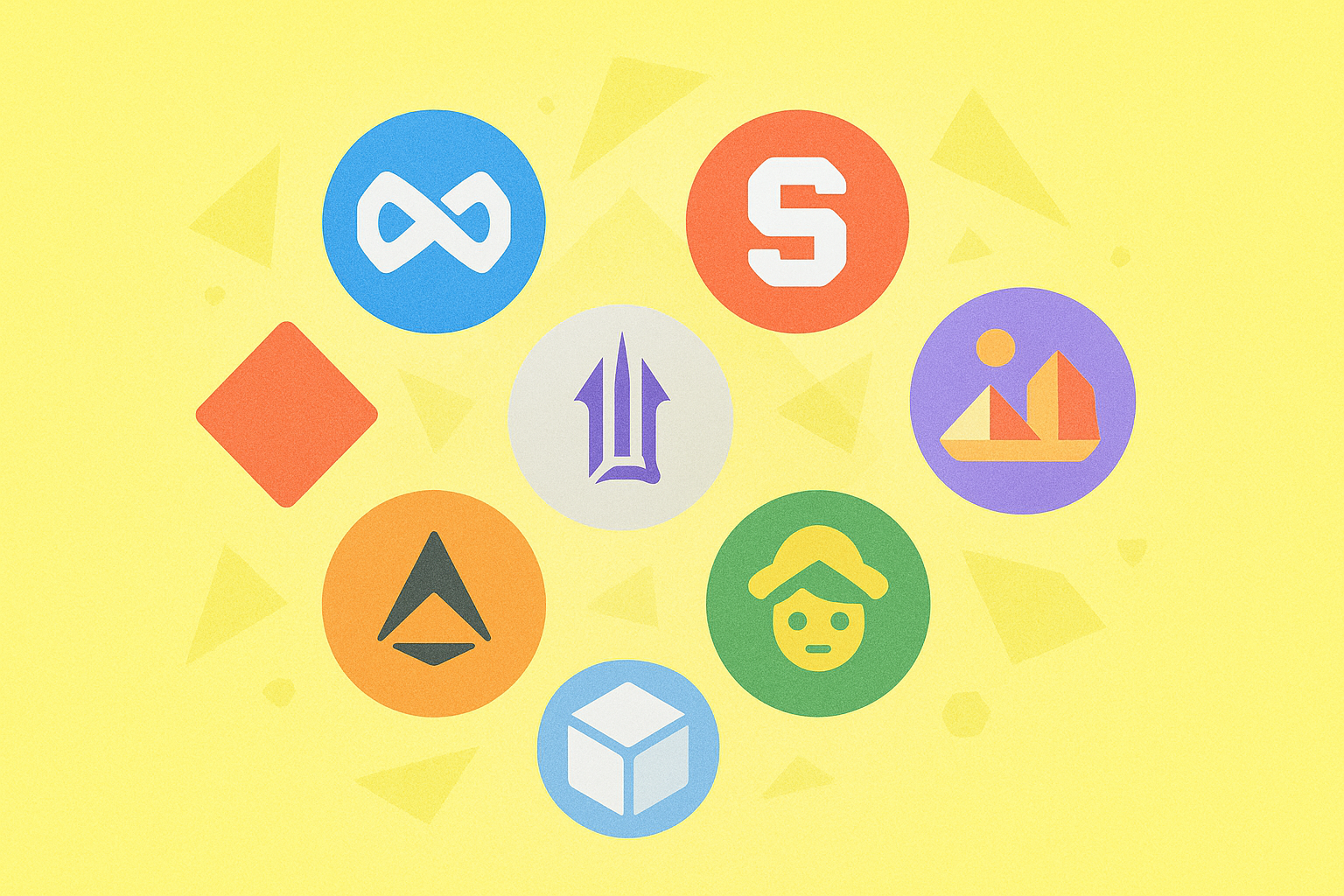
Explore the top metaverse games shaping the digital gaming landscape in 2024. This comprehensive guide introduces what the metaverse represents—a virtual world blending VR and AR technologies with blockchain for true digital ownership and play-to-earn opportunities. Discover seven leading metaverse games: Axie Infinity's Pokémon-inspired battles and NFT creatures, The Sandbox's creative world-building with SAND tokens, Decentraland's virtual real estate and MANA governance, Illuvium's triple-A 3D graphics, My Neighbor Alice's beginner-friendly environment, Alien Worlds' free-to-play mining, and Bloktopia's educational VR skyscraper. Each platform offers unique gameplay mechanics, native cryptocurrencies, and earning potential through NFT trading and token rewards. Whether you seek entertainment, investment opportunities, or creative expression, these games demonstrate how blockchain technology transforms gaming into a legitimate income source. Perfect for both gaming enthusiasts and cryptocurrency investors e
The excitement, anticipation, and confusion surrounding the metaverse mirror the early days of the Internet, which revolutionized information exchange and communication. Neal Stephenson first coined the term "metaverse" in his 1992 science fiction novel, envisioning it as a complete virtual world parallel to reality.
The metaverse primarily encompasses gaming experiences, but it promises to expand far beyond games. For instance, Facebook's Meta aims to transform social networking through artificial intelligence and VR technology, imagining a comprehensive platform for socializing, learning, and playing. The metaverse represents a virtual world offering simulated and shared experiences where users interact in real time. It encompasses existing and future digital platforms that leverage VR and AR technologies to deliver immersive and interactive digital experiences.
This emerging digital ecosystem creates new opportunities for entertainment, commerce, and social interaction. Users can own virtual assets, participate in virtual economies, and engage with others in ways that blur the boundaries between physical and digital realities. The metaverse is built on blockchain technology, enabling true digital ownership through NFTs and decentralized governance structures.
1. Axie Infinity
Launched in 2018, Axie Infinity has established itself as one of the most popular metaverse games in circulation. The gameplay draws inspiration from Pokémon mechanics and requires players to collect, breed, raise, battle, and trade creatures called "Axies". These Axies are adorable small creatures that function as NFTs, making each Axie indivisible and unique with its own set of characteristics and abilities.
Players earn rewards in the form of NFTs through various in-game activities. Alternatively, participants can receive rewards in Axie Infinity Shards (AXS) and Smooth Love Potion (SLP), the two native tokens of the platform. Players can earn Smooth Love Potion by achieving victories in the game's ranked Arena mode, where strategic battles test their skills and team composition.
The game has created a robust play-to-earn economy where skilled players can generate substantial income. The breeding system allows players to create new Axies with potentially valuable trait combinations, adding a strategic layer to the gameplay. The marketplace facilitates trading between players, creating a dynamic economy driven by supply and demand.
2. The Sandbox
The Sandbox, originally a mobile game from the early 2000s, was launched in 2010 and allows players to create worlds and populate them with characters and objects. In 2018, Animoca Brands acquired the game and transformed it into a blockchain-based play-to-earn platform, bringing it into the metaverse era.
Players buy and sell virtual real estate in The Sandbox, organize events, and trade NFTs and in-game items. The platform offers the Sandbox Game Maker, which enables users to design their own games without coding knowledge, and VoxEdit, a tool for creating NFTs and 3D models with voxel-based graphics.
What is SAND?
The SAND token serves as the primary currency within the ecosystem. As an ERC-20 token, SAND is integral to various gaming activities, including purchasing virtual land, exchanging user-created NFTs, and customizing avatars. LAND tokens represent ownership of virtual land parcels, while ASSETS are NFTs created within the platform by users.
SAND serves a dual purpose, acting as both a utility and governance token. SAND holders can participate in decision-making processes for platform development through a decentralized autonomous organization (DAO). SAND can be staked, allowing holders to earn a share of the platform's advertising revenue and transaction fees, creating passive income opportunities for token holders.
The platform has attracted major brands and celebrities who have purchased virtual land to establish their presence in the metaverse. This growing ecosystem creates opportunities for creators, gamers, and investors alike.
Decentraland is a virtual reality platform similar to The Sandbox, offering a decentralized metaverse experience. Users can purchase various in-game items, including virtual land parcels known as "LAND". Purchasing a land parcel in the game grants an ERC-721 token, a non-fungible token representing unique ownership.
The game offers diverse ways to engage and earn within its virtual economy. For example, users can purchase spaces and rent them for advertising purposes or develop them into venues like stadiums for concerts and events. Holding land can also serve as a long-term investment strategy, as prime locations may appreciate in value over time.
Decentraland's ecosystem is limited to 90,601 LAND parcels, which form Genesis City. When land is purchased, an equivalent amount of MANA equal to the land's value is burned, creating deflationary pressure on the token supply.
MANA serves two primary roles in the Decentraland metaverse:
- Users can utilize MANA to purchase LAND and other in-game items, serving as the primary medium of exchange
- MANA holders can participate in platform governance decisions through a DAO, influencing the future direction of the platform
The platform hosts regular events, art galleries, and social gatherings, creating a vibrant virtual community. Users can create wearables, art installations, and interactive experiences, monetizing their creativity through the platform's marketplace.
4. Illuvium
Illuvium represents an innovative entry in the "triple-A, 3D blockchain" game genre. Players in this alien-themed game track and capture mystical creatures called Illuvials by trapping them with shards or healing them after battle. These Illuvials serve as allies in battles against other players and monsters, creating strategic gameplay opportunities.
As tradeable NFTs, the value of Illuvials intensifies with their rarity and strength level. Players can increase the value of these creatures by fusing three identical Illuvials, each at their peak level, to create a new, more powerful entity with enhanced abilities and characteristics.
The game allows players to discover their own equipment, including armor and weapons, through exploration and combat. Success in missions and tournaments rewards players with the game's cryptocurrency, ILV, which can be traded on IlluviDEX, the platform's decentralized exchange.
Illuvium features stunning graphics built on Unreal Engine 4, setting a new standard for blockchain gaming visuals. The game combines elements of exploration, collection, and strategic combat, appealing to both traditional gamers and cryptocurrency enthusiasts.
5. My Neighbor Alice
My Neighbor Alice distinguishes itself by welcoming players without prior experience in cryptocurrencies, blockchain, or NFTs. Set in the Lummelunda archipelago, the game offers a peaceful environment for community interaction and virtual land ownership. Players contribute to the community through activities like fishing, beekeeping, and insect catching.
Players assist the protagonist Alice in her daily tasks, interacting with various characters and earning rewards for their efforts. They can also utilize in-game NFTs to design, decorate, and personalize their properties, expressing their creativity and style.
The native cryptocurrency of My Neighbor Alice is the ALICE token, an ERC-20 token used to purchase in-game items, earn staking rewards, and participate in the game's governance system. The game creates an accessible entry point for newcomers to the metaverse while maintaining the benefits of blockchain technology.
The platform emphasizes social interaction and creative expression, allowing players to visit each other's islands and participate in community events. This approach makes blockchain gaming more approachable for mainstream audiences.
6. Alien Worlds
Alien Worlds is a free-to-play P2E metaverse that has attracted a large player base. While being free-to-play, users may need to make small purchases of the game's native cryptocurrency, the Trillium (TLM) token, to complete certain missions and acquire NFTs more efficiently.
The game revolves around traveling to distant alien worlds and mining TLM or NFTs. As players progress in the game, they acquire more resources to discover NFTs more quickly. There are over 300 different NFTs to collect, each unique in terms of value and rarity, creating a diverse collection ecosystem.
The game's objectives include:
- Mining or acquiring more than 300 unique NFTs with varying characteristics
- Participating in planetary events and competitions
- Renting spaceships to travel to distant planets and explore new territories
- Competing against other players in strategic battles and winning rewards
- Contributing to the governance system of Alien Worlds through the DAO structure
Players can choose which planet to mine on, each with different mining difficulty and reward rates. The game incorporates elements of strategy, resource management, and competition, creating an engaging play-to-earn experience.
7. Bloktopia
Bloktopia is a significant decentralized metaverse offering an immersive VR experience. Built on the Polygon network, it utilizes Unity, a cross-platform game engine, ensuring smooth performance and accessibility. This platform is designed as a decentralized VR skyscraper with 21 floors, each symbolizing the total supply of 21 million BTC as a tribute to cryptocurrency's origins.
Bloktopia functions as an educational and entertainment hub, catering to all levels of cryptocurrency experience. The platform offers various interactive spaces, including gaming rooms, meeting rooms, and areas where major brands can establish their virtual presence. Users can engage in activities such as learning about cryptocurrencies, playing games, socializing with other users, and participating in play-to-earn games.
The native token of Bloktopia, $BLOK, is an ERC-20 token fundamental to in-game transactions, such as purchasing NFTs and accessing exclusive events. This token is also used to buy and customize virtual real estate, known as REBLOK, and acquire advertising rights, called ADBLOK.
The platform creates opportunities for content creators, educators, and businesses to establish their presence in the metaverse. The vertical design allows for easy navigation and creates distinct zones for different activities, from educational content on lower floors to entertainment venues on higher levels.
The metaverse has already begun its impressive journey, driven by technological advances and innovative concepts. Major global companies are actively developing this space, promising a future with more engaging games and broader virtual interactions. In the coming years, the metaverse is poised to become a major player in the digital entertainment sector, potentially reshaping how we interact with technology and each other in virtual spaces.
The integration of blockchain technology with virtual worlds creates unprecedented opportunities for digital ownership, decentralized governance, and new economic models. As VR and AR technologies continue to advance, the metaverse experience will become increasingly immersive and accessible to mainstream audiences.
The play-to-earn model has demonstrated the potential for gaming to become not just entertainment but also a source of income for players worldwide. This paradigm shift challenges traditional gaming models and creates new possibilities for digital economies. As the technology matures and more users adopt metaverse platforms, we can expect to see continued innovation in gameplay mechanics, social features, and economic systems that will define the future of digital interaction.
FAQ
Metaverse games are blockchain-based virtual worlds where players own digital assets as NFTs, trade freely, and earn cryptocurrency rewards. Unlike traditional games, they offer true asset ownership, play-to-earn mechanics, cross-game interoperability, and decentralized governance, creating persistent economies where players have genuine financial value.
The most popular metaverse games in 2024 include Otherside, Pudgy World, Decentraland, Illuvium, and The Sandbox. These games attract massive players through unique experiences and strong community engagement.
Create a metaverse account first. Most games support standard PC or mobile devices with graphics cards. Some require VR headsets for immersive experience. Ensure stable internet connection and download the game client from official sources.
Yes, you can earn money in metaverse games by trading virtual assets. Players can buy and sell virtual real estate, in-game items, and collectibles at higher prices. Assets can be converted to cryptocurrencies and withdrawn for real-world value gains.
Metaverse games carry several risks including currency volatility, data privacy breaches, addiction potential, and intellectual property disputes. Players should verify platform credibility, use secure wallets, monitor gameplay time, and understand token trading regulations to mitigate these concerns.
Starting costs range from hundreds to thousands of dollars depending on the game. Some games offer free-to-play options, while others require NFT purchases or initial investments. As technology advances, entry costs are expected to decrease significantly in the coming years.
Decentraland emphasizes player-driven virtual worlds and NFT assets with DAO governance, Roblox focuses on user-generated content and diverse game creation, while Fortnite combines engaging gameplay with live cultural events and cross-media experiences.
Metaverse games will evolve as social platforms with virtual economies, enhanced interactivity through VR/AR, and seamless integration of virtual and real-world experiences, driving innovation in education, commerce, and entertainment sectors.
* The information is not intended to be and does not constitute financial advice or any other recommendation of any sort offered or endorsed by Gate.