Timing Bitcoin Bottom Purchases with Hash Ribbons

Understanding Bitcoin Trends Through Hash Ribbons
The Hash Ribbon indicator has emerged as a crucial analytical tool for traders seeking to predict Bitcoin price movements. This technical indicator analyzes changes in Bitcoin mining difficulty and hash rate to capture signals of potential price increases or decreases.
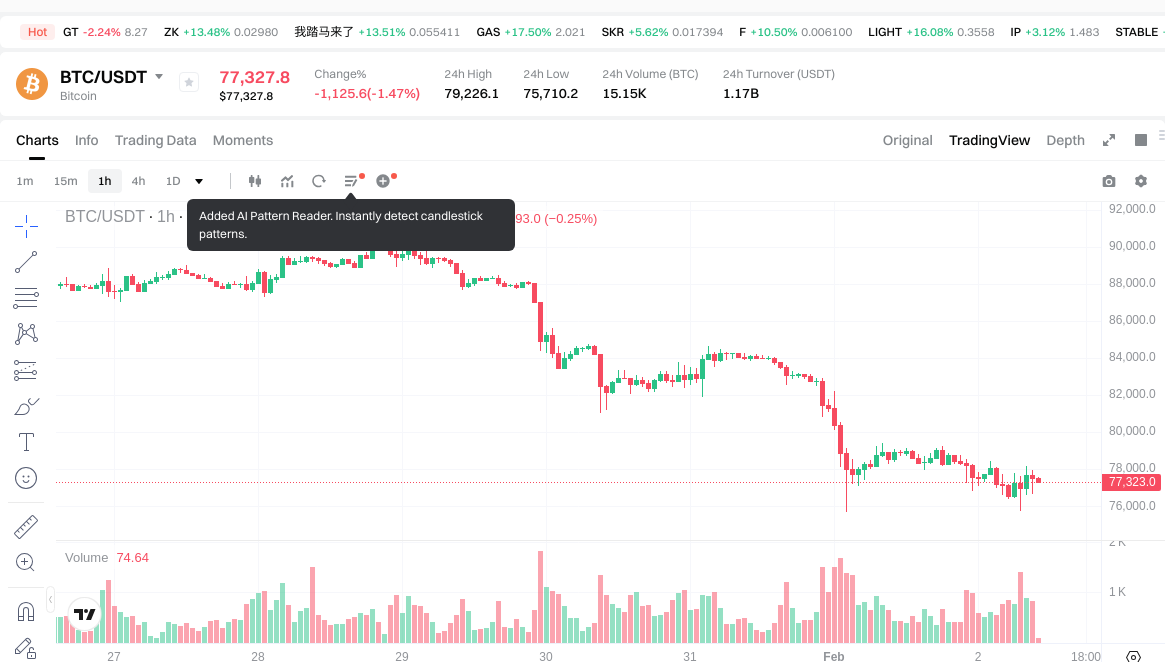 By reflecting miner activity, the Hash Ribbon serves as a valuable instrument for forecasting market bullish or bearish trends.
Recent market analysis using Hash Ribbons on trading platforms has revealed interesting patterns. The indicator displays two key moving averages: the 30-day moving average (shown in light green) and the 60-day moving average (shown in purple). Historical data demonstrates that when the 30-day moving average crosses below the 60-day moving average, it signals miner capitulation, suggesting that miners are abandoning their operations. This typically indicates potential selling pressure as miners may liquidate their Bitcoin holdings to cover costs, often preceding price declines.
However, market dynamics can be complex and sometimes counterintuitive. In past observations, even when capitulation signals appeared, Bitcoin prices occasionally demonstrated resilience and upward movement. For instance, during periods of significant political or economic events, such as major electoral developments or institutional investment flows through Bitcoin spot ETFs, prices have shown unexpected strength despite bearish technical signals.
The relationship between the two moving averages provides crucial insights into miner profitability and network stability. When the 30-day moving average remains above the 60-day moving average, it indicates that miner profitability is secured and the Bitcoin network's hash rate remains stable. This configuration suggests a healthy mining ecosystem and potential price support.
Technical indicators like the Relative Strength Index (RSI) complement Hash Ribbon analysis. During periods of rapid price appreciation, RSI values can reach extreme levels above 80, indicating overbought conditions. Conversely, when RSI falls to levels around 45 or lower, it may signal potential buying opportunities, especially when combined with Hash Ribbon recovery signals.
What Are Hash Ribbons
Hash Ribbons represent a sophisticated technical analysis indicator designed specifically for analyzing Bitcoin miner activity to assess market strength or weakness. This indicator utilizes the hash rate, which represents the computational power of the Bitcoin network, as its foundation. The analysis typically employs the 30-day and 60-day moving averages of the hash rate to generate actionable trading signals.
The mechanism works through crossover analysis between these two moving averages. When the short-term moving average (30-day) crosses below the long-term moving average (60-day) from above, it indicates a declining hash rate trend. This crossover pattern signals that miners are losing profitability, which often precedes Bitcoin price declines. This critical juncture is known as the Capitulation Signal, representing a period when miners are forced to cease operations due to unsustainable economics.
Conversely, when the short-term moving average crosses above the long-term moving average from below, creating a Golden Cross pattern, it generates a buy signal. This bullish crossover indicates that mining profitability has improved, suggesting miners are returning to the network or expanding their operations. Such recovery typically precedes or coincides with Bitcoin price appreciation, as it demonstrates renewed confidence in the network's economic viability.
It's important to understand that markets operate with considerable complexity and are influenced by multiple factors simultaneously. When making real investment decisions, traders should employ Hash Ribbons in conjunction with other technical analysis tools, fundamental analysis, and comprehensive market condition assessments. This multi-faceted approach helps account for the various forces that drive cryptocurrency markets beyond just mining economics.
The Hash Ribbon indicator's strength lies in its ability to translate miner behavior—which represents significant capital investment and operational commitment—into actionable market insights. Miners typically possess deep industry knowledge and make calculated decisions based on long-term profitability projections, making their collective behavior a valuable market sentiment indicator.
Understanding Bitcoin Mining Difficulty and Hash Rate
Bitcoin mining difficulty represents a fundamental concept in the cryptocurrency's security mechanism. Essentially, it measures how challenging it is to find a hash value smaller than a specific target number. To explain this concept in accessible terms, Bitcoin mining can be compared to a lottery game where participants must find a number from an enormous range that falls below a specific threshold.
Mining Difficulty Mechanics
The mining difficulty operates according to several key principles that maintain Bitcoin's consistent block production time:
-
Target Threshold: The Bitcoin network establishes a specific target value, which is an extremely small number relative to the possible hash output range. This target determines the difficulty of successfully mining a block.
-
Hash Value Generation: When miners attempt to mine a block, they use cryptographic hash functions to generate numerical values. These values aren't randomly generated but are specifically derived from the block's information, including transaction data, previous block references, and a variable called the nonce.
-
Difficulty Adjustment: The difficulty level determines how challenging it is to find a hash value below the target threshold. When difficulty increases, the target value decreases, making it harder to find qualifying hash values. Conversely, when difficulty decreases, the target value increases, making successful mining more achievable. This dynamic adjustment ensures that Bitcoin blocks are produced at relatively consistent intervals, approximately every 10 minutes, regardless of the total network hash rate.
To illustrate this concept through analogy, imagine mining difficulty as the number of winning lottery tickets in a box. When difficulty increases, fewer winning tickets exist in the box, making it harder to draw a winning ticket. Miners must make numerous attempts to find this winning ticket (a valid hash value), requiring substantial computational resources and energy expenditure.
For a block to be considered valid on the Bitcoin network, it must contain a hash value lower than the network-wide target threshold. This target applies universally across the entire Bitcoin network, ensuring consistent security standards. Mining difficulty adjusts dynamically based on the relationship between the number of active miners and the maximum target threshold. Higher difficulty levels intensify competition among miners, requiring them to deploy greater computing power to maintain their chances of successfully mining blocks.
Hash Rate Fundamentals
The hash rate represents the total computational capacity that miners collectively contribute to the Bitcoin network. A high hash rate indicates robust mining activity and demonstrates network strength and security. When many miners actively participate, the network becomes more resistant to potential attacks and maintains greater stability. Conversely, a declining hash rate suggests reduced mining activity, which can indicate network vulnerability and decreased confidence in mining profitability.
The hash rate serves as a real-time indicator of miner commitment to the network. Miners invest significant capital in specialized hardware (ASICs) and ongoing operational costs (primarily electricity). Their willingness to maintain or expand these investments directly correlates with their confidence in Bitcoin's long-term value proposition and their ability to operate profitably.
Hash Value Structure and Generation
Hash values in Bitcoin mining follow a specific structural format that's crucial to understanding the mining process:
Bitcoin hash values are expressed in hexadecimal (base-16) notation, using characters 0-9 and A-F to represent numerical values. A typical hash value might appear as follows:
0000000000000000000abc123def4567890abcdef1234567890abcdef12345678
This hash value is generated through a cryptographic process that takes block information as input and processes it through a hash function. Bitcoin specifically uses the SHA-256 (Secure Hash Algorithm 256-bit) function, which accepts the block header information and produces a unique 256-bit hexadecimal string as output.
The generation process follows these sequential steps:
-
Block Header Compilation: The block header contains critical information including the previous block's hash, a timestamp, the difficulty target, and the nonce value. The nonce, short for "number used once," is a special variable that miners adjust to modify the resulting hash value.
-
SHA-256 Application: Miners apply the SHA-256 hash function twice to the block header information. This double-hashing approach enhances security and is a distinctive feature of Bitcoin's mining algorithm.
-
Hash Value Output: The SHA-256 function produces a 64-character hexadecimal string (256 bits in total). This output serves as the hash value that miners must evaluate against the difficulty target.
For miners to successfully mine a block, the generated hash value must be numerically smaller than the network's current difficulty target. To find such a hash value, miners systematically modify the nonce value in the block header, generating new hash values with each iteration. This process is inherently repetitive and computationally intensive, continuing until a miner discovers a hash value that satisfies the difficulty requirement. The first miner to find a valid hash value broadcasts it to the network, claims the block reward, and the process begins anew for the next block.
Hash Ribbon Trading Applications
Hash Ribbons serve as practical tools for identifying optimal entry and exit points in Bitcoin trading. This indicator helps traders recognize patterns in Bitcoin network hash rate changes, specifically targeting moments when miners capitulate and subsequently recover. Understanding these transitions provides valuable insights for timing market positions.
Implementing Hash Ribbon Analysis
Traders can effectively utilize Hash Ribbons through the following systematic approach:
-
Hash Ribbon Configuration: The indicator employs two moving averages calculated from Bitcoin network hash rate data. The standard configuration uses a 30-day moving average and a 60-day moving average. These timeframes balance responsiveness to recent changes while filtering out short-term noise, providing reliable signals for medium to long-term trading strategies.
-
Crossover Signal Analysis:
-
Bullish Signals: When the 30-day hash rate moving average crosses above the 60-day hash rate moving average, it indicates hash rate recovery and suggests that miner capitulation has ended. This bullish crossover, often called a Golden Cross in technical analysis, signals that miners have regained profitability and confidence in the network. Historically, such crossovers have preceded or coincided with Bitcoin price appreciation, making them valuable buy signals for traders. The recovery indicates that the weakest miners have exited, leaving more efficient operations that can sustain lower price levels, potentially establishing a price floor.
-
Bearish Signals: When the 30-day hash rate moving average crosses below the 60-day hash rate moving average, it signals declining hash rate and indicates ongoing miner capitulation. This bearish crossover, sometimes called a Death Cross, suggests that Bitcoin prices may face downward pressure. Miners experiencing losses may liquidate their Bitcoin holdings to cover operational costs, creating selling pressure. Additionally, reduced hash rate can raise concerns about network security and stability, potentially dampening investor confidence. However, astute traders recognize that these capitulation periods, while indicating near-term weakness, often precede eventual market bottoms.
-
-
Price Reversal Identification: Hash Ribbons excel at capturing Bitcoin price reversal points by monitoring miner behavior. When miners capitulate and hash rate declines, followed by stabilization and recovery, it often indicates that a market bottom has formed. This pattern reflects the completion of a capitulation cycle where unprofitable miners have exited, costs have been reduced, and remaining miners can operate sustainably at current or lower price levels. Traders who recognize these patterns can position themselves advantageously before broader market participants identify the trend reversal.
Historical analysis demonstrates the indicator's effectiveness. For example, examining past market cycles reveals instances where initial capitulation signals appeared, followed by brief recovery attempts (Golden Crosses) that failed, leading to subsequent Death Crosses and further capitulation. These complex patterns underscore the importance of patience and confirmation when trading based on Hash Ribbon signals. Successful traders often wait for sustained crossovers rather than acting on initial signals that may prove temporary.
Miner Capitulation as Long-Term Buying Opportunity
When the 30-day hash rate moving average crosses below the 60-day moving average in a Death Cross pattern, it signals miner capitulation—miners abandoning operations due to unprofitability. While this indicates Bitcoin prices are approaching or testing bottom levels, it presents a potentially valuable long-term buying opportunity for patient investors.
The rationale behind viewing capitulation as a buying opportunity stems from market psychology and fundamental economics. Extreme fear dominates market sentiment during capitulation periods, often creating oversold conditions where assets trade below their intrinsic value. Investors who can maintain conviction during these challenging periods and employ dollar-cost averaging strategies may accumulate Bitcoin at favorable prices, positioning themselves for substantial gains during subsequent recovery phases.
However, timing these purchases requires careful consideration. Rather than attempting to catch the exact bottom—a notoriously difficult task—prudent investors implement staged entry strategies. This approach involves making multiple smaller purchases as capitulation signals develop and persist, averaging entry prices across the bottoming process. This methodology reduces the risk of premature entry while ensuring participation in the eventual recovery.
While Hash Ribbon analysis provides valuable insights, successful trading requires integrating multiple analytical tools. Traders should complement Hash Ribbon signals with other technical indicators such as the Relative Strength Index (RSI), Stochastic RSI, Moving Average Convergence Divergence (MACD), and volume analysis. Additionally, fundamental factors including regulatory developments, institutional adoption trends, and macroeconomic conditions should inform trading decisions. This comprehensive approach helps traders build conviction in their positions and manage risk effectively across varying market conditions.
Why Traders Use Hash Ribbons
Hash Ribbons fundamentally serve as indicators of cryptocurrency miner activity, but their utility extends significantly into investment strategy and risk management. Traders leverage this indicator to identify optimal purchase price levels and capture buying opportunities near market bottoms, making it an invaluable tool for timing market entries.
The strategic value of Hash Ribbons manifests through several key advantages that support trader decision-making and risk management:
-
Miner Psychology and Market Response Analysis: Hash Ribbons effectively reflect Bitcoin miner psychology and behavior patterns. Since miners represent one of the primary factors influencing Bitcoin price direction through their control of hash rate, understanding their collective actions provides crucial market insights. Miner decisions about hash rate deployment—whether to expand, maintain, or reduce mining operations—directly impact network security and indirectly influence market sentiment. By analyzing these patterns, traders gain visibility into an important market participant group whose actions often precede broader price movements.
-
Market Reversal Detection: Hash Ribbons specialize in identifying moments when miners transition from capitulation to recovery. These inflection points, where miners emerge from panic conditions and begin restructuring their operations, often coincide with significant Bitcoin price movements. Miners, as sophisticated market participants with substantial capital at stake, typically make calculated decisions based on their assessment of long-term profitability. When collective miner behavior shifts from contraction to expansion, it signals improving fundamental conditions that may support price appreciation. Traders who recognize these reversal patterns early can position themselves advantageously before broader market recognition drives prices higher.
-
Technical Analysis Enhancement: Hash Ribbons function as part of a comprehensive technical analysis framework. When combined with complementary indicators, they enable more accurate identification of market entry and exit points. For instance, when Hash Ribbon bullish signals align with confirming signals from indicators like MACD (showing bullish momentum), RSI (indicating oversold conditions recovering), and volume analysis (showing accumulation), traders can develop high-conviction trading positions. This convergence of multiple analytical perspectives reduces false signals and improves trading success rates.
-
Long-Term Trend Analysis: Beyond short-term trading signals, Hash Ribbons provide valuable insights into Bitcoin's long-term market trends. Miner activity serves as a proxy for network health and sustainability. Consistent miner participation and hash rate growth indicate a robust, secure network that can support higher valuations. Conversely, sustained miner exodus and hash rate decline may signal fundamental challenges that could pressure prices over extended periods. Long-term investors use these insights to assess Bitcoin's overall trajectory and adjust their portfolio allocation accordingly.
-
Institutional Decision Support: Hash Ribbons have gained recognition among institutional investors and professional traders as a reliable analytical tool. In cryptocurrency markets where rapid, accurate analysis is paramount for success, Hash Ribbons provide objective, data-driven insights that complement other analytical approaches. Institutional investors particularly value indicators that reflect actual economic behavior (miner profitability decisions) rather than purely price-based technical patterns, as they tend to provide more fundamental insights into market conditions.
-
Risk Management Framework: Perhaps most importantly, Hash Ribbons support effective risk management by helping traders identify periods of elevated risk (during capitulation) and reduced risk (during recovery). Understanding where the market stands in the miner capitulation-recovery cycle enables traders to adjust position sizing, set appropriate stop-losses, and manage portfolio exposure in alignment with prevailing risk levels. During capitulation phases, conservative traders may reduce exposure or wait for confirmation of recovery before entering positions. During recovery phases, traders may increase exposure or maintain positions with greater confidence.
The Hash Ribbon's effectiveness stems from its grounding in economic reality—it translates the profit-and-loss decisions of miners, who face real operational costs and capital requirements, into actionable market intelligence. This connection to fundamental economics, rather than purely technical price patterns, gives the indicator particular value in cryptocurrency markets where traditional valuation methods may be less applicable. By monitoring miner behavior through Hash Ribbons, traders gain a window into the economic sustainability of current price levels and the likelihood of trend continuation or reversal.
FAQ
What is the Hash Ribbons indicator and how does it work?
Hash Ribbons measures mining ecosystem tension through mining difficulty and transaction value analysis. Buy signals suggest Bitcoin uptrend potential, while sell signals indicate miner stress periods.
How do Hash Ribbons help identify Bitcoin bottoms?
Hash Ribbons analyze mining hash rate trends to identify potential market lows. When mining activity shifts, it signals capitulation phases where prices often bottom, helping investors time optimal entry points into Bitcoin.
What is the success rate of timing Bitcoin bottom purchases with Hash Ribbons? What risks exist?
Hash Ribbons shows approximately 85% historical accuracy in identifying market bottoms since 2012. Main risks include false signals and market volatility. While effective historically, traders should combine it with other analysis methods for optimal results.
What is the difference between Hash Ribbons and other Bitcoin bottom indicators such as MVRV and Fear and Greed Index?
Hash Ribbons track mining hash rate trends and difficulty changes, while MVRV measures market valuation ratios and Fear and Greed Index reflects market sentiment. Hash Ribbons focus on on-chain mining metrics, making them distinct technical indicators compared to valuation and sentiment-based alternatives.
How has Hash Ribbons performed historically in predicting Bitcoin bottoms?
Hash Ribbons historically signaled Bitcoin bottoms in 2021 and 2022, preceding significant price movements. The pattern demonstrates reliable predictive capability for identifying potential market bottoms.
How to apply Hash Ribbons signals in actual trading?
Monitor Hash Ribbons indicator for buy signals at market bottoms. When the indicator shows low readings, consider entering positions. This method has historically proven effective for identifying optimal entry points in long-term trends.
Should you buy immediately after Hash Ribbons shows a reversal signal?
Hash Ribbons reversal signals indicate potential trend changes, but don't guarantee immediate entry. Combine with other indicators, market volume, and price action for confirmation before purchasing.
Share
Content
How to Buy Cryptocurrency


Trending Cryptocurrencies



How to Mine Ethereum in 2025: A Complete Guide for Beginners

Exploring the Crypto World: The Ultimate Mining Guide and Profit Secrets

From Zero to Hero – Mining Technology and Trends Analysis

Mining Strategies – Building Your Digital Gold Factory

Pi Network (PI): Mobile-Friendly Cryptocurrency for Global Adoption

Pi Network 2025: Latest Mining Updates and Mainnet Launch Progress

What is ARCHAI: Revolutionizing AI Architecture Search and Automated Machine Learning

What is MVRK: A Comprehensive Guide to Market Value Risk Metrics and Their Application in Modern Finance

What is ATR: A Comprehensive Guide to Average True Range in Trading

What is HEU: Understanding Highly Enriched Uranium and Its Global Impact

How Much Should You Invest in Bitcoin and Cryptocurrencies?