老子 vs STX: Ancient Chinese Philosophy Meets Modern Blockchain Technology


Introduction: 老子 vs STX Investment Comparison
In the cryptocurrency market, the comparison between 老子 and STX has become a topic of interest for investors. The two assets exhibit notable differences in market capitalization ranking, application scenarios, and price performance, representing distinct positioning within the crypto asset landscape. 老子: Launched in 2025, this token has positioned itself as a trending meme on BNB Chain, gaining attention within the meme token segment. STX (Stacks): Since its launch in 2019, Stacks has been recognized as a decentralized application platform, providing an open-source development ecosystem for building distributed applications and protocols, with smart contract capabilities through its Clarity programming language. This article will analyze the investment value comparison between 老子 and STX through historical price trends, supply mechanisms, technical ecosystems, and future outlook, attempting to address the question investors frequently ask:
"Which asset presents different investment characteristics based on current market conditions?" By examining market data as of February 02, 2026, we will explore how these two assets differ in their fundamental attributes, including their respective market positions (老子 ranked at 2281 with a market cap of approximately 1.41 million USD, while STX ranked at 122 with a market cap of approximately 451.62 million USD), circulation ratios, and technological foundations.
I. Historical Price Comparison and Current Market Status
Laozi (Coin A) and STX (Coin B) Historical Price Trends
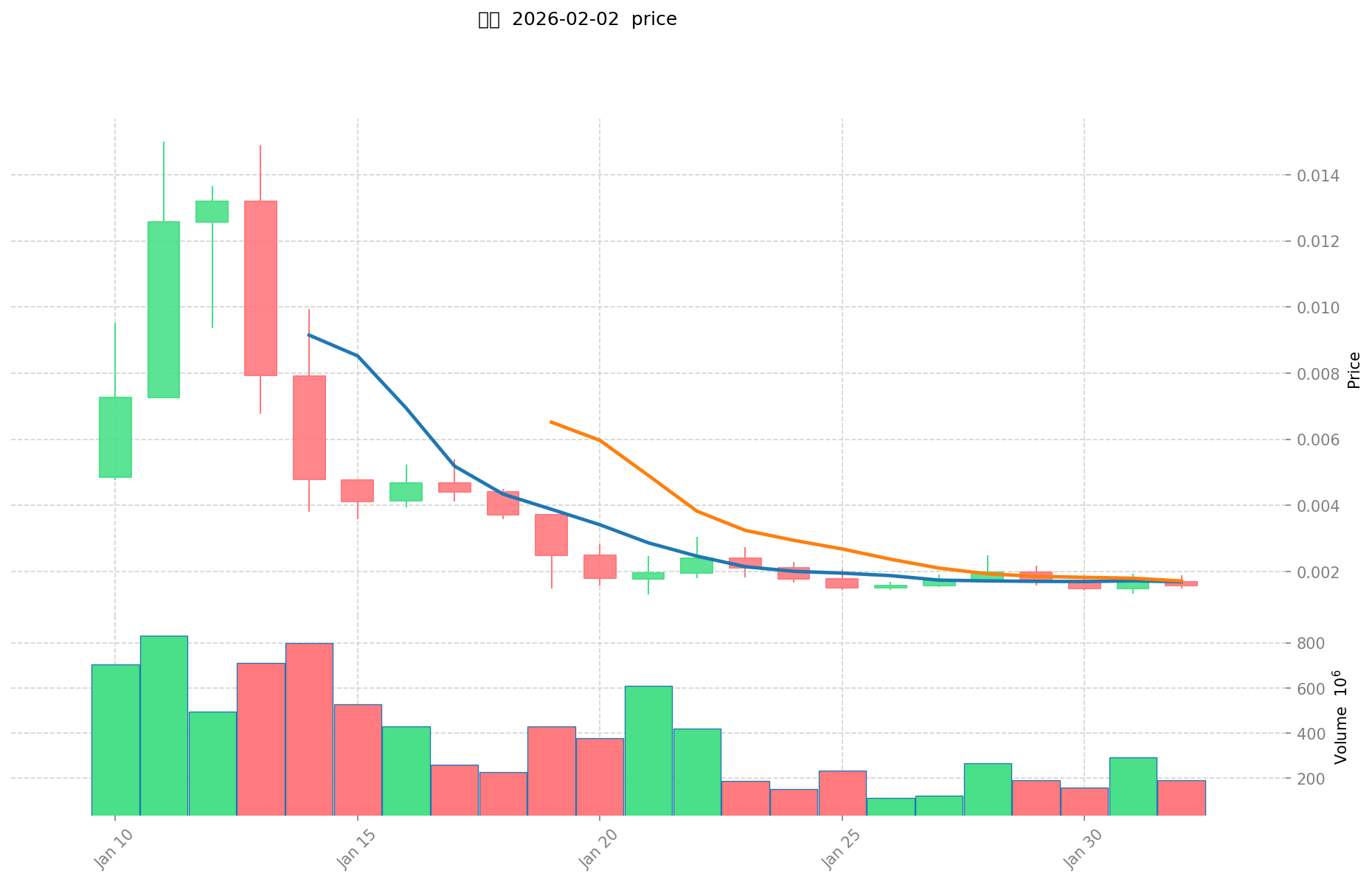
- 2026: Laozi launched in early January 2026, reaching an all-time high of $0.015 on January 11, 2026, followed by a decline to an all-time low of $0.00132 on January 21, 2026. The price fluctuated between these extremes during its initial trading period.
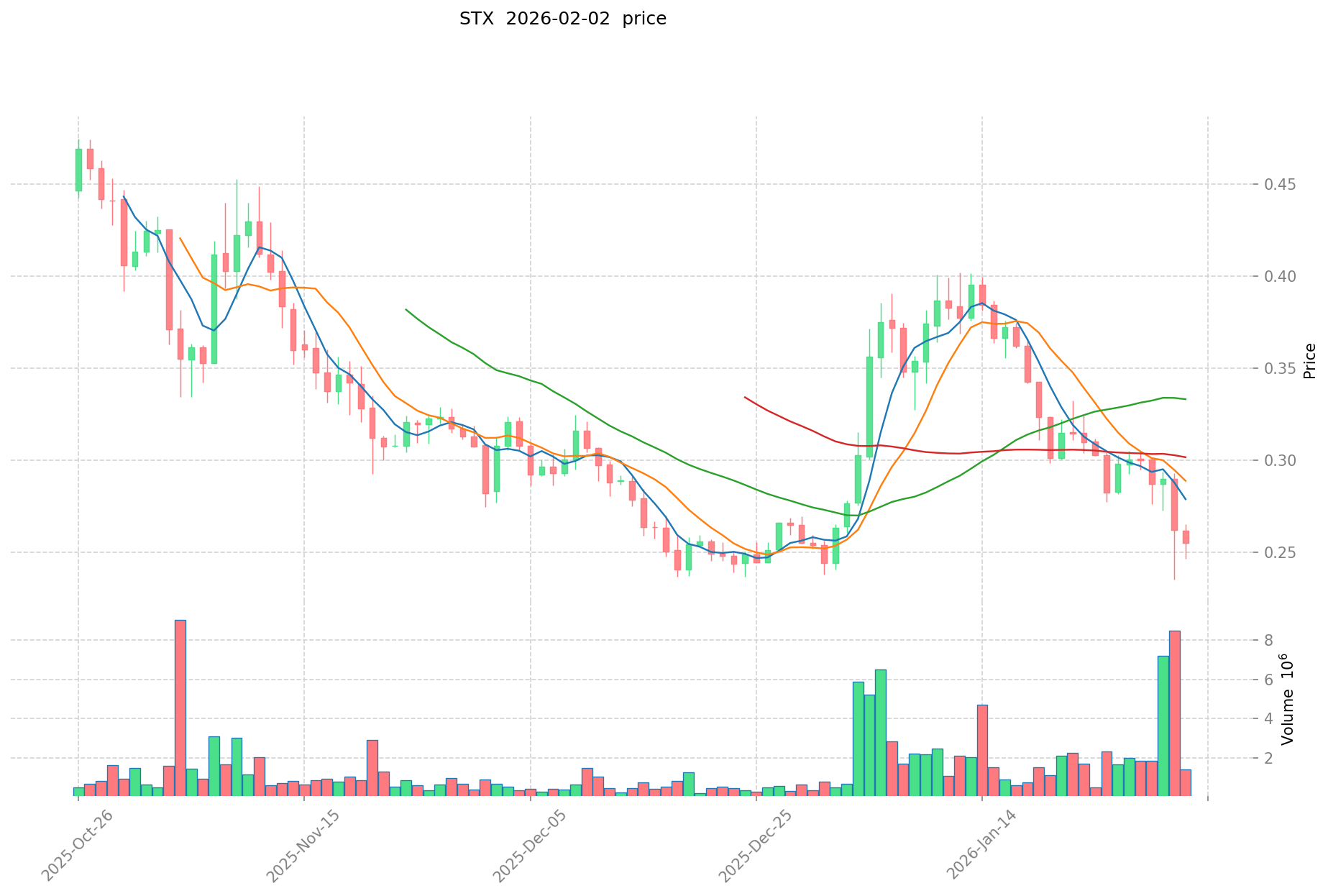
- 2024-2026: STX experienced a decline from its all-time high of $3.86 recorded on April 1, 2024, to the current price range. The token has shown a yearly decline of approximately 79.11% from its peak valuation.
- Comparative Analysis: During recent market cycles, Laozi demonstrated volatility within a narrow price range of $0.00132 to $0.015, while STX experienced a broader decline from $3.86 to its current trading level of approximately $0.25, reflecting different market trajectories and maturity stages.
Current Market Status (February 2, 2026)
- Laozi Current Price: $0.001412
- STX Current Price: $0.2545
- 24-Hour Trading Volume: Laozi recorded $211,729.47 compared to STX's $495,078.82
- Market Sentiment Index (Fear & Greed Index): 14 (Extreme Fear)
View real-time prices:
- Check Laozi current price Market Price
- Check STX current price Market Price
II. Core Factors Influencing 老子 vs STX Investment Value
Supply Mechanism Comparison (Tokenomics)
Based on the available materials, STX demonstrates strong fundamentals driven by AI data center demand and high-capacity hard drive requirements. The company's financial reports have exceeded market expectations, suggesting operational efficiency and market positioning strength. However, specific tokenomics information regarding supply mechanisms, issuance models, or deflationary features for either asset was not available in the reference materials.
Institutional Adoption and Market Application
- Institutional Interest: STX has shown notable performance with an 8% post-earnings surge, reflecting institutional confidence in AI infrastructure demand. The materials indicate sustained AI infrastructure requirements, particularly in data center operations.
- Enterprise Adoption: The reference materials highlight STX's strategic positioning in AI data centers and high-capacity storage solutions, though specific cross-border payment, settlement, or investment portfolio applications were not detailed for either asset.
- Regulatory Environment: Specific national policy stances or regulatory frameworks regarding these assets were not provided in the available materials.
Technology Development and Ecosystem Building
STX's technology foundation centers on AI data center infrastructure and high-capacity hard drive demand. The materials confirm ongoing AI infrastructure requirements, suggesting potential for continued technological relevance. Specific technical upgrades, smart contract implementations, DeFi integrations, NFT applications, or payment solutions for either asset were not detailed in the reference materials.
Macroeconomic Environment and Market Cycles
- Inflationary Context: The materials note improved liquidity conditions in futures markets, drawing parallels to mid-2021 patterns that preceded previous cycle peaks. This suggests potential sensitivity to broader market liquidity conditions.
- Monetary Policy Impact: Reference materials mention resistance levels around the 98,000-100,000 range in broader market contexts, though specific correlations with interest rates, dollar index movements, or direct policy impacts on these assets were not elaborated.
- Geopolitical Considerations: Cross-border transaction demand and international dynamics were not specifically addressed in the available materials regarding these particular assets.
III. 2026-2031 Price Prediction: Laozi vs STX
Short-term Forecast (2026)
- Laozi: Conservative $0.221415 - $0.2545 | Optimistic $0.2545 - $0.297765
- STX: Data not available in provided materials
Mid-term Forecast (2028-2029)
- Laozi may enter a moderate growth phase, with estimated prices ranging from $0.188750 to $0.4589330 across 2028-2029
- STX: Data not available in provided materials
- Key drivers: institutional capital inflows, ETF developments, ecosystem expansion
Long-term Forecast (2030-2031)
- Laozi: Baseline scenario $0.280980 - $0.488747 | Optimistic scenario $0.488747 - $0.723346
- STX: Data not available in provided materials
Disclaimer
老子:
| Year | Predicted High Price | Predicted Average Price | Predicted Low Price | Price Change |
|---|
STX:
| Year | Predicted High Price | Predicted Average Price | Predicted Low Price | Price Change |
|---|---|---|---|---|
| 2026 | 0.297765 | 0.2545 | 0.221415 | 0 |
| 2027 | 0.323075025 | 0.2761325 | 0.223667325 | 8 |
| 2028 | 0.36551659025 | 0.2996037625 | 0.188750370375 | 17 |
| 2029 | 0.4589330433975 | 0.332560176375 | 0.16960568995125 | 30 |
| 2030 | 0.581747516532787 | 0.39574660988625 | 0.280980093019237 | 55 |
| 2031 | 0.723345653550087 | 0.488747063209518 | 0.312798120454092 | 92 |
IV. Investment Strategy Comparison: Laozi vs STX
Long-term vs Short-term Investment Strategies
-
Laozi: May be suitable for speculative investors with high risk tolerance seeking short-term opportunities in emerging meme token segments. The asset's limited trading history and volatility within narrow price ranges suggest a focus on short-term price movements rather than long-term fundamental value.
-
STX: May appeal to investors interested in infrastructure-oriented assets with established market presence. With its positioning in AI data center operations and multi-year trading history, STX could align with medium to long-term investment horizons for those evaluating technology infrastructure exposure.
Risk Management and Asset Allocation
-
Conservative Investors: A potential allocation approach might consider STX: 70-80% vs Laozi: 0-5%, given STX's established market position and longer operational track record compared to Laozi's recent launch.
-
Aggressive Investors: A more risk-oriented allocation could explore STX: 40-50% vs Laozi: 10-20%, with the remainder in diversified assets, acknowledging higher volatility tolerance for emerging tokens.
-
Hedging Tools: Portfolio strategies may include stablecoin reserves for liquidity management, options contracts where available for downside protection, and cross-asset diversification to mitigate concentration risk.
V. Potential Risk Comparison
Market Risks
-
Laozi: Exhibits significant liquidity constraints with 24-hour trading volume of approximately $211,729, representing limited market depth. The token's narrow trading range between $0.00132 and $0.015 since January 2026 launch indicates potential for sharp price swings. Market capitalization ranking at 2281 suggests limited market recognition and higher sensitivity to sentiment shifts.
-
STX: Demonstrates price decline of approximately 79.11% from April 2024 peak to current levels, indicating exposure to broader market cycle corrections. Trading volume of approximately $495,078 suggests moderate liquidity, though subject to market conditions. Market cap ranking at 122 indicates established presence but does not eliminate volatility risk.
Technical Risks
-
Laozi: As a BNB Chain-based token launched in 2025, potential technical considerations include network dependency and smart contract security, though specific scalability implementations were not detailed in available materials.
-
STX: Infrastructure focus on AI data centers and storage solutions presents operational dependencies on technology hardware cycles and data center demand sustainability. Network stability considerations apply to any blockchain-based asset, though specific technical vulnerabilities were not addressed in reference materials.
Regulatory Risks
- Regulatory frameworks for cryptocurrency assets continue to evolve across jurisdictions, with potential differential impacts on established infrastructure tokens versus emerging meme tokens. STX's longer operational history may provide some precedent for regulatory treatment, while newer tokens like Laozi face uncertainty regarding future classification and compliance requirements. Both assets remain subject to changing policy environments that could affect accessibility, trading venues, and institutional participation.
VI. Conclusion: Which Is the Better Buy?
📌 Investment Value Summary
-
Laozi Characteristics: Represents early-stage exposure to meme token trends on BNB Chain with limited operational history since January 2026 launch. Market cap of approximately $1.41 million and ranking at 2281 indicate nascent market positioning with associated volatility.
-
STX Characteristics: Offers exposure to established infrastructure narrative with focus on AI data center operations. Market cap of approximately $451.62 million and ranking at 122 reflect longer market presence since 2019 launch, though subject to significant price corrections from previous peaks.
✅ Investment Considerations
-
Novice Investors: Consider prioritizing established assets with longer operational histories and greater liquidity. Approach emerging tokens with caution, limiting exposure to amounts prepared for potential loss. Focus on understanding fundamental differences in market positioning and risk profiles.
-
Experienced Investors: Evaluate portfolio allocation based on individual risk tolerance and investment objectives. Consider correlation with broader market cycles, liquidity constraints, and technological narratives when comparing infrastructure-focused assets versus speculative tokens.
-
Institutional Investors: Assess alignment with investment mandates, regulatory compliance requirements, and liquidity thresholds. Infrastructure narratives may warrant due diligence on operational fundamentals, while meme token exposure typically falls outside institutional risk parameters.
⚠️ Risk Disclosure: Cryptocurrency markets exhibit extreme volatility. This analysis does not constitute investment advice. Market conditions as of February 02, 2026 may change substantially. Investors should conduct independent research and consider consulting financial advisors before making investment decisions.
VII. FAQ
Q1: What are the main differences in market positioning between Laozi and STX?
STX is an established infrastructure token ranked at 122 with a market cap of approximately $451.62 million, while Laozi is an emerging meme token ranked at 2281 with a market cap of approximately $1.41 million. STX has operated since 2019 as a decentralized application platform with focus on AI data center infrastructure, offering smart contract capabilities through its Clarity programming language. Laozi launched in January 2026 on BNB Chain as a trending meme token with limited operational history and significantly lower liquidity ($211,729 24-hour volume versus STX's $495,078).
Q2: Which asset presents higher liquidity risk?
Laozi presents substantially higher liquidity risk. With a 24-hour trading volume of approximately $211,729 and market cap ranking at 2281, Laozi demonstrates limited market depth and narrow trading activity. The token's price fluctuation between $0.00132 and $0.015 since launch indicates potential for sharp price swings due to limited order book depth. STX, with approximately $495,078 in 24-hour volume and ranking at 122, offers comparatively better liquidity conditions, though both assets remain subject to broader cryptocurrency market volatility.
Q3: How do the historical price performances differ between these two assets?
Laozi has demonstrated extreme short-term volatility since its January 2026 launch, reaching an all-time high of $0.015 on January 11, 2026, before declining to an all-time low of $0.00132 on January 21, 2026. STX has experienced a prolonged decline from its all-time high of $3.86 on April 1, 2024, representing approximately 79.11% decrease to current levels around $0.25. Laozi's price trajectory reflects typical early-stage meme token volatility within a narrow range, while STX's performance indicates exposure to broader market cycle corrections with a longer trading history spanning multiple years.
Q4: What are the primary risk factors investors should consider for each asset?
For Laozi, primary risks include extreme liquidity constraints, limited market recognition evidenced by 2281 ranking, dependence on meme token sentiment trends, and absence of established operational track record. For STX, key risks involve significant price decline of 79.11% from previous peaks, exposure to AI infrastructure demand cycles, technical dependencies on data center operations, and broader cryptocurrency market correlation. Both assets face evolving regulatory frameworks, with newer tokens like Laozi encountering greater uncertainty regarding future classification and compliance requirements compared to STX's longer operational precedent.
Q5: Which allocation strategy might suit different investor profiles?
Conservative investors might consider allocating 70-80% to STX versus 0-5% to Laozi, prioritizing established market presence and infrastructure positioning. Aggressive investors with higher risk tolerance could explore 40-50% STX versus 10-20% Laozi allocations, acknowledging significant volatility acceptance for emerging tokens. Novice investors should prioritize understanding fundamental differences and limit exposure to emerging tokens to amounts prepared for potential loss. Institutional investors typically require assets meeting specific liquidity thresholds and regulatory compliance standards, which may exclude emerging meme tokens from consideration entirely.
Q6: What technological foundations differentiate these assets?
STX operates as a decentralized application platform providing an open-source development ecosystem for distributed applications and protocols, featuring smart contract capabilities through its Clarity programming language and focus on AI data center infrastructure. Laozi functions as a BNB Chain-based meme token launched in 2025, with positioning centered on trending social narratives rather than technical infrastructure development. The fundamental technological divergence reflects STX's infrastructure-oriented utility versus Laozi's speculative meme token characteristics, resulting in different value propositions for technology-focused investors.
Q7: How do market sentiment conditions affect these assets differently?
With the current Fear & Greed Index at 14 (Extreme Fear) as of February 2, 2026, both assets face challenging sentiment conditions. However, their responses differ significantly: Laozi, as an emerging meme token, demonstrates heightened sensitivity to sentiment shifts due to limited market depth and speculative positioning, potentially experiencing amplified volatility during fear cycles. STX, with established infrastructure narrative and longer operational history, may exhibit relatively moderated responses to sentiment changes, though still subject to broader market correlation. Meme tokens typically show stronger sentiment correlation than infrastructure-focused assets during extreme market conditions.
Q8: What are the long-term growth prospects for each asset through 2031?
Based on available forecast data, Laozi predictions suggest potential baseline scenario ranging from $0.280980 to $0.488747 by 2030-2031, with optimistic scenarios reaching $0.723346. However, these projections carry significant uncertainty given the token's limited operational history since January 2026. STX long-term forecasts were not available in the provided materials. Investors should recognize that long-term cryptocurrency predictions involve substantial uncertainty, particularly for emerging tokens with limited track records. Growth prospects depend on multiple factors including technological adoption, regulatory developments, market cycle dynamics, and competitive positioning within respective segments.
Share
Content
Introduction: 老子 vs STX Investment Comparison
I. Historical Price Comparison and Current Market Status
II. Core Factors Influencing 老子 vs STX Investment Value
III. 2026-2031 Price Prediction: Laozi vs STX
IV. Investment Strategy Comparison: Laozi vs STX
V. Potential Risk Comparison
VI. Conclusion: Which Is the Better Buy?
VII. FAQ
How to Buy Cryptocurrency


Trending Cryptocurrencies



2025 SUI coin: price, buying guide, and Staking rewards

How to Buy Crypto: A Step-by-Step Guide with Gate.com
HNT Price in 2025: Helium Network Token Value and Market Analysis
What is SwissCheese (SWCH) and How Does It Democratize Investment?

Cardano (ADA) Price Analysis and Outlook for 2025
How to Invest in Metaverse Crypto

Is Fuse Network (FUSE) a good investment?: A Comprehensive Analysis of Utility, Market Potential, and Risk Factors for 2024

LOT vs BTC: Understanding the Key Differences Between Litecoin and Bitcoin in the Cryptocurrency Market

MOTHER vs ENJ: Battle of Two Revolutionary Blockchain Platforms - Which One Deserves Your Investment?

FUSE vs AVAX: Comparing Two Leading Layer-1 Blockchain Networks for DeFi and Web3 Applications

10 Ways to Get Cryptocurrency for Free in 2025 (and Avoid Scams)