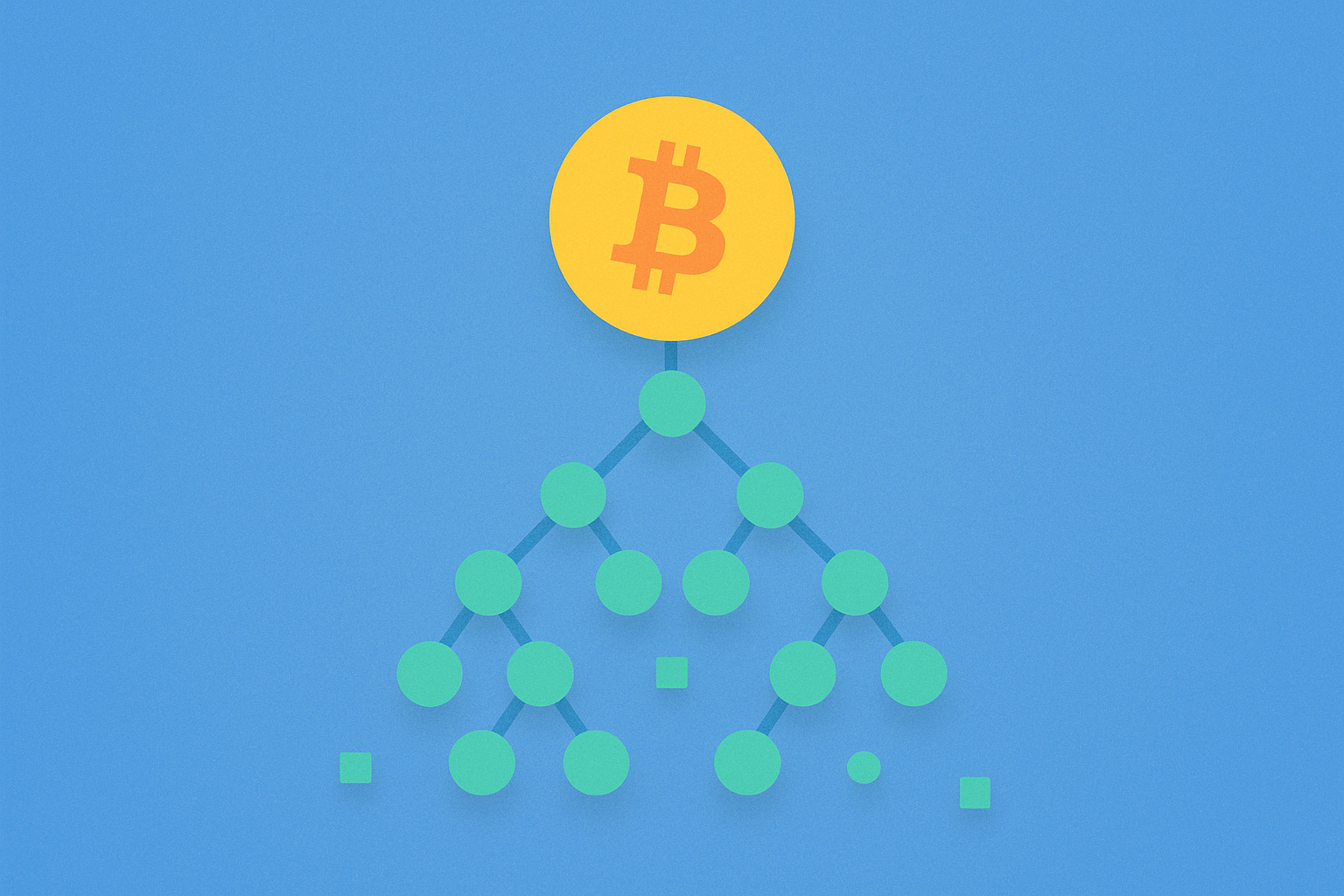
Descubre el funcionamiento de los árboles de Merkle en la tecnología blockchain: fundamentos del hashing, estructuras de datos jerárquicas, resistencia a la manipulación y aplicaciones criptográficas. Esta completa guía está especialmente diseñada para desarrolladores y especialistas en web3.
Qué es un árbol de Merkle
Un árbol de Merkle es una técnica para organizar y estructurar datos que permite almacenar grandes cantidades de información de forma eficiente y verificar rápidamente su integridad. Esta tecnología también se denomina árbol de hash, en referencia a su principio fundamental de funcionamiento.
La base de este concepto es el hashing (la conversión de cualquier conjunto de datos en una cadena única de longitud fija). Cada información tiene un hash único, que actúa como su huella digital. Una función hash es una transformación unidireccional: es sencillo generar un hash a partir de los datos originales, pero casi imposible recuperar los datos originales desde el hash.
Para ilustrar este principio, pensemos en el algoritmo SHA-256 que utiliza Bitcoin. El número 256 indica la longitud en bits del resultado. Sea cual sea el tamaño de la entrada (una sola letra o un libro completo), SHA-256 siempre genera una cadena de 64 caracteres. Esto permite almacenar información de forma compacta y acelera notablemente el procesamiento de datos.
Las ventajas del hashing son evidentes: en vez de guardar grandes volúmenes de información, el sistema trabaja con valores hash concisos. Así se ahorra espacio de almacenamiento y se mejora la velocidad de procesamiento. Cualquier cambio en los datos originales, incluso de un solo carácter, modifica completamente el hash resultante, haciendo el sistema muy sensible a cualquier alteración.
Quién creó el concepto
El árbol de Merkle fue desarrollado por el criptógrafo estadounidense Ralph Merkle en 1979. Por entonces, buscaba métodos eficientes para verificar la integridad de los datos y proteger la información frente a modificaciones no autorizadas. Su propuesta (organizar los datos como una estructura arbórea de hashes) fue pionera en su época.
Es relevante resaltar que el invento de Merkle se mantuvo como una teoría durante décadas, empleándose únicamente en campos especializados de la criptografía. El concepto se popularizó con la llegada de la tecnología blockchain y el crecimiento de las criptomonedas. Satoshi Nakamoto, creador de Bitcoin, convirtió los árboles de Merkle en un elemento clave de la arquitectura blockchain, demostrando su utilidad práctica.
Actualmente, los árboles de Merkle se emplean no solo en criptomonedas, sino también en sistemas de control de versiones (como Git), bases de datos distribuidas, soluciones de backup y otras tecnologías donde es necesario verificar de forma eficiente grandes volúmenes de datos.
Propósito del concepto: un ejemplo sencillo
El árbol de Merkle permite organizar, almacenar y verificar la integridad de la información de forma eficiente, sin necesidad de procesar el conjunto completo de datos. Para clarificarlo, utilicemos un ejemplo práctico con una biblioteca de libros raros.
Imagina un coleccionista con una amplia biblioteca de libros raros, guardados en una instalación segura. El propietario necesita un sistema de control para detectar rápidamente cualquier cambio en la colección, ya sea robo, sustitución o traslado de ejemplares.
El método tradicional exige inventarios completos y regulares: comprobar cada libro frente al catálogo, una tarea costosa y laboriosa. El concepto Merkle ofrece una solución más eficiente:
Primer paso: catalogación exhaustiva. Cada libro recibe una etiqueta única (equivalente a un hash) que refleja todas sus características: título, autor, año de publicación, estado de la portada, número de página con una errata concreta. Todos los libros se agrupan en una jerarquía definida (por estantería, estante y sala).
Segundo paso: generación de información resumen. Las etiquetas individuales de los libros se usan para crear etiquetas de estantería (que resumen los libros de cada estantería), luego etiquetas de estante y, finalmente, una sola etiqueta para toda la biblioteca. Esta estructura jerárquica de etiquetas replica un árbol de Merkle.
Tercer paso: creación de un sistema de control. El propietario guarda únicamente la etiqueta final de la biblioteca y la estructura de su formación. Para verificar la integridad de la colección, basta con comparar la etiqueta final actual con la de referencia. Si son iguales, la colección no ha cambiado. Si no coinciden, el sistema identifica rápidamente qué estantería se ha modificado, sin necesidad de revisar cada libro.
Resultados del uso del concepto Merkle:
- Control exhaustivo de datos: cualquier cambio se refleja de inmediato en el hash final
- Alta eficiencia de verificación: no es necesario procesar el conjunto completo de datos
- Localización rápida de cambios: la estructura arbórea identifica con precisión las modificaciones
- Seguridad sin intermediarios: el sistema funciona automáticamente, sin depender de terceros
- Eficiencia de recursos: los datos de control se almacenan de manera compacta en vez de duplicar toda la información
Cómo funciona el concepto y el papel de los árboles
El término "árbol de Merkle" alude a su estructura visual, similar a un árbol invertido con ramificaciones. Analicemos su funcionamiento con un ejemplo de cuatro bloques de datos originales.
Nivel inferior: hojas del árbol. Supongamos que contamos con cuatro bloques de datos (bloque de datos 1, 2, 3 y 4). Pueden ser transacciones de blockchain, archivos en un sistema de almacenamiento, o cualquier otro dato. Cada bloque se somete a hashing y genera un hash único. Los denominaremos hash 0-0, hash 0-1, hash 1-0 y hash 1-1.
Segundo nivel: primera combinación. Se agrupan los hashes en pares. Hash 0-0 y hash 0-1 se combinan y se hashean juntos para obtener el hash 0. De manera similar, hash 1-0 y hash 1-1 se combinan para obtener el hash 1. Lo fundamental: en vez de concatenar los hashes, se genera un nuevo hash a partir de su combinación.
Tercer nivel: la raíz del árbol. Quedan dos hashes: hash 0 y hash 1. Se combinan y se hashean para producir un solo hash, conocido como hash raíz o hash superior. Esta es la cima del árbol, que contiene información criptográfica sobre todos los bloques de datos originales.
Visualmente, la estructura se asemeja a un árbol:
- Raíz (hash superior), en lo más alto
- Ramas (hash 0, hash 1), nivel intermedio
- Hojas (hash 0-0, 0-1, 1-0, 1-1), hashes de los bloques de datos originales
- Base, los bloques de datos en sí
La característica esencial de esta estructura es el cambio de hash en cascada. Si se modifica tan solo un carácter en el bloque de datos 1, se desencadena una cadena de cambios:
- Cambia el hash 0-0
- Por lo tanto, cambia el hash 0 (pues se calcula a partir del hash 0-0)
- En consecuencia, cambia el hash superior (hash raíz)
Para comprobar la integridad de todos los datos, basta con comparar únicamente el hash raíz. Si coincide con el de referencia, los datos permanecen intactos. Si no coincide, es posible identificar rápidamente qué rama ha cambiado revisando los hashes en cada nivel.
Este método es especialmente eficaz para grandes volúmenes de datos. Por ejemplo, en vez de verificar un millón de transacciones, basta con comparar un único hash raíz de 64 caracteres. Así se ahorran recursos computacionales y tiempo, haciendo el sistema escalable y eficiente.
Cómo protege los datos un árbol de hash
El potencial completo de los árboles de Merkle se alcanza al combinarse con el almacenamiento descentralizado, como ocurre en la tecnología blockchain. Veamos el mecanismo de protección usando la red de Bitcoin como ejemplo.
Una blockchain consiste en una cadena de bloques, cada uno contiene:
- Un conjunto de transacciones organizadas como árbol de Merkle
- El hash raíz del árbol (Merkle root)
- El hash del bloque anterior
- Otros metadatos
Lo esencial es que copias de toda la blockchain se almacenan en miles de nodos independientes en todo el mundo. Esto es la descentralización: no existe un centro de control único, y los datos se distribuyen entre muchos participantes.
Imaginemos un ataque. Un atacante quiere modificar una transacción en uno de los bloques para aumentar la cantidad transferida. El proceso sería el siguiente:
Paso 1: modificación de datos. El atacante altera los datos de la transacción en su copia de la blockchain.
Paso 2: cambios de hashes en cascada. Por la estructura del árbol de Merkle, al cambiar la transacción se modifican:
- El hash de esa transacción
- Todos los hashes intermedios hasta la raíz
- El Merkle root del bloque
- El hash del bloque
- Los hashes de todos los bloques posteriores (ya que cada bloque contiene el hash del anterior)
Paso 3: detección de discrepancias. Cuando esa blockchain modificada intenta sincronizarse con la red, el sistema detecta la inconsistencia. Los nodos de la red comparan los hashes de los bloques y detectan que la versión del atacante no coincide con la consensuada en miles de nodos.
Paso 4: rechazo de cambios. La red funciona por consenso: la versión aceptada por la mayoría de nodos es la válida. La versión modificada se rechaza como inválida.
Para que un ataque tenga éxito, el atacante debería:
- Modificar simultáneamente los datos en la mayoría de los nodos (lo que es técnicamente imposible con suficiente descentralización)
- Recalcular todos los hashes en el bloque alterado y en todos los bloques posteriores
- Realizar una enorme cantidad de trabajo computacional (proof-of-work) por cada bloque
- Hacerlo más rápido que el resto de la red crea nuevos bloques
El coste de un ataque en las principales redes blockchain supera con creces cualquier posible beneficio, lo que convierte el sistema en seguro desde el punto de vista económico.
La comparación con sistemas centralizados resalta las ventajas de los árboles de Merkle:
Sistema centralizado:
- Los datos se almacenan en una única ubicación o los gestiona un solo operador
- Si se compromete el servidor central, se obtiene control total de los datos
- Los cambios pueden pasar inadvertidos
- Es necesario confiar en el operador del sistema
Sistema descentralizado con árboles de Merkle:
- Los datos se distribuyen entre miles de nodos independientes
- Un ataque requeriría comprometer la mayoría de los nodos a la vez
- Cualquier modificación se detecta al instante por la discordancia de hashes
- No es necesario confiar en nadie: el sistema se rige por principios matemáticos
Ventajas adicionales de la protección mediante árboles de hash:
Verificación rápida. Para comprobar si una transacción concreta está en un bloque, no es necesario descargar el bloque completo. Solo hace falta la ruta desde esa transacción hasta el hash raíz (Merkle proof), que se compara con el hash raíz registrado en el encabezado del bloque.
Clientes ligeros. Los usuarios pueden verificar transacciones sin guardar toda la blockchain. Basta con almacenar los encabezados de bloque con los hashes raíz, lo que requiere muy poco espacio.
Detección eficiente de daños. Si los datos de un nodo se corrompen (por ejemplo, por un fallo de hardware), la discordancia de hashes permite detectar el problema rápidamente y el nodo puede restaurar una versión correcta desde otros participantes de la red.
Así, los árboles de Merkle junto con la descentralización forman un sistema sólido de protección de datos, donde la seguridad se garantiza por las propiedades matemáticas de las funciones criptográficas y el almacenamiento distribuido, no por la confianza en una autoridad.
Preguntas frecuentes
¿Qué es un árbol de Merkle? ¿Cuál es su definición principal?
Un árbol de Merkle es un árbol binario de valores hash, donde cada nodo hoja representa datos o su hash. Se emplea para verificar la integridad de grandes volúmenes de datos de manera eficiente, mediante el hashing secuencial desde los nodos base hasta el hash raíz, protegiendo contra manipulaciones.
¿Cómo funciona un árbol de Merkle? ¿Cuál es su estructura y principio?
Un árbol de Merkle organiza los datos en una estructura jerárquica de hashes. Cada nodo contiene el hash de sus dos nodos hijos y el nodo raíz corresponde al hash de todo el conjunto de datos. Esto permite verificar la integridad de forma rápida y detectar cualquier modificación.
¿Qué aplicaciones tienen los árboles de Merkle en blockchain? ¿Por qué los utiliza Bitcoin?
Los árboles de Merkle organizan los datos de transacciones en los bloques de Bitcoin. La raíz Merkle en el encabezado de bloque agrupa todos los hashes de transacciones, permitiendo una verificación rápida y reforzando la seguridad de la blockchain.
¿Cuáles son las ventajas de un árbol de Merkle? ¿Qué problemas resuelve?
Un árbol de Merkle permite verificar grandes cantidades de datos de forma rápida, reduciendo las comparaciones necesarias. Cualquier cambio, por mínimo que sea, modifica el hash raíz. Así se garantiza la integridad y seguridad de la información en la blockchain.
¿En qué se diferencia un árbol de Merkle de las estructuras de datos estándar?
Un árbol de Merkle utiliza punteros de hash, en lugar de punteros convencionales, y crea una estructura jerárquica mediante hashing. Esto proporciona verificación criptográfica y mejora la eficiencia de los controles de integridad en blockchain.
¿Cómo se verifica la integridad de los datos en un árbol de Merkle?
Obtén el hash raíz Merkle y el hash del nodo hoja. Calcula el hash de tus datos y compáralo con el hash de hoja proporcionado. Si coinciden, los datos están verificados y sin alterar.
¿Cómo se garantiza la seguridad del árbol de Merkle en criptografía?
La seguridad de un árbol de Merkle depende de las funciones criptográficas hash. Cada nodo contiene el hash de sus nodos hijos, por lo que cualquier cambio en los datos modifica el hash y se detecta inmediatamente. Así se asegura la integridad y la inmutabilidad en blockchain.
* La información no pretende ser ni constituye un consejo financiero ni ninguna otra recomendación de ningún tipo ofrecida o respaldada por Gate.