


First Brands $2.3 billion disappears into thin air! The Lehman Brothers tragedy repeats itself 17 years later
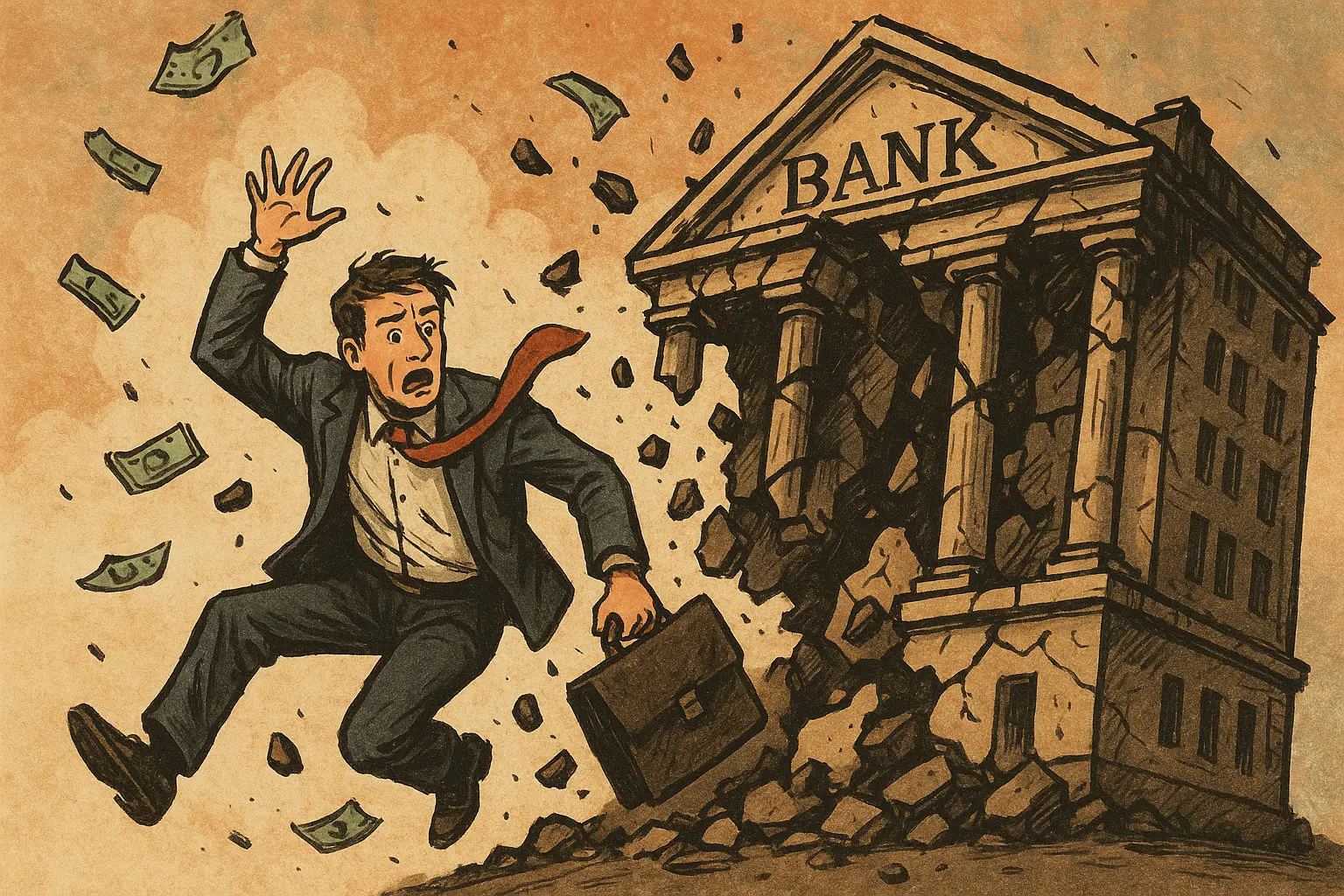
In September 2025, auto parts manufacturer First Brands filed for Chapter 11 bankruptcy protection in a U.S. court, with only $12 million remaining in its bank accounts. The largest creditor, Raistone, claimed that $2.3 billion in assets had vanished into thin air, and the total debt could approach $12 billion. The case is expected to go to court in July 2026. Analysts are comparing this incident to a potential Lehman Brothers moment.
$2.3 Billion Disappears Out of Thin Air: The Collapse of First Brands’ Fraud Empire
“This kind of thing won’t happen a second time.” The Lehman Brothers bankruptcy in 2008 finally made Wall Street stop trusting tears. But 17 years later, that ideal was shattered. A multi-year, multi-billion-dollar fraud scheme has surfaced, once again bringing Wall Street back to square one. Is greed at play, or have even the most seasoned players been set up? Is First Brands’ bankruptcy replaying Lehman Brothers’ tragedy?
Last September, Ohio-based auto parts manufacturer First Brands filed for Chapter 11 bankruptcy protection in the U.S. courts. Initially, the public thought this was just another ordinary bankruptcy case. But when First Brands’ advisors revealed in court that the company’s bank accounts held only $12 million, it immediately drew the attention and alarm of Wall Street.
One of First Brands’ largest creditors, Raistone (a short-term financing firm), claimed that as much as $2.3 billion in assets had “disappeared,” and advisors said they could not trace the $1.9 billion worth of assets that should have served as collateral for creditors. It is reported that First Brands’ total debt may be close to $12 billion. This huge gap between assets and liabilities indicates systemic accounting fraud within First Brands’ financial statements.
The same event has different interpretations on Wall Street. Morgan Stanley considers this a controllable “isolated error,” a manageable risk event. Legendary short-seller Jim Chanos believes this is the first thunderclap in the private credit market. Some investment analysts have likened it to a potential “Lehman Brothers moment.” Lehman’s collapse was caused by the housing bubble and complex financial products, but now First Brands exposes systemic risks in private credit proliferation and accounts receivable financing.
Three Similarities Between First Brands and Lehman Brothers
Massive Scale: $12 billion in debt compared to Lehman’s $613 billion in liabilities
Chain Reaction: Multiple top-tier institutions deeply involved, with a single point of failure potentially triggering systemic crisis
Regulatory Gaps: Private credit, like the CDOs of 2008, lacks effective regulation and transparency
As many Wall Street heavyweights share their views, UBS and Jefferies—both caught up in the case—are more concerned with where the hundreds of billions of dollars in funds have gone. First Brands was supposed to transfer receivables (accounts receivable) to banks to repay loans and finance operations, but suddenly stopped the transfers and defaulted, causing a liquidity crisis. This resulted in heavy losses for Jefferies and UBS, which had previously provided loans, factoring, and fund investments, turning their books into massive bad debts.
Jefferies and UBS: Double Disasters
Jefferies’ Point Bonita Capital, a roughly $3 billion trade finance hedge fund, had extended $715 million in debt financing to First Brands, primarily through accounts receivable factoring. In simple terms, Jefferies lent money to First Brands and then collected principal and interest from its customers’ payments.
This fund was once a “low-profile star” on Wall Street. Since its founding in 2019, it achieved annualized returns of 7.56% to 9.38%. In a letter to investors last April, it claimed “100% months of positive returns.” But after First Brands’ collapse, all that shine was gone. Multiple institutional investors—including BlackRock, Morgan Stanley Asset Management, Texas Treasury Safekeeping Trust, and Singapore’s sovereign wealth fund—began redeeming and withdrawing their investments.
Jefferies CEO Richard Handler tried to soothe the market with a Wall Street classic metaphor: “As individuals, we believe we’ve been duped,” and “I don’t think this is a canary in the coal mine.” (In early mining, canaries warned miners of toxic gases; a dead bird signaled danger. The canary symbolizes early warning signals and systemic risks.) Handler attempted to frame First Brands as a single fraud case rather than a sign of systemic crisis.
Turning to another giant, UBS, the situation is similarly grim. On the WSO forum, UBS has repeatedly been criticized for its supposed need to exit the “Big Eight” investment banks. This time, it’s caught in its own proud asset management and hedge fund businesses. It is disclosed that UBS’s risk exposure to First Brands exceeds $500 million. Its deep involvement stems from a three-layered financial chain: direct loans, factoring of receivables, and fund investments exposed to First Brands.
UBS’s $500 million loss isn’t fatal to its overall business, but it severely damages its reputation. As the world’s largest private bank, UBS’s core strength lies in risk management and due diligence. The failure of due diligence in the First Brands case will seriously undermine client trust in UBS’s professionalism. High-net-worth clients may start questioning: if UBS can’t detect such a large-scale fraud, are my assets truly safe?
Due Diligence Failures and the Wild West of Private Credit
First Brands’ founders, Patrick James and his brother Edward James, lack financial backgrounds but used forged invoices, repeated collateral pledges, and inflated receivables to build a layered financing structure that successfully deceived multiple institutions. Patrick and Edward James are federally charged with bank fraud, telecom fraud, and money laundering conspiracy. Both deny guilt, and the trial is scheduled for July 2026.
Joseph Sarachek, a bankruptcy lawyer at NYU Stern School of Business, highlights a key market pain point: in recent years, the demand for high-yield assets like private credit, receivables financing, and supply chain loans has been extremely strong—so much so that many institutions have lowered their due diligence standards. For private companies that are not publicly listed, information is inherently opaque, and due diligence should be more rigorous, not laxer.
This explains the core reason behind First Brands’ successful fraud: it’s not that the deception techniques were particularly sophisticated, but that investors actively lowered their standards. In a low-interest-rate environment with declining traditional investment returns, institutional investors desperately seek high-yield assets. Point Bonita Capital’s ability to offer stable 7-9% returns was highly attractive at the time. This yield hunger led investors to accept higher risks and ignore obvious warning signs.
Failures in due diligence included: inability to verify invoice authenticity (Patrick James forged numerous customer invoices), failure to detect repeated collateral pledges (the same receivables used multiple times as collateral), failure to identify inflated revenue (sales figures far exceeding actual business scale), and failure to understand the true business model (First Brands’ real profitability could not support its financing scale).
All these are fundamental aspects of due diligence, yet they failed across multiple top-tier institutions. This collective failure cannot be simply attributed to individual analysts’ negligence but reflects a broader industry moral hazard driven by the pursuit of high yields. When everyone relaxes standards to chase returns, fraudsters find opportunities.
Can A&M and FTI Rescue the Losses?
Beyond Jefferies and UBS, another key role in the First Brands case is played by restructuring advisors and professional service teams. These teams, typically composed of specialized turnaround firms and law firms, are responsible for managing funds, tracking assets, controlling risks, and legal negotiations—crucial for executing bankruptcy procedures and asset oversight.
In this case, the core secured creditor’s restructuring advisor is Vaughn Strawbridge of FTI Consulting. FTI is a top global restructuring and bankruptcy firm, known for handling complex, high-risk cases. Strawbridge previously led the bankruptcy restructuring of Virgin Australia—one of the largest airline bankruptcies during the pandemic, testing his cash flow management and creditor coordination skills.
According to internal sources, FTI was initially appointed as the receiver for First Brands’ subsidiary but withdrew after just three days due to operational concerns, suggesting that deeper investigation revealed worse-than-expected conditions and risks beyond their capacity. FTI’s role is to monitor risks and assist UBS in asset recovery.
Additionally, Ashurst’s restructuring team, led by James Marshall, handled key legal negotiations and procedural steps. But the real executor of the bankruptcy, asset management, and asset recovery is Alvarez & Marsal (A&M)—a top-tier restructuring consultancy.
A&M is one of the most profitable restructuring firms globally, with starting salaries reaching $190,000 (about 1.34 million RMB). Known for managing major cases like Lehman Brothers, FTX, and Evergrande, it’s often called Wall Street’s “fire brigade.” John Nestel, a senior partner at A&M leading the restructuring effort for First Brands, has over 20 years of experience in high-risk restructurings. He has led numerous complex cross-border cases involving creditor negotiations and plays a key role in executing the bankruptcy process.
However, even A&M’s top-tier team may not be able to recover much in this case. The disappearance of $2.3 billion in assets suggests these assets may never have existed or have been transferred into untraceable channels. A&M’s task is to maximize asset recovery during liquidation, but if the assets are fictitious or already transferred, recovery rates could be minimal. Jefferies and UBS might only recover a small fraction of their investments, suffering huge losses.
The timeline shows that the fraud at First Brands took years to uncover. During this period, Patrick and Edward James used forged documents and false statements to pass due diligence by multiple institutions. Their long-term success indicates highly sophisticated methods or extremely lax investor scrutiny. The case is scheduled for trial in July 2026, when more details of the fraud and fund flows will be revealed.