


El Salvador’s Bitcoin Stash Drops to $500M as IMF Loan Review Stalls—CDS Spike to 5-Month High
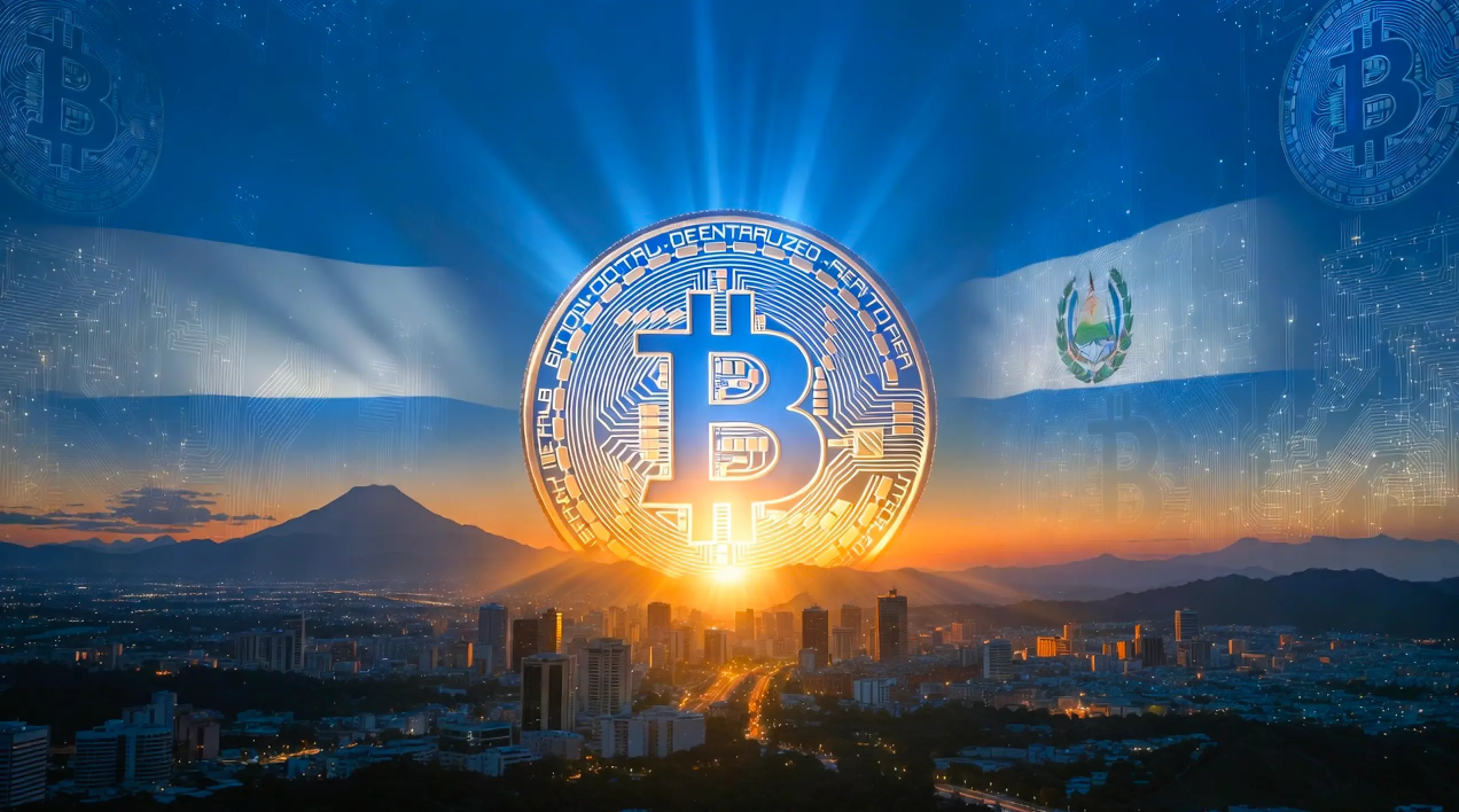
El Salvador’s national Bitcoin treasury has lost nearly $300 million in value since October 2025, falling from $800 million to approximately $504 million as BTC trades 50% below its all-time high. President Nayib Bukele continues purchasing one Bitcoin per day despite the drawdown, a policy that now strains negotiations with the International Monetary Fund over the stalled $1.4 billion loan program.
The second IMF review has been frozen since September 2025, and credit default swaps have surged to a five-month high as investors price in rising repayment risk ahead of $450 million in bond payments due this year. For the broader crypto market, El Salvador has evolved from a symbolic adoption story into a high-stakes stress test of sovereign Bitcoin exposure.
The $300 Million Drawdown: From $800M to $504M in Four Months
On February 13, 2026, the Bitcoin Office of El Salvador published its latest holdings snapshot. The numbers told a story of brutal mean reversion.
The country holds 7,560 BTC, acquired through a combination of open market purchases and the daily accumulation policy Bukele instituted in 2022. At Bitcoin’s October 2025 peak of $126,000, that treasury was valued at approximately $800 million. Today, with BTC trading near $66,500, the same coins are worth roughly $504 million.
The $296 million decline represents a 37% drawdown in fiat terms. It is not a realized loss; El Salvador has not sold any of its holdings. But for a nation with total international reserves of approximately $4.5 billion, the paper loss is material. It is roughly equivalent to 6.5% of the country’s entire reserve buffer.
Bukele’s response has been consistent: continue accumulating. The government adds one Bitcoin to its treasury each day, regardless of price. This policy increases exposure during drawdowns, lowering the average cost basis while raising the total quantity at risk. Since the October peak, the country has added approximately 105 BTC to its holdings, worth roughly $7 million at current prices.
The arithmetic is straightforward but the politics are not. Every daily purchase is a visible signal that Bukele remains committed to the Bitcoin strategy. It is also a visible reminder to the IMF that the government is not pausing the very activity that prompted Fund concerns.
The IMF Impasse: Second Review Frozen Since September
On February 26, 2025, the IMF approved a 40-month Extended Fund Facility for El Salvador, granting total access of approximately $1.4 billion. The first review concluded in June 2025, triggering a $231 million disbursement.
The second review was scheduled for September 2025. It has not occurred.
According to IMF documents and statements from officials, the delay stems from two interrelated issues. First, the government delayed publication of a legally mandated analysis of the pension system, a structural benchmark required under the program. Second, the Fund has continued to raise concerns about fiscal risks associated with Bitcoin, specifically regarding transparency, governance, and the potential for public funds to be exposed to volatile asset price swings.
“The IMF may take issue with disbursements potentially being used to add Bitcoin,” said Christopher Mejia, an emerging market sovereign analyst at T Rowe Price. “Bitcoin being down also doesn’t help to ease investors’ concerns.”
The Fund itself has been circumspect but consistent. In response to inquiries about El Salvador, an IMF spokesperson stated that discussions continue, “centered on better understanding purchases and on enhancing their overall transparency and governance, in line with program commitments.”
A third review is formally scheduled for March 2026. Whether it proceeds depends entirely on whether the government and Fund can resolve the pension analysis delay and reach a shared understanding of Bitcoin risk parameters. Investors are watching not for rhetorical progress but for disbursement triggers.
Credit Default Swaps Surge: The Market Prices In Program Risk
The bond market has been less patient than the negotiators.
Credit default swaps on El Salvador’s sovereign debt have climbed to a five-month high, according to Bloomberg-compiled pricing data. The move signals that institutional investors perceive increased probability of repayment stress. CDS levels are now comparable to periods preceding previous IMF standoffs.
The immediate catalyst is the combination of stalled reviews and declining treasury value. But the structural driver is the payment schedule. El Salvador faces approximately $450 million in bond amortizations during 2026, with obligations rising to nearly $700 million in 2027. These are not hypothetical maturities; they are fixed contractual commitments.
“The market would react quite poorly if the anchors provided by the IMF were no longer present,” said Jared Lou, who helps manage the William Blair Emerging Markets Debt Fund. His formulation captures the consensus view: the IMF program is not merely a financing source; it is a credibility signal that enables access to private capital markets.
Without that signal, refinancing becomes more expensive. Without refinancing, the payment schedule becomes unsustainable. The CDS market is pricing the probability of this cascade, not the probability of default tomorrow.
One Bitcoin Per Day: The Policy That Won’t Pause
Bukele’s daily accumulation policy has become the central symbolic friction point.
When Bitcoin was rising, the policy was framed as visionary accumulation—buying scarce digital assets before global adoption. When Bitcoin peaked at $126,000, the daily purchase represented a $4.2 million addition to the treasury. The optics were favorable.
At $66,000, the daily purchase represents approximately $2.2 million. The optics have inverted. Critics see a government pouring scarce dollar liquidity into a depreciating asset while negotiating with creditors. Supporters see dollar-cost averaging at discounted prices.
Neither framing captures the full institutional context. The purchases are not large relative to El Salvador’s overall fiscal position; $2.2 million per day represents roughly 0.05% of GDP annually. But they are highly visible, and they occur while the IMF has explicitly flagged Bitcoin-related risks as a program concern.
The Fund has not demanded that El Salvador halt purchases. It has requested enhanced transparency and governance around the process. The government has not complied with those requests to the Fund’s satisfaction. The stalemate continues.
The US Backstop: Can Bukele Bypass the IMF?
Some investors have begun speculating about an alternative pathway. Bukele has cultivated a relationship with the Trump administration, which holds significant influence over the IMF as its largest shareholder. If the Fund proves intransigent, could El Salvador secure direct US financial backing?
“It appears the Bukele government is leaning on its seemingly preferential relationship with the US to push the limits of the program,” said Thomas Jackson, an analyst at Oppenheimer.
Katrina Butt, portfolio manager at AllianceBernstein, framed the question more directly: whether El Salvador may ultimately “ditch the IMF program altogether and, instead, rely on the US as a financial backer.”
The scenario is not impossible, but it is fraught. Direct bilateral financing at scale would require Congressional approval or executive action that has not been signaled. The US has not historically served as a lender of last resort for sovereigns engaged in active IMF disputes.
Moreover, abandoning the IMF program would trigger immediate negative reactions from rating agencies and institutional investors. Moody’s recently changed El Salvador’s outlook to positive, citing the nation’s adherence to the IMF program. That outlook would be withdrawn within hours of a program breakdown.
Bhutan Sold, El Salvador Held: Divergent Sovereign Strategies
El Salvador is not the only sovereign with a Bitcoin treasury. Bhutan, through its investment arm Druk Holding and Investments, accumulated Bitcoin through mining operations rather than open market purchases.
When Bitcoin declined from its October peak, Bhutan sold. According to on-chain analysis and government disclosures, the kingdom liquidated approximately $22.4 million worth of BTC, reducing exposure and securing dollar liquidity.
El Salvador did the opposite. It continued accumulating.
The divergence illustrates the absence of a standardized sovereign crypto strategy. Bhutan treated Bitcoin as a liquid reserve asset to be harvested during strength. El Salvador treats Bitcoin as a strategic long-term holding to be accumulated regardless of price.
Neither approach is obviously correct. Bhutan reduced risk and secured cash; it also sold assets that may recover. El Salvador maintained conviction and averaged down; it also absorbed additional volatility and extended its IMF negotiation timeline.
What is clear is that the market is now pricing these choices differently. Bhutan’s bonds have not experienced the same CDS pressure. El Salvador’s have.
Key Numbers: El Salvador’s Bitcoin Exposure
| Metric | Value |
|---|---|
| Total BTC holdings | 7,560 |
| Treasury value (Oct 2025 peak) | ~$800M |
| Treasury value (Feb 13, 2026) | ~$504M |
| Four-month drawdown | ~$296M (-37%) |
| Daily accumulation rate | 1 BTC |
| International reserves | ~$4.5B |
| IMF program total access | $1.4B |
| IMF disbursed to date | $231M |
| Second review status | Frozen since Sept 2025 |
| 2026 bond payments | ~$450M |
| 2027 bond payments | ~$700M |
| CDS level | 5-month high |
Sources: El Salvador Bitcoin Office, Bloomberg, IMF
What El Salvador Actually Spent on Bitcoin
A persistent misconception in market commentary is that El Salvador “lost” $300 million. This is incorrect. The country has not sold any Bitcoin. The decline in treasury value is an unrealized mark-to-market loss, not a realized capital loss.
The actual cash spent to acquire the 7,560 BTC is not precisely disclosed, but public statements and transaction analysis suggest an average entry price in the range of $42,000–$45,000. At that cost basis, the treasury remains significantly above water. The paper profits have simply compressed from approximately $400 million to approximately $100 million.
This distinction matters because it affects the government’s incentive structure. A treasury with unrealized losses is psychologically uncomfortable but operationally irrelevant if the holder has no intention to sell. Bukele has repeatedly stated that El Salvador will not sell its Bitcoin. If taken at face value, the mark-to-market fluctuations are noise.
The IMF, however, does not treat unrealized gains as collateral. It evaluates fiscal risk based on volatility, not current market value. A treasury that swings $300 million in four months is, from the Fund’s perspective, a source of instability regardless of whether the government plans to transact.
Four Takeaways for Investors Watching El Salvador
The IMF program is the anchor. Without it, bond prices deteriorate and refinancing costs rise. Bukele’s ability to push program limits is not unlimited.
Daily Bitcoin purchases are a political signal, not a fiscal threat. The nominal value is small relative to GDP. But the signal conflicts with IMF requests for transparency.
The US relationship is a wild card. Preferential treatment could ease pressure; it could also complicate formal financing channels. Markets have not priced this variable consistently.
El Salvador is not Bhutan. The two sovereigns have opposite treasury strategies. Comparing their outcomes requires distinguishing between realized and unrealized accounting.
What Comes Next: March 2026 and the Third Review
The formal timeline points to March 2026 for the third IMF review. Whether that review occurs depends entirely on progress in the preceding weeks.
The government must publish the delayed pension system analysis. The Fund must receive and approve it. Discussions on Bitcoin transparency and governance must advance from general concerns to specific commitments. None of these steps are impossible. None are guaranteed.
If the review proceeds and a disbursement follows, the CDS spike will reverse and bond prices will stabilize. If the review is postponed again—or if the Fund signals that continued Bitcoin accumulation is incompatible with program continuation—the market reaction will be sharp and negative.
El Salvador has spent four years positioning itself as the world’s most Bitcoin-forward sovereign. That positioning generated attention, tourism, and a narrative of technological modernity. It also generated counterparty risk that no other emerging market bears.
The next thirty days will determine whether that risk was a calculated bet or an overextension.
El Salvador entered 2026 with a Bitcoin treasury worth $800 million, an active IMF program, and bond prices that had returned 130% over three years. It enters the second month of 2026 with a treasury worth $504 million, a frozen program review, and CDS at five-month highs.
The Bitcoin price decline is the proximate cause of the treasury compression. But the market’s anxiety is not about the price drop itself. It is about what the price drop reveals: a sovereign that committed to a volatile asset strategy without establishing clear guardrails, and an IMF negotiation that has stalled not on technical disagreements but on fundamental questions of risk governance.
Bukele’s daily purchase continues. The Fund’s questions remain unanswered. The March review will determine whether this collision course resolves through compromise or rupture.
Related Articles
California Public Employees' Retirement Fund increases holdings of Strategy shares to 470,000 shares, valued at approximately $59 million
Harvard’s $442M Bitcoin ETF Move Puts Crypto Ahead of Tech Shares
Bitcoin Faces Uncertainty in 2026 as Michael Terpin Warns of Possible Drop to $40,000