


Mastercard, BlackRock, and Franklin Templeton Flock to XRP Ledger as Institutional Adoption Accelerates
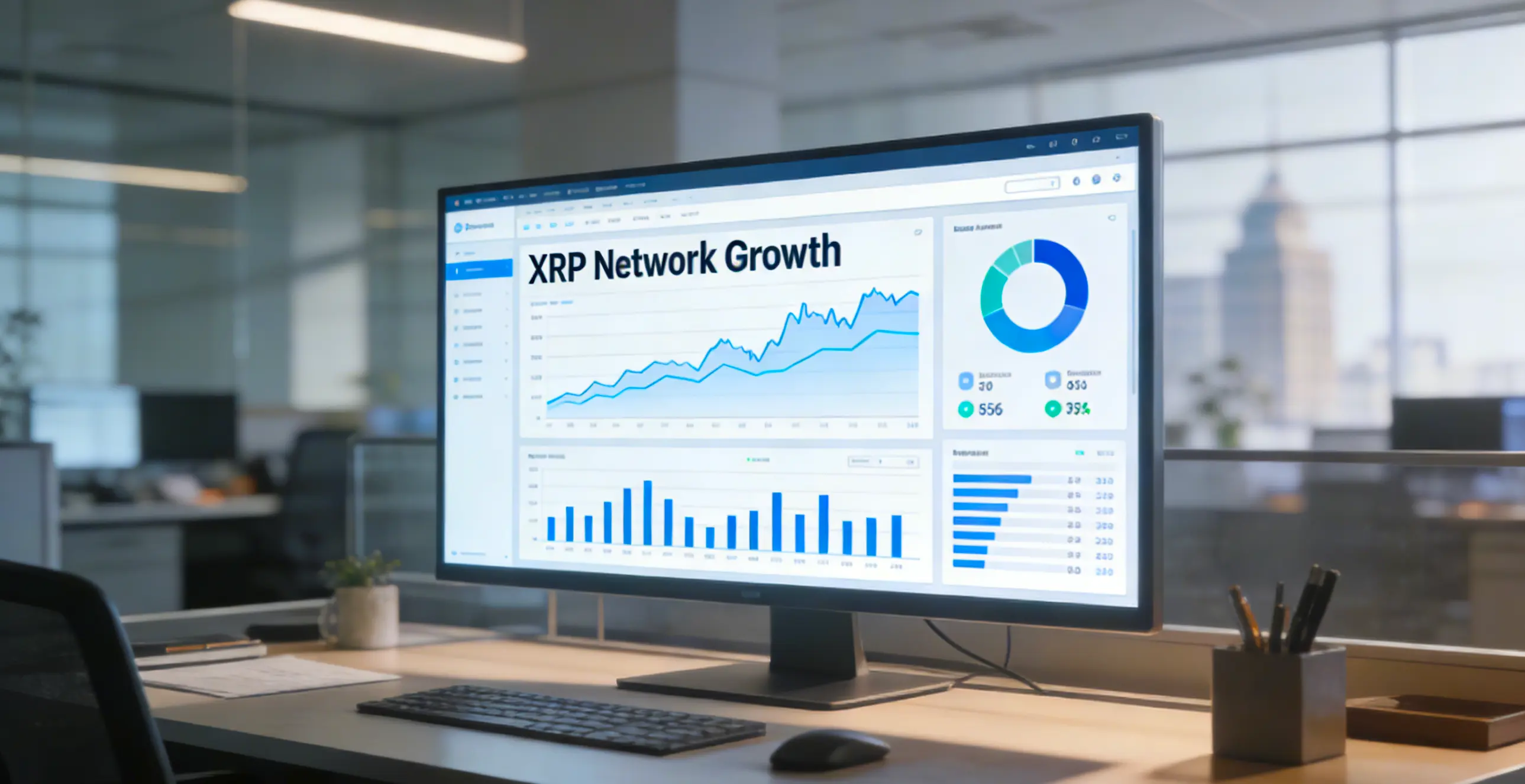 A senior Ripple ecosystem leader has confirmed that global financial heavyweights including Mastercard, BlackRock, and Franklin Templeton are actively exploring the XRP Ledger (XRPL) for tokenization, payments, and settlement solutions.
Meanwhile, Evernorth—led by former Ripple executive Asheesh Birla—is building one of the world’s largest institutional XRP treasuries, worth at least $1 billion, to power its fully on-chain financial operations. These developments signal a profound shift: traditional finance is moving onto blockchain infrastructure, and XRP—with its near‑instant settlement and ultra‑low costs—is emerging as the neutral bridge asset at the center of this transformation.
Ripple Director Confirms Institutional Giants Exploring XRP Ledger
Odelia Torteman, Director of Corporate Adoption at XRPL Commons, recently confirmed what many in the XRP community have long suspected: the world’s largest financial institutions are taking a serious look at the XRP Ledger.
In an interview, Torteman was asked directly whether names like Mastercard, BlackRock, Visa, and Franklin Templeton—all of which have appeared at XRPL‑focused events—are showing genuine interest. Her response was unequivocal: yes.
Torteman emphasized that the XRP Ledger, launched in 2012, was built from the ground up for financial institutions. Its design prioritises cross‑asset, transparent payments and settlements, making it a natural fit for enterprises that need speed, reliability, and regulatory alignment.
“The XRP Ledger has always been about enabling financial institutions to move value efficiently,” she said. “Its built‑in features—like the automated market maker (AMM), native decentralised exchange (DEX), trust lines, and ongoing work on compliance and KYC tools—reduce the friction that typically holds institutions back from adopting blockchain.”
This institutional validation comes at a time when the broader crypto market is searching for real‑world use cases beyond speculation. For XRP holders, the message is clear: XRP is not just another tradable token; it is the fuel for a growing ecosystem of enterprise‑grade financial applications.
Why XRP Ledger? Built‑In Finance Features That Attract Enterprises
What makes XRPL stand out in a crowded field of layer‑1 blockchains? According to Torteman, it’s the ledger’s native capabilities that eliminate the need for complex smart contract workarounds.
Native Decentralised Exchange (DEX): XRPL has a built‑in DEX that allows users to trade any issued asset directly on the ledger. This isn’t an add‑on or a third‑party protocol; it’s part of the core infrastructure. For institutions, that means trustless, transparent trading without relying on potentially vulnerable external platforms.
Automated Market Maker (AMM): The recent addition of a native AMM to XRPL further enhances liquidity provision. It allows users to earn yield by supplying liquidity to trading pairs, all within the same secure environment.
Trust Lines and Compliance Tools: XRPL’s trust line mechanism enables users to explicitly authorise which assets they are willing to hold. This feature, combined with ongoing product development around KYC and compliance, gives institutions granular control over their exposure and helps them meet regulatory obligations.
Low Fees and Fast Settlement: Perhaps most importantly, XRPL offers near‑instant settlement (3–5 seconds) and transaction costs that are fractions of a cent. For high‑volume financial operations, these characteristics are non‑negotiable.
Torteman stressed that these features collectively make XRPL “purpose‑built” for finance—a phrase that echoes the recent comments of Evernorth CEO Asheesh Birla.
Recent Partnerships Bring Tokenization and Payments to XRPL
The talk of institutional interest isn’t just theoretical. Over the past year, Ripple has announced a series of partnerships that put XRPL at the centre of real‑world financial experiments.
Franklin Templeton and DBS Launch Tokenized Solutions
In September 2025, Ripple partnered with asset management giant Franklin Templeton and Singapore’s DBS bank to launch tokenized lending and trading solutions. The initiative uses tokenised money market funds alongside Ripple’s USD‑backed stablecoin, RLUSD.
Ripple executive Nigel Khakoo called the move a “breakthrough for institutional tokenisation.” By combining a regulated stablecoin with tokenised fund shares, the solution improves liquidity and capital efficiency for institutional participants. DBS added that tokenised securities could enhance market liquidity and trust—a sentiment that aligns with the broader push toward on‑chain capital markets.
Securitize Integration: BUIDL and VBILL Now Swappable for RLUSD
Also in September 2025, Ripple and Securitize announced an integration that allows investors in VanEck’s VBILL fund and BlackRock’s BUIDL fund to swap their shares directly for RLUSD. This always‑on smart contract functionality creates continuous liquidity for tokenised Treasury funds, giving investors a compliant and stable exit into RLUSD while maintaining access to on‑chain yields.
The partnership directly connects BlackRock’s $500 million‑plus BUIDL fund—the largest tokenised Treasury fund on the market—with the XRP Ledger. It’s a powerful demonstration of how XRPL can serve as a settlement layer for institutional‑grade assets.
Mastercard Pilots RLUSD for Card Settlements
In November 2025, Mastercard teamed up with Gemini and Ripple to pilot RLUSD stablecoin settlements for card payments on XRPL. The project marks a first for U.S. regulated banks using public blockchain for transaction settlement.
By integrating RLUSD into Mastercard’s payment network, the initiative allows banks to complete card transactions on a public blockchain, with Ripple providing faster and more transparent settlement through XRPL. For XRP holders, this represents perhaps the most tangible link yet between a mainstream financial utility and the XRP ecosystem.
Evernorth’s $1 Billion XRP Treasury: A Case Study in On‑Chain Finance
While partnerships with established giants grab headlines, the most ambitious bet on** **XRP may come from a newer player: Evernorth.
Led by CEO Asheesh Birla—a former Ripple executive who spent nearly a decade at the company—Evernorth is building what it calls the world’s largest institutional XRP treasury, with a target of at least $1 billion in capital.
Why XRP? Birla’s Thesis
In a recent livestream, Birla laid out his reasoning. He argued that global finance is on the cusp of a major transformation as traditional systems migrate to blockchain infrastructure—a shift whose scale he believes remains widely underestimated.
Birla contrasted XRP with other major cryptocurrencies:
- Bitcoin, he noted, was designed primarily as a digital alternative to gold. It functions well as a store of value but is not optimised for high‑volume payments or settlements.
- Ethereum introduced programmability but prioritised broad functionality over financial performance, resulting in higher fees, network congestion, and slower transaction speeds—limitations that hinder its suitability for institutional finance.
In contrast, Birla argued, XRP and the XRP Ledger were specifically engineered for real‑world financial use. XRPL delivers:
- Near‑instant settlement (3–5 seconds)
- Ultra‑low transaction costs (fractions of a cent)
- High throughput (1,500+ transactions per second)
- Reliability and energy efficiency
Additionally, XRP functions as a neutral bridge asset, enabling efficient value transfers across different currencies, networks, and jurisdictions without requiring pre‑funded accounts in each destination.
Evernorth’s On‑Chain Strategy
Based on this thesis, Evernorth has structured its entire corporate strategy around XRP. The company plans to deploy its $1 billion‑plus treasury across four key areas:
- Settlement flows: Using XRP to settle transactions in real time, reducing counterparty risk and capital requirements.
- Treasury operations: Managing corporate liquidity on‑chain, with XRP as the primary reserve asset.
- Tokenized asset frameworks: Participating in the issuance and trading of tokenised securities on XRPL.
- Institutional‑grade DeFi: Earning yield through compliant decentralised finance protocols built on XRPL.
Beyond accumulation, Evernorth intends to reinvest yield generated from its XRP holdings into acquiring more tokens, creating a compounding exposure to the ecosystem. The company also aims to simplify institutional access to XRP by handling operational complexity behind the scenes, allowing other institutions to gain indirect exposure efficiently.
Birla’s vision is bold: a fully on‑chain financial model that is faster, cheaper, and more efficient than traditional systems. And at its core is** **XRP.
XRP’s Role: Bridge Asset for the New Financial Stack
The common thread running through these developments—from BlackRock’s BUIDL integration to Evernorth’s treasury strategy—is the recognition of XRP as more than a speculative token.
On XRPL, XRP serves several essential functions:
- Bridge currency: It facilitates cross‑currency payments by acting as a neutral intermediate, eliminating the need for multiple currency pairs and pre‑funded accounts.
- Network fee currency: All transactions on XRPL are paid in XRP, creating consistent demand.
- Liquidity source: The native DEX uses XRP as the base pair for all issued assets, ensuring deep liquidity across the ecosystem.
As institutions tokenise assets and conduct settlements on XRPL, they will inevitably interact with XRP. This is not a feature that can be easily replaced; it’s baked into the protocol’s architecture.
The Broader Shift: Traditional Finance Moving On‑Chain
What we are witnessing is the early stage of a multi‑trillion‑dollar migration. According to a recent report by Bernstein, the market for tokenised assets could reach $5 trillion by 2030. BlackRock CEO Larry Fink has repeatedly stated that he believes the next generation of markets will be tokenised.
Ripple is positioning itself at the forefront of this shift. By partnering with incumbent financial institutions (Franklin Templeton, DBS, Mastercard) and forward‑thinking newcomers (Evernorth), it is building the on‑ramps and infrastructure needed to bring traditional capital on‑chain.
The involvement of Mastercard—a company that processes over $9 trillion in payments annually—is particularly significant. Its pilot with RLUSD on XRPL suggests that stablecoin settlements on public blockchains are moving from theoretical to practical.
For XRP, the implications are profound. If the ledger becomes a preferred venue for institutional tokenisation and settlement, XRP’s utility—and by extension its value—could scale with adoption.
What This Means for XRP Investors
For the millions of XRP holders who have weathered years of regulatory uncertainty and market volatility, the news flow of recent months offers a clear narrative: institutional adoption is no longer a hope; it’s happening.
- Mastercard, BlackRock, and Franklin Templeton are not just “looking”; they are actively piloting and integrating with XRPL.
- Evernorth is placing a billion‑dollar bet that XRP will be the backbone of on‑chain finance.
- Ripple’s acquisition spree ($4 billion in 2025) and product expansion (Ripple Prime, Ripple Treasury, RLUSD) are all designed to drive utility and liquidity around XRP.
None of this guarantees short‑term price appreciation.** **XRP remains 60% below its all‑time high, and technical indicators still show a downtrend. But for long‑term investors, the foundation being laid today could support a much larger valuation in the years ahead.
As Asheesh Birla put it: blockchain networks optimised specifically for financial use will ultimately capture the bulk of institutional activity as traditional finance moves on‑chain. XRPL, with its decade‑long focus on speed, cost, and reliability, is arguably the best‑positioned candidate for that role.
Conclusion: A Quiet Revolution on XRPL
While the crypto world obsesses over memecoins and short‑term price action, a quiet revolution is taking place on the XRP Ledger. Some of the world’s most powerful financial institutions are quietly building the infrastructure for tokenised markets—and they’re building it on XRPL.
For** **XRP, this represents the realisation of a vision that has been years in the making. From its inception in 2012, the ledger was designed for financial institutions. Now, with regulatory clarity improving (witness Garlinghouse’s appointment to the CFTC advisory committee) and major players moving on‑chain, that vision is finally becoming reality.
The road ahead will undoubtedly have its ups and downs. But for those willing to look beyond the daily noise, the signal is clear: XRP is becoming the neutral bridge asset for a new era of finance.
Related Articles
Cryptocurrency Market Rebounds Amid U.S. Government Shutdown: Bitcoin, Ethereum, XRP, and Solana Rise Simultaneously
European Compliance Channel Opens: XRP Accelerates Coverage of the EU Market After Scandinavia
Top Nordic Exchange Accelerates XRP Adoption Across Europe
Could Brad Garlinghouse's participation in the CFTC conference change the direction of XRP?
XRP News Today: $1.40 Holds as Investors Buy the Dip Despite U.S. Government Shutdown Fears
Ripple's former CTO confirms no issuer for XRP: NFT scam led to funds being stolen, victims unable to recover tokens