


Unity AI releases upgraded version in March, lowering the development barrier for natural language generation games
Unity CEO Matthew Bromberg recently announced during the quarterly earnings call that an upgraded version of Unity AI will be launched during the Game Developers Conference (GDC 2026) in March. This upgraded tool focuses on enabling developers to generate casual games entirely through natural language, aiming to significantly lower the barriers to game development and attract creators without coding skills.
Technical Architecture of the Unity AI Upgrade
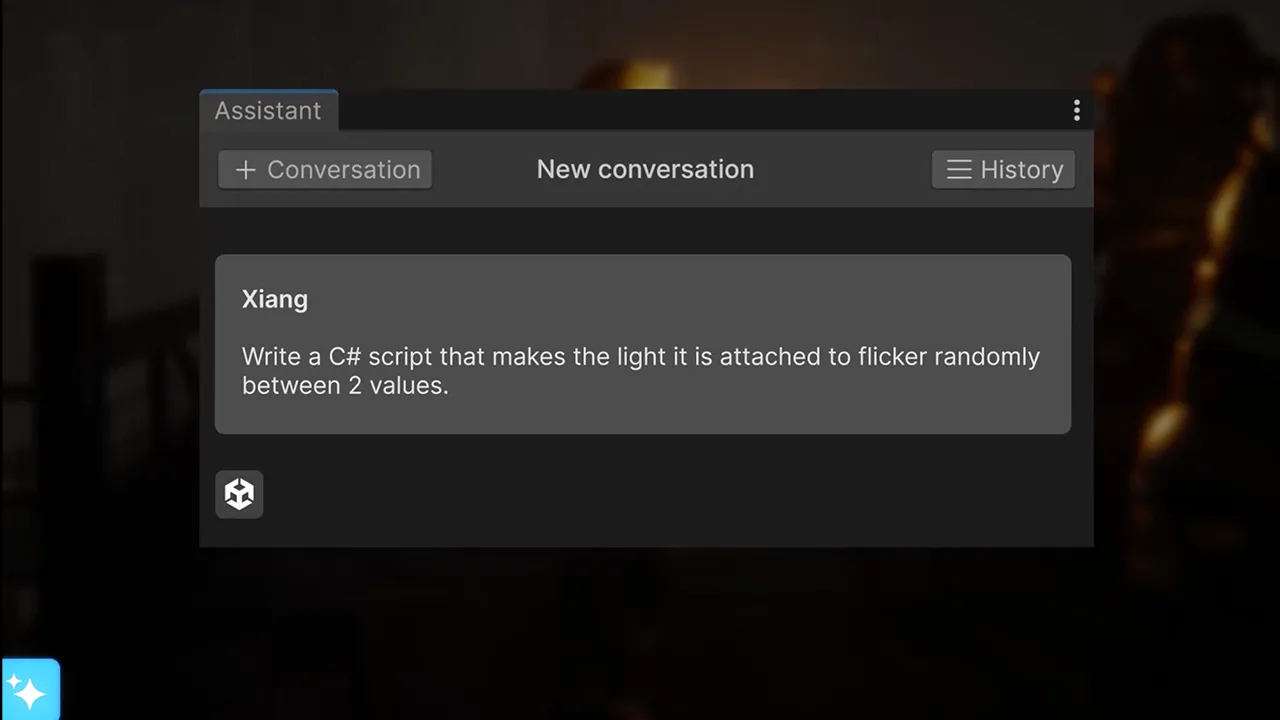 (Source: Unity)
According to Unity’s official legal documentation, the current Unity AI assistant system employs a multi-layered model architecture:
Natural Language Processing Layer: Integrates OpenAI’s GPT series and Meta’s Llama large language models, responsible for responding to developer inquiries, automatically generating code, and executing proxy tasks.
Object Generation and Optimization Layer: Combines various first-party and partner foundational models, including Scenario models (trained with Stable Diffusion, FLUX, Bria, and GPT-Image) and Layer AI models (based on Stable Diffusion and FLUX).
Context Integration Capability: Unity emphasizes that, compared to general AI tools, its system’s deep understanding of project backgrounds allows it to provide more accurate and efficient assistance.
The core design logic of this architecture is to enable developers to interact with tools in a manner close to natural language, greatly shortening the distance from creative concept to executable prototype.
Democratization of Game Development: Millions of Potential Creators and Industry Concerns
Bromberg envisions Unity AI as “a bridge connecting initial ideas to successful digital experiences,” aiming to eliminate technical barriers in the creative process. He believes that whether it’s casual creators with no programming background or professional developers seeking efficiency, the upgraded Unity AI can provide value.
Elon Musk has also expressed bolder predictions on this topic. In response to comments from Epic Games CEO Tim Sweeney, Musk stated that in the future, players might not even need to input prompts; AI will automatically recognize and generate game content tailored to user preferences, fundamentally disrupting current game creation and consumption models. He has previously agreed with industry forecasts that AI could generate similar works before the release of GTA 6.
However, developments from Google’s side have also caused market tension. After Google’s interactive world generation model Project Genie was launched, several gaming-related stocks declined, with market concerns that AI tools might impact traditional game development business models.
Industry Voices: Where Are the Boundaries of Tool Assistance?
Take-Two Interactive CEO Strauss Zelnick, in an interview with IGN, issued a systematic warning about this wave of AI game tools. He pointed out that market panic stems from the public conflating “tools” with “works.”
Zelnick’s core argument hits the root of the issue: no tool can simply be pressed to produce a commercially competitive, market-ready product. Regardless of how powerful AI tools are, the core concepts, character designs, and overall structure of a game still require the creator’s original ideas and judgment. He emphasized, “Tools are born to unleash human creativity and achieve greater accomplishments. We should never underestimate the importance of human talent.”
Frequently Asked Questions
What are the main improvements of the Unity AI upgrade compared to the current version?
Based on available information, the key upgrade is the deep integration of natural language interfaces—developers can describe their needs in everyday language, and AI will automatically generate corresponding game structures and code. The current version mainly offers code assistance and asset generation; the upgrade aims to enable an end-to-end process from concept description to a playable casual game.
Will AI game generation tools pose a professional threat to existing game developers?
The mainstream industry view is “assistive rather than substitutive.” Zelnick explicitly states that AI tools enhance efficiency, not replace creativity itself. For casual games, AI may lower production barriers; but for commercial projects involving world-building, narrative design, and innovative gameplay, human creativity and judgment remain the core barriers.
Are there copyright concerns with the models used by Unity AI?
Unity’s official documentation discloses that its models incorporate training data from sources like Stable Diffusion and FLUX, among others. The copyright status of these training datasets remains a legal gray area worldwide. Developers should pay attention to the latest terms of use and copyright policies in their region and on relevant platforms when using AI-generated assets for commercial purposes.