


Trump's son invests in Polymarket, sparking controversy; 6 mysterious accounts bet on Iran going to war and make millions
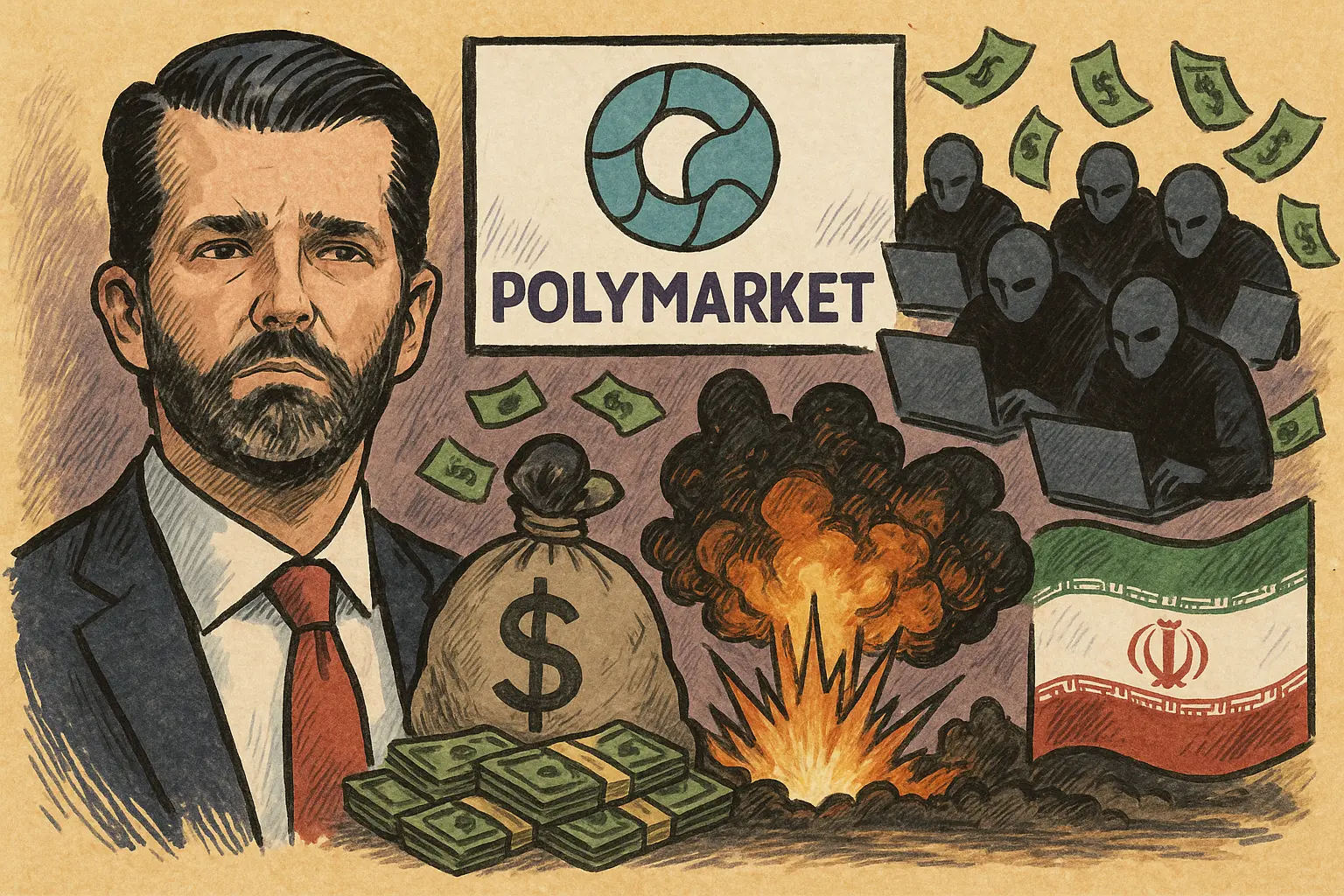
The US prediction market platform Polymarket has seen six new registered accounts accurately betting on the timing of Iran conflicts, with total profits of about $1 million. At the same time, Donald Trump Jr., the eldest son of President Trump, is an advisor to Polymarket. His venture capital firm, 1789 Capital, has also invested millions of dollars in the platform, further fueling political controversy over potential conflicts of interest.
On-Chain Behavior Analysis of the Six Mysterious Accounts
According to reports from Bloomberg and NPR, Bubblemaps SA’s analysis reveals several anomalies:
Unusual Trading Concentration: The six accounts only traded on contracts related to US airstrikes on Iran, with highly focused and singular trading activity.
Timing Alignment: Multiple bets were placed hours before the explosions in Tehran were reported, not after the news broke.
Market Size: Contracts directly related to US military actions reached a total trading volume of $529 million (about NT$16.65 billion), making them some of the most traded contracts on Polymarket.
Regulatory Gray Area: The prediction markets currently lack clear regulations against market manipulation, making it difficult for analysts to distinguish between “unlucky guesses” and “insider information.”
Experts note that the precision of these trades, if not based on confidential intelligence, is statistically very unlikely. However, without direct evidence, investigators find it difficult to confirm insider trading.
The Multiple Connections Between Trump’s Son and Polymarket
Donald Trump Jr. has specific ties to Polymarket that heighten political sensitivity:
Advisor Role: He serves as an official advisor to Polymarket, influencing company strategy.
Financial Investment: His venture capital firm, 1789 Capital, has invested millions in the platform, establishing clear financial interests.
Federal Investigation Reversal: After Trump took office, the administration reversed two federal investigations into Polymarket that had been initiated during the Biden administration. Previously, Polymarket faced regulatory scrutiny for offering services to US users.
Democratic Senator Christopher Murphy of Connecticut publicly criticized on X (Twitter), accusing Trump associates of “profiting from war,” and announced plans to propose legislation banning such activities. He stated bluntly, “It’s crazy that this is even legal.”
Legal Framework, Historical Precedents, and Political Responses
This isn’t the first time prediction markets have been embroiled in insider trading allegations. In January, an anonymous trader accurately predicted the arrest of Venezuelan President Nicolás Maduro, profiting about $400,000. The previous year, Israeli authorities accused two individuals of using military secrets to bet on conflicts between Israel and Iran on Polymarket for profit.
In terms of legal classification, the US Commodity Futures Trading Commission (CFTC) considers prediction markets as “futures contracts,” not gambling. However, under current US law, bets based on war and death could still violate regulations, as such wagers are seen as potentially encouraging violence and geopolitical instability. Another platform, Kalshi, faced criticism for promoting markets related to the death of Iran’s Supreme Leader Khamenei, ultimately refunding some funds to avoid legal issues, which angered some traders.
Financial reform organization Better Markets, led by former SEC official Amanda Fischer, urges Congress to act swiftly to legislate against markets that “bet on war and assassinations,” citing these activities as having “distorted incentives” and threatening international stability.
Frequently Asked Questions
Is betting on Polymarket legal in the US?
Polymarket’s legal status is somewhat ambiguous. The CFTC classifies prediction markets as futures contracts, not gambling; however, Polymarket previously faced federal investigations for serving US users and ultimately ceased offering services to American retail investors. US law explicitly prohibits bets based on violent events, including war and death.
What does Trump Jr.’s role as a Polymarket advisor imply legally?
Serving as a platform advisor and making investments are legal business activities. The controversy centers on the fact that, during his father’s presidency, federal investigations into Polymarket were dropped, and highly relevant bets appeared on the platform—raising ethical questions about conflicts of interest, rather than direct legal violations.
Can insider trading in prediction markets be regulated the same as in stock markets?
Currently, there is no clear federal legislation explicitly regulating insider trading in prediction markets. Existing market manipulation laws mainly target traditional financial instruments. Prediction markets fall into a regulatory gray area between futures, gambling, and information trading, making enforcement difficult. Senator Murphy’s proposed legislation aims to address this regulatory gap.