


3 reasons Bitcoin could enter a prolonged medium-term uptrend lasting several months
Bitcoin is currently in a sensitive phase after a prolonged decline. However, many positive signals from macroeconomic data and on-chain metrics are suggesting a strong potential for reversal. Several analysts are optimistic, predicting that Bitcoin could enter a medium-term recovery lasting several months.
Here are three main reasons why experts believe in this recovery scenario:
The Relationship Between Bitcoin and the ISM Manufacturing PMI Index
One of the key factors driving expectations of Bitcoin’s recovery is the growth of the Manufacturing PMI index published by the Institute for Supply Management (ISM). According to the latest report, the PMI for February 2026 reached 52.4%, a slight decrease from 52.6% the previous month but still above market expectations of 51.8%.
Notably, this is the second consecutive month that the index has exceeded 50, marking the end of a three-year recession in the US manufacturing sector. This improvement reflects a more favorable economic environment, where investors are willing to accept higher risks. This could pave the way for capital flows into risk assets like Bitcoin.
Analyst Joe Consorti emphasized the correlation between the PMI index and Bitcoin prices in previous cycles, noting that the current developments could signal a trend reversal.
“In history, this often coincides with the early stages of Bitcoin bull markets, except in 2022,” Joe Consorti shared.
“Golden Cross” on the Inter-Exchange Flow Index (IFP)
Another signal reinforcing confidence in Bitcoin’s recovery is the appearance of a “golden cross” on the Inter-Exchange Flow Pulse (IFP) index. Analyst CW suggests that this pattern indicates the potential start of a new bullish cycle.
According to CryptoQuant — a platform analyzing on-chain data — the IFP measures Bitcoin flow between spot and derivative exchanges. It’s an important indicator of market sentiment.
Specifically, when a large amount of Bitcoin is transferred to derivative exchanges, the index typically signals an upward trend, as traders move Bitcoin to open long positions. Conversely, when Bitcoin flows from derivatives to spot exchanges, it indicates a downtrend, as traders close long positions and reduce risk.
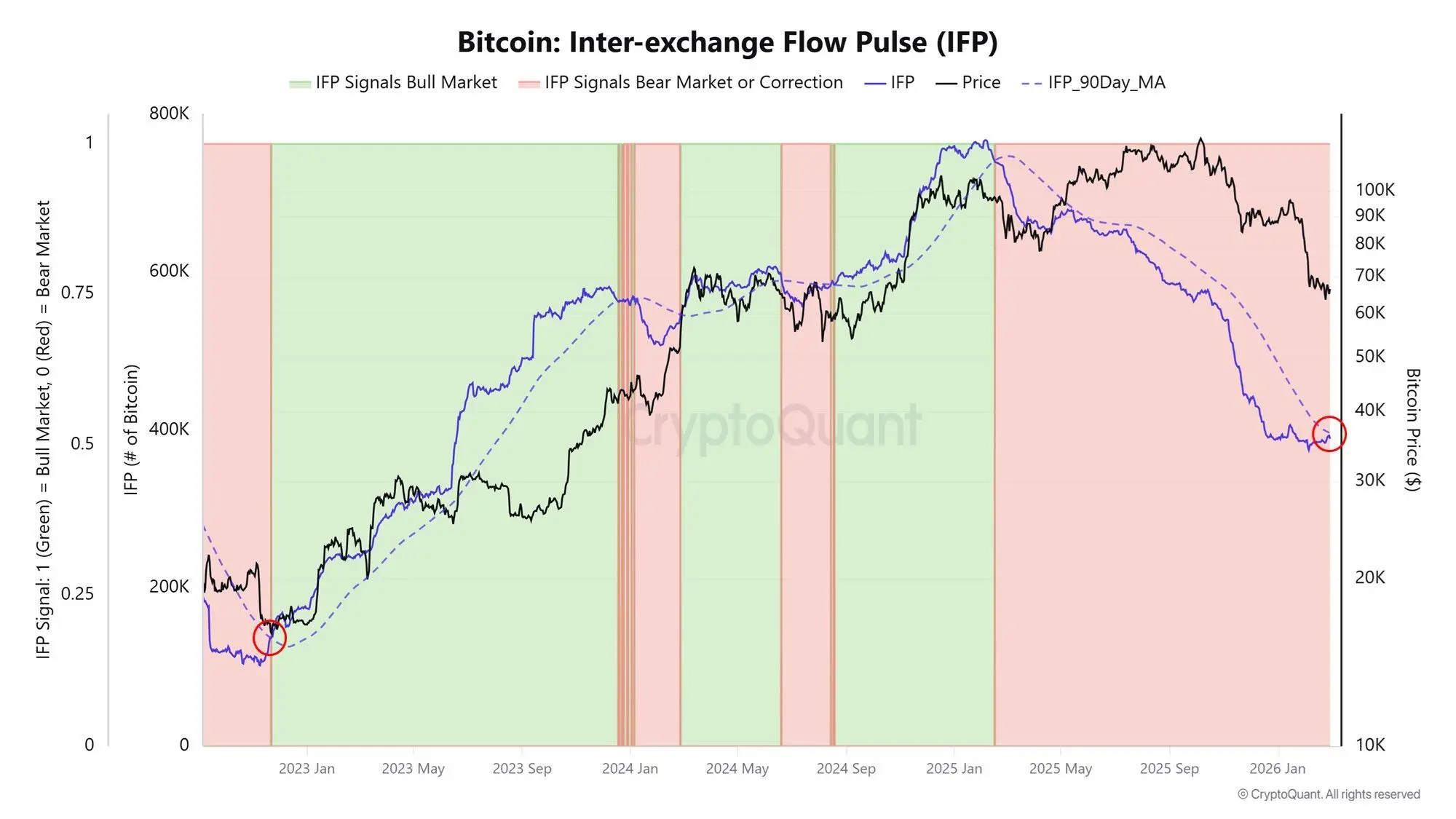 Bitcoin trading flow between exchanges | Source: CryptoQuant
In previous cycles, this “golden cross” has appeared before strong recoveries from 2023 to 2025. Currently, after a year of correction, the golden cross is becoming more imminent. If confirmed, it could be a sign that Bitcoin is about to enter a new bullish phase.
“Golden cross is very close on Bitcoin’s IFP index. After a year of correction, the price is ready to rise again. Everyone, get ready,” analyst CW stated.
Five Consecutive Months of Red Candles Indicate Exhausted Selling Pressure
Another factor boosting analyst optimism is that Bitcoin has recorded five consecutive months of red candles — an extremely rare phenomenon in history. February 2026 marks the fifth month in a row that Bitcoin closed at a lower price than the previous month.
Historically, this has only happened once before, during 2018–2019, when Bitcoin experienced six consecutive months of red candles. After that period, Bitcoin’s price surged strongly, with five months of green candles and a gain of over 300%, from around $3,400 to $14,000.
Although historical data is limited, a prolonged streak of red candles often signals that selling pressure is waning. When buying demand returns, a strong reversal could occur.
“Five or six months of red candles no longer matter, because most of the decline has already passed. The full upside potential is still ahead,” analyst Satoshi Flipper emphasized.
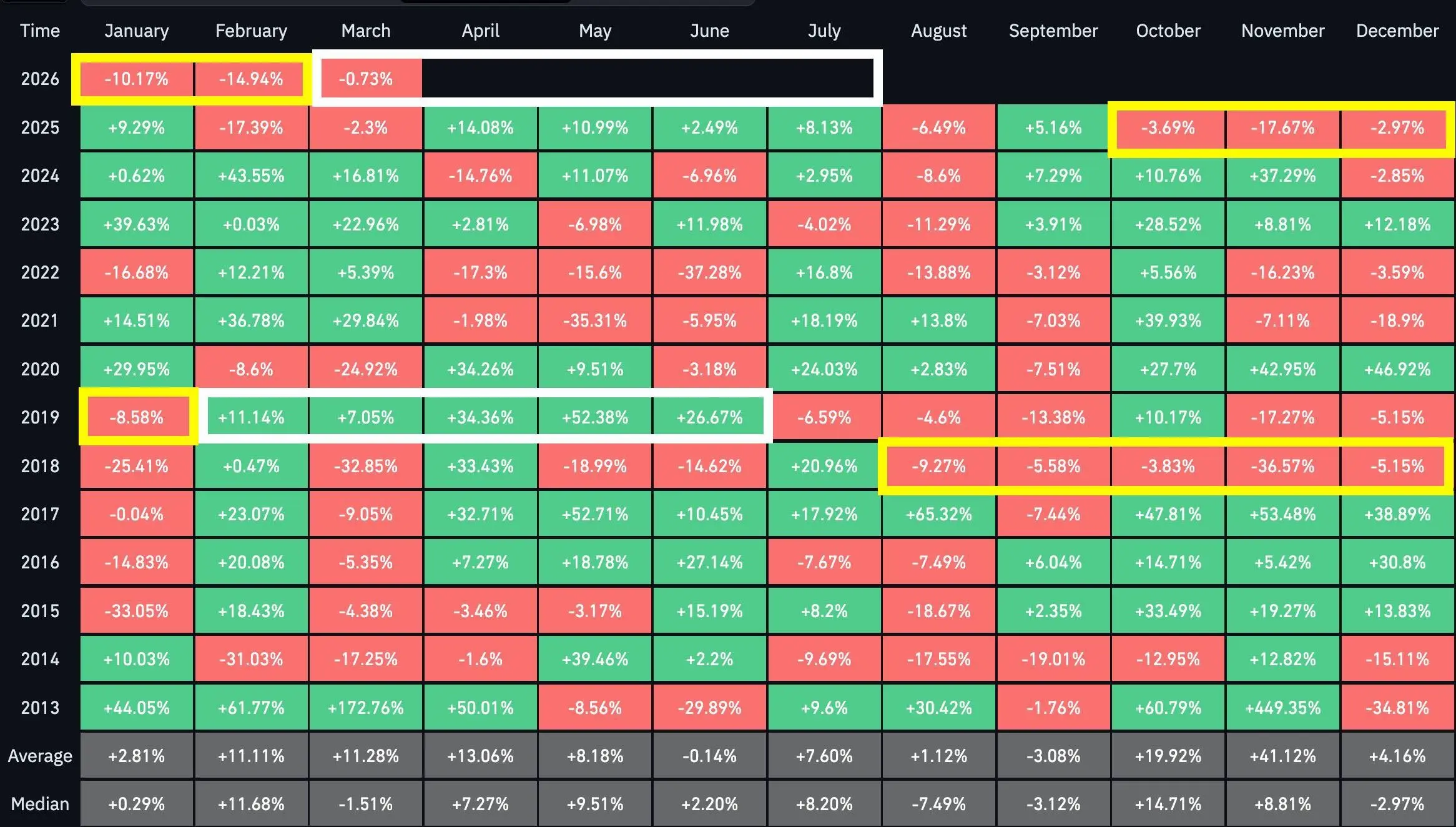 Monthly Bitcoin price movements | Source: Coinglass
Conclusion
These signals, when viewed in the context of history, have previously confirmed prolonged bullish trends. A recent report from BeInCrypto also supports the view that Bitcoin is at a bottom and ready for a recovery. However, experts warn that the market could experience another deep correction before truly entering a new bull cycle.
Mr. Teacher
Related Articles
Bitcoin fell below $63,000 and rebounded to around $70,000, with institutional funds continuing to flow in to support the BTC price.
BTC 15-minute increase of 0.79%: ETF capital net inflow and institutional buying drive short-term rally
Bitcoin implied volatility has increased from approximately 38.5% to 53.1%.
Bitcoin mining companies start reducing BTC holdings: Core Scientific sells nearly 2,000 BTC
Core Scientific to Sell 2,500 Bitcoin as Company Pivots Toward AI
The altcoin market is experiencing a structural decline, with 38% of tokens approaching historical lows, as funds continue to flow into Bitcoin and Ethereum.