On April 3, DeFi data platform DeFiLlama reported that Polymarket’s single-day revenue reached $1.71 million, ranking 5th among all crypto protocols by daily revenue. On the same day, members of the Polymarket team confirmed that users holding the POLY token will be eligible for a fee discount, further igniting market discussion around Polymarket’s POLY airdrop mechanism.
New Fee Structure: First Time Charging a Taker Fee to Broad Categories
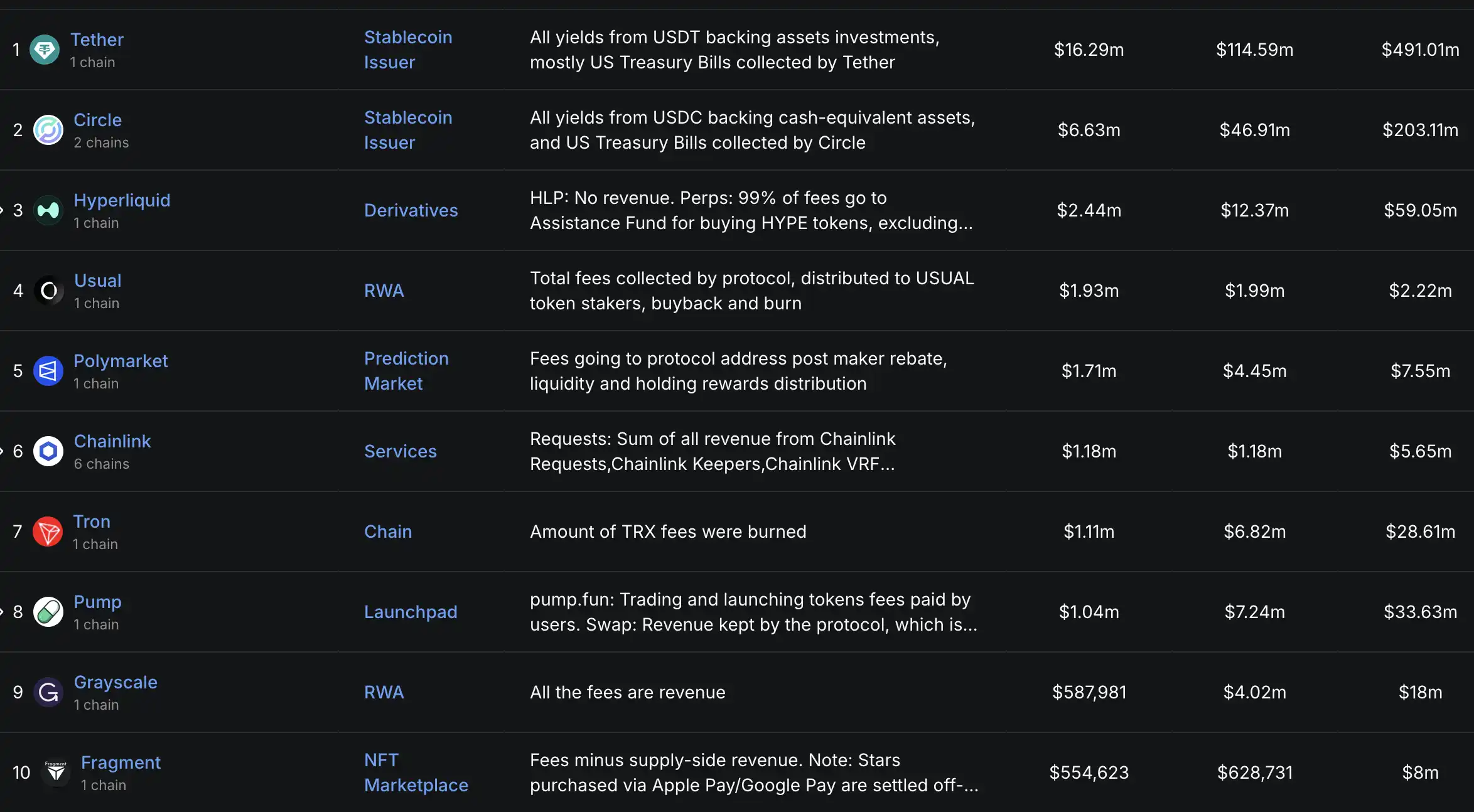 (Source: DefiLlama)
Polymarket’s new fee structure adopts a variable fee design, adjusting fees dynamically based on the category of the trading asset and market conditions. The fee tiers are as follows:
Crypto-related contracts: Peak fees can be as high as 1.8%, with the actual fee rate changing along a curve depending on share price and market conditions
Sports, finance, politics, culture, weather, and general categories: Lower tiered fees are applied
Mentioned categories and specific economic forecasts: Peak fees are about 1.5%
This fee adjustment is the first time Polymarket has charged a Taker fee to broad trading categories since its launch. Its business model has shifted from being driven by trading volume to establishing a foundation for sustainable and predictable fee revenue.
POLY Token Discount Confirmed: Token Utility Goes Beyond Governance
In response to community questions, Polymarket team member Mustafa explicitly confirmed that users holding the POLY token will receive a discount when paying trading fees. This statement gives the POLY token real-world utility beyond governance—holding the token directly reduces transaction costs, provides incentives for long-term active traders to hold, and simultaneously strengthens expectations in the market for future POLY airdrop arrangements.
Polymarket’s Influence Extends into Global Oil Futures Markets
Polymarket’s market impact has gone beyond the crypto-native ecosystem. Multiple veteran oil traders confirmed to the media that Polymarket’s prediction data is being integrated into algorithmic trading systems that influence the global Brent crude oil futures market. Ajay Parmar, head of oil trading at market intelligence organization ICIS, said, “The platform’s impact on many markets is growing more and more.” Goldman Sachs has incorporated analysis of prediction market data into its oil market research reports; the Intercontinental Exchange (ICE) has also rolled out trading tools integrating Polymarket data sources, providing energy traders with “crowdsourced probability assessments” as market signals.
Notably, ICE agreed last year to invest $2.0 billion in Polymarket and recently added another $600 million. The platform’s valuation is approximately $9.0 billion. With daily revenue ranking in the top five among crypto protocols, it further validates Polymarket’s commercialization potential in the eyes of institutional investors.
Frequently Asked Questions
Why did Polymarket start charging Taker fees on March 30?
Previously, Polymarket mainly relied on trading-volume-driven revenue. Introducing a Taker fee is a business upgrade toward a sustainable fee-income model. The new fee schedule uses a variable design, differentiating charges by contract category, which helps enhance the platform’s long-term profitability.
What is the real significance of the POLY token fee discount mechanism for holders?
The Polymarket team confirmed that POLY token holders can receive fee discounts. This means the POLY token extends from a pure governance tool to a practical function that reduces trading costs, providing an immediate incentive for active trading users to hold.
How does Polymarket affect global oil futures markets?
Energy traders and market intelligence organizations have confirmed that Polymarket’s prediction data is integrated into algorithmic trading systems to generate market signals for Brent crude oil futures. ICE’s launch of trading tools integrating Polymarket data shows that prediction markets are upgrading from crypto-native tools to become a reference for traditional financial markets—though it has also raised regulatory concerns that potential insider trading could amplify market impact.
Disclaimer: The information on this page may come from third parties and does not represent the views or opinions of Gate. The content displayed on this page is for reference only and does not constitute any financial, investment, or legal advice. Gate does not guarantee the accuracy or completeness of the information and shall not be liable for any losses arising from the use of this information. Virtual asset investments carry high risks and are subject to significant price volatility. You may lose all of your invested principal. Please fully understand the relevant risks and make prudent decisions based on your own financial situation and risk tolerance. For details, please refer to
Disclaimer.


