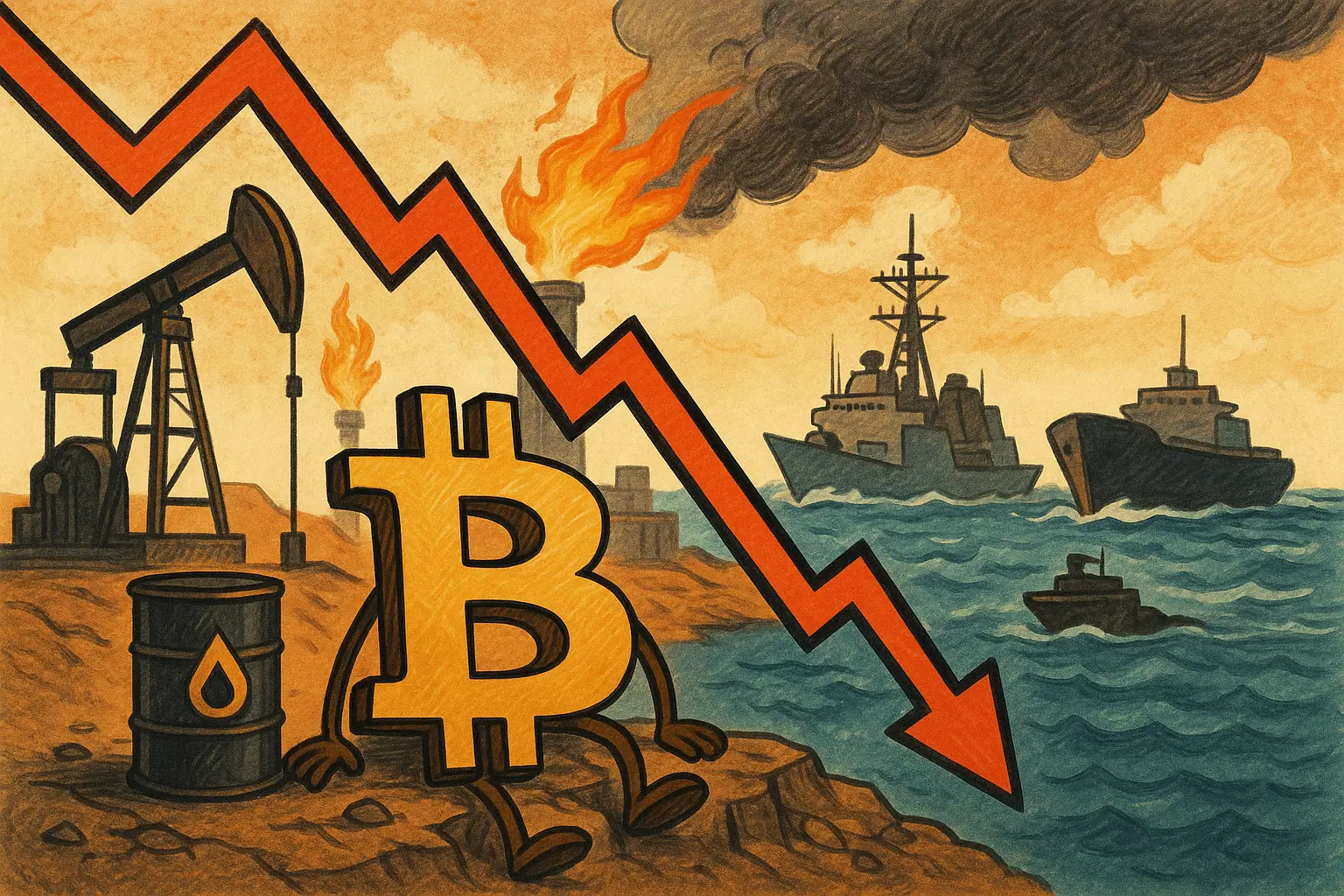
After the U.S. futures market opened on Sunday, oil prices surged from $95 per barrel to $113.7, nearly a 20% increase, reaching the highest level since early April 2022 during the Russia-Ukraine conflict, directly triggering a panic over global energy supply shortages. As a result, Bitcoin briefly plummeted to $65,725, marking its fourth consecutive day of decline.
Strait of Hormuz Crisis: The Fundamental Cause of the Oil Price Surge
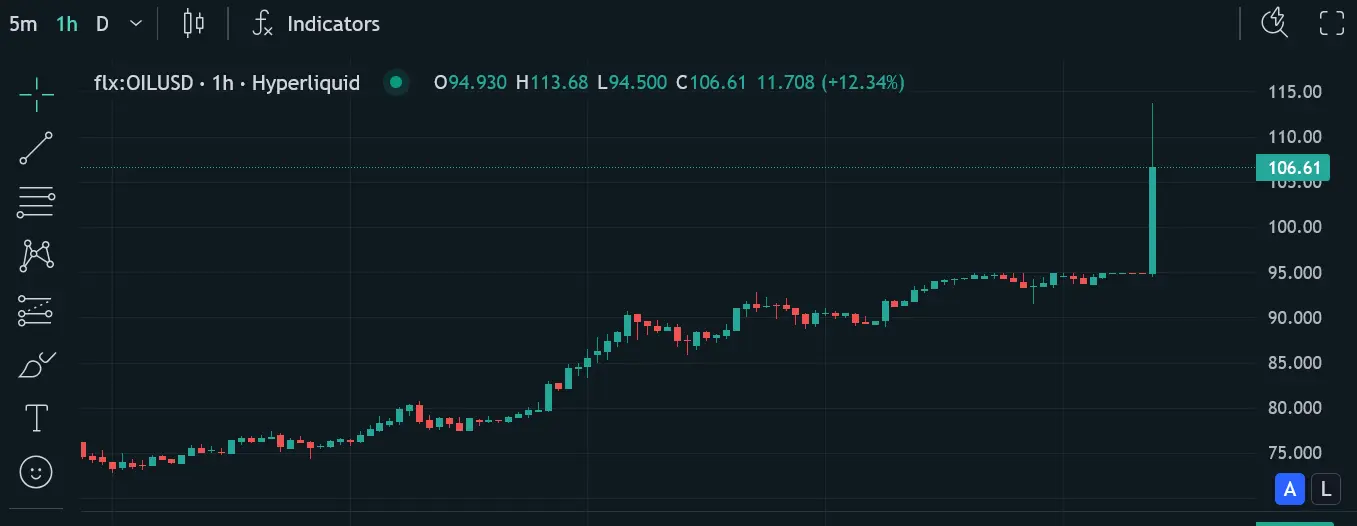
(Source: Trading View)
The trigger for this oil price spike was an emergency warning from Iraq: Iran’s threat to block the Strait of Hormuz could disrupt approximately 3 million barrels of daily oil production worldwide. The Strait of Hormuz is the world’s most critical oil shipping chokepoint, handling about one-fifth of global oil trade. If blocked, the impact on the global energy market would far exceed any single oil-producing country’s output changes.
Last week, the US-Israel coalition’s military strikes on Iran pushed oil prices up by over 30%. The recent threat of Iran’s blockade further heightened market fears of supply chain disruptions. Oil prices subsequently retreated, with the latest data showing around $105 per barrel.
Regarding the rapid rise in oil prices, President Trump told reporters on Saturday, “We anticipated oil prices would go up. But they will also go down, and very quickly. We have plenty of oil—very abundant reserves—and this problem will be resolved soon.” He also ruled out the necessity of using strategic petroleum reserves.
Bitcoin Falls for Four Consecutive Days: The Logic Behind the Drop from $73,770 to $66,000
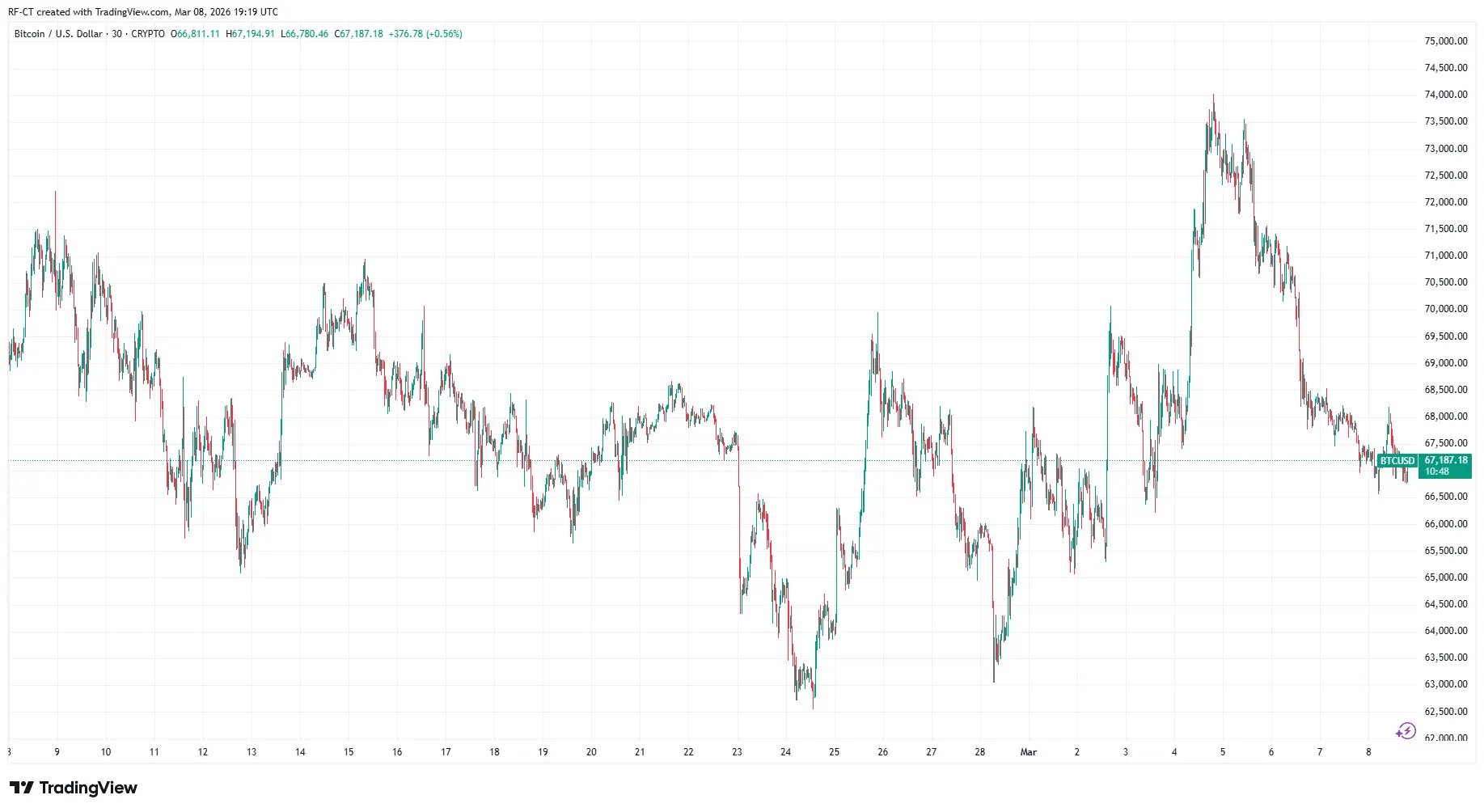
Last week, following news of the US and Israel bombing Iran, Bitcoin briefly surged from below $64,000 to $73,770 on Wednesday, driven by risk-averse sentiment switching. However, as initial shock news was digested, Bitcoin began to reverse:
Decreasing geopolitical impact: The “uncertainty premium” of military actions usually dissipates quickly once the event is confirmed, shifting market sentiment from panic to assessment.
Rising energy costs suppress risk appetite: Continued high oil prices lead to inflation expectations, reducing investors’ willingness to allocate to high-volatility assets.
Bitcoin has retraced over 48% from its cycle high of $127,000: Technical momentum has not yet formed a clear bottom support structure.
Four days of consecutive declines have eroded market confidence: Profit-taking selling pressure from bulls and macro uncertainties triggered by oil prices create dual suppression.
Technical Analysis: Why Is Bitcoin Falling Today – Key Support and Resistance Levels
(Source: Trading View)
Historically, Bitcoin experiencing 40% to 60% retracements during bull markets is not uncommon: in 2017, Bitcoin dropped from $20,000 to $10,000; in 2021, from $64,000 to $30,000. Currently, from the peak of $127,000 to about $66,000, the retracement is approximately 48%, fitting within historical norms.
The core technical issue now is whether the critical support zone of $62,000 to $64,000 can hold. If this zone is broken, the next major support will be the historical demand zone of $58,000 to $60,000. The precondition for a rebound is to regain the psychological level of $70,000 and break through the previous consolidation area of $75,000 to $80,000.
Frequently Asked Questions
Why did Bitcoin fall today in relation to the oil price surge?
The rapid increase in oil prices triggered global inflation fears, prompting investors to retreat from risk assets. As a high-beta risk asset, Bitcoin typically leads declines during deteriorating market sentiment. Additionally, rising energy costs directly increase operational expenses for Bitcoin miners, potentially causing some to sell off.
Is the impact of the Strait of Hormuz crisis on Bitcoin’s decline a short-term phenomenon?
Trump’s administration stated that the oil price increase is expected to be temporary, emphasizing that U.S. oil reserves are ample. If the Middle East situation does not escalate further, panic selling driven by oil prices may subside as market sentiment stabilizes. However, Bitcoin’s larger downward pressure stems from its technical correction since the high of $127,000, which is relatively independent of geopolitical factors.
Does four consecutive days of decline indicate a deeper downward trend?
This remains uncertain. Historically, Bitcoin’s 40%-60% retracements during bull markets are normal. The key technical support is in the $62,000 to $64,000 range; whether this holds will be the most direct indicator of the short-term trend direction.
Disclaimer: The information on this page may come from third parties and does not represent the views or opinions of Gate. The content displayed on this page is for reference only and does not constitute any financial, investment, or legal advice. Gate does not guarantee the accuracy or completeness of the information and shall not be liable for any losses arising from the use of this information. Virtual asset investments carry high risks and are subject to significant price volatility. You may lose all of your invested principal. Please fully understand the relevant risks and make prudent decisions based on your own financial situation and risk tolerance. For details, please refer to
Disclaimer.


