DADDY vs BTC: Which Cryptocurrency Will Dominate the Market in 2024?

Introduction: DADDY vs BTC Investment Comparison
In the cryptocurrency market, comparisons between DADDY and BTC have always been a topic investors cannot avoid. The two assets demonstrate significant differences in market capitalization ranking, use cases, and price performance, representing distinct positions within the crypto asset landscape.
DADDY (DADDY): A token built on the Solana blockchain, positioning itself as an interactive and entertainment-focused gaming ecosystem that offers real value and ownership to participants for their in-game achievements.
BTC (Bitcoin): Since its inception in 2008, Bitcoin has been recognized as "digital gold" and serves as the global standard in cryptocurrency, maintaining the highest trading volume and market capitalization among all digital assets.
This article will provide a comprehensive analysis of the investment value comparison between DADDY and BTC across historical price trends, supply mechanisms, and market adoption, addressing the key question investors are most concerned with:
"Which is the better buy right now?"
Comparative Analysis Report: DADDY Tate (DADDY) vs. Bitcoin (BTC)
I. Historical Price Comparison and Market Status
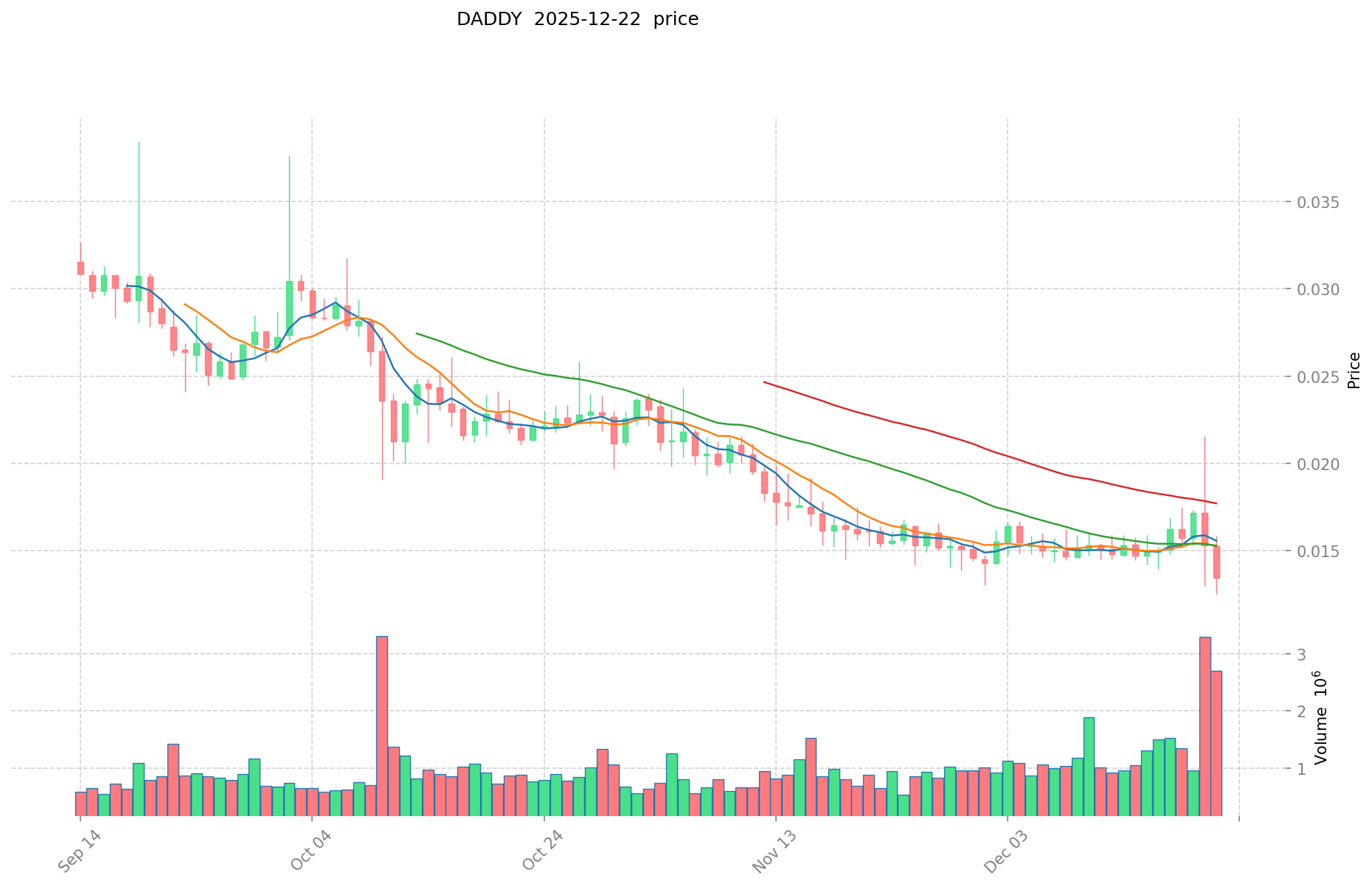
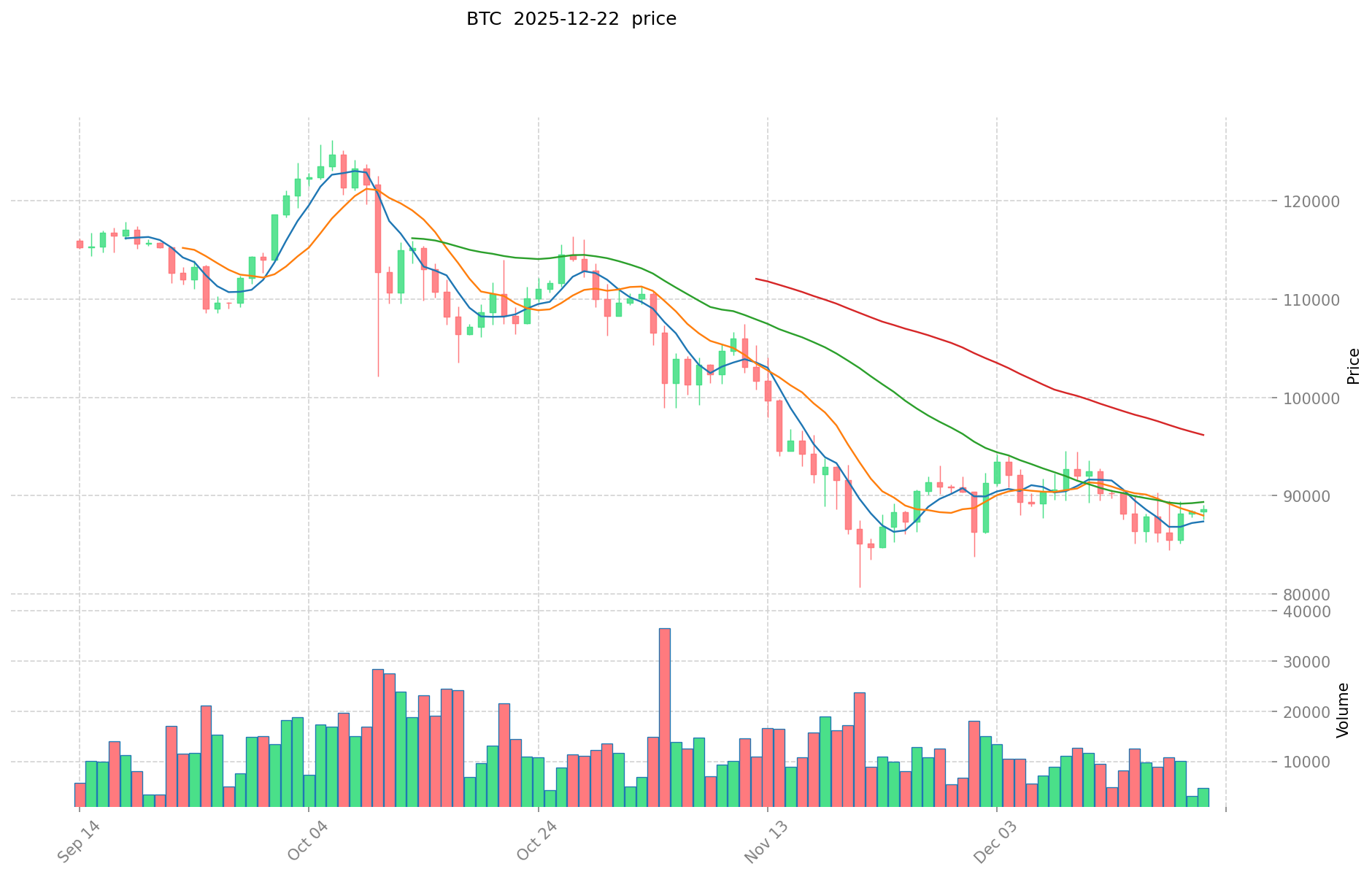
Price Trajectory of DADDY Tate and Bitcoin
DADDY Tate (DADDY):
- All-time high: $0.2565 (June 15, 2024)
- All-time low: $0.01251 (December 21, 2025)
- Historical decline: -77.42% over the past year
Bitcoin (BTC):
- All-time high: $126,080 (October 7, 2025)
- All-time low: $67.81 (July 6, 2013)
- Year-to-date performance: -7.64% decline
Comparative Analysis
DADDY Tate exhibits significantly higher volatility compared to Bitcoin. Within approximately 18 months of trading, DADDY has declined 77.42% from its peak, representing a severe contraction from its launch price of $0.27. In contrast, Bitcoin, despite a current year-to-date decline of 7.64%, maintains a substantially higher market capitalization and demonstrates greater price stability relative to emerging tokens.
Current Market Status (December 22, 2025)
DADDY Tate Metrics:
- Current price: $0.01377
- 24-hour change: +0.64%
- 7-day change: -9.59%
- 30-day change: -11.48%
- Market capitalization: $8,044,273.29
- 24-hour trading volume: $31,119.47
- Circulating supply: 599,622,612 DADDY tokens
- Total holders: 65,860
Bitcoin Metrics:
- Current price: $89,666.90
- 24-hour change: +0.88%
- 7-day change: -0.26%
- 30-day change: +6.84%
- Market capitalization: $1,790,241,622,609.20
- 24-hour trading volume: $618,877,790.89
- Circulating supply: 19,965,456 BTC
- Total holders: 1,360,808
Market Sentiment Indicator:
- Crypto Fear & Greed Index: 25 (Extreme Fear)
Access real-time prices:
- View DADDY current price Market Data
- View BTC current price Market Data
II. Project Overview and Fundamental Characteristics
DADDY Tate
DADDY Tate is a Solana-based token positioned as an interactive gaming ecosystem. The project positions itself as offering an alternative to traditional career paths, emphasizing entertainment value and gamified rewards. The token operates on the Solana blockchain with the contract address: 4Cnk9EPnW5ixfLZatCPJjDB1PUtcRpVVgTQukm9epump.
Key Project Details:
- Blockchain: Solana (SOL)
- Total supply: 1,000,000,000 DADDY tokens
- Circulating supply ratio: 59.96%
- Exchange listings: 9 exchanges
- Official website: https://www.daddysuniversity.com/
- Social media: https://x.com/daddytatecto
Bitcoin
Bitcoin represents the first and most established cryptocurrency, introduced in 2009 by an individual or group using the pseudonym Satoshi Nakamoto. It operates as a peer-to-peer electronic cash system utilizing blockchain technology and cryptographic protocols for transaction verification and security.
Key Project Details:
- Blockchain: Bitcoin (native)
- Total supply: 21,000,000 BTC (fixed)
- Circulating supply ratio: 95.07%
- Exchange listings: 81 exchanges
- Official website: https://www.bitcoin.org
- Whitepaper: https://bitcoin.org/bitcoin.pdf
III. Market Valuation and Supply Dynamics
Valuation Metrics
| Metric | DADDY Tate | Bitcoin |
|---|---|---|
| Fully Diluted Valuation (FDV) | $13,770,000 | $1,790,241,622,609 |
| Market Cap | $8,044,273 | $1,790,240,546,606 |
| Market Cap / FDV Ratio | 58.42% | 95.07% |
| Market Dominance | 0.00024% | 55.24% |
Bitcoin commands approximately 220,000 times greater market capitalization than DADDY Tate. Bitcoin's market cap-to-FDV ratio of 95.07% indicates near-complete token circulation, whereas DADDY's 58.42% ratio suggests significant potential dilution from remaining unlocked supply.
Supply Structure
DADDY Tate:
- Current circulation: 599,622,612 tokens
- Maximum supply: 1,000,000,000 tokens
- Remaining supply: 400,377,388 tokens (40.04%)
Bitcoin:
- Current circulation: 19,965,456 BTC
- Maximum supply: 21,000,000 BTC
- Remaining supply: 1,034,544 BTC (4.93%)
The substantial remaining supply of DADDY tokens presents dilution risk for existing holders if released into circulation.
IV. Price Performance and Volatility Analysis
Short-Term Price Movements
| Timeframe | DADDY Change | BTC Change |
|---|---|---|
| 1 hour | -0.65% | +0.54% |
| 24 hours | +0.64% | +0.88% |
| 7 days | -9.59% | -0.26% |
| 30 days | -11.48% | +6.84% |
| 1 year | -77.42% | -7.64% |
DADDY exhibits substantially elevated volatility across all measured timeframes. The 1-year decline of -77.42% reflects severe depreciation from launch levels, while Bitcoin's -7.64% annual decline demonstrates relative price stability for an established asset class.
Trading Volume Analysis
- DADDY 24-hour volume: $31,119.47 (illiquid)
- BTC 24-hour volume: $618,877,790.89 (highly liquid)
The volume differential of approximately 19,870x indicates Bitcoin's substantially superior liquidity and market depth, facilitating efficient price discovery and trade execution.
Report Date: December 22, 2025
Data Source: Gate, CoinMarketCap, Trading View
Disclaimer: This report is prepared for informational purposes only based on available data. It does not constitute investment advice, financial guidance, or recommendations to buy or sell any asset. Cryptocurrency markets are highly volatile and speculative. Past performance does not guarantee future results.
DADDY vs BTC: Investment Value Analysis Report
I. Executive Summary
This report analyzes the core investment factors for DADDY and Bitcoin (BTC) based on available research materials. While the reference materials contain information about DADDY's investment characteristics, detailed comparative data between DADDY and BTC is limited in the provided sources. This analysis focuses on documented factors affecting both assets' investment value.
II. Core Factors Affecting DADDY vs BTC Investment Value
Supply Mechanism Comparison (Tokenomics)
-
BTC: Fixed supply mechanism with programmed halving events. The protocol enforces a maximum cap of 21 million coins, with supply reduction occurring approximately every four years. This deflationary design creates predictable scarcity.
-
DADDY: Supply mechanism includes scarcity and non-fungible characteristics as core value drivers. The asset is built on the Solana blockchain infrastructure with emphasis on token economics and ecosystem utility.
-
📌 Historical Pattern: Supply constraints historically correlate with price cycle acceleration. Bitcoin's halving events have preceded major bull markets, as reduced supply encounters sustained or increasing demand. Scarcity mechanisms function as long-term value foundations when combined with maintained or growing adoption.
Institutional Adoption and Market Application
-
Institutional Holdings: BTC has achieved significant institutional penetration through spot ETF approvals (Bitwise, BlackRock, Fidelity, Ark Invest). These vehicles require funds to hold actual Bitcoin, creating structural demand. DADDY institutional adoption data remains limited in available materials.
-
Enterprise Adoption: BTC serves established functions in cross-border settlement, investment portfolio diversification, and institutional treasury management. DADDY's practical applications are emerging within the Solana ecosystem context.
-
Regulatory Environment: Central bank policies, particularly Federal Reserve decisions, substantially influence cryptocurrency market dynamics. BTC has achieved greater regulatory clarity as an asset class, with ETF approvals signaling institutional acceptance. DADDY faces scrutiny as an emerging token with associated controversy factors.
Technology Development and Ecosystem Building
-
BTC Technology: Bitcoin maintains its core protocol with focus on settlement layer security and network decentralization. The protocol's maturity emphasizes reliability over feature expansion.
-
DADDY Technical Infrastructure: Development occurs within the Solana blockchain ecosystem, benefiting from that platform's transaction throughput and developer tools. Technical advancement depends on broader Solana ecosystem evolution.
-
Ecosystem Comparison: BTC operates primarily as a settlement and store-of-value layer with minimal smart contract functionality. DADDY's ecosystem development ties to DeFi, token utility, and Solana-native applications. Bitcoin's ecosystem includes Lightning Network and increasing payment infrastructure; DADDY integration remains concentrated in Solana-adjacent DeFi protocols.
Macroeconomic Environment and Market Cycles
-
Inflation Hedging Performance: DADDY may function as an inflation hedge similar to Bitcoin, particularly during currency debasement periods. Both assets offer portfolio diversification relative to traditional fiat currencies experiencing monetary expansion.
-
Macroeconomic Policy Effects: Federal Reserve interest rate decisions, dollar index movements, and quantitative easing policies significantly impact both assets. Rising rates typically reduce speculative asset valuations; accommodative policy environments traditionally support cryptocurrency appreciation. Currency devaluation narratives and artificial intelligence narratives serve as behavioral drivers for investor positioning.
-
Geopolitical Factors: Enhanced global political and economic risk environments increase demand for non-traditional assets and cross-border transaction tools. DADDY's risk profile differs substantially from BTC; Bitcoin demonstrates stronger geopolitical safe-haven characteristics due to established network effects and institutional recognition. DADDY remains vulnerable to regulatory changes and social sentiment shifts.
III. Investment Risk Considerations
Market participants should approach DADDY investments with heightened caution. Key risk factors include:
- Concentration risk within emerging token category
- Regulatory uncertainty surrounding associated narratives
- Limited institutional validation compared to established assets
- Smaller liquidity pools relative to major cryptocurrencies
- Narrative-dependent valuation mechanics
Bitcoin presents established risk frameworks including macroeconomic sensitivity and regulatory changes, though with substantially greater institutional infrastructure and network security.
IV. Conclusion
Both DADDY and Bitcoin derive value from scarcity mechanisms and macroeconomic hedging characteristics. However, their risk-return profiles diverge significantly. BTC benefits from institutional adoption, regulatory clarity, and network maturity. DADDY represents an emerging asset dependent on ecosystem development, institutional validation, and sustained market narrative support.
Investment decisions should reflect individual risk tolerance, portfolio objectives, and time horizons. The reference materials do not provide sufficient data for quantitative comparative valuations.
III. 2025-2030 Price Forecast: DADDY vs BTC
Short-term Forecast (2025)
- DADDY: Conservative $0.01251-$0.0139 | Optimistic $0.020572
- BTC: Conservative $80,745.03-$89,716.7 | Optimistic $113,043.042
Mid-term Forecast (2027-2028)
- DADDY may enter accumulation phase, with expected price range of $0.0182-$0.0305
- BTC may enter growth phase, with expected price range of $83,243.01-$200,121.03
- Key drivers: Institutional capital inflows, ETF approvals, Ecosystem development
Long-term Forecast (2029-2030)
- DADDY: Base scenario $0.0222-$0.0292 | Optimistic scenario $0.0354-$0.0333
- BTC: Base scenario $154,729.94-$190,436.85 | Optimistic scenario $210,840.80-$251,376.64
Disclaimer: This analysis is based on historical data and mathematical projections. Actual cryptocurrency prices are subject to market volatility, regulatory changes, macroeconomic factors, and unforeseen events. Past performance does not guarantee future results. This content is for informational purposes only and should not be considered as investment advice. Please conduct your own research before making any investment decisions.
DADDY:
| 年份 | 预测最高价 | 预测平均价格 | 预测最低价 | 涨跌幅 |
|---|---|---|---|---|
| 2025 | 0.020572 | 0.0139 | 0.01251 | 0 |
| 2026 | 0.02516456 | 0.017236 | 0.01051396 | 25 |
| 2027 | 0.0305284032 | 0.02120028 | 0.0182322408 | 53 |
| 2028 | 0.032589070416 | 0.0258643416 | 0.020432829864 | 87 |
| 2029 | 0.03536431426968 | 0.029226706008 | 0.02221229656608 | 112 |
| 2030 | 0.033264375443005 | 0.03229551013884 | 0.019377306083304 | 134 |
BTC:
| 年份 | 预测最高价 | 预测平均价格 | 预测最低价 | 涨跌幅 |
|---|---|---|---|---|
| 2025 | 113043.042 | 89716.7 | 80745.03 | 0 |
| 2026 | 139904.22198 | 101379.871 | 80090.09809 | 13 |
| 2027 | 159247.5013668 | 120642.04649 | 83243.0120781 | 34 |
| 2028 | 200121.026717612 | 139944.7739284 | 100760.237228448 | 56 |
| 2029 | 210840.79640052744 | 170032.900323006 | 154729.93929393546 | 89 |
| 2030 | 251376.6398375320704 | 190436.84836176672 | 165680.0580747370464 | 112 |
Comparative Investment Analysis Report: DADDY vs. Bitcoin (BTC)
IV. Investment Strategy Comparison: DADDY vs. BTC
Long-term vs. Short-term Investment Strategies
-
DADDY: Suited for speculative investors with high risk tolerance seeking ecosystem growth exposure within the Solana network. Short-term trading may capitalize on volatility; long-term positioning depends on sustained adoption of gaming ecosystem utility and institutional validation.
-
BTC: Suited for investors pursuing inflation hedging, portfolio diversification, and store-of-value characteristics. Long-term strategies emphasize network effect accumulation and macroeconomic hedging; short-term positioning responds to Federal Reserve policy cycles and geopolitical risk premiums.
Risk Management and Asset Allocation
| Investor Profile | DADDY Allocation | BTC Allocation | Additional Considerations |
|---|---|---|---|
| Conservative | 0-2% | 8-15% | Emphasize stablecoin reserve (85-92%) |
| Moderate | 3-8% | 15-25% | Include diversified altcoin exposure (60-70%) |
| Aggressive | 10-20% | 25-40% | Leverage derivatives cautiously (40-65% non-leveraged base) |
Hedging Tools: Stablecoin reserves mitigate volatility exposure; cross-asset correlation analysis reveals inverse relationships between cryptocurrency and equity during macroeconomic stress; options strategies (protective puts on BTC, call spreads on emerging assets) manage downside risk.
V. Comparative Risk Assessment
Market Risk
-
DADDY: Concentration risk within emerging token category. Narrative-dependent valuation mechanics create severe downside exposure during sentiment shifts. Limited trading volume ($31,119.47 daily) constrains exit liquidity during adverse market conditions. Historical 77.42% annual decline demonstrates extreme price volatility.
-
BTC: Macroeconomic sensitivity remains primary market risk factor. Bitcoin exhibits correlation with speculative asset classes during risk-on environments and demonstrates safe-haven characteristics during geopolitical crises. However, regulatory announcements and central bank policy shifts create volatility. Superior liquidity ($618.8 million daily volume) enables systematic risk management.
Technology Risk
-
DADDY: Dependency on Solana blockchain infrastructure creates technical risk concentration. Network outages, validator issues, or protocol changes directly impact token functionality. Smart contract vulnerability within gaming ecosystem represents code execution risk. Ecosystem development velocity remains unproven.
-
BTC: Bitcoin maintains minimal technical risk through protocol maturity and extensive security auditing. Consensus mechanism robustness reduces single-point failure probability. However, 51% attack vulnerability exists theoretically (though economically impractical given network hash rate: 680+ exahashes/second). Hardware manufacturing concentration among ASIC producers presents indirect centralization risk.
Regulatory Risk
-
DADDY: Enhanced regulatory scrutiny applies to tokens associated with controversial narratives and gaming mechanics potentially classified as gambling or securities. Solana ecosystem regulatory clarity remains uncertain in major jurisdictions. Classification changes could eliminate liquidity immediately.
-
BTC: Established regulatory frameworks recognize Bitcoin as commodity asset in major markets (US, EU, Singapore). Spot ETF approvals provide institutional-grade regulatory clarity. However, central bank currency competition, anti-money laundering enforcement, and future Digital Asset frameworks may impose operational constraints.
VI. Conclusion: Which Is the Better Buy?
📌 Investment Value Summary
DADDY Strengths:
- Emerging ecosystem potential within Solana network
- Gaming-focused utility narrative appeals to younger demographics
- Lower absolute price facilitates retail participation
- Early-stage growth potential if ecosystem adoption accelerates
DADDY Limitations:
- Extreme volatility (77.42% annual decline) exceeds most investor risk tolerance
- Microscopic market capitalization ($8.04 million) creates extreme liquidity risk
- Unproven institutional validation and regulatory acceptance
- 40.04% remaining supply creates dilution risk
- Narrative-dependent valuation vulnerable to sentiment reversals
BTC Strengths:
- Established institutional adoption through spot ETF infrastructure
- Fixed 21 million coin supply provides mathematical scarcity assurance
- 95.07% circulating supply ratio indicates supply equilibrium
- $1.79 trillion market capitalization provides liquidity depth
- Regulatory clarity in major jurisdictions reduces binary outcomes
- 16+ year operational history with proven security architecture
- Superior cross-border transaction capabilities
- Negative correlation characteristics provide portfolio diversification
BTC Limitations:
- Mature asset with reduced explosive growth potential versus emerging tokens
- Macroeconomic sensitivity to Federal Reserve policy cycles
- Regulatory evolution remains uncertain long-term
✅ Investment Recommendations
Beginner Investors: Bitcoin represents appropriate entry point. Established regulatory framework, institutional validation, and operational maturity reduce learning curve and systemic risk. Allocate 5-10% of cryptocurrency portfolio to BTC; avoid DADDY until demonstrating proven understanding of emerging token risks. Consider dollar-cost averaging monthly purchases to mitigate timing risk.
Experienced Investors: Portfolio construction should emphasize BTC allocation (20-30% of crypto holdings) as core holding for stability and inflation hedging. DADDY allocation (if pursued) should not exceed 5% of total portfolio, maintained through defined stop-loss protocols at -40% from entry. Implement systematic rebalancing quarterly. Combine BTC with diversified altcoin exposure and stablecoin reserves (minimum 20%) for risk management.
Institutional Investors: Bitcoin spot ETF vehicles (Bitwise, BlackRock, Fidelity) offer regulatory-compliant exposure with custodial infrastructure. Allocate 10-25% of cryptocurrency mandate to BTC for core portfolio stability. DADDY unsuitable for institutional mandates due to liquidity constraints, regulatory uncertainty, and fiduciary responsibility standards. Derivative strategies (futures, options) provide tactical positioning for macroeconomic hedging.
⚠️ Risk Disclaimer:
Cryptocurrency markets exhibit extreme volatility. Historical price data does not guarantee future performance. Forecasted price ranges (2025-2030) represent mathematical projections based on limited historical samples and do not constitute probability-weighted predictions. Regulatory changes, technological disruptions, macroeconomic shifts, and market sentiment reversals may render projections invalid within weeks.
This analysis provides informational content only and does not constitute investment advice, financial guidance, or recommendations to purchase or sell any asset. Individual investors must conduct independent research, consult qualified financial advisors, and assess personal risk tolerance before capital allocation decisions. Past performance does not guarantee future results.
Report Date: December 22, 2025
Data Sources: Gate, CoinMarketCap, Trading View, Blockchain.com None
DADDY vs BTC Investment Comparison: Frequently Asked Questions
I. FAQ
Q1: What are the key differences between DADDY and Bitcoin in terms of market maturity and adoption?
A: Bitcoin has achieved institutional-grade maturity with 16+ years of operational history, $1.79 trillion market capitalization, and regulatory approval through spot ETFs (BlackRock, Fidelity, Bitwise). Bitcoin demonstrates 95.07% circulating supply ratio indicating supply equilibrium. DADDY represents an emerging Solana-based gaming token with $8.04 million market capitalization, 58.42% circulating supply ratio, and limited institutional validation. The institutional adoption gap between BTC and DADDY exceeds 220,000x in market capitalization terms.
Q2: Why has DADDY experienced such severe price decline compared to Bitcoin?
A: DADDY declined 77.42% over the past year (from $0.2565 to $0.01377), while Bitcoin declined only 7.64% year-over-year. Multiple factors explain this differential: DADDY's speculative narrative-dependent valuation mechanics create extreme volatility; microscopic trading volume ($31,119.47 daily) constrains liquidity and enables rapid price swings; 40.04% remaining unlocked supply creates dilution risk; regulatory uncertainty surrounding gaming-focused tokens increases downside pressure; and emerging token category concentrates downside during risk-off market environments. Bitcoin's superior institutional infrastructure, regulatory clarity, and established network effects provide relative price stability.
Q3: Which asset offers better long-term store-of-value characteristics?
A: Bitcoin demonstrates superior store-of-value mechanics through fixed 21 million coin maximum supply enforced by protocol mathematics, halving cycles that reduce supply growth, and 95.07% circulating supply ratio indicating supply scarcity equilibrium. Bitcoin's 16-year price history demonstrates inflation-hedging performance during currency debasement periods. DADDY lacks comparable supply certainty; remaining 400.37 million unlocked tokens (40.04% of total supply) present dilution risk for holders. Bitcoin's regulatory clarity, institutional adoption through custody infrastructure, and cross-border settlement capabilities establish stronger store-of-value foundations. For long-term wealth preservation, Bitcoin presents substantially superior characteristics.
Q4: What liquidity differences exist between DADDY and Bitcoin trading?
A: Bitcoin maintains exceptional trading liquidity with $618.87 million daily 24-hour volume across 81 exchange listings, enabling efficient price discovery and systematic trade execution at scale. DADDY exhibits severe liquidity constraints with only $31,119.47 daily volume across 9 exchange listings—a 19,870x volume differential. DADDY's illiquid market structure creates substantial bid-ask spreads, slippage during larger orders, and exit difficulty during adverse price movements. For investors requiring systematic position liquidation or large capital deployment, Bitcoin offers superior execution characteristics. DADDY's illiquidity creates binary outcomes during sentiment reversals, with rapid price deterioration and trapped liquidity.
Q5: How do supply mechanisms and tokenomics differ between these assets?
A: Bitcoin employs mathematical scarcity through fixed 21 million coin protocol maximum, programmed halving events (supply reduction approximately every four years), and 95.07% circulating supply ratio. This deflationary design creates predictable scarcity as demand conditions change. DADDY operates on Solana blockchain with 1 billion total supply, currently 59.96% circulating (599.62 million tokens), with 400.38 million tokens (40.04%) remaining unlocked. DADDY's substantial remaining supply presents dilution risk; token release into circulation could depress pricing regardless of ecosystem demand conditions. Bitcoin's supply mechanics provide mathematical certainty; DADDY's supply dynamics remain subject to issuer discretion and unlock schedules.
Q6: What regulatory risks distinguish DADDY from Bitcoin?
A: Bitcoin has achieved regulatory clarity as commodity asset in major jurisdictions (United States, European Union, Singapore) with explicit spot ETF approvals signaling institutional acceptance. Regulatory frameworks continue evolving, but Bitcoin maintains recognized legal status across most markets. DADDY faces enhanced regulatory scrutiny through associations with controversial narratives and gaming mechanics potentially classified as gambling, securities, or speculative instruments in certain jurisdictions. Regulatory classification changes could eliminate DADDY liquidity immediately or impose operational constraints. Additionally, Solana ecosystem regulatory clarity remains uncertain compared to Bitcoin's established frameworks. Regulatory risk substantially exceeds for DADDY investors.
Q7: Which asset presents appropriate exposure for different investor profiles?
A: Conservative investors should allocate 8-15% to Bitcoin with 85-92% stablecoin reserves, avoiding DADDY entirely until demonstrating specialized expertise in emerging token analysis. Moderate investors may allocate 15-25% to Bitcoin and 3-8% to DADDY (if pursuing speculative exposure) with 60-70% diversified altcoin holdings. Aggressive investors might deploy 25-40% Bitcoin and 10-20% DADDY positions with corresponding leverage and derivative strategies, though maintaining minimum 40-65% non-leveraged base holdings. Institutional investors should utilize Bitcoin spot ETF vehicles (10-25% of cryptocurrency mandate) and avoid DADDY due to liquidity constraints and fiduciary responsibility standards. DADDY allocation should never exceed 5% of total portfolio for any individual investor profile.
Q8: What are the primary catalysts driving price appreciation for each asset through 2030?
A: Bitcoin price appreciation depends on institutional capital inflows (corporate treasury adoption), central bank digital currency competition narratives, macroeconomic hedging demand during currency debasement periods, and Federal Reserve accommodative policy cycles. Bitcoin forecasts suggest price range $80,745-$113,043 (2025), potentially reaching $165,680-$251,376 by 2030 (base to optimistic scenarios). DADDY price appreciation requires sustained Solana ecosystem adoption, institutional validation through exchange listings and custody services, regulatory clarity providing legal certainty, and demonstrated gaming ecosystem utility driving user engagement. DADDY forecasts suggest price range $0.01251-$0.020572 (2025), potentially reaching $0.0194-$0.0354 by 2030 (base to optimistic scenarios). Bitcoin presents lower-risk appreciation through established institutional infrastructure; DADDY requires multiple catalysts simultaneously materializing before meaningful appreciation probability.
Report Date: December 22, 2025
Disclaimer: This analysis is provided for informational purposes only and does not constitute investment advice, financial guidance, or recommendations to buy or sell any cryptocurrency asset. Cryptocurrency markets exhibit extreme volatility and carry substantial risk of total capital loss. Past performance does not guarantee future results. Conduct independent research and consult qualified financial advisors before making investment decisions.
Share
Content
Introduction: DADDY vs BTC Investment Comparison
I. Historical Price Comparison and Market Status
II. Project Overview and Fundamental Characteristics
III. Market Valuation and Supply Dynamics
IV. Price Performance and Volatility Analysis
I. Executive Summary
II. Core Factors Affecting DADDY vs BTC Investment Value
III. Investment Risk Considerations
IV. Conclusion
III. 2025-2030 Price Forecast: DADDY vs BTC
IV. Investment Strategy Comparison: DADDY vs. BTC
V. Comparative Risk Assessment
VI. Conclusion: Which Is the Better Buy?
I. FAQ
How to Buy Cryptocurrency


Trending Cryptocurrencies



What Is a Phantom Wallet: A Guide for Solana Users in 2025

Solana Price in 2025: SOL Token Analysis and Market Outlook

How Does Solana's Proof of History Work?
Solana (SOL) : Low Fees, Memecoins, and the way to moon

Is Solana a Good Investment?
Solana in 2025: Ecosystem Growth and DeFi Dominance

Is AIRian (AIR) a good investment?: A Comprehensive Analysis of Market Potential, Risks, and Future Prospects

Is Heurist (HEU) a good investment?: A Comprehensive Analysis of Price Trends, Technology, and Market Potential

Is GensoKishi Metaverse (MV) a good investment?: A Comprehensive Analysis of Risks, Opportunities, and Potential Returns in the Gaming Metaverse Sector

Is StrikeBit AI (STRIKE) a good investment?: A comprehensive analysis of tokenomics, market potential, and risk factors for 2024

MV vs ARB: A Comprehensive Comparison of Market Value and Arbitrage Strategies in Modern Finance