Ultimate Guide to Free NFT Minting
What is NFT Minting?
NFT stands for Non-Fungible Token, which is used to prove ownership of specific assets. Typically, NFTs refer to digital assets. Simply put, NFT minting is the process of creating artwork on the blockchain.
What can be turned into an NFT? Basically, anything you own in the digital space can be minted. You can create NFTs from tweets, digital artwork, and even music albums. Among these, art pieces have gained the most popularity in recent years.
Artists worldwide can now create and sell their artwork securely thanks to blockchain technology. Moreover, anyone can create NFTs and sell their work. However, when tokenizing digital assets and minting NFTs, significant gas fees are incurred. Since most NFTs are issued on Ethereum, we will introduce methods for minting using Ethereum. However, every transaction on this popular network incurs gas fees, which are typically quite expensive.
The NFT minting process is not much different from uploading content to streaming platforms, but gas fees cannot be ignored and they fluctuate over time. When minting and creating NFTs, you need a cryptocurrency wallet like MetaMask and a small amount of Ether to pay for gas fees. In this guide, we will explore how to create and sell NFTs for free on the Ethereum and Polygon blockchains.
Minting NFTs for Free
Before learning how to sell NFT artwork, you need to choose a marketplace where you can mint NFTs for free. Additionally, you need a cryptocurrency wallet to pay fees when your NFT is sold and receive payment.
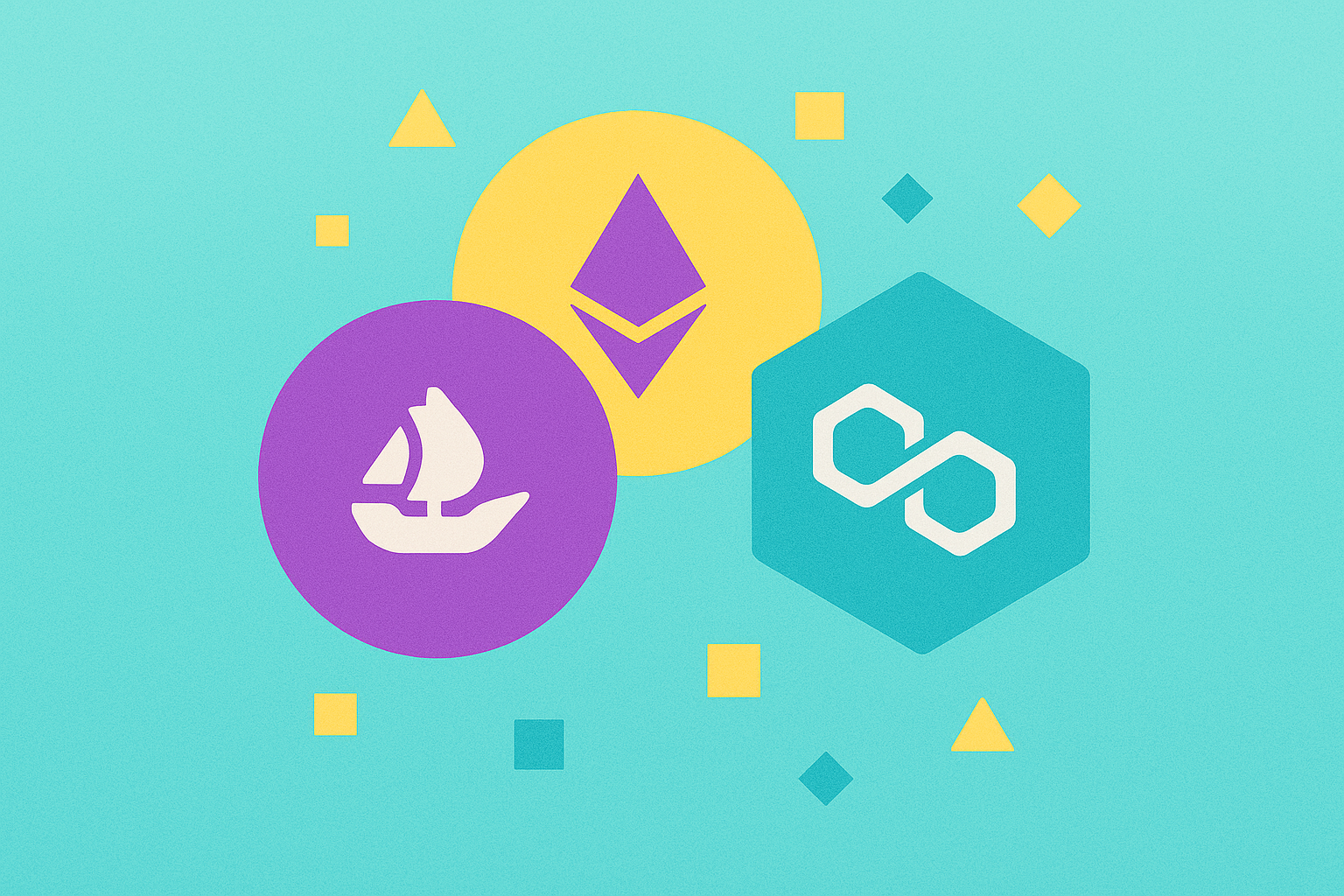
You can create and sell NFTs on numerous platforms, each with different characteristics. We will explore the most famous platforms for NFT trading: OpenSea and Rarible. While they support various cryptocurrency wallets, we will use MetaMask, the most popular wallet among cryptocurrency users.
However, what you must know about popular NFT marketplaces is that while NFT minting is free, they charge a service fee of 2.5% based on the sale amount for NFT listing. This fee goes to the platform, not the blockchain network.
Regardless of how well you understand the cryptocurrency market, reading this step-by-step guide will help you create and sell NFTs.
How to Mint NFTs for Free on OpenSea
Step 1: Install MetaMask Wallet and Create an Account
MetaMask is a popular cryptocurrency wallet that can be installed as a browser extension. If you have never used it before, first download the wallet from the MetaMask website.
If you already have a MetaMask wallet, you can import it using your secret recovery phrase. If you are a new user, you can create a wallet by following the instructions. Since device issues can occur, write down the secret phrase needed to recover your wallet using pen and paper. You also need to set a password that will be required every time you connect to a new device.
Step 2: Connect MetaMask to OpenSea
Navigate to the OpenSea marketplace and click the wallet icon in the upper right corner to connect your wallet. Select MetaMask from the wallets that appear in the popup and click confirm. Once your wallet is connected to the NFT market, you can view your profile and create your first NFT.
Step 3: Create and Mint NFTs for Free on OpenSea
Choose between a Single NFT or an NFT collection. NFT collection minting, which has a higher success rate than single NFTs, is more popular.
You can create a single NFT by clicking Create in the upper right menu. To create an NFT collection, click the account icon (upper right, next to the wallet icon), then My Collections, and then Create a Collection.
The minting process for singles and collections is quite similar. NFT collections require additional information, and after creation, you can add items or select the number of NFTs to mint. If you want to add scarcity to your NFTs, you can burn some of them later.
You must include the following details for each artwork or NFT:
- Digital artwork (image, video, audio, 3D model)
- Name
- External link
- Description
- Collection (if you have created one)
- Properties
- Unlockable content
- Supply
- Blockchain
Since we are discussing how to create and sell NFTs for free, it is very important to select Polygon instead of the default Ethereum setting.
As you already know, Ethereum is mainly used for NFT blockchains, but other blockchains that support smart contracts and NFT minting also exist. Polygon's fees are quite low and fast, making it one of the major networks suitable for NFT and cryptocurrency trading. In this case, OpenSea creators can use Polygon to create NFTs for free.
Click Create to generate your first NFT. However, it has not yet been listed for sale and will not appear in searches.
Step 4: Upload Your NFT
To list your NFT, you need to click Sell in the upper right corner. You can set your desired price.
After entering all the details, click Complete Listing. It will then appear in the sales listings.
Keep in mind that when your NFT sells, you must pay OpenSea a fee of 2.5% of the sale price.
All done! You can now create and sell NFTs on OpenSea.
What is Lazy Minting?
Lazy minting, also known as gasless minting, refers to NFTs that are minted at the time of purchase rather than at creation, allowing new artists to mint NFTs without upfront costs. Lazy minting is a feature offered by popular marketplaces including OpenSea and Rarible.
The lazy minting feature was introduced in late 2021 as gas fees soared to astronomical levels. This feature is particularly suitable for creators who are new to the market or do not want to pay expensive amounts before their work is sold.
With lazy minting, advanced technology allows the cost of NFT minting to be deferred until it is sold to the first buyer. After the sale is completed, it is actually recorded on the blockchain. Before being minted, the relevant data is stored in IPFS, a decentralized file storage system.
NFT transfer fees are also included in gas fees. This is why creators do not have to pay additional costs. A certain percentage of the purchase price is used when recording the NFT on the blockchain.
How to Mint NFTs for Free on Rarible
Rarible is another NFT marketplace famous for NFT artwork, game items, and other NFT assets. We will now introduce in detail how to sell NFTs for free on Rarible. Since you need a wallet to connect to Rarible, we will use MetaMask as we did with OpenSea.
Step 1: Install MetaMask Wallet and Create an Account
This step is the same as Step 1 on OpenSea. If you do not have a MetaMask wallet, create and download one. You must safely store your secret recovery phrase in case of device issues.
Step 2: Connect MetaMask to Rarible
Go to Rarible.com, click Sign, then Sign in with MetaMask, and connect your MetaMask wallet.
Step 3: Create and Mint NFTs for Free on Rarible
Once you have connected the marketplace from your wallet and agreed to Rarible's terms of service, click Create in the upper right corner to generate your NFT.
Click the Ethereum blockchain and select either Single or Multiple NFTs.
Clicking Multiple allows you to create an NFT collection, which is a commonly selected option. However, since we are learning how to create and sell NFTs for free, there is not much difference. Therefore, we will select Single.
Enter the following details for your new NFT:
- Digital file (image, video, audio)
- Select sale type (fixed price, bid, timed auction)
- Price
- Unlockable content
- Collection (select Rarible for free minting)
- Free minting (must be enabled)
- Name
- Description
- Royalties
You must select the Rarible collection to enable the free minting feature.
Also, make sure the free minting feature is enabled. This feature is actually the lazy minting feature. Using this feature, when your NFT is first sold, the buyer pays the gas fees required for NFT minting.
After filling in all the information and confirming its accuracy (it cannot be changed later), scroll down and click Create Item. You have minted your first NFT on Rarible.
Once the NFT is created, it can be purchased immediately on Rarible. However, until someone actually purchases the NFT, it is only minted on the Ethereum blockchain and not stored on it.
Congratulations! You have now learned how to sell NFTs for free on Rarible.
How to Sell NFTs
You now know how to sell NFTs for free on OpenSea and Rarible. Now let us explore two methods: building an NFT community and promoting your NFTs.
Building a Community
Forming an NFT community is very important and something new artists must pay attention to. OpenSea and other famous NFT marketplaces use social verification for artwork approval. OpenSea requires at least one social media account to manage and publicly display your NFT collection.
First, let your subscribers know that you are interested in NFTs. Then, share your first NFT collection as soon as you create it.
Experts recommend releasing limited edition NFT drops to increase revenue and followers.
Promoting Your NFTs
You need to know how to promote your NFTs to increase the chances of selling your work. Do not make the mistake of thinking that people will automatically buy just because you list them. You must promote your NFTs through all possible social media channels. The majority of NFT artists and creators use Twitter, Telegram, Discord, and Reddit to communicate with fans.
OpenSea and Rarible Comparison
You have now learned how to sell NFT artwork on both OpenSea and Rarible platforms. So which marketplace is better? The results will vary depending on your community, already established fan base, differentiated features, and personal preferences. Since there are differences between OpenSea and Rarible, you can utilize each according to specific features you prefer.
In conclusion, both are popular NFT marketplaces, so they have many similarities. However, a major difference is that you can mint NFTs on different blockchains. On OpenSea, you can mint on the Ethereum or Polygon blockchain, while on Rarible, you can mint on Ethereum, Flow, and Tezos. Since NFTs have received considerable attention relatively recently, both marketplaces expect more NFT creators to participate in the cryptocurrency market. Therefore, the current gap may narrow in the future.
Additionally, Rarible allows for verified badges. Artists prefer this feature, and it will serve as an important factor in choosing a platform for NFT sales.
FAQ
What is NFT and how to create your first NFT?
NFT is a non-fungible token representing unique digital assets on blockchain. To create your first NFT, prepare cryptocurrency and a wallet, connect to platforms like OpenSea, upload your digital file, set details, and confirm creation. Pay transaction fees to complete.
Which platforms support free creation and sales of NFTs?
OpenSea is a leading free platform for creating and selling NFTs without coding. Rarible also offers free NFT creation and sales capabilities. Mintable is another popular option providing cost-free NFT minting and marketplace services for creators.
How to mint and list NFTs for free on marketplaces?
Create a Collection using Collection Manager on Polygon blockchain. Upload your artwork, set pricing, and list for sale. Polygon offers zero gas fees for minting and listing, making it completely free to get started selling your NFTs.
What fees are required to create and sell NFTs (gas fees, platform fees, etc.)?
Creating and selling NFTs requires gas fees for blockchain transactions and platform fees, typically 2.5% on sales. The total cost varies based on network conditions and chosen marketplace. Initial creation often costs less on Layer 2 solutions.
How to choose the right blockchain network to reduce NFT creation costs?
Select low-fee blockchains like Solana or Polygon instead of Ethereum. Consider layer-2 solutions, monitor gas fees during off-peak hours, and research each network's compatibility with your wallet before minting.
NFT销售时如何设置价格和版税?
NFT价格由创作者自由设定。版税通常在5-10%之间,在铸币时配置,每次二次销售时自动支付给原始创作者。
What kind of digital assets (images, videos, music, etc.) do I need to create an NFT?
You can create an NFT from any unique digital asset including images, videos, music, 3D models, animations, or AI-generated art. The asset must be original and in a supported digital format. Most NFT platforms accept common file types like PNG, JPG, MP4, and MP3.
How to protect the intellectual property and copyright of my NFT works?
Register your work officially, leverage blockchain's immutable record for ownership proof, monitor for unauthorized sales, and take legal action against infringement. NFT's unique hash ensures authenticity and traceability of your digital creation.
Share
Content
How to Buy Cryptocurrency


Trending Cryptocurrencies



XZXX: A Comprehensive Guide to the BRC-20 Meme Token in 2025

Survey Note: Detailed Analysis of the Best AI in 2025

Detailed Analysis of the Best 10 GameFi Projects to Play and Earn in 2025
Kaspa’s Journey: From BlockDAG Innovation to Market Buzz

Best Crypto Wallets 2025: How to Choose and Secure Your Digital Assets

Popular GameFi Games in 2025
What is MOBI: A Comprehensive Guide to Amazon's E-Book File Format and Its Uses
What is ALMANAK: A Comprehensive Guide to Digital Calendar and Event Management Systems
Proof of Work vs Proof of Stake: Which Is Superior?
What is RWAINC: A Comprehensive Guide to Real-World AI and Networking Capabilities
The Most Promising Cryptocurrencies: Where to Invest