What is Grid Trading? A Beginner's Guide

What is Grid Trading?
Grid trading is an automated trading strategy where a trader places incremental orders below and above a set price level. This quantitative trading process is specifically designed to profit from the crypto market's inherent volatility. The strategy operates through automated orders that are executed via grid trading bots, which work tirelessly to establish and maintain a successful grid trading framework.
In this approach, the bots automatically place orders within predetermined price ranges, creating a structured trading grid that covers various potential market movements. This systematic approach allows traders to capitalize on market fluctuations without constant manual intervention. Essentially, traders set specific price ranges based on the expectation that the asset price will fluctuate within that range, then capture profits from both upward and downward price movements. This bidirectional profit-taking mechanism makes grid trading particularly effective in volatile markets where prices oscillate frequently.
The beauty of grid trading lies in its ability to remove emotional decision-making from the trading process. By establishing clear parameters upfront, traders can execute a disciplined strategy that responds systematically to market movements, regardless of short-term sentiment or fear-driven reactions.
How Does Grid Trading Work?
Every trader begins by determining trading range parameters on their chosen crypto exchange. These parameters include the upper and lower limits where they will strategically place their buy and sell orders. Grid trading executes predetermined orders designed to establish maximum profit for every trade within the price ranges of the designated grid structure.
The grid represents the area in which these trades are plotted, with price levels resembling gridlines on a structured grid. The distance between each gridline is typically uniform, creating a consistent framework for order execution. This consistency is crucial for maintaining a balanced approach to capturing profits across different price levels.
The trader sets a maximum price level above which no sell orders can execute, and establishes a minimum price level below which no buy orders are placed. Each buy order has a corresponding sell order set at levels above it, creating a paired structure that captures profit as prices move through the grid.
For example, using Ethereum (ETH), you might set buy orders at $500 increments below the current price. If ETH trades at $2,000, you would place buy orders at $1,500, $1,000, and $500. Correspondingly, sell orders would be placed at $500 increments above the current price—at $2,500, $3,000, and $3,500.
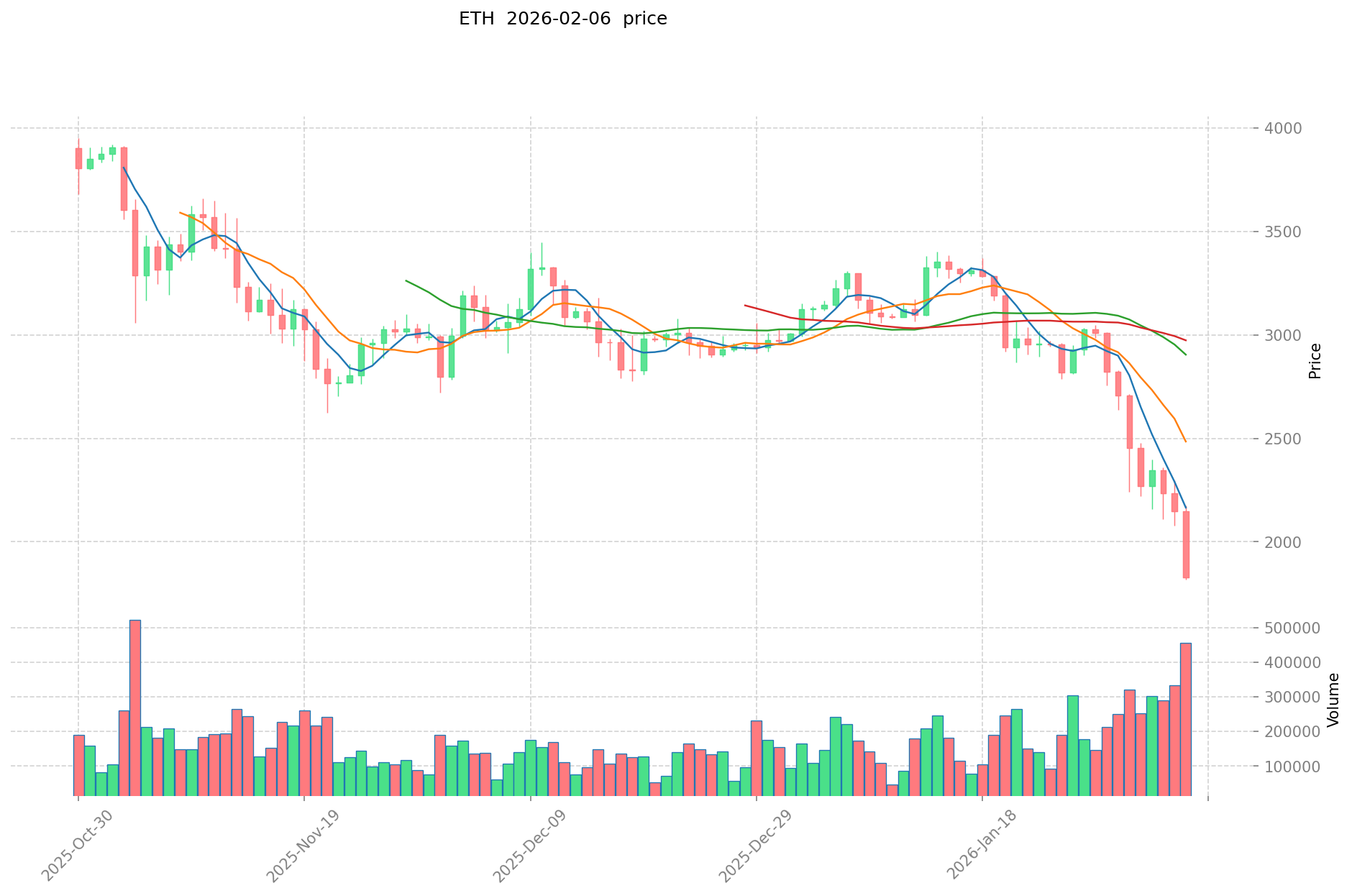 The bot automatically executes these buy and sell orders according to these predetermined parameters, capturing profits as the price oscillates through the grid levels.
This systematic approach ensures that you're consistently buying at lower prices and selling at higher prices, which is the fundamental principle of profitable trading. The automation aspect means these opportunities are captured 24/7, even when you're away from your screen.
Constructing a Trading Grid
When you plot your strategy on a chart, you will observe the grid structure begin to take form. Constructing a successful trading grid requires careful planning and consideration of several key factors. Let's explore the essential steps below.
Determine Starting Price
This step is crucial because you cannot create an effective grid without a solid baseline. By this stage, you should be familiar with the asset's price action and can determine the range in which it typically trades. Analyzing historical price data, identifying support and resistance levels, and understanding recent trading patterns will help you establish an appropriate starting point. This baseline serves as the anchor for your entire grid structure, so taking time to identify it accurately is essential for strategy success.
Choose the Interval
You need to determine the "pip" intervals you will use in your strategy. Pips refer to price increments, such as every $100 above or below the current price. For illustration, you might begin by selecting ten pips as your interval. If the asset price is $200, your buy orders would be placed at $190, $180, $170, and so on, while sell orders would be at $210, $220, $230, and beyond.
The interval size significantly impacts your strategy's performance. Smaller intervals capture more frequent trades but generate smaller profits per trade, while larger intervals capture bigger price movements but execute trades less frequently. Setting up stop-losses automatically sells positions at a predetermined price after a certain amount of loss occurs, which is crucial for minimizing losses while maximizing profits. The optimal interval depends on the asset's volatility, your risk tolerance, and your profit targets.
With-the-Trend or Against-the-Trend
Determining this approach can be challenging if you don't know what to look for, but it's a critical decision that shapes your entire strategy. Trading "with the trend" means plotting your orders in the direction of the asset's price trend. For instance, if an asset is in an uptrend with a current price of $500 and you're using ten-pip intervals, you would set buy orders at $510, $520, $530, and higher levels. This strategy requires a well-defined exit strategy when the trend continues favorably, allowing you to lock in profits before a reversal occurs.
Conversely, trading "against the trend" means taking positions in the opposite direction of the prevailing trend. This approach often results in capitalizing on corrections and retracements—temporary price movements that go against the main trend. Against-the-trend strategies can be profitable in ranging markets where prices oscillate within a defined channel, but they carry higher risk in strongly trending markets where prices may continue moving in one direction for extended periods.
Pros and Cons of Grid Trading
Grid trading proves most effective when prices move in a sideways market or within a specific range. This is because assets often fluctuate within tight ranges for extended periods, creating ideal conditions for grid strategies. While this trading approach provides immense benefits to traders, such as high customizability and access to exchange liquidity, there are still important caveats to consider. Let's examine the advantages and disadvantages below.
Pros
-
Low Entry Point: The bots enable traders to enter positions at levels they would otherwise be unable to access manually. This is often the case because constant price monitoring is required to achieve those optimal lower entry points. This advantage also works in reverse, helping traders achieve maximum selling points at peak prices. Without automation, capturing these precise entry and exit points would require round-the-clock vigilance, which is practically impossible for individual traders.
-
High Automation: The underlying trading strategy for grid trading is logical and rule-based, making it ideal for automation. This makes it easy for bots to execute their programmed tasks independent of market sentiments and trends. The result is high automation levels that perform efficiently and consistently, removing the need for constant manual intervention. This automation is particularly valuable in the 24-hour cryptocurrency market, where opportunities can arise at any time.
-
Enhanced Risk Management: When using a bot, you can directly configure settings that significantly impact your rewards and profitability. This granular control gives you more precise risk management capabilities and reduces the likelihood of highly speculative trades that could result in substantial losses. You can set parameters for maximum position sizes, stop-loss levels, and profit-taking thresholds, creating a comprehensive risk management framework.
-
Removes Emotions from Trading: Emotions such as anger, fear, and greed are powerful driving factors in crypto investments, especially in active trading. Using trading bots minimizes emotional attachment since the entire process is automated and governed by logic and predefined rules rather than emotional reactions. This emotional detachment often leads to more consistent results, as the strategy isn't derailed by panic selling during dips or greedy holding during peaks.
Cons
-
Long Waiting for Larger Timeframes: Long timeframe windows require you to hold positions for weeks or even months at a time. This extended holding period can tie up capital and potentially reduce overall profits if opportunities in other markets are missed. In this scenario, patience becomes a critical virtue, and traders must be comfortable with their capital being committed for extended periods.
-
The System Fails if the Market is Too Directional: For this strategy to succeed, there must be regular pullbacks and oscillations in the market. A strongly trending market that moves primarily in one direction will work against grid trading strategies, as losses cannot be averaged down effectively. In such scenarios, the strategy may accumulate losing positions on one side of the grid while missing the major directional move.
-
Constant Monitoring: This challenge arises primarily when a trading bot is not used. A trader needs to remain vigilant of price action, and with a market that operates 24 hours a day, manual monitoring becomes nearly impossible. This limitation inevitably causes traders to miss important timed orders and optimal entry or exit points. This is precisely why automated grid trading bots have become essential tools for implementing this strategy effectively.
Grid Trading Bots
Bots have been utilized for an extended period in various trading markets, and when it comes to the 24-hour cryptocurrency market, learning to use them effectively has become increasingly important. Grid trading bots are sophisticated trading codes or algorithms that automate the entire grid process. Traders program these bots to execute orders at specified interval prices, allowing them to step away from their screens while the bot continues working.
The benefits of using grid trading bots include faster rational-thinking decisions, extensive trade customization options, and the opportunity to continue generating profits even in quiet or ranging markets. For instance, certain major exchanges offer both internal trading bots and specialized grid bots. Some leading platforms provide the largest selection of trading bots among all exchanges that support automated trading. These bots utilize real-time data and pre-set indicators and rules to generate profitable trading signals.
You can choose from various bot configurations that suit your specific trading needs—some are designed for spot trading, others for margin trading, and specialized versions exist for futures trading. The flexibility of these tools allows traders to implement grid strategies across different market conditions and trading instruments, maximizing opportunities for profit generation.
Modern grid trading bots also offer features like backtesting, allowing you to test your strategy against historical data before deploying real capital. This risk-free testing environment helps traders refine their parameters and gain confidence in their approach before committing funds.
Setting Up a Successful Grid Trading Strategy
Grid trading has been proven to provide substantial trading advantages in both forex and cryptocurrency markets. While some risks are inherent, as with any investment approach, the advantages definitely outweigh the disadvantages when implemented correctly. The success of these strategies relies primarily on three critical components: a solid entry strategy, well-defined risk management, and strategic position sizing.
Entry strategies can be determined based on various trading indicators or the overall price pattern visible in the chart. Technical analysis tools such as moving averages, support and resistance levels, and volatility indicators can help identify optimal grid placement. As for risk management, this includes setting up your "stop loss" and "take profit" levels to protect accumulated profits and contain potential losses. These protective measures ensure that a single adverse market movement doesn't wipe out gains from multiple successful trades.
To manage your capital effectively, carefully determine the size of each trade and the total number of trades placed within each grid level. Position sizing should reflect your overall risk tolerance and account size, ensuring that no single trade or series of trades can significantly damage your portfolio. In summary, if you plan your trade orders strategically and incorporate the assistance of grid trading bots, you can considerably improve your chances of success in both volatile and ranging market conditions.
Successful grid traders also regularly review and adjust their strategies based on changing market conditions. What works in a ranging market may need modification during trending periods, and maintaining flexibility while adhering to core principles is key to long-term profitability.
FAQ
What is Grid Trading? How does it work?
Grid trading is an automated strategy that places buy and sell orders at different price levels within a set range. As prices fluctuate, it automatically executes trades to profit from price swings without requiring constant market monitoring.
Is grid trading suitable for beginners? What are its advantages and disadvantages?
Grid trading suits beginners well due to its automation and low skill requirements. Advantages include hands-off operation and reduced monitoring needs. Disadvantages include potentially lower returns and the need for patience during market consolidation periods.
How to start grid trading? What conditions are needed?
To begin grid trading, select a stable asset, set appropriate grid size and intervals based on trading costs, establish stop-loss and take-profit levels, and start with small trading amounts to practice the strategy.
What is the difference between grid trading and regular trading?
Grid trading captures short-term price fluctuations through frequent buy-low, sell-high cycles for quick profits. Regular trading or dollar-cost averaging focuses on long-term wealth accumulation by smoothing out market volatility over time. Grid trading suits sideways markets, while regular trading works across all market conditions.
What are the risks of grid trading? How to reduce risks?
Grid trading risks include sudden market volatility causing forced liquidations. Reduce risks by setting appropriate grid ranges, avoiding too narrow or wide settings. Choose stable assets and monitor market conditions regularly to optimize strategy parameters.
Can grid trading be used in both cryptocurrency and stock markets?
Yes, grid trading works in both cryptocurrency and stock markets. However, it performs best in cryptocurrency due to higher volatility. Grid trading automates entries and exits across price ranges, reducing emotional decisions in both markets, though market conditions vary.
Share
Content
How to Buy Cryptocurrency


Trending Cryptocurrencies



Newbie Guide: Easily Profit from Automated Trading on Gate.com

xStocks on Gate: A 2025 Guide to Buying TSLAx and NVDAx

What is a Liquidity Sweep

Mastering Tranchess (CHESS) Price Prediction: MACD & RSI Technical Analysis Guide

What Is Sentiment in Trading? How It Shapes Market Moves

SKYAI Price Analysis: MACD and RSI Signals Reveal Bearish Short-Term Trend

7 Best Tron Wallets for Storing TRX

What is INFRA: A Comprehensive Guide to Infrastructure as a Service and Its Impact on Modern Business

What is DYP: A Comprehensive Guide to Understanding Decentralized Yield Protocols
2026 MLP Price Prediction: Expert Analysis and Market Forecast for Midstream Energy Infrastructure Growth

What is CRE: A Comprehensive Guide to Commercial Real Estate Investment and Development