Proof-of-Work explained in straightforward terms

2026-02-03 17:38:25
Bitcoin
Blockchain
Crypto Tutorial
Mining
PoW
Article Rating : 4
67 ratings
Discover Proof of Work: an in-depth overview of the PoW mechanism, how blockchain consensus algorithms function, the distinctions between PoW and PoS, key mining concepts, and which cryptocurrencies utilize this protocol. This is a thorough guide designed for beginners.
Proof-of-Work explained in straightforward terms

What Is PoW in Plain Language

PoW, or Proof-of-Work, is a consensus algorithm central to many cryptocurrencies. The term PoW stands for Proof-of-Work, which literally means “proof of work.”

PoW facilitates the mining of new blocks in blockchain networks, playing a crucial role in transaction verification and validating blockchain data across decentralized participants’ computers. Because the process is distributed, every network node can independently confirm the accuracy of the work performed.

One of Proof-of-Work’s most significant achievements is solving the double-spending problem—preventing the same digital asset from being used twice. PoW also effectively blocks other types of abuse in cryptocurrency networks, providing a high level of security and system reliability.

Core Principle of Proof-of-Work

PoW coordinates the operation of decentralized networks. The system relies on miners—specialized market participants who connect high-performance hardware to the cryptocurrency network and solve complex mathematical problems for rewards.

PoW system workflow:

  • Users initiate transactions and set a fee, which serves as a miner’s reward. The fee size determines how quickly the transaction is processed
  • Miners’ hardware executes intensive cryptographic calculations to verify and process transactions. If all transaction parameters meet network rules, the transaction is included in a new block
  • The new block is added to the cryptocurrency blockchain, ensuring the transparency and immutability of transaction history

It’s important to note that, in PoW systems, a miner’s income depends directly on computational power. The higher the miner’s hash rate, the greater the chance of discovering a new block and earning a reward.

Who Invented PoW

Proof-of-Work has a long and storied history. Programmers Cynthia Dwork and Moni Naor first introduced the idea in a 1993 paper aimed at countering spam and denial-of-service attacks.

In 1997, Adam Back, a programmer and cryptographer, implemented the concept in Hashcash—a system designed to combat email spam by requiring senders to complete a computational task before sending messages.

By 1999, Markus Jakobsson and Ari Juels published a paper that defined the concept more precisely and gave it the name Proof-of-Work. Their research provided the theoretical groundwork for further technological advances.

In 2009, an anonymous developer or group known as Satoshi Nakamoto launched Bitcoin, a groundbreaking cryptocurrency built on the Proof-of-Work algorithm. This milestone ushered in a new era in financial technology and propelled PoW to global prominence.

What Does Proof-of-Work Mining Mean?

In cryptocurrency, mining is the process of generating digital assets through computational operations. In PoW-based systems, miners compete continuously to create new blocks and earn rewards.

Key features of Proof-of-Work mining:

  • The difficulty of mining adjusts dynamically based on overall network activity. As more miners join, computational challenges become tougher, ensuring consistent block generation times
  • PoW mining creates a hardware “arms race.” Miners must invest in increasingly powerful equipment to stay competitive. Failing to upgrade leads to a smaller share of the network’s hash rate, lower profits, or exit from mining altogether
  • Mining requires significant investments not just in hardware, but also in electricity, cooling systems, and ongoing maintenance

PoW Criticism

Proof-of-Work faces strong criticism from environmental groups and segments of the crypto community, primarily due to its high energy consumption. Miners are locked in an ongoing race for computational power, driving constant hardware upgrades and exponential electricity use. The carbon footprint of large PoW networks rivals that of entire countries.

There’s also concern about the centralization of PoW mining. Competitive hardware demands major financial investment, creating a high entry barrier for regular users. As a result, most PoW mining has concentrated in large companies and industrial-scale farms—contrary to cryptocurrency’s original decentralized vision.

Another criticism is the geographic clustering of mining operations in regions with cheap electricity, posing security risks if there’s coordinated action or regulatory intervention.

Which Cryptocurrencies Use Proof-of-Work?

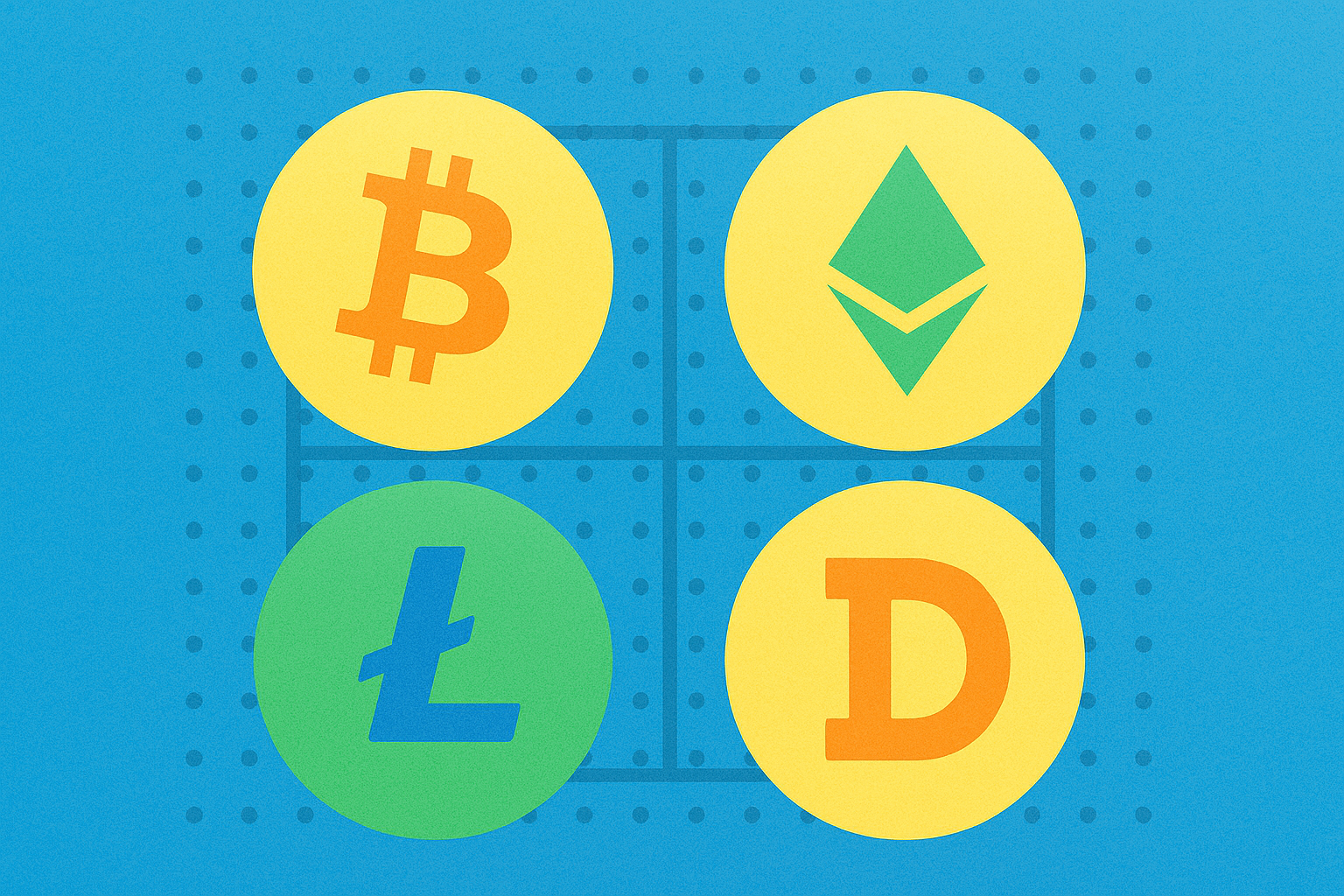
PoW is the core consensus algorithm for Bitcoin—the world’s first and most valuable cryptocurrency. In 2022, Ethereum transitioned from Proof-of-Work to Proof-of-Stake to lower energy consumption and boost scalability.

Other notable PoW cryptocurrencies include:

  • Dogecoin—a coin originally created as a parody but now widely recognized with an active community
  • Ethereum Classic—a fork of the original Ethereum that continues to use PoW
  • Litecoin—one of the earliest altcoins, often called “digital silver” alongside Bitcoin’s “digital gold”
  • Monero and Zcash—cryptocurrencies focused on transaction privacy
  • Bitcoin Cash and Bitcoin SV—Bitcoin forks that emerged from community disputes over protocol development

Each of these coins has its own PoW implementation and unique features, but all rely on consensus via proof of completed computational work.

FAQ

What Is Proof-of-Work? Explain Simply—How Does PoW Work?

Proof-of-Work (PoW) is a consensus mechanism where nodes solve complex mathematical puzzles to validate transactions. Successful nodes earn rewards and create new blocks. PoW deters fraud by making blockchain manipulation costly and difficult.

What’s the Difference Between Proof-of-Work and Proof-of-Stake?

Proof-of-Work relies on miners solving challenging mathematical problems, while Proof-of-Stake uses token staking by holders. PoW consumes more energy; PoS is more efficient and environmentally friendly.

Why Does Bitcoin Use Proof-of-Work?

Bitcoin uses Proof-of-Work to secure the network from attacks, establish decentralized consensus, and ensure the blockchain remains immutable without centralized control.

How Does Proof-of-Work Mining Validate Transactions?

Miners solve complex puzzles to verify transactions. The first to find a solution earns a reward and adds a new block to the blockchain. This process confirms all network operations.

Is Proof-of-Work Worth the Electricity?

Yes. Proof-of-Work provides maximum blockchain security and decentralization. Electricity costs are an investment in network reliability and protection against attacks. The value of Bitcoin and other PoW networks justifies these expenditures.

How Do I Participate in Proof-of-Work Mining?

Join a mining pool, buy specialized hardware (ASIC or GPU), install mining software, and start solving cryptographic puzzles. Block rewards decrease over time due to halving.

* The information is not intended to be and does not constitute financial advice or any other recommendation of any sort offered or endorsed by Gate.

Related Articles
How to Mine Ethereum in 2025: A Complete Guide for Beginners

How to Mine Ethereum in 2025: A Complete Guide for Beginners

This comprehensive guide explores Ethereum mining in 2025, detailing the shift from GPU mining to staking. It covers the evolution of Ethereum's consensus mechanism, mastering staking for passive income, alternative mining options like Ethereum Classic, and strategies for maximizing profitability. Ideal for beginners and experienced miners alike, this article provides valuable insights into the current state of Ethereum mining and its alternatives in the cryptocurrency landscape.

2025-05-09 07:23:30
Exploring the Crypto World: The Ultimate Mining Guide and Profit Secrets

Exploring the Crypto World: The Ultimate Mining Guide and Profit Secrets

Cryptocurrency mining has evolved into one of the most exciting frontiers in the financial technology landscape. Whether you’re a seasoned investor or a newcomer, understanding the ins and outs of mining is essential to unlocking the secrets behind digital asset creation and profitability. In this comprehensive guide, we’ll explore everything from the fundamentals of mining to the trends shaping the industry—helping you build your very own digital gold factory. And for those who want to diversify their crypto journey, platforms like Gate.com provide a seamless integration of mining tools and exchange services to support your strategy.

2025-04-17 09:44:58
From Zero to Hero – Mining Technology and Trends Analysis

From Zero to Hero – Mining Technology and Trends Analysis

Explore the evolution of mining technology, highlighting key innovations and analyzing current industry trends. It offers insights into how emerging tools and techniques are transforming the sector from traditional practices to high-efficiency operations.
2025-04-17 10:22:41
Mining Strategies – Building Your Digital Gold Factory

Mining Strategies – Building Your Digital Gold Factory

Explore effective mining strategies to build your digital gold factory. Learn how to optimize performance, reduce costs, and harness cutting-edge technology for success in the evolving digital mining landscape.
2025-04-17 10:26:10
Pi Network (PI): Mobile-Friendly Cryptocurrency for Global Adoption

Pi Network (PI): Mobile-Friendly Cryptocurrency for Global Adoption

Deep dive into how Pi Network lowers the threshold of crypto assets and promotes global user participation and blockchain economy popularization through mobile mining and community trust mechanism.
2025-05-21 06:55:22
Pi Network 2025: Latest Mining Updates and Mainnet Launch Progress

Pi Network 2025: Latest Mining Updates and Mainnet Launch Progress

Pi Network is set to achieve a significant breakthrough in 2025 with the successful launch of its Mainnet, sparking a surge in the cryptocurrency market. The latest Pi crypto news indicates that Pi Network mining updates are leading to an ecological explosion, with user numbers increasing by 300%. Exchanges like Gate are supporting the rise in Pi coin value prediction, and the adoption of Pi cryptocurrency continues to expand. However, the surge in exchange balances also raises potential risks, and the subsequent development following the Pi Network mainnet launch is worth paying attention to.
2025-06-24 07:28:42
Recommended for You
2026 TURBOS Price Prediction: Expert Analysis and Market Forecast for the Next Bull Run

2026 TURBOS Price Prediction: Expert Analysis and Market Forecast for the Next Bull Run

This comprehensive analysis examines TURBOS, a non-custodial DEX on the Sui blockchain, providing expert price forecasts and investment strategies through 2031. Currently trading at $0.00013 with a market cap of $860,600, TURBOS faces significant volatility after declining 94.48% from its 2023 peak. The article evaluates key drivers including ecosystem development, regulatory environment, and market sentiment, presenting price predictions ranging from $0.0001 to $0.00029 by 2031 under various scenarios. Investment strategies cover long-term holding, active trading, and risk management frameworks suitable for different investor profiles. Critical analysis identifies extreme volatility, limited liquidity across 2 exchanges including Gate, and competitive DEX pressures as primary risks. The guide recommends conservative allocation strategies, secure storage via Web3 Wallet, and dollar-cost averaging approaches. Suitable for investors evaluating early-stage DeFi infrastructure exposure within the Sui ecosystem.
2026-02-03 20:32:56
2026 ROUTE Price Prediction: Expert Analysis and Market Forecast for the Next Bull Run

2026 ROUTE Price Prediction: Expert Analysis and Market Forecast for the Next Bull Run

This comprehensive analysis examines ROUTE token's price trajectory and investment potential from 2026 to 2031. As Router Protocol's native infrastructure token for cross-chain solutions, ROUTE is currently trading near $0.001347 with moderate market sentiment indicating extreme fear conditions—potentially creating buying opportunities for contrarian investors. The article synthesizes historical price evolution, supply-demand dynamics, and ecosystem development to provide professional price forecasts: ranging from $0.00107-$0.00172 in 2026, with mid-term expectations reaching $0.00154-$0.0023 by 2028-2029, and long-term targets approaching $0.003 by 2031. Key drivers include technological upgrades, ecosystem expansion, and cross-chain adoption, balanced against significant risks including limited liquidity across 4 exchanges, concentrated token holdings (46.98% controlled by top 5 addresses), and competitive pressures in the bridge infrastructure sector. The analysis provides stratified investment recommendat
2026-02-03 20:31:42
2026 DCK Price Prediction: Expert Analysis and Market Forecast for Decentralized Finance Token

2026 DCK Price Prediction: Expert Analysis and Market Forecast for Decentralized Finance Token

This comprehensive analysis examines DexCheck (DCK), an AI-powered blockchain analytics platform token, providing expert price forecasts from 2026 to 2031. The article reviews DCK's market trajectory from its $0.014 launch price in 2023 to its current $0.001298 valuation, analyzing key factors including market demand, institutional participation, and ecosystem development. Detailed price predictions range from conservative ($0.00087-$0.0013 in 2026) to transformative scenarios (58% growth potential by 2031). The guide offers tailored investment strategies for beginners, experienced traders, and institutions, emphasizing risk management through asset allocation, portfolio diversification, and secure storage via Gate Web3 Wallet. Critical risk assessments address market volatility, limited liquidity, regulatory uncertainty, and competition. Ideal for crypto investors seeking data-driven insights into DCK's long-term investment potential and practical trading approaches.
2026-02-03 20:31:30
Best 2 Platforms for Learn and Earn Programs

Best 2 Platforms for Learn and Earn Programs

This comprehensive guide explores how to earn cryptocurrency through learn-to-earn programs, innovative platforms that reward users with crypto tokens for completing educational modules. The article evaluates top platforms using rigorous methodology, assessing educational quality, reward value, and user accessibility to help learners identify the best options. It explains how these programs work through interactive video courses, quizzes, and affiliate opportunities that generate both direct rewards and passive income. The guide addresses key considerations including advantages like free education and practical crypto experience, disadvantages such as market volatility and geographical restrictions, and important tax implications across different jurisdictions. Whether you're a beginner seeking to build crypto knowledge or an experienced user exploring passive income opportunities on Gate or other platforms, this resource provides actionable strategies and detailed FAQs to maximize your learning-to-earning po
2026-02-03 20:28:31
Is DarwiniaRing (RING) a good investment?: A Comprehensive Analysis of Price Potential, Market Fundamentals, and Risk Factors for 2024

Is DarwiniaRing (RING) a good investment?: A Comprehensive Analysis of Price Potential, Market Fundamentals, and Risk Factors for 2024

This comprehensive analysis examines whether DarwiniaRing (RING) represents a viable investment opportunity in 2024-2031. RING, the native utility token of Darwinia Network, functions as a cross-chain bridge connecting Polkadot parachain ecosystems with external blockchains, serving as gas for transactions and enabling governance participation through staking. Currently trading at $0.0004984 with a market capitalization of $850,200.86, RING has declined 99% from its 2021 all-time high of $0.30361, reflecting broader cryptocurrency market dynamics. The token faces multiple considerations: limited trading liquidity ($12,756.74 daily volume), 81.24% circulating supply ratio creating defined scarcity, and competitive pressures within cross-chain infrastructure. Investment suitability varies by profile—conservative investors should maintain 0.5-2% portfolio allocation using Gate for price monitoring, while active traders can capitalize on volatility through technical strategies. Success depends on Darwinia Network
2026-02-03 20:23:54
Is Telos (TLOS) a good investment?: A Comprehensive Analysis of Price Performance, Technology, and Future Prospects

Is Telos (TLOS) a good investment?: A Comprehensive Analysis of Price Performance, Technology, and Future Prospects

This comprehensive guide evaluates whether Telos (TLOS) represents a sound investment opportunity by analyzing its market performance, technological fundamentals, and future potential. The article examines TLOS's current trading status at $0.01658 with an $854,112 market cap, tracing its historical price trajectory and recent 86.99% year-over-year decline. It explores core investment factors including the token's unlimited supply model, ecosystem governance features, and positioning as a third-generation blockchain platform for scalable distributed applications. Detailed price projections span 2026-2030 across conservative, neutral, and optimistic scenarios, supported by technical analysis and market data. The guide provides actionable investment strategies tailored to different investor profiles—from beginners using dollar-cost averaging to active traders and institutional participants. Critical risk assessment covers market volatility, regulatory uncertainty, technical vulnerabilities, and liquidity constra
2026-02-03 20:23:11