


The era of Ethereum brushing Visa has arrived! EIL ends the nightmare of cross-chain authorization
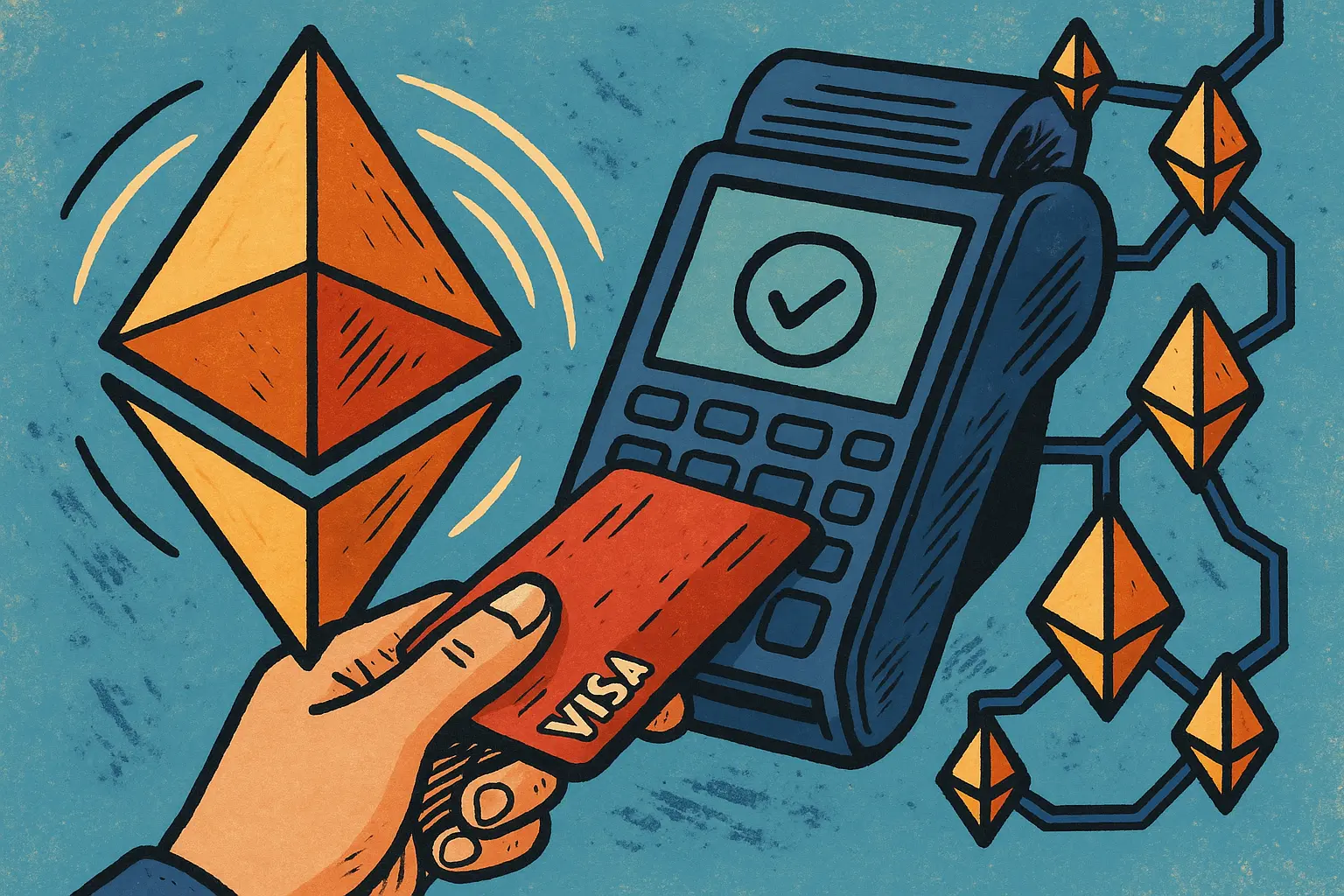
Ethereum Foundation accounts and the Chain Abstraction Team have launched the Ethereum Interoperability Layer (EIL), a multi-chain interoperability framework based on the ERC-4337 account abstraction standard. It addresses the three major pain points of cross-chain interactions: repeated authorizations, gas fee shortages, and long waiting times. Using Merkle tree technology, it enables single-signature multi-chain execution, where XLP cross-chain liquidity providers staking 1 ETH can be penalized without permission.
The Fragmented Ethereum: Our Daily Cross-Chain Nightmare
If you’re a deep Web3 user, you’ve likely experienced this “soul-crushing” dilemma: assets worth tens of thousands of dollars sitting in your wallet, but due to a missing $2 native gas fee on the Base chain, you watch a popular NFT mint fail; or to move funds from Arbitrum to Optimism, you have to act like a “digital mover,” shuttling between various third-party bridges, enduring long confirmation waits, tedious authorization clicks, and constantly worrying about bridge hacks.
This fragmented experience is a true reflection of the current Ethereum ecosystem. Despite the boom of Layer 2 networks, Ethereum hasn’t become a supercomputing platform but has split into isolated “data islands.” For users, each L2 is like a country requiring a new “visa.” This fragmentation not only drains emotional value but also makes Ethereum appear clumsy and friction-prone when facing Solana, a “single-chain powerhouse.”
The “three sins” of cross-chain—authorization fatigue, gas scarcity, and settlement delays—stem from Ethereum lacking a native, unified “dispatch hub.” Against this backdrop, the Ethereum Foundation’s accounts and Chain Abstraction Team have introduced the Ethereum Interoperability Layer—EIL. This is not just a technical protocol but a strategic correction to restore a “single experience” for Ethereum. Its goal: make cross-chain operations as simple as swiping a Visa card—users sign once, and the protocol handles the complexity underneath.
From a competitive perspective, Solana’s monolithic architecture offers seamless user experience. Users on Solana can interact with any dApp without switching networks, preparing multiple gas tokens, or using bridges. This “plug-and-play” experience gives Solana an edge in attracting new users. While Ethereum’s Layer 2 strategies have technically scaled, the fragmented user experience remains a fatal flaw. EIL is Ethereum’s strategic response to Solana’s challenge.
EIL is Not a New Chain: It’s Ethereum’s Universal Translator
Many mistake EIL for another chain or a new relay network. In fact, EIL is a multi-chain interoperability framework based on ERC-4337 (account abstraction). It’s a “experience enhancement” for Ethereum’s core architecture. Strategically, it’s crucial to clarify EIL’s precise position in the tech stack. It differs fundamentally from “intent” protocols like Li.Fi or CowSwap.
Intent protocols handle “price discovery” and “route optimization” (e.g., finding the cheapest swap path), while EIL focuses on executing known calls. Simply put, intent protocols are like travel agencies helping you buy tickets; EIL is like the global civil aviation system handling passports, boarding, and baggage transfer. It doesn’t participate in price bidding but ensures your cross-chain instructions are executed trustlessly.
To illustrate: the old model (cross-chain = going abroad) requires currency exchange (asset transfer), visa applications (re-authorization on each chain), and adherence to local traffic rules (buying native gas). EIL (cross-chain = swiping Visa) allows you to use your “Visa card” (your smart wallet) once to sign (submit UserOp), and the global network (EIL protocol) automatically handles exchange rates and cross-chain verification. As a cardholder, you are unaware of the underlying chains.
Old Cross-Chain vs EIL Experience Comparison
Authorization steps:
Old model: sign on each chain;
EIL: one signature covers all chains.
Gas preparation:
Old model: pre-purchase native tokens for each chain;
EIL: pay with any token.
Waiting time:
Old model: 7-14 days challenge period;
EIL: minutes or even seconds.
Security risks:
Old model: relies on custodial bridges;
EIL: secured via staking and slashing mechanisms.
This experience upgrade is not just incremental but transformative. When cross-chain friction approaches zero, Ethereum’s ecosystem will evolve from “multiple independent L2s” into a “single global computing platform.” This fusion will unleash enormous composability potential—DeFi protocols can seamlessly access assets and liquidity across chains, enabling complex financial products currently impossible.
Merkle Tree Magic & XLP Game Theory
To bring the “swipe Visa” experience to Ethereum, we need to solve the engineering trade-off between efficiency and security. EIL employs three black technologies, implementing trust minimization through game theory. The core feature is batch execution—one signature for multiple chains (Batch of Batches). Traditionally, cross-chain interactions across three chains require three signatures. Under EIL, wallets use Merkle trees to bundle complex cross-chain instructions into a “master key.”
Wallets construct UserOperation objects on different chains, integrated into a Merkle tree. Users sign only the root, and this authorization can be synchronized across multiple chains. This reduces operation time from 10 minutes to 10 seconds, transforming dApp interactions from “chain-hopping” to “multi-chain collaboration.” Technically, Merkle trees are cryptographic data structures that efficiently verify large data sets’ integrity.
The second core feature is cross-chain liquidity providers (XLP)—a 24/7 refueling station. XLPs are not traditional intermediaries but “funding workers.” When you initiate a request on the source chain, XLPs pre-fund assets or gas on the target chain and issue a cryptographic voucher. The key decentralization point: once users receive the voucher, it becomes self-executing. XLPs do not control your account—they only supply “ammunition.”
Game theory and slashing mechanisms are the soul of EIL’s security. XLPs must stake 1 ETH on Ethereum L1 as collateral. If they issue false vouchers or abscond with funds, anyone can submit proof for permissionless slashing. This economic penalty system is more reliable than trusting anyone’s integrity. The 1 ETH stake (~$2,000–$3,000) is enough to deter small-scale malicious acts but not so high as to discourage participation.
The third core feature is maximum security and privacy. Many existing “solver” models pose invisible risks: when you submit intent, your wallet address, IP, and intent details are exposed, risking privacy breaches and regulatory scrutiny (e.g., OFAC). EIL insists on “decentralization” and “native” operation: preventing IP leaks (wallets directly construct and submit transactions without centralized servers) and avoiding 7-day delays (using atomic swaps and local execution for secure, minutes-level cross-chain).
Pectra Upgrade & EIP-7702: The 2026 Tech Turning Point
EIL is not a distant promise. According to the latest Ethereum Foundation updates, the mainnet is expected to launch in early 2025 (within 3-4 months). 2026 will be the real turning point when the ecosystem matures. The key milestones are the Pectra upgrade and EIP-7702. In 2026, with Pectra’s widespread adoption, EIP-7702 will unlock powerful capabilities.
EIP-7702 allows ordinary externally owned accounts (EOA, like your MetaMask wallet) to temporarily “transform” into smart contract accounts during transaction execution. This means you won’t need to switch wallets to enjoy EIL’s extensive authorization and gas payment features. The Ethereum Foundation’s SDK will enable mainstream wallets to adapt quickly. Coupled with Vitalik’s favored L1-zkEVM verification, Ethereum will achieve true “synchronous composability.”
From the deployment timeline, the early 2025 launch may only include core features, with full experience only after Pectra’s upgrade in 2026. This phased rollout reduces technical risk but also means the complete “Visa experience” will take at least a year. For users suffering from cross-chain frustrations, this wait is worthwhile.
Ethereum’s founder Vitalik Buterin recently offered a profound insight: the era of “Branded Shards” (L2 as branded slices) is ending. Previously, due to slow L1 scaling, L2s had to establish their own brands to attract traffic; now, with improved L1 performance and EIL’s implementation, L2’s role will fundamentally change.
L2’s new mission shifts from “scaling” to “value addition.” After EIL unifies interoperability, L2s will no longer compete on “scaling” (which becomes baseline) but will focus on providing privacy, application-specific efficiency, ultra-low latency, or built-in oracles. Ethereum’s “return” is marked by EIL’s emergence—transforming Ethereum from a “set of unrelated chains” back into a “single, unified global operating system.”
Asset liquidity will explode. Removing friction costs will allow capital to flow like water across shards, massively boosting DeFi efficiency. Ending the “island era,” user experience will break free from the constraints of underlying chains, entering a true “application era.” Users will only care about which app they use, not which chain it’s on.
We are at a pivotal moment that will shape the next decade of technology. EIL is not just a code rewrite; it’s a reaffirmation of Ethereum’s decentralized values—refusing to compromise on centralization for the sake of ultra-smooth experience. One day in 2026, when you casually open your wallet and perform a complex cross-chain transaction across four chains without noticing, remember: it’s EIL behind the scenes turning the “cross-chain nightmare” into an invisible cloud. The “Visa era” of Ethereum is within reach.
Related Articles
Vitalik Buterin: Ethereum acts as the settlement layer for AI, but there are significant risks behind it
BitMine's book loss is nearly $8 billion, yet BlackRock increased its holdings by 165.6%. Why is BMNR still being supported?
Ethzilla Launches First Tokenized Aviation Asset on Ethereum
"Maqi" Ethereum long positions are down to only 261 ETH, with a loss of over $760,000 in the past week.
Robinhood Launches Ethereum Layer-2 Testnet, Expands Blockchain Vision
Greeks.live: BTC and ETH options worth nearly $2.9 billion settle today, with put options dominating