


El Salvador's BTC holdings evaporate by $300 million! IMF loan remains uncertain, debt default risk increases
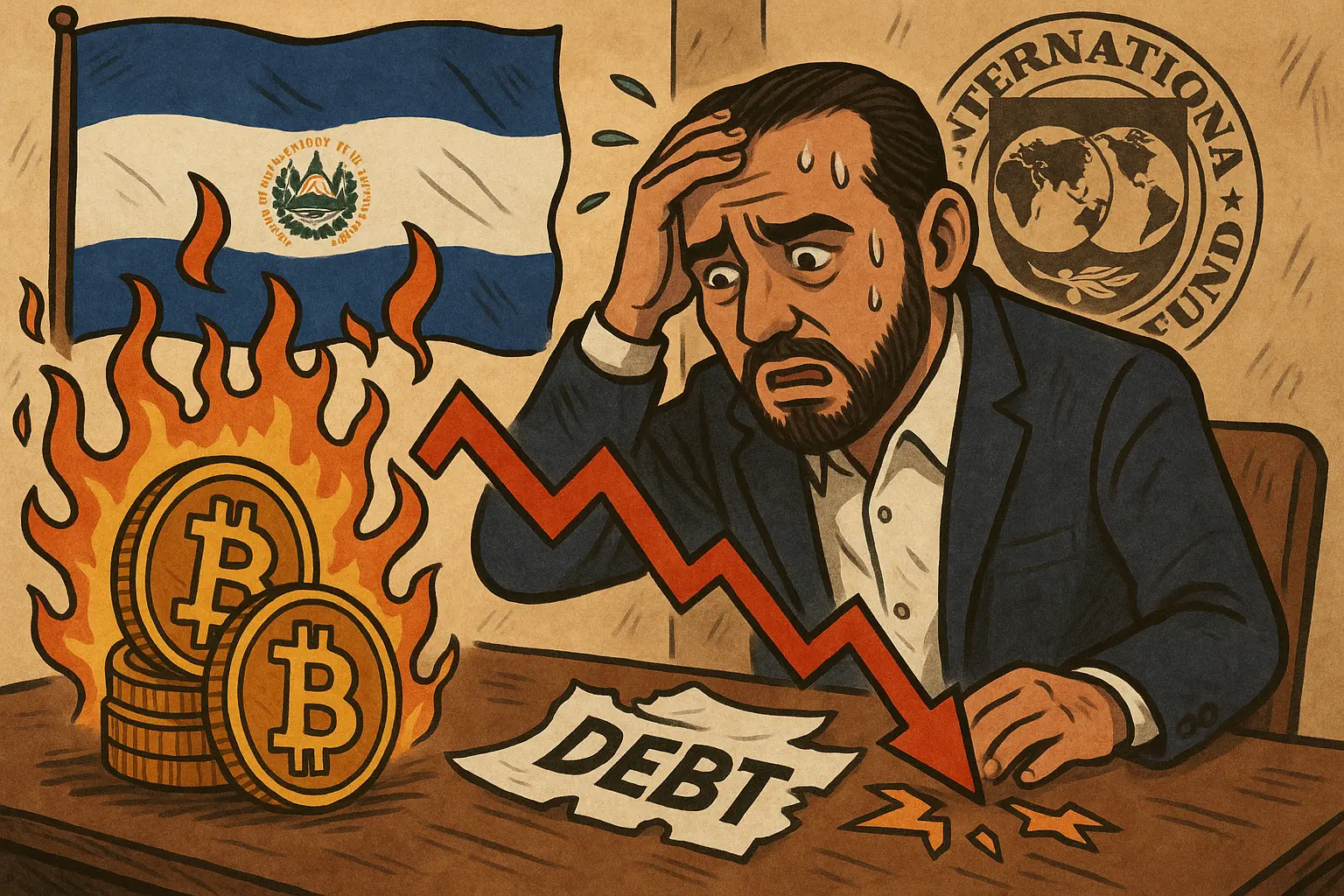
The value of Bitcoin holdings held by El Salvador has significantly decreased, while the credit default swap (CDS) has risen to its highest level in five months, sparking concerns over the country’s IMF loan negotiations. Bloomberg reports that the reserve value has fallen from a peak of approximately $800 million in October 2025, losing nearly $300 million in just four months.
El Salvador’s Bitcoin Holdings Drop to $500 Million, Falling into a Fiscal Black Hole
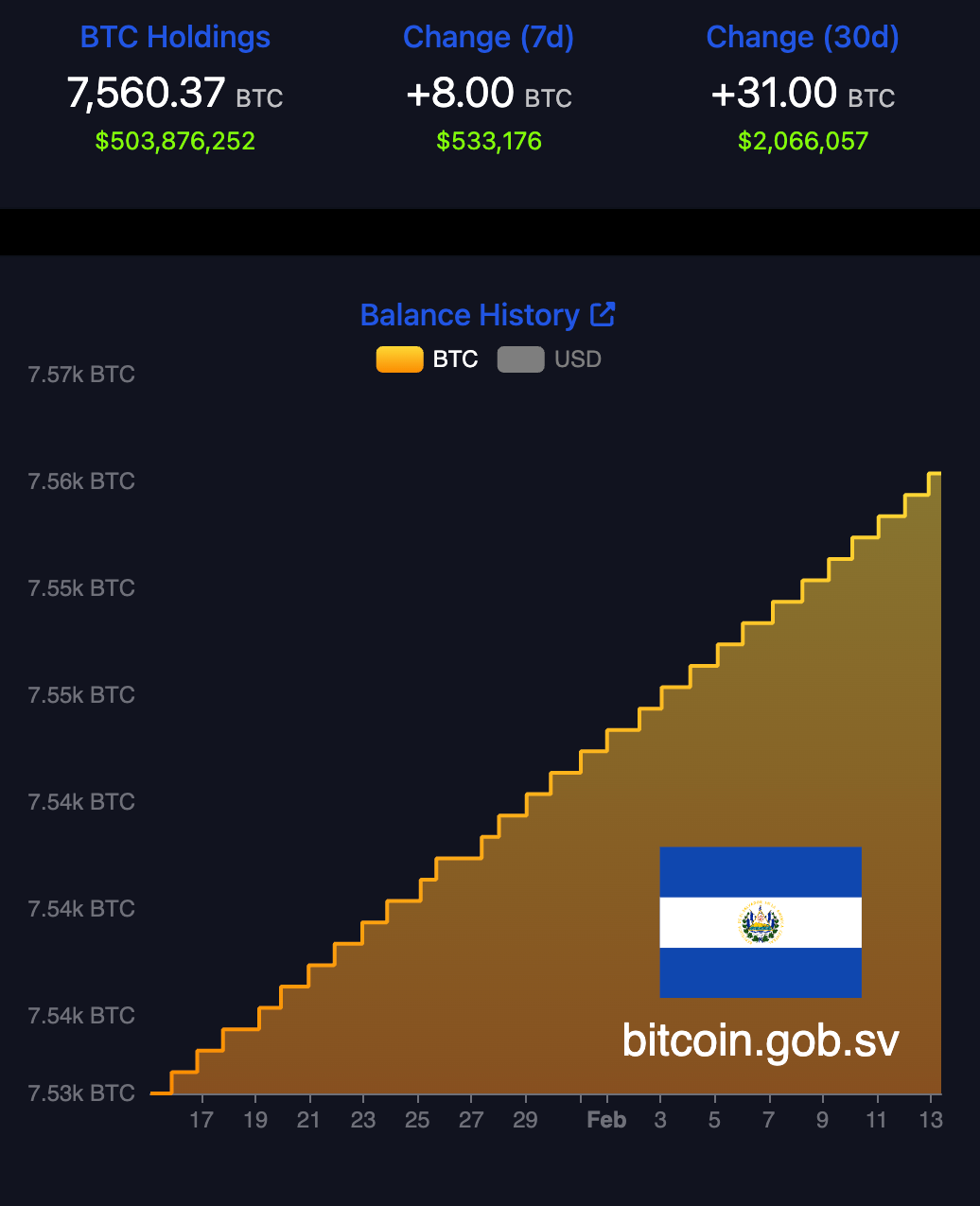
(Source: El Salvador Bitcoin Office)
According to the latest data from the El Salvador Bitcoin Office, the country’s Bitcoin reserve stands at 7,560 coins, valued at approximately $503.8 million. Bloomberg reports that this reserve’s value has declined from its October 2025 peak of about $800 million, shrinking by nearly $300 million in just four months. Bukele is a staunch supporter of Bitcoin, consistently purchasing one coin daily. However, this strategy increases the country’s exposure to market volatility.
Falling from $800 million to $500 million represents a loss of about 37.5%. For a nation, a $300 million loss is catastrophic. El Salvador’s annual GDP is around $30 billion, so $300 million accounts for about 1% of GDP. If these funds had been used for education, healthcare, or infrastructure, they could have generated tangible social benefits. Instead, they evaporated simply because of Bitcoin speculation.
Bukele’s “buy one coin every day” strategy was praised as visionary during a bull market but became a laughingstock during a bear market. This cost-averaging approach, while potentially smoothing costs over the long term, can deplete fiscal resources in the short term. If Bitcoin continues to decline, El Salvador’s losses could further expand. Even more concerning, the rigidity of this strategy—committing to buy one coin daily—limits government flexibility to respond, preventing stops even if market conditions worsen.
Three Major Risks of El Salvador’s Bitcoin Investment
Market Risk: A $300 million decline; if Bitcoin drops to $50,000, another $100 million loss could occur
Fiscal Risk: Daily purchases drain foreign exchange reserves, impacting debt repayment capacity
Political Risk: Failure of Bukele’s bet could undermine his political position
In contrast, Bhutan recently sold $22.4 million worth of Bitcoin. The stark difference in strategies reflects their fundamentally different risk perceptions. Bhutan’s Bitcoin comes from mining operations, which have generated over $765 million in profits since 2019. However, the 2024 halving has sharply increased mining costs, squeezing profit margins and reducing yields. Currently, Bhutan appears to be selling some Bitcoin, while El Salvador continues to prioritize long-term accumulation.
IMF Loan Standoff and $450 Million Bond Maturity Pressure
El Salvador’s increasing crypto investments have complicated its relationship with the IMF. The government’s ongoing Bitcoin purchases, coupled with delays in pension reform, have made the agreement with the IMF more complex. The IMF has expressed concerns about Bitcoin’s potential impact on fiscal stability. If the IMF agreement stalls, it could weaken one of the key supports for El Salvador’s sovereign debt recovery.
According to official IMF documents, on February 26, 2025, the IMF approved a 40-month Extended Fund Facility (EFF), releasing about $1.4 billion. The first review concluded in June 2025, with $231 million disbursed. However, due to the government’s failure to publish pension system analysis reports, the second review has been delayed since September. Despite multiple warnings from the IMF, El Salvador continued increasing its Bitcoin reserves during this period.
The third review is scheduled for March, with each review tied to additional loan disbursements. “We believe that continued Bitcoin purchases could pose some challenges to the IMF’s assessment. If the anchoring mechanism provided by the IMF disappears, market reactions could be very negative,” said Jared Lu, a manager of William Blair’s emerging markets debt fund.
Meanwhile, concerns about El Salvador’s fiscal outlook are intensifying in the bond markets. The CDS spread has risen to its highest in five months, reflecting growing investor worries about the country’s repayment ability. Bloomberg data shows that El Salvador faces $450 million in bond maturities this year, with nearly $700 million due next year.
The $450 million bond maturity is a significant test for El Salvador. If the IMF loan is frozen due to Bitcoin issues, the country will need to raise funds through other channels—such as issuing new debt (which would be costly given the rising CDS spreads), cutting government spending (potentially sparking social unrest), or forcibly selling Bitcoin at a loss. All options are painful.
The Critical Moment for the Bitcoin Nation Experiment
El Salvador’s Bitcoin policy is now intertwined with critical fiscal negotiations and IMF talks. The upcoming IMF assessment and the country’s debt repayment plans will significantly influence investor confidence and debt sustainability. Despite the decline in reserves, the country has diversified its portfolio; last month, amid macroeconomic tensions, it purchased $50 million worth of gold as a safe haven.
Bukele’s radical experiment of making Bitcoin legal tender was once hailed as a major victory and historic breakthrough for the crypto industry, demonstrating that Bitcoin could be more than a speculative asset and could become part of a national monetary system. However, the crash from $126,000 to $66,000 exposed the risks of this experiment. For retail investors, a 50% loss is a personal financial blow; for the country, a $300 million loss impacts the well-being of all citizens.
If El Salvador ultimately defaults on debt or the IMF loan is cut off due to Bitcoin policies, it would serve as a cautionary tale of Bitcoin’s failure as a national currency, potentially deterring other countries from pursuing similar policies. Conversely, if El Salvador survives this crisis and Bitcoin’s price rebounds, turning its investment into profit, the experiment could be deemed a long-term success. The coming months will determine the historical evaluation of this “Bitcoin country” experiment.
For the crypto industry, the El Salvador case offers important lessons: betting on Bitcoin requires strong risk tolerance and a long-term perspective. For nations, using taxpayers’ money for high-risk investments demands extreme caution. Bukele’s aggressive strategy has garnered attention, but its sustainability and responsibility toward citizens remain to be tested by history.
Related Articles
Trading Time: AI Panic Escalates Ahead of CPI, Bitcoin Fluctuates and Bottoms Out, Difficult to Reproduce "Spring Festival Market"
Major Hong Kong Hedge Fund Reportedly Broke Down During BTC Crash - U.Today
ChatGPT Crypto Analysis 2026: Bitcoin $250K Bull or $55K Bear Scenario
Bitcoin Approaches Key MVRV Threshold That Has Marked Every Major Low
Greeks.live: BTC and ETH options worth nearly $2.9 billion settle today, with put options dominating