


Year of the Horse meme coin Chinese memes explode! I'm riding the horse, dark horse, crying, success at once, who is the Golden Dog?
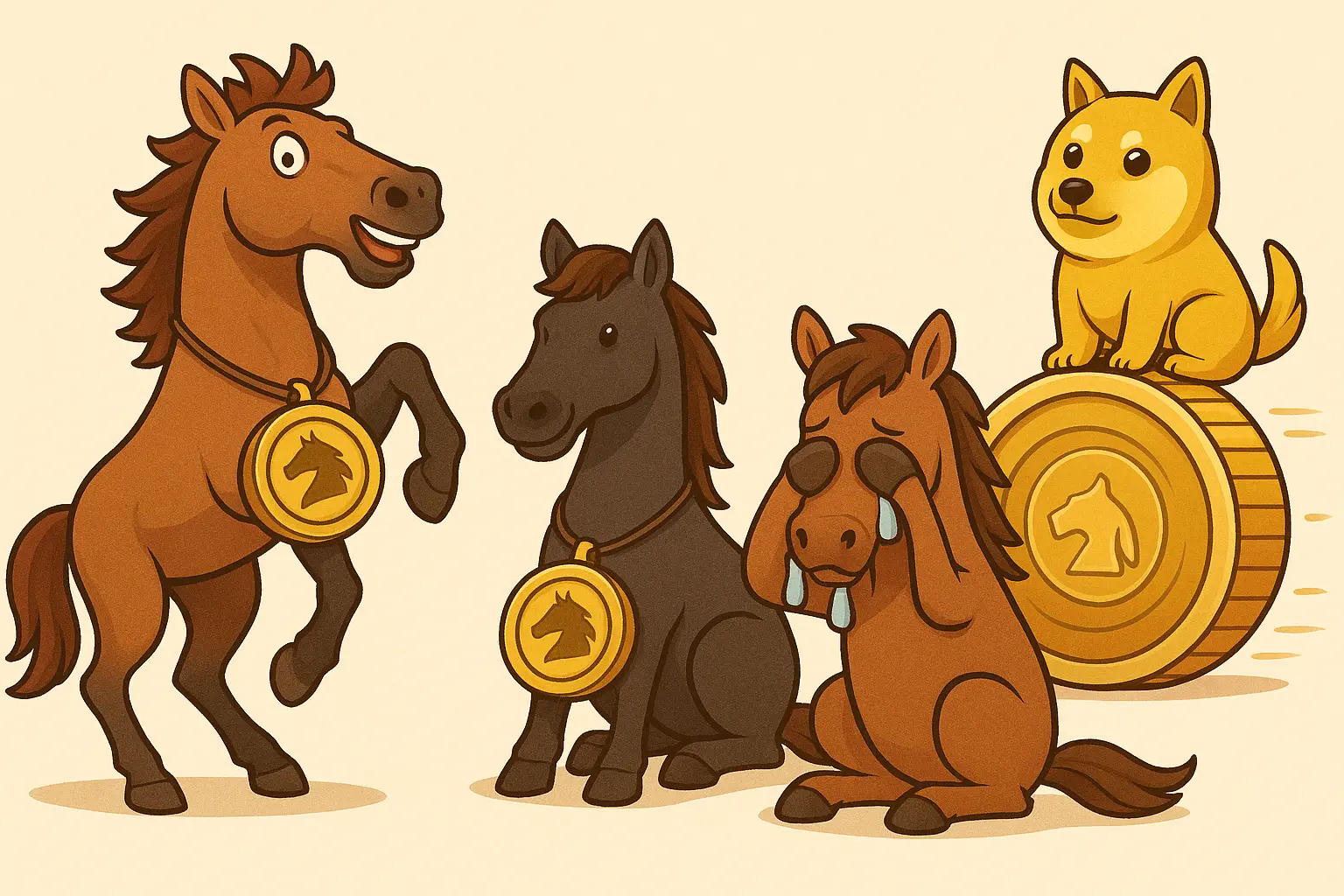
The Year of the Horse (Bing Wu Year) meme coins in 2026 are primarily centered around Chinese themes, with “Wo Ta Ma Lai Le” attracting the most attention, once surging over 700%, with a market cap surpassing $52 million. The token name cleverly combines a Chinese profanity pun, quickly gaining popularity within Chinese-speaking communities. Other popular tokens include Ma Dao Cheng Gong (Good luck phrase emphasizing New Year atmosphere), Hei Ma (Dark Horse, narrative of sudden rise), Ku Ku Ma (Self-deprecating, reflecting trapped emotions), Teng Xiao Ma (Cute pet style), and others.
Chinese Zodiac Culture Sparks BSC Meme Coin Trend
In January 2026, with the Lunar Year of the Horse arriving, a wave of horse-themed meme coins based on zodiac culture exploded across the BSC chain. Unlike previous narratives dominated by Western communities like Doge or Pepe, this round’s notable feature is “Chinese-led.” The Chinese crypto community demonstrated stronger organizational mobilization and cultural identity, with Gas consumption and transaction counts on BSC rising exponentially.
“Wo Ta Ma Lai Le” (I’ve come on my horse), as the leading Chinese meme token of early 2026, cleverly combines a Chinese profanity pun and quickly became a hit on BSC. This linguistic play has natural dissemination advantages within Chinese culture—“踏馬” (treading on a horse) is a vulgar term but also evokes the heroic imagery of “Horse Treading Flying Swallow.” After launching in early January, it skyrocketed over 700% in a short period, with a market cap exceeding $52 million, becoming the leader among horse-themed meme coins.
“Ma Dao Cheng Gong” (Success in the Horse) emphasizes auspicious meanings and the festive New Year atmosphere, attracting investors seeking short-term gains. This positive connotation is especially popular during Lunar New Year, as Chinese culture values good luck rituals. Compared to the rough style of “Wo Ta Ma Lai Le,” “Ma Dao Cheng Gong” adopts a more auspicious approach, appealing to more conservative investors.
Top Horse Meme Coins
Wo Ta Ma Lai Le: Profanity pun, once surged over 700%, market cap $52 million
Ma Dao Cheng Gong: Auspicious meaning, festive New Year vibe
Hei Ma: Reverse narrative, fitting the “get rich overnight” mentality
Ku Ku Ma: Self-deprecating, resonating with traders who are trapped
Teng Xiao Ma: Cute pet style, attempting to reach audiences outside crypto
Other horse-themed tokens like Hei Ma, Ku Ku Ma, Teng Xiao Ma, etc., saw significant gains, mostly low market cap and high volatility. These tokens often carry cultural consensus or emotional projection—more than just code or symbols, they represent collective cultural expression of the Chinese-speaking community during the Year of the Horse.
BSC’s Liquidity Counterattack on Solana
The story begins with Solana. Starting in late 2024, Solana dominated the meme market thanks to low Gas fees and fast transaction speeds. Pump.fun style projects flourished, with thousands of new tokens created, launched, and then zeroed out daily. However, as everyone competed on the same track, “PVP” battles became hyper-competitive, and retail traders’ profit-loss ratios worsened. The market began craving new narratives and battlegrounds.
BSC keenly sensed this signal. As an EVM-compatible chain with mature smart contract ecosystem and lower transaction costs, BSC’s decentralization is less than Ethereum’s but performance and cost are superior. More importantly, BSC is deeply integrated with the world’s largest exchange ecosystem, providing clear liquidity exit paths for projects on its chain.
Thus, a capital migration quietly unfolded. Many traders shifted focus to BSC, because competing on Solana with speed and information advantage was increasingly difficult, while BSC offered a clearer “upward channel.” This is a typical “stocking game” capital rotation—when one ecosystem’s profit-loss ratio deteriorates, smart money seeks the next battleground.
BSC’s meme coin-focused incentive system offers clear “airdrop expectations” as a baseline return, allowing participants to earn other rewards through points even if the tokens perform poorly. This “bottom support” mechanism greatly lowers the psychological barrier for capital migration. Compared to Solana meme coins lacking clear “exit routes,” BSC’s advantage lies in its deep integration with centralized exchange ecosystems.
Cultural Codes and Identity Financialization
Looking at this wave of hype, truly resilient tokens often have a cultural core supporting them. From a broader perspective, the cultural code of the Chinese Year of the Horse meme coins can be summarized as several dimensions: identity-based linking of holding a token to a specific identity, forming “us vs. them” group divisions—holding equals taking a side, and taking a side equals belonging.
Emotion-driven tokens carry collective sentiments of crypto traders after market volatility—whether it’s the urgency after missing out, euphoria from sudden gains, or self-deprecating humor after being trapped. Ku Ku Ma exemplifies this emotional resonance, providing a shared outlet for traders’ losses and frustrations. Subcultural breakout tokens borrow from anime, cute pets, internet memes, and outside trends, enabling meme coins to reach audiences beyond the crypto circle and gain broader dissemination.
The success of Hei Ma reflects the Chinese cultural obsession with reverse narratives. In crypto, everyone hopes to be that “dark horse,” turning small bets into big leaps and crossing social classes. This collective psychological finance makes “Hei Ma” tokens gain market consensus beyond their actual value. During the Lunar New Year, tokens with auspicious meanings like “Ma Dao Cheng Gong” are especially popular, as Chinese culture emphasizes good luck rituals, and holding such tokens is seen as a ceremonial investment.
High-Risk Warnings for Retail Investors
However, in this feast, retail investors must stay alert. The high-risk nature of horse-themed meme coins relies heavily on community hype, pun-based names, and holiday concepts, with no real technical backing or utility. Prices are extremely volatile; these tokens often surge over 50% in 24 hours and can plummet 50% or more within a week—“Wo Ta Ma Lai Le” once retraced over 50% in a week.
Concentration risk is also significant. Many meme coins have high holdings concentrated among the top addresses—often 30% to 50% of total supply—making them vulnerable to whale dumps. On-chain data shows that the top 10 addresses hold a large portion of supply, giving whales outsized influence over price movements. Additionally, many tokens’ creators and early holders are anonymous, increasing the risk of rug pulls.
Three Core Risks of Horse Meme Coins
Lack of real utility: Relying on hype, puns, and holiday themes, with no technical value or practical use cases
Extreme volatility: 24-hour swings often exceed 50%, with weekly gains of 700% followed by 50% retracements
Concentration of holdings: Top 10 addresses often hold 30%-50%, risking whale manipulation
Liquidity fragility is the fourth major risk. Although these tokens attract large short-term capital, most of it is speculative and lacks long-term holding intent. When market sentiment shifts or more attractive narratives emerge (e.g., Year of the Snake), funds may withdraw rapidly, causing sharp declines. The seasonal nature of Lunar New Year means these tokens’ life cycles can be very short—once the festival ends, interest may fade.
Regulatory shadows are also a concern. Some horse meme tokens’ names involve Chinese profanity puns, which could trigger content review issues. If regulators determine these tokens are unregistered securities or scams, the entire sector could face severe challenges. Investors should approach hype around the Year of the Horse cautiously, avoid blindly following trends, and conduct thorough research (DYOR).
This Chinese Year of the Horse meme coin frenzy is essentially an “attention finance” experiment. In this algorithmic, points-based, social media-driven cyber gambling arena, the true winners are those who hear the music earliest and can exit promptly. Most latecomers chasing hot spots may only experience a costly “life chart” (K-line) journey. After all, in crypto, meme prices are highly unpredictable, but risks are certain.
Related Articles
Whale sells 12,000 BTC in a single day! Bitcoin volatility soars, can the $60,000 support hold?
Russia's return to USD settlement triggers market turbulence. Can Bitcoin brew a reversal above $60,000?
Bitcoin price approaches a key support level. Can BTC rebound 23.6% to challenge the 50-day moving average?
Bitcoin plummeted 30% this month, as a whale transferred 7,800 BTC to the exchange platform, sparking concerns of a new round of selling pressure.
Cardano drops out of the top ten, with $0.22 becoming the dividing line between bulls and bears. Will ADA's price test a three-year low again?
Monero MACD bullish crossover approaching, XMR weekly rebound of 15%, aiming to retake the $788 high?