


Anthropic rejects the White House's final ultimatum, setting a potential precedent for government-mandated encryption companies
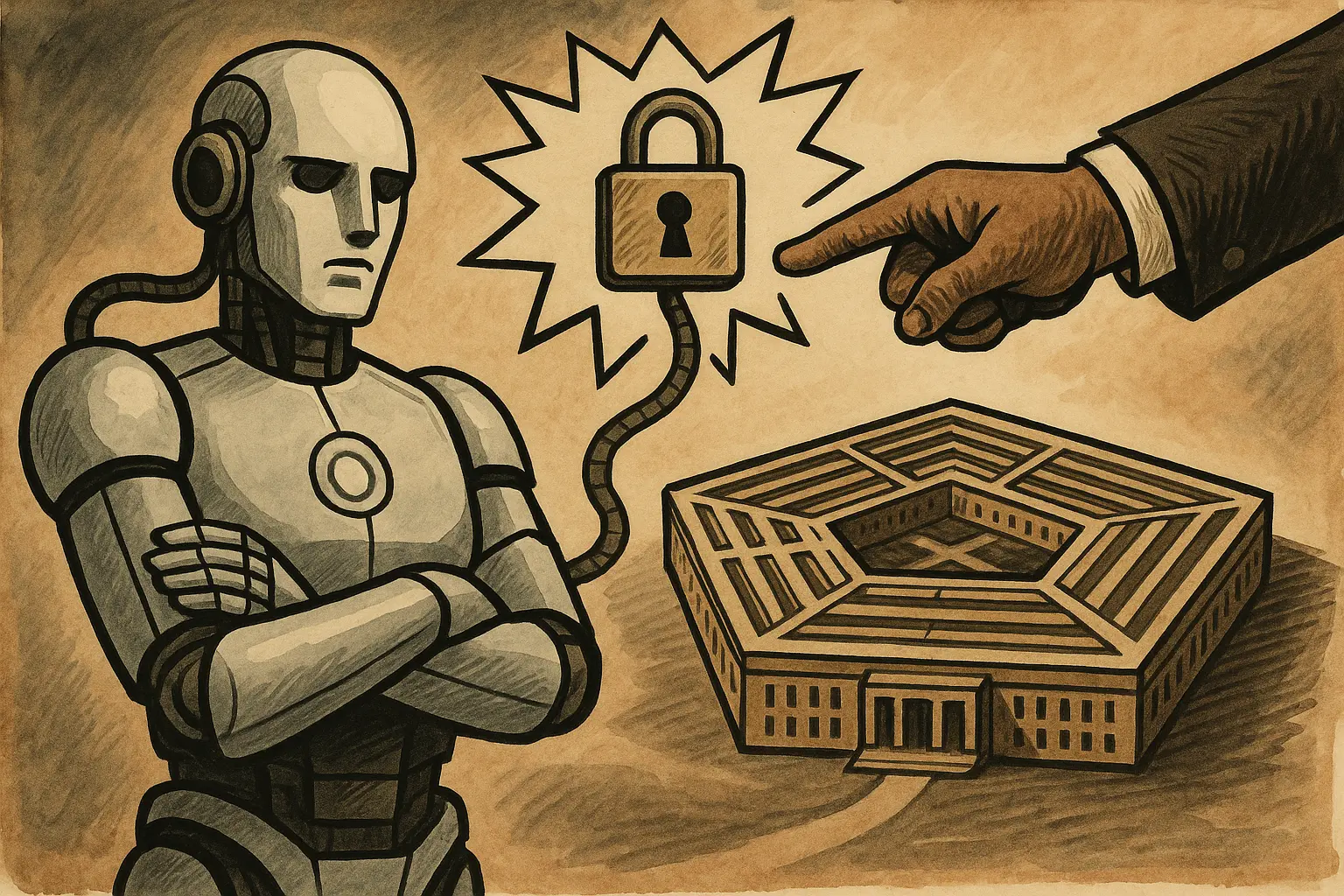
Anthropic CEO Dario Amodei publicly refused the U.S. Department of Defense’s ultimatum on February 26, 2026, rejecting unrestricted military use of Claude AI. The DoD, citing the 1950 Defense Production Act (DPA) to force technology transfer, created the first control boundary dispute between tech companies and the government.
The Confrontation: Anthropic’s Two Red Lines and Pentagon’s Three Threats
The core of this dispute is Anthropic’s two restrictions on military use of Claude: prohibiting autonomous targeting of enemy combatants and banning large-scale surveillance of U.S. citizens. The Pentagon views these restrictions as unacceptable barriers to legitimate military operations.
The escalation timeline: On Tuesday, Amodei met directly with Defense Secretary Pete Hegseth, who listed three consequences—removing Anthropic products from military systems; classifying them as supply chain risks, banning other defense contractors from using their products; and forcing technical transfer under the DPA. On Wednesday evening, the Pentagon presented a “final plan,” which Anthropic’s spokesperson said was “full of legal jargon, allowing arbitrary disregard of safeguards.” On Thursday, Defense Department spokesperson Sean Parnell issued a public ultimatum on X, demanding a response by 5:01 PM Friday.
In a blog post, Amodei described the Pentagon’s threats as “fundamentally contradictory,” noting that “cutting-edge AI systems lack the reliability to drive fully autonomous weapons,” and systems without proper oversight cannot demonstrate the critical judgment required by trained professional teams daily.
Potential Precedents for Cryptocurrency and Decentralization Insights
The Pentagon’s invocation of the DPA could have far-reaching implications beyond AI. If the government can, under national security grounds, legally compel AI companies to remove safety restrictions, the same framework could theoretically be used to force crypto companies to modify privacy features or weaken transaction protections.
Key Takeaways for the Cryptocurrency Market from This Dispute
Legal Precedent Risks: The use of the DPA as a legal pathway for government-mandated modifications to core security features in tech companies could set a precedent, posing similar pressures on crypto infrastructure providers.
Decentralization Resilience Argument: Centralized AI providers can be forced to remove security protections under government pressure, whereas decentralized architectures offer greater resistance to such coercion, validating the infrastructure advantages of decentralization.
Competitive Landscape Shift: Elon Musk’s xAI has signed an agreement allowing Grok AI for confidential systems; OpenAI and Google are accelerating efforts in secure AI domains. Anthropic’s early lead faces fundamental challenges.
Direct Cryptocurrency Connections: Anthropic’s $380 billion valuation and AI-driven software disruption are already impacting private credit flows related to Bitcoin; additionally, FTX’s bankruptcy estate held significant early shares in Anthropic, later sold to pay creditors.
FAQs
What is the Defense Production Act (DPA), and why does its invocation pose a major threat to tech companies?
The DPA, passed in 1950, is a U.S. federal law granting the executive branch broad powers to prioritize and direct private industry in emergencies, including mandatory technology transfer. If invoked against tech firms, it could force companies to hand over technology or modify products without market negotiations, posing potential threats to AI and crypto sectors.
What are the direct business risks for Anthropic in this confrontation?
The immediate risk involves a $200 million military contract. However, the more profound impact is the supply chain risk designation—requiring all contractors working with the U.S. Department of Defense to verify whether they use Anthropic’s products—potentially excluding Anthropic systematically from the vast defense supply chain, with impacts far beyond a single contract.
What specific lessons does this dispute offer for privacy protection in cryptocurrency?
This conflict reveals a legal pathway for government intervention in private tech companies’ core functions under national security pretexts. For crypto, it underscores that centralized infrastructure providers could be forced to alter privacy protections or transaction designs under similar pressures, further strengthening the case for decentralized architectures as more resilient to coercion.
Related Articles
Concerns over bank deposit outflows intensify, U.S. Senators restart debate on stablecoin yield regulation
U.S. Congress pushes DeFi legislation, developer criminal liability exemptions or rewriting the crypto legislative landscape
Data: As the crypto market drops over 21%, the tokenized gold protocol rises up to 62%
Why did Bitcoin drop today? Increased uncertainty in US-Iran nuclear negotiations, and the $71,000 fake breakout exposed the essence of short squeeze.
Ethereum proposes a roadmap to address the threat of quantum computing
Bitcoin Slides to $66K Support as Relief Rally Loses Steam